
News
PLATEAU STATE: EVEN THIS DARKNESS SHALL PASS AWAY

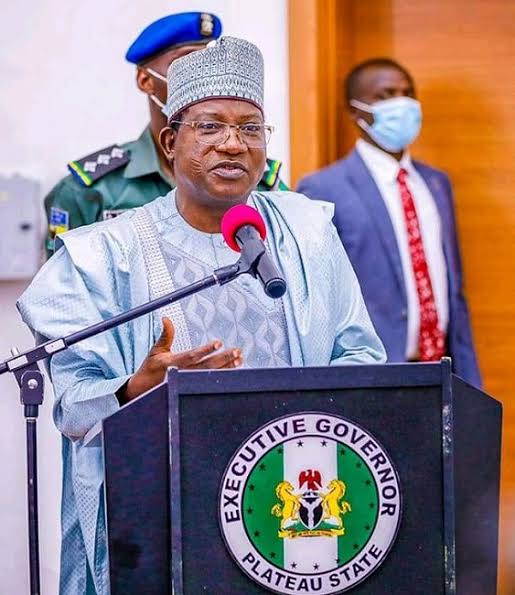
PLATEAU STATE: EVEN THIS DARKNESS SHALL PASS AWAY
BY CHRIS GYANG
Nothing poignantly symbolizes the decrepit and gloomy face of governance in Plateau State such as the thick darkness that envelopes the Plateau State Government House at Little Rayfield every night.
Driving past that seat of government from the well-lit, ritzy and upscale Rayfield at sunset, you will never imagine that just a few metres to your left is the fence of what used to be one of the most magnificent government houses in the entire country. Close associates say that Governor Lalong harbours a deep aversion for the government house, built by his predecessor, because its sheer magnificence is a constant, niggling, reminder of his own disastrous outing as governor.
At daytime, the atmosphere of despondency is thicker, more palpable. The dilapidation and unkemptness that afflict both the fence and huge buildings within tell an even worse story; the sad tale of a governor who long ago let go of governance for fanciful frivolities that inflate his parched ego. Citizens here fittingly refer to him as ‘The Absentee Governor’.
The very structures within this expansive estate that were once the pride of Plateau people now desperately beg for a fresh coat of paint; yearn for their once lush lawns to be trimmed and watered; and pray for the overgrown grass and assorted weeds to be mown, perhaps for the first time in only God knows how many years.
Sadly, it is this sense of listlessness and abandonment that pervade both the people and atmosphere of Plateau State under His Excellency, Governor Simon Bako Lalong. And, yes, never fail to add to his string of aliases the fact that he also occupies the exalted position of the Chairman of the Northern Governors’ Forum and is likewise the Director-General of the All Progressives Party’s Presidential Campaign Council – which tickles him exceedingly, more than anything else these days.
It is this latest assignment, which he misconstrues as a reward for his exceptional leadership qualities, that he uses as yet another alibi to escape responsibility from the serious work of governance. His exaggerated sense of personal worth is now at its peak. But in his excitement, he failed to ask himself why the man who made him Director-General of his campaign team never thought him fit and worthy to be his running-mate, which, it must be admitted, Mr. Lalong straineously hankered after.
For a man who can settle for any position as far it gives him a semblance of public visibility, anything goes, warts and all. And knowing that his strength does not lie in taking and resolutely maintaining principled stands on fundamental issues, Tinubu and his kitchen cabinet fully understood that, at the least prompting, Governor Lalong would easily abandon his original quest and succumb to taking up the lesser, more temporary, position of Campaign DG.
At least, in his own reckoning, that would allow him share in the limelight that would shine on the APC’s high and mighty, as long as the campaigns last.
Other serious governors are making last minute efforts to consolidate on their achievements by commissioning projects and tidying up policies and programmes to strengthen and make them solid, robust and enduring. But Governor Lalong is squandering sleepless nights and precious resources hopping around the country on an exercise that is as self-serving as it is futile.
His efforts are akin to the gimmicks of a failed salesman struggling to market an essentially flawed product. Unfortunately, the best he can get for Tinubu in Plateau State cannot be more than what he was able to eke out for Buhari in the 2019 presidential ballot – a spectacularly humiliating result.
Moreover, the albatross of the Muslim-Muslim ticket that malignantly hangs on Mr. Lalong’s neck will be very difficult to cast off. This will, among other heavy moral baggage, make his job of selling the Tinubu/Shettima ticket very awkward to his immediate Christian constituency, both in Plateau State and elsewhere in the country. His task is further compounded by the fact that he is a Knight of the Catholic Faith.
What little time Mr. Lalong scrapes out to run the affairs of the state is devoted to empty state ceremonies still aimed at boosting his ego and picking up the pieces of the APC in the state which he single-handedly destroyed by turning it into a personal estate for his own pleasure. Today, many men and women who stood behind him in most of his inglorious seven years in office have been forced to either abandon him or join other political parties.
Even members in Jos North, who formed the fulcrum of the strength of the APC in the state, have rebelled against Mr. Lalong. His high-handedness and nepotism in handling both party and state affairs have been their chief motivations. Political analysts say that, as things stand, there is no way the APC can make any meaningful impact in the 2023 general elections.
Also, pundits further suggest that it is perhaps the highly fractious governorship primaries of the APC that finally nailed the coffin of the APC in Plateau State. The governor was seen to have deliberately skewed the process to favour his preferred aspirant which did not go down well with a majority of the contestants who took the matter to court.
Unfortunately, the outcome did not favour the aggrieved aspirants. But they have vowed to pursue the case up to the Supreme Court. However, many see this as a strategy to distract the APC from concentrating on the electioneering campaigns as more than 95 per cent of them are set to pitch their tents with the political party that has shown the greatest potential of defeating the APC in the forthcoming polls.
In the midst of all these, the people of Plateau State continue to suffer. As we write, civil servants are set to commence a five-day Sit-At-Home warning strike from midnight of Sunday, December 11, to Friday, December 16, 2022. They want to push home their demands for the payment of their five months’ salaries.
In fact, they had planned to start this industrial action before the flag-off of the APC presidential campaign in Jos on November 15. But, in order to stave off the embarrassment that would have caused Governor Lalong, being the arrowhead of the Tinubu campaign organisation, the workers were hoodwinked into calling it off when some workers started receiving salary alerts. But that was discontinued immediately after that political fiesta.
It later emerged that only a handful of workers had actually been paid a month or two’s outstanding salaries. Barely one month after, the workers have not heard any more from the state government regarding that matter.
With the governor perpetually absent and the levers of governance abandoned, it is only natural to expect these kinds of upheavals in the system arising from citizens’ frustrations with their wretched conditions. Abject conditions underscored by poverty for which Plateau State is now officially recognised as occupying the fifth position in the entire country.
Statistics released by the National Bureau of Statistics (NBS) in November, revealed that 133 million Nigerians (63 per cent of the population) are multi-dimensionally poor due to lack of access to health care, education, proper living standards, employment and security.
PUNCH newspaper (November 18, 2022) reported: “The NBS further showed [that] Sokoto, Bayelsa, Gombe, Jigawa and Plateau are the top poorest states in 2022.
“Sokoto leads the poorest with 90.5 per cent of the people in the state poor. It is followed by Bayelsa with 88.5 per cent people, Gombe with 86.2 per cent, Jigawa with 84.3 per cent and Plateau with 84 per cent.”
Certainly, the Lalong administration should not be surprised at this bleak chunk of reality. To expect anything to the contrary would be to engage in the highest form of self-delusion. This is only the natural outcome of the government’s total lack of any concrete and practical economic blueprint aimed at harnessing and channelling the huge natural and human potentials of the state.
Like all else about the Lalong administration, its economic policies have been largely driven by a haphazard, trial-by-error, approach which is at best pedestrian and completely reliant on the old way receiving monthly handouts from the Federation Account. Most of which is deployed towards oiling huge and extensive political wheels and buying personal favours and loyalties of cheap political strumpets.
This is but a slice of the tragedy in which Plateau State is currently wallowing, emblematic of the darkness hanging over the Little Rayfield Government House. But come May, 29, 2023, its flamboyance, verve and splendour shall be restored, along with the natural vibrancy and pride of citizens. Citizens who are confident that, through their concerted and selfless efforts, they shall restore honour to their despoiled destiny so that even this darkness shall pass away.
(GYANG is the Chairman of the N.G.O, Journalists Coalition for Citizens’ Rights Initiative – JCCRI. Emails: info@jccri-online.org; chrisgyang01@gmail.com)


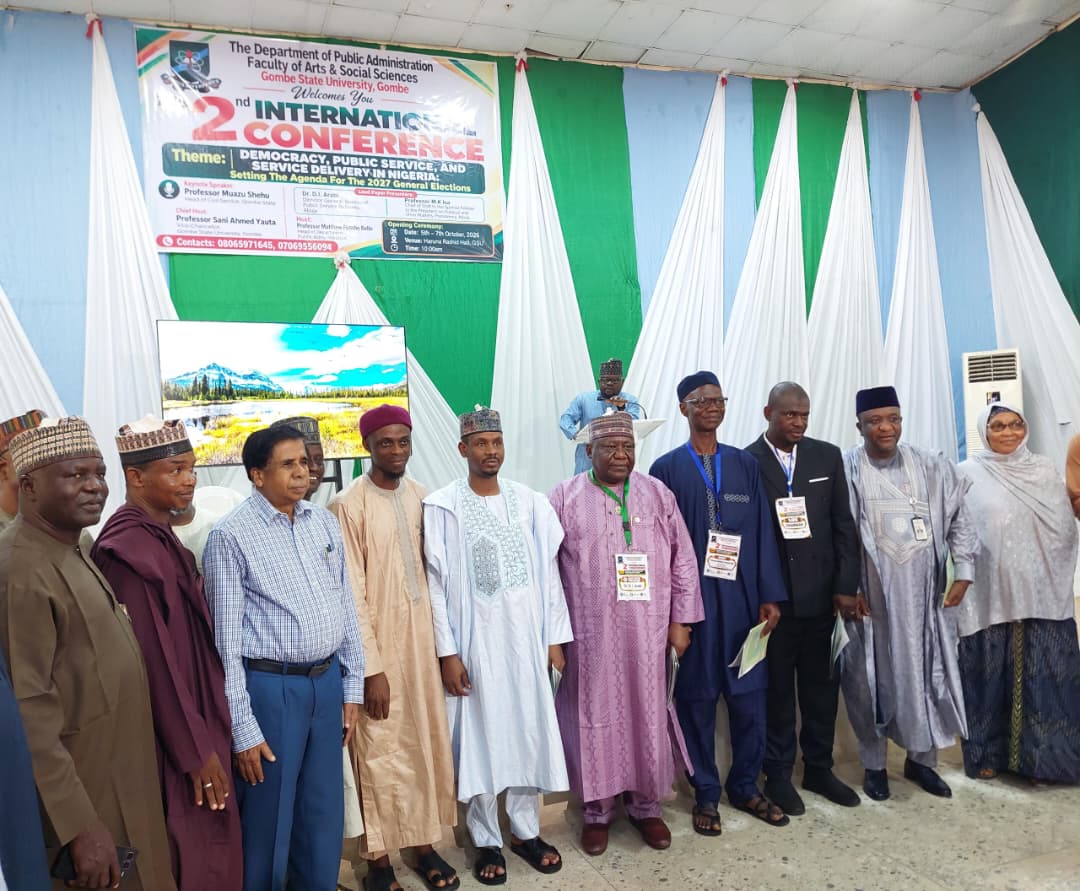
Bureau urges states to deepen public service reforms
By Elizabeth Ogunjobi
The Bureau of Public Service Reforms (BPSR) has urged sub-national governments to emulate Federal Government efforts to institutionalise systemic public service reforms.
Dr Dasuki Arabi, BPSR Director-General, made the call on Tuesday in Gombe while presenting a paper at Gombe State University’s conference.
He stressed the need for sustained reforms focused on digital governance, human capital development and performance management to optimise service delivery.
Arabi said replicating Federal Government reforms across states would promote a whole-of-government approach capable of improving public service delivery nationwide.
He said reforms initiated by President Bola Tinubu had helped reposition Nigeria among emerging countries making progress in public service delivery.
According to him, the reforms have strengthened the civil service while addressing challenges affecting effective public service delivery.
“The introduction of government financial integrated management information system for payment of contracts and services and the National Strategy of Public Service Reforms have yielded gains,” Arabi said.
He listed Performance Management, e-culture and the Federal Civil Service Strategy among initiatives that had contributed to improving public service performance.
“These reforms have built public confidence as private sector investment is coming,” Arabi said.
He cited the Dangote Refinery’s offer and foreign participation in Nigeria’s stock exchange as indications of growing investor confidence in the country.
“More than 60 per cent of participants in our stock exchange are not Nigerians,” the Director-General said.
Arabi said BPSR’s ambition was to position Nigeria among the world’s 20 best-performing public services through sustained institutional reforms.
He said: “We are not there, but we have institutions of government that have surpassed that.
“Our tax, our revenue agency is one of the best in the world. Our stock exchange is one of the best in the world.
“The Insurance Commission is the best in Africa and the tenth in the world.”
He, however, said more needed to be done, particularly by states, to ensure reforms were coordinated with Federal Government efforts.
“I think we are moving, but we need to do more, especially if whole-of-government approach by the states work with the Federal Government,” he said.
Arabi urged states to embrace reforms and make citizen engagement and effective public service delivery central to their governance priorities.
He said only Gombe, Kaduna, Enugu, Ogun and Lagos states had provided information on their reform activities to the BPSR.
“All other states are lagging behind. The data is on our website. If you want to check, you can see,” he said.
Prof. Ahmed Yauta, Vice-Chancellor, Gombe State University, represented by his deputy, Prof. Rasheed Abdulganiy, commended the organisers for convening the conference.
Yauta said the conference would contribute to strengthening public service reforms and improving governance in Gombe State.
Prof. Muazu Shehu, Gombe State Head of Service and keynote speaker, said meaningful public service reforms required combining research evidence with reliable data.
Shehu said Gombe State had deliberately embraced governance reforms that distinguished the state through improved governance and service delivery.
He urged policymakers to establish dedicated research units within government agencies and departments to support evidence-based decision-making.
According to him, such units should collect, analyse and apply data to decisions capable of positively affecting governance and service delivery.
Prof. Matthew Bello, Head of the Department of Public Administration, Gombe State University, said the conference would strengthen reform implementation and service delivery in Gombe.
He said the objective was to ensure reforms touched citizens’ lives and contributed to improved governance in the next administration.
Bello added that conference presentations would be translated into actionable plans and published in a book of proceedings.
He said copies would subsequently be sent to government agencies and other relevant stakeholders for consideration and implementation.
The News Agency of Nigeria (NAN) reports that the conference’s theme is ‘Democracy, Public Service and Service Delivery in Nigeria: Setting the Agenda for the 2027 General Elections’.
Bureau urges states to deepen public service reforms
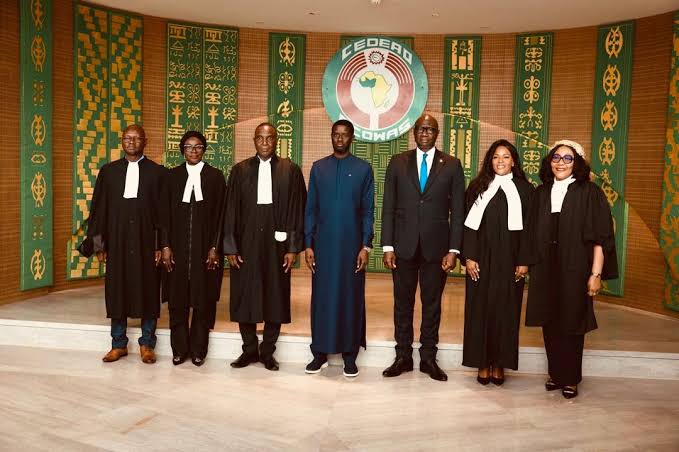
ECOWAS Swears in Five Judges as Faye Demands Stronger Public Trust in Regional Justice
By: Michael Mike
The Economic Community of West African States (ECOWAS) on Tuesday swore in five new judges of its Community Court of Justice, with Chairman of the Authority of Heads of State and Government, President Bassirou Diomaye Faye of Senegal, charging them to strengthen public confidence in regional justice through impartial, credible and independent decisions.
Faye administered the oath of office to the judges at the ECOWAS Commission headquarters in Abuja, urging them to discharge their responsibilities without fear, favour or external influence as the region grapples with political, economic, security and environmental challenges.
The new judges are Désiré Henri Aihou of Benin; Justice Awa Bah of The Gambia; Charlyne Brumskine of Liberia; Henrietta Uzoamaka Didigu of Nigeria; and Dr Yaouza Ouro-Sama of Togo.
The ECOWAS Chairman said the Court had a crucial role to play in protecting citizens’ rights, ensuring fairness in the application of community laws and restoring confidence in regional institutions at a time when the region required stronger commitment to the rule of law.
“Through its decisions, it protects rights, serves as a reminder of everyone’s obligations, and strengthens trust in our institutions,” Faye said.
He urged the judges to allow the oath they had taken to guide them throughout their four-year tenure, particularly when determining cases brought before the Court.
Faye charged them to examine cases according to their conscience, deliver justice fairly and exercise their judicial responsibilities impartially without yielding to pressure from any quarter.
“That is why I urge you, throughout the duration of your mandate, to constantly keep in mind—especially at the moment of decision-making—the foundation of your oath,” he said.
The ECOWAS Chairman said the credibility of the Court would ultimately be measured by the quality of its judgments and the confidence those decisions inspired among citizens.
He urged the new judges to build on the Court’s achievements while contributing to efforts to modernise its operations and make regional justice more effective, accessible and accepted by the people.
The new judges were appointed for a four-year, non-renewable term by the ECOWAS Authority of Heads of State and Government at its 69th Ordinary Session in Lungi, Sierra Leone, on July 19, 2026.
Their appointment followed the December 2025 Supplementary Act SA.1/12/25 relating to the Community Court of Justice.
Under Article 3 of the Act, the Court is to comprise five independent judges selected from nationals of member states who possess high moral character and the qualifications required for appointment to a Supreme Court or equivalent judicial office.
Candidates must also demonstrate recognised competence in international law, particularly community or regional integration law, and have at least 20 years of professional experience.
Article 5 requires every judge to take an oath of office or make a solemn declaration before the Chairman of the Authority of Heads of State and Government before assuming judicial responsibilities.
The five new judges succeeded Justice Ricardo Cláudio Monteiro Gonçalves of Cape Verde; Justice Sengu Mohamed Koroma of Sierra Leone; Justice Dupe Atoki of Nigeria; Justice Gberi-Bè Ouattara of Côte d’Ivoire; and Justice Edward Amoako Asante of Ghana, whose four-year tenure had expired.
Faye commended the outgoing judges for their service and contribution to the development of community law and the region’s integration process.
“Through their stewardship and commitment, they have brought community law to life and contributed to building an ECOWAS that is mindful of the principles of justice, respectful of individual rights, and resolutely oriented toward integration,” he said.
Earlier, ECOWAS Commission President, General Birame Diop, said the swearing-in ceremony represented more than the formal assumption of judicial office, describing it as a commitment by the new judges to the citizens of the community and to a common legal order.
He said the oath required the judges to put aside personal interests and external influences and serve community law with honour, loyalty, impartiality and conscience.
“The oath marks the moment when the individual sets aside their personal interests and all external influences to serve only community law,” Diop said.
According to him, the ceremony also demonstrated that member states, at the highest political level, recognised the authority of the Court and were committed to respecting its independence.
Diop described the Community Court as one of ECOWAS’s most visible and accessible institutions, particularly because individuals can approach it to seek redress for violations of their rights.
“By opening its doors to individuals, the Community has given concrete meaning to the idea of an ECOWAS of the peoples, and no longer just of States,” he said.
He said the Court’s jurisprudence, particularly in the area of human rights, had attracted attention beyond West Africa and represented an important contribution to the region’s legal development.
Diop, however, stressed the need for stronger cooperation among the ECOWAS Commission, Judicial Council, Community Court, Parliament and member states, arguing that judicial independence and institutional dialogue should reinforce rather than undermine each other.
He disclosed that work was underway on the possible establishment of an Appellate Chamber for the Community Court.
According to him, a committee comprising representatives of community institutions had been constituted to examine the proposal, while recommendations from a recent international conference in Dakar would feed into the deliberations.
He said the ECOWAS Commission was prepared to contribute fully to the process.
Diop also urged member states to strengthen cooperation with the Court to ensure effective implementation of its decisions and consolidate the rule of law across the region.
The new judges are expected, upon assumption of duty, to elect a President and Vice-President from among themselves for two-year terms.
Their arrival comes at a consequential period for ECOWAS, with the Court expected to remain a key institution for the protection of citizens’ rights and the interpretation and enforcement of community law.
ECOWAS Swears in Five Judges as Faye Demands Stronger Public Trust in Regional Justice
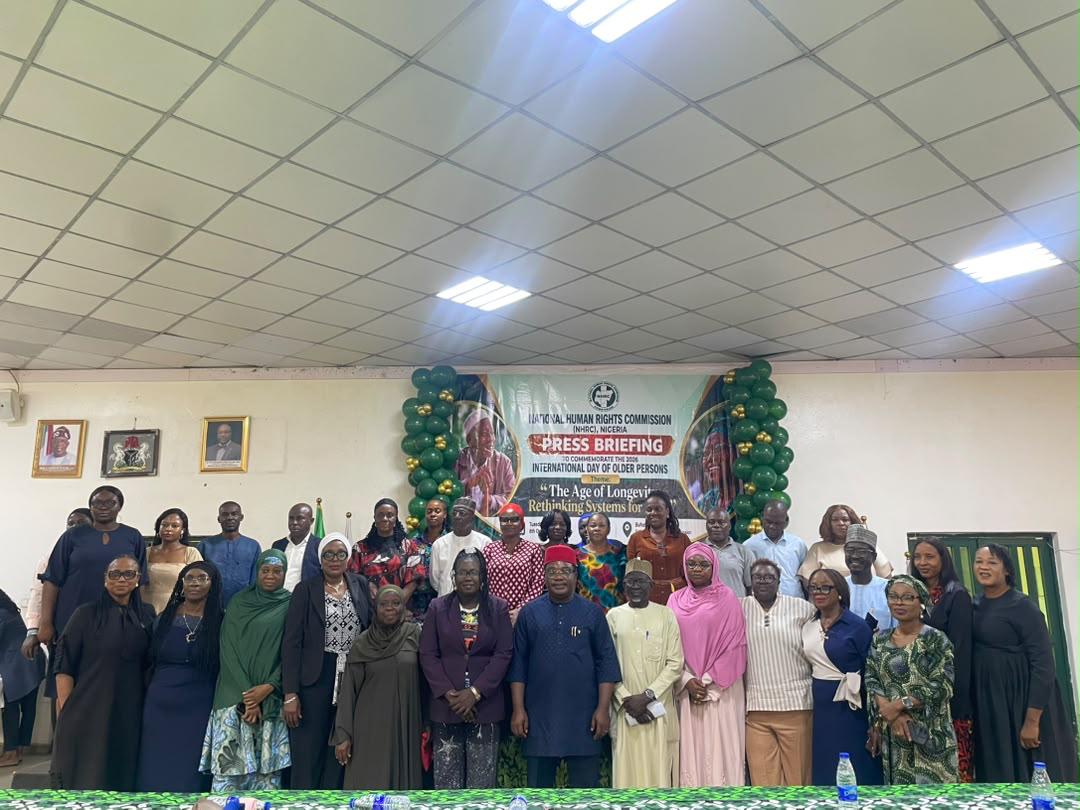
NHRC: Nigeria Must Overhaul Systems as Ageing Population Faces Poverty, Abuse
By: Michael Mike
Nigeria’s growing population of older persons is confronting a social protection system that remains ill-equipped to guarantee their dignity, security and independence, the National Human Rights Commission (NHRC) has warned.
The Commission said yesterday that poverty, inadequate income, weak social protection, limited access to healthcare, delayed pensions, social isolation, age discrimination, abandonment, abuse and property dispossession were leaving many older Nigerians vulnerable.
The Executive Secretary of the NHRC, Dr Tony Ojukwu, who raised the concerns in Abuja at the Commission’s commemoration of the 2026 International Day of Older Persons, said Nigeria must fundamentally rethink its policies, institutions and social protection systems to respond to longer lives.
The commemoration, held under the theme, “The Age of Longevity: Rethinking Systems for Longer Lives,” brought together government institutions, civil society organisations and other stakeholders to examine the rights and welfare of older persons.
Ojukwu said the increasing length of human life should be regarded as an achievement rather than a burden, but warned that longevity would have little meaning if additional years were characterised by poverty, ill-health, insecurity, neglect and exclusion.
He said the critical question for Nigeria was no longer simply how long its citizens lived, but whether they could live their later years in good health, dignity, security, equality and with the ability to participate meaningfully in society.
“Older persons are right holders and active members of our society, and their voices must be reflected in decisions and policies that affect their lives,” he said.
The NHRC boss rejected the perception of older persons as merely dependent recipients of assistance, stressing that they remained parents, grandparents, professionals, entrepreneurs, farmers, community leaders, caregivers, mentors and custodians of culture and institutional memory.
He said their contribution to national development should be recognised and protected through policies that allow them to remain active and independent for as long as possible.
Ojukwu said the protection of older persons was fundamentally a human rights issue, noting that growing older did not strip anyone of the rights guaranteed under the Constitution and international human rights instruments.
He listed among those rights dignity, equality and non-discrimination, life, healthcare, social security, adequate living standards, family life, property, participation, access to justice and freedom from violence, abuse, exploitation and neglect.
He said Nigeria already had a legal and policy foundation for protecting older persons through the Constitution, the National Human Rights Commission Act, the National Senior Citizens Centre Act and the National Policy on Ageing.
He also cited the International Covenant on Economic, Social and Cultural Rights, Convention on the Rights of Persons with Disabilities, United Nations Principles for Older Persons, Madrid International Plan of Action on Ageing, African Charter on Human and Peoples’ Rights and the Protocol to the African Charter on the Rights of Older Persons in Africa as important instruments underpinning the rights of older people.
Ojukwu disclosed that international discussions were ongoing towards the development of a dedicated Convention on the Rights of Older Persons, which he said would strengthen the global framework for protecting the elderly.
“Why should older persons not have a Convention?” he asked, arguing that older people deserved a dedicated international legal instrument just as children and persons with disabilities had specific conventions protecting their rights.
The NHRC Executive Secretary said ageing did not affect all Nigerians in the same way, with some groups facing significantly greater risks.
He identified older women, particularly widows, as vulnerable to discriminatory cultural practices, inheritance disputes, poverty and gender discrimination.
Older persons living with disabilities, those in rural communities, people living alone and elderly Nigerians affected by displacement, poverty or humanitarian emergencies, he added, faced additional barriers.
“Ageing is not a single experience,” Ojukwu said, insisting that policies must reflect differences in gender, disability, economic circumstances, location, health and social conditions.
He warned against a culture in which elderly people were excluded from decisions affecting their own lives because relatives assumed they knew what was best for them.
Using his family as an example, he recalled how his family had once considered relocating his mother to the United States because most of his siblings lived there.
She eventually returned because she was uncomfortable with the cold weather.
For Ojukwu, the experience illustrated the need to listen to older persons before making decisions on their behalf.
“Talk to them and find out what they want. You’ll be surprised that what they want may even be easier for you to provide than what you are thinking for them,” he said.
Ojukwu said the NHRC was strengthening its institutional response to the challenges confronting older persons through advocacy, public enlightenment, monitoring, investigation of complaints, stakeholder engagement and capacity building.
He disclosed that the Commission had established and trained older persons’ desk officers across its state offices to bring ageing-related issues closer to communities nationwide.
He said the NHRC was also engaging stakeholders on implementation of the African regional framework on the rights of older persons while strengthening responses to elder abuse and other violations.
The Executive Secretary called for a broader change in societal attitudes towards ageing, warning against stereotypes that equate old age with incapacity, dependency or lack of productivity.
“Growing older is a natural part of the human life cycle. The dignity of a person does not diminish because of age,” he said.
He urged the media to play a greater role by exposing abuse and neglect, holding duty bearers accountable and highlighting the contributions of older persons rather than portraying them exclusively as vulnerable dependants.
The President of the Civil Society for the Rights of Older Persons in Nigeria (COSROPIN), Senator Eze Darlington Ajoku, said the country must move beyond annual celebrations and translate policies on ageing into concrete action.
Ajoku called for stronger healthcare, social protection, housing, transportation, pensions, employment and community support systems.
He also advocated greater investment in geriatric healthcare, caregiver support, lifelong learning and age-friendly communities, as well as the meaningful participation of older persons in decision-making.
Describing older persons as “rights-holders, not recipients of charity alone,” Ajoku said their contributions to Nigeria’s development must be recognised.
“Let us move from celebration to action, from policy to implementation, and from ageing with vulnerability to ageing with dignity,” he said.
The vulnerability of older persons was also brought into focus against the backdrop of Nigeria’s displacement crisis.
The Federal Commissioner of the National Commission for Refugees, Migrants and Internally Displaced Persons (NCFRMI) said Nigeria had, as of September 1, 2026, 140,927 refugees and asylum seekers and 3,679,757 internally displaced persons.
He said older men and women, including persons with disabilities, formed part of these displaced populations and required humanitarian responses that recognised their specific needs.
Older displaced persons, he stressed, should be treated as rights holders rather than simply beneficiaries of humanitarian assistance.
The NCFRMI said its protection activities incorporated rights to life, dignity, healthcare, food, shelter and age-friendly care, adding that it was ready to deepen collaboration with the NHRC and other stakeholders.
Ojukwu said the responsibility for protecting older Nigerians could not rest solely with the NHRC or government agencies.
He called on federal, state and local governments, civil society organisations, development partners, traditional and religious institutions, families, communities and caregivers to strengthen their collective response.
The NHRC said it would continue to receive and investigate complaints, monitor situations affecting older persons and engage duty bearers on stronger implementation of existing laws and policies.
For Ojukwu, the objective should be to ensure that longer lives do not translate into longer periods of vulnerability, but into years marked by dignity, security, participation and respect for fundamental rights.
NHRC: Nigeria Must Overhaul Systems as Ageing Population Faces Poverty, Abuse

Bureau urges states to deepen public service reforms

ECOWAS Swears in Five Judges as Faye Demands Stronger Public Trust in Regional Justice

NHRC: Nigeria Must Overhaul Systems as Ageing Population Faces Poverty, Abuse

Roger Federer’s Shock as DNA Results Reveal Myla and Charlene Are Not His Biological Children

THE PLIGHT OF FARIDA

FAILED COUP IN BURKINA FASO: HOW TRAORÉ NARROWLY ESCAPED ASSASSINATION PLOT AMID FOREIGN INTERFERENCE CLAIMS
-
 News3 years ago
Roger Federer’s Shock as DNA Results Reveal Myla and Charlene Are Not His Biological Children
-
Opinions5 years ago
THE PLIGHT OF FARIDA
-
 News1 year ago
FAILED COUP IN BURKINA FASO: HOW TRAORÉ NARROWLY ESCAPED ASSASSINATION PLOT AMID FOREIGN INTERFERENCE CLAIMS
-

 News3 years ago
EYN: Rev. Billi, Distortion of History, and The Living Tamarind Tree
-
 Opinions5 years ago
POLICE CHARGE ROOMS, A MINTING PRESS
-

 ACADEMICS3 years ago
A History of Biu” (2015) and The Lingering Bura-Pabir Question (1)
-

 Columns3 years ago
Army University Biu: There is certain interest, but certainly not from Borno.
-

 Politics1 year ago
2027: Why Hon. Midala Balami Must Go, as Youths in Hawul and Asikira/Uba Federal Constituency Reject ₦500,000 as Sallah Gift
