
Uncategorized
REFLECTION: ‘Why I endorsed Professor Zulum to succeed me as Borno’s next Governor’

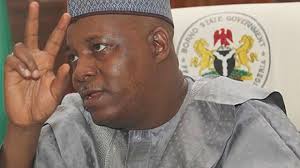
REFLECTION: ‘Why I endorsed Professor Zulum to succeed me as Borno’s next Governor’
By Kashim Shettima
In the politics of Borno State, at least since 1999, we have had and maintained a tradition in which major stakeholders of a ruling party, expect from an outgoing Governor, a sense of political direction in the choice of a successor. Some people may see this tradition as a form of dictatorship but to many others, politicians with varied experiences, such an honor provides the critical step needed by our party in its transition processes.
In the last couple of days, I have come under intense pressure from many stakeholders insisting that I should anoint a successor. In all discussions, I have maintained one divine statement, which is, only Allah gives power to whom he pleases and at the time He pleases. I, Kashim Shettima am but human, a first amongst equals. I do not and cannot give power. I can only make recommendation based on my own human but informed analysis. Even at that, my recommendation cannot foreclose the fundamental right of any legitimate aspirant to contest the primary election.
We cannot pretend not to be aware that an otherwise leader in our party, the APC, has deliberately created an unnecessary division within its membership in the state. This has led, to borrow from the satirical wisdom of Distinguished Senator Mohammed Ali Ndume, the existence of what is akin to a match between “home based players” in the majority and with local support and a minority “foreign based players”. Four months ago, when we received some fleeing leaders back into the APC fold, I had thought that those who choose to work against the majority have learned lessons. I had expected us to once again, fuse into one indivisible family so that together, we could give our party a direction and confront our opponents as a united force. How wrong I was! Perhaps, I ignored the common saying, that a leopard does not change its spots.
As we all know, we have 21 cleared governorship aspirants, if I am right. I will like to first, place on record, my deepest respect for all aspirants, including those who have joined forces to fight the majority.
Also Read: OF ZULUM, SHETTIMA AND CONFLICT THEORISTS
Some people have tried to make mockery of the sheer number of Borno’s governorship aspirants. To me, the high number only goes to show the enthusiasm, passion and determination of many citizens who want to contribute in the post conflict repositioning of Borno. All our 21 aspirants, I believe, are only eager to build on our modest efforts in order to take Borno to the next level. I salute all of them and I dare say, that all our aspirants have immense qualities which make everyone of them eminently qualified to be the Governor of Borno State especially in ordinary times. However, as we know, Borno is not in ordinary times and regardless, there can only be one Governor at a time.
I would like to say that the task of recommending one aspirant to our stakeholders has more than anything else, tested me. I have faced the test of choosing between my personal interest, my friendships, and my political associations, all on one side and on the other, my conscience and the future of Borno State.
Borno state has seen the darkest side of history. The type we cannot wish for worst enemies. Parents, brothers and sisters, have witnessed first hand, the public and brutal execution of their loved ones. We have lost thousands of persons. Nearly two million persons were displaced. Majority ran for their lives, trekking for miles before arriving different safe destinations. Today, Borno still has citizens displaced in all parts of Nigeria and neighbouring countries. Thousands of children have been turned into orphans after the gruesome murder of their parents, and similarly thousands of women have become widows of the conflict. Wealthy merchants in hundreds of communities have been transformed overnight from prosperity to penury.. Landlords have been turned into hapless tenants, and even among the homeless. Prosperous and economically viable communities were turned to graves and war zones.
Borno has witnessed a long period of gloom and doom.
Our peculiar experiences in Borno State have to my mind, made the task of choosing a potential Governor a difficult one. It was a task, which required and forced me to set aside personal interest and consider the greater interest of our dear state.. Borno is greater than Kashim Shettima and Borno is greater than any one of us.
As Governor from 2011 to date, I can say without any iota of doubt that handling the affairs of Borno State is as complex as steering the affairs of some big countries. The challenges before Borno are more than whatever anyone might imagine.
Making the choice of my potential successor was beyond my thinking alone. Such a choice required a combination of very deep thoughts and wisdom. I therefore had to undertake very extensive consultations. I consulted to extents never reached in the recent political history of Borno State. I have met virtually all the critical segments that make up our dear State. I have held closed-door meetings and had frank and open discussions with our royal fathers and elders. I have visited homes and met with past and serving leaders, party stakeholders and professionals of various fields. I even went as far as employing the services of agents unknown to each other, which I sent to communities across our 27 local government areas to feel the pulses of our citizens. In all my consultations, I created one-on-one atmosphere to get undiluted opinions. I held one on one meeting with public office holders across different levels of Borno. I made sure I was getting the honest opinions of everyone. I was able to collate views as comprehensive as humanly possible. I looked at these views as objectively as possible.
Of our 21 aspirants, if I were to support and hand pick what some people might call any of my closest boys as successor; I most certainly would go for Barrister Kaka Shehu Lawan or Adamu Lawan Zaufanjimba. If, on the other hand, public service is the only consideration, none of the aspirants can be more qualified than our elder statesman, Ambassador Baba Ahmed Jidda. If loyalty to political association is my main consideration, Distinguished Senator Abubakar Kyari has proved unalloyed loyalty to political association with me. If years of sincere and mutual friendship are my main consideration, Distinguished Senator Baba Kaka Bashir Garbai and Alhaji Mai Sheriff are my closest friends amongst all our aspirants. If the consideration is about humility and ability to carry people along, His Excellency Shettima Yuguda Dibal is legendary. I have relationship and so much respect for majority of the aspirants, the likes of Hon. Umara Kumalia, Makinta, name them. In fact, two of the aspirants, Mustapha Fannarambe and Umar Alkali are my relatives. All aspirants have divergent qualities. However, because of the situation we found ourselves, considerations for the next Governor of Borno State requires specific quips tailored to our needs for now.
Also Read: WHY THE RACE FOR SOME POSITIONS ARE CROWDED IN BORNO- Bwala
From the generality of feedbacks, there is no doubt that what will define political debates in Borno’s 2019 Governorship election will be promises in the aftermath of brutal conflict, deaths and destructions of communities.
Everywhere in the world, post conflict rehabilitation, restoration, reconciliation & resettlement are complex, composite & interwoven.
With humility and absolute respect for all aspirants, I will like to say, that from overwhelming opinions and feedbacks, the aspirant with an edge in understanding the Peace-Development Nexus of Borno’s post conflict future is Professor Babagana Umara Zulum, mni.
As Commissioner for Reconstruction, Rehabilitation and Resettlement since September 2015, Professor Zulum has been in the thick of our recovery and restoration efforts. He has proved to understand the dynamics. He has established enormous amount of contact in the post conflict development sector and has earned the confidence of local and international stakeholders. Borno needs such confidence in the task of completing our ongoing social and economic recovery, rebuilding of communities and livelihoods.
For our peculiar situation, Professor Zulum has shown the potentials to take Borno State to the next level. His age is also an advantage. At 48, Professor Zulum is in his prime, he is head & shoulders above me in terms of intellect, capacity & indefatigability. Zulum is without the slightest doubt, a workhorse!
Professor Zulum’s story in the struggles of life will connect with electorates. Professor Zulum fought his way from grass to grace. From a humble beginning, he hawked firewood to finance his education. Through unusual courage and determination, he is today a Professor of Irrigation Engineering and member of the National Institute of Policy and Strategic Studies.
My recommendation of Professor Zulum does not, should not and will not stop any aspirant from contesting in the primaries.
It is easy to market Professor Zulum before delegates. If we succeed, Insha’Allah, we shall go round Borno State, to remind electorates from Gwoza to Chibok, Bama to Damasak, Konduga to Kaga and all over Borno State. We shall tell electorates to look around their neighborhoods and see how Professor Zulum was able to rebuild their communities—from thousands of homes, hundreds of schools to healthcare centres and restored their livelihoods at the risk of being attacked by Boko Haram.
I will remind my fellow APC stake-holders and supporters that the contest before us is one that would require us to be together. No matter our differences, we must recognize that we stand to loose individually and as a group, when we sabotage our efforts. We must set aside our individual interests and preferences for the future of Borno and the benefit of our traumatized citizens.
I will like to express my continued and most profound appreciation to the honour done to me in giving me the task of making consultations on behalf of our great party. I believe I have to the best of my ability, justified the trust you have shown in me. No one would expect a Professor to become a stooge of any Governor. Professor Zulum has always been one with his independent mindset. Fortunately, his mindset has proved to be highly progressive and productive. His records as rector of Ramat Polytechnic in Maiduguri have stood him out as much as what he so much achieved in our ongoing reconstruction and Resettlement of internally displaced persons and refugees affected by the Boko Haram crisis. In choosing Professor, I know, that I will be remembered for placing Borno above my personal interest.
I will forever remain grateful for the overwhelming support and honour I have enjoyed in serving the good people of Borno State.
Allah Ya ba mu nasara!
Signed
Kashim Shettima
September 30, 2018.
REFLECTION: ‘Why I endorsed Professor Zulum to succeed me as Borno’s next Governor’



Troops arrest suspected ISWAP member, recover image of armed men in Borno
By: Zagazola Makama
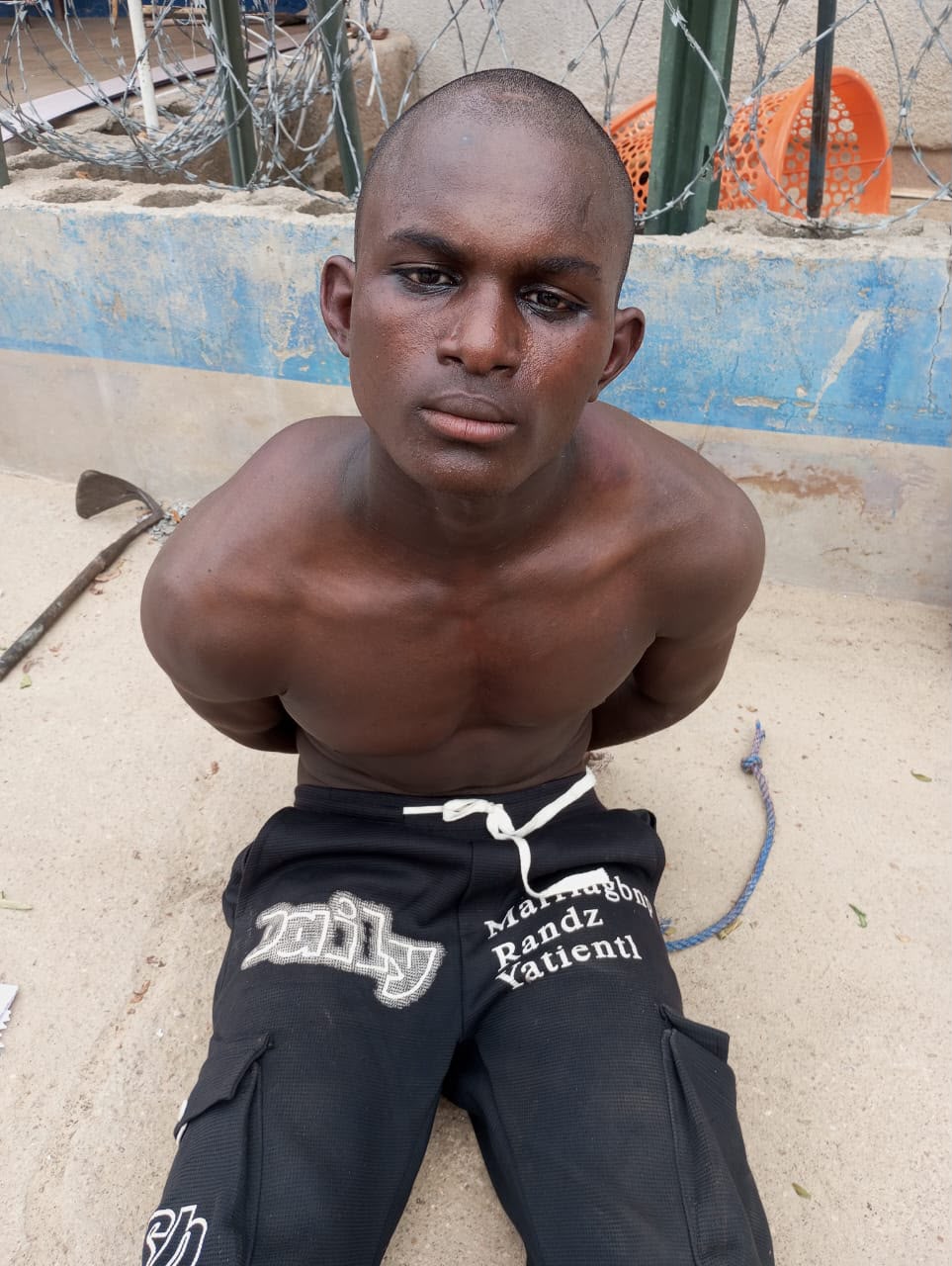
Troops of Operation Hadin Kai, working with members of the Civilian Joint Task Force (CJTF), have arrested a suspected Islamic State West Africa Province (ISWAP) operative in Mairari town, Guzamala Local Government Area of Borno State.
The suspect, identified as Bubba Hamadu, 25, was arrested at about 2:22 p.m. on Monday, Aug. 24, 2026, by troops of Forward Operating Base (FOB) Mairari alongside CJTF members.
According to sources the suspect was subjected to preliminary interrogation following his arrest.
During the process, security personnel reportedly discovered a photograph on his mobile phone showing the suspect alongside unidentified individuals carrying AK-47 rifles.
The discovery raised suspicion about the suspect’s possible links with ISWAP elements operating within the area.
Items recovered from him included one Tecno mobile phone, an umbrella, an arrow, prayer beads, a mirror and an eye drop.
The military said Hamadu had been transferred into the custody of Headquarters Sector 3, Operation Hadin Kai, for further investigation and necessary action.
The arrest forms part of ongoing intelligence-led operations by troops and local security partners aimed at identifying and disrupting terrorist networks operating within the Lake Chad Basin.
Security forces have continued to rely on community-based intelligence, patrols and targeted arrests to identify suspected terrorists and facilitators in areas affected by insurgency.
The military said the general security situation across the theatre remained calm but unpredictable, while troops’ morale and fighting efficiency remained satisfactory.
Troops arrest suspected ISWAP member, recover image of armed men in Borno

Israel Sends Life-Saving Ambulances, Medical Equipment to Nigeria
By: Michael Mike
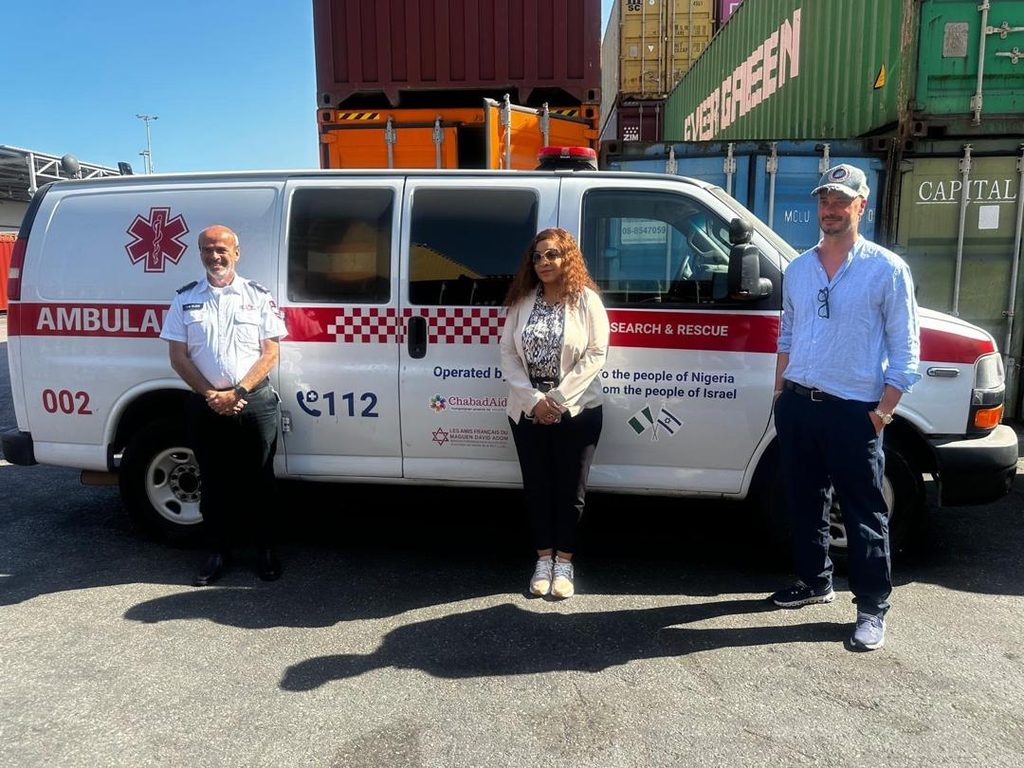
Nigeria’s healthcare and emergency response capacity is set for a boost as Israel has donated a first batch of ambulances, medical equipment and wheelchairs to the country in what officials described as a demonstration of the growing humanitarian and health partnership between the two nations.
The consignment was handed over at the Port of Ashdod, Israel, with Nigeria’s newly appointed Ambassador to Israel, Ambassador Nkechi Linda Ufochukwu, receiving the items on behalf of Nigeria.
The development comes barely three weeks after Ufochukwu formally assumed her diplomatic assignment in Israel, following the presentation of her Letters of Credence to Israeli President Isaac Herzog on August 3. Her appointment has been linked to Nigeria’s renewed efforts to expand cooperation with Israel in healthcare, technology, innovation, agriculture, security and other strategic areas.

The medical donation, facilitated by Magen David Adom (MDA), Israel’s national emergency medical and disaster-response service, comprises fully equipped ambulances, medical devices and mobility aids, including wheelchairs.
The equipment is expected to strengthen emergency medical response and improve access to essential healthcare services, particularly for vulnerable populations and communities where emergency transportation and medical infrastructure remain inadequate.

Receiving the donation, Ambassador Ufochukwu expressed Nigeria’s appreciation to the Israeli Government and Magen David Adom, describing the gesture as an important expression of friendship and solidarity between the two countries.
She said the intervention would contribute to efforts to improve healthcare delivery and emergency response in Nigeria, while providing practical support to hospitals, emergency centres and communities in need.
The ambassador emphasised that the value of the donation went beyond the equipment itself, noting that stronger cooperation in healthcare could provide opportunities for knowledge sharing, technology transfer and the development of more resilient emergency medical systems.
The latest initiative also places healthcare among the practical areas through which Nigeria and Israel are seeking to translate their longstanding diplomatic relationship into tangible benefits for citizens.
Nigeria and Israel have maintained diplomatic relations for decades, with cooperation extending across agriculture, water technology, security, innovation, education and trade. Under the new diplomatic leadership in Tel Aviv, healthcare and technological cooperation have emerged as important areas for closer engagement.
Ufochukwu had, shortly after presenting her credentials, identified healthcare alongside trade and investment, agriculture and food security, technology and innovation, defence and security cooperation, and cultural and people-to-people exchanges as priority areas for her tenure.
The role of Magen David Adom in the initiative is also significant. Established in 1930, the organisation serves as Israel’s national emergency medical, disaster-response and blood-service organisation and operates an extensive emergency response network.
For Nigeria, where road crashes, insecurity, disasters and other emergencies continue to place pressure on already stretched emergency medical services, the availability of properly equipped ambulances can make a critical difference between delayed treatment and timely intervention.
Beyond transportation, modern emergency ambulances serve as mobile treatment units, allowing trained medical personnel to begin stabilising patients before they reach hospitals.
The donation therefore comes at a time when Nigeria is seeking to strengthen its emergency healthcare architecture and move towards a system capable of delivering faster and more coordinated responses to medical crises.
It is also expected to reinforce the humanitarian dimension of Nigeria-Israel relations, particularly as both countries explore practical areas of cooperation that can directly affect the welfare of their populations.
The consignment is expected to be deployed to appropriate healthcare and emergency-response facilities in Nigeria, where the equipment will support patient care, emergency transportation and disaster-response operations.
The handover was witnessed by officials of Magen David Adom, representatives of the Israeli Ministry of Health and members of the Nigerian diplomatic mission in Israel.
For Abuja and Tel Aviv, the initiative represents a shift from diplomatic goodwill to practical cooperation, with life-saving equipment becoming a visible symbol of a relationship increasingly focused on healthcare, innovation and technology transfer.
As Nigeria continues its drive to improve access to quality healthcare, the latest Israeli intervention could provide a foundation for broader cooperation in emergency medicine, medical technology, professional training and disaster preparedness.
The donation consequently offers more than immediate relief: it presents an opportunity for Nigeria to deepen technical collaboration with Israel and build emergency medical systems capable of responding more effectively when lives are at risk.
Israel Sends Life-Saving Ambulances, Medical Equipment to Nigeria
Kidnappers Kill Two Locals, Abduct Doctor and Hakimi’s Wife in Kaduna
By Zagazola Makama
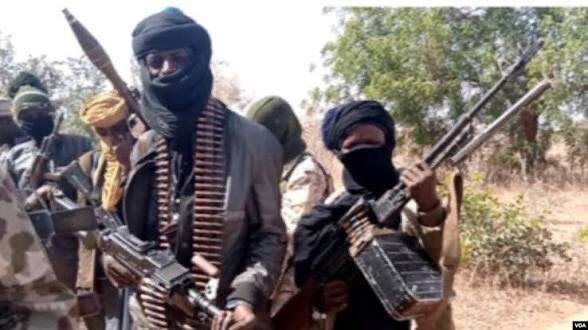
Troops of Operation ENDURING PEACE (OPEP) have launched rescue and offensive operations following the abduction of a medical doctor and the wife of a Hakimi in Sanga Local Government Area of Kaduna State.
The incident occurred at about 7:40 a.m. on Sunday, August 23, 2026, at Abu village, Ninzo Ward, Sanga LGA.
According to a security source, troops of Sector 7, Sub-Sector 71, deployed at Raga General Duty location, responded to a report of the abduction of Dr. Ezekiel Audu and the wife of the local Hakimi.
Preliminary information indicated that the kidnappers opened fire after two local residents confronted them while they were fleeing with the abducted victims.
The two locals were reportedly killed in the attack.
Following the incident, troops immediately initiated rescue and offensive operations based on intelligence pointing to a possible hideout of the fleeing kidnappers.
The troops subsequently moved into the identified area in an attempt to intercept the criminals and rescue the victims.
However, no contact had been established with the kidnappers as of the latest security update.
The military said efforts remain ongoing to locate and rescue the abducted victims and apprehend the perpetrators.
Security forces are maintaining heightened surveillance across the area as the search operation continues.
Kidnappers Kill Two Locals, Abduct Doctor and Hakimi’s Wife in Kaduna

Troops arrest suspected ISWAP member, recover image of armed men in Borno

Troops conduct wet-season clearance patrols across communities in Yobe

Troops intervene as cattle graze on farmlands in Plateau

Roger Federer’s Shock as DNA Results Reveal Myla and Charlene Are Not His Biological Children

THE PLIGHT OF FARIDA

FAILED COUP IN BURKINA FASO: HOW TRAORÉ NARROWLY ESCAPED ASSASSINATION PLOT AMID FOREIGN INTERFERENCE CLAIMS
-
 News2 years ago
Roger Federer’s Shock as DNA Results Reveal Myla and Charlene Are Not His Biological Children
-
Opinions5 years ago
THE PLIGHT OF FARIDA
-
 News1 year ago
FAILED COUP IN BURKINA FASO: HOW TRAORÉ NARROWLY ESCAPED ASSASSINATION PLOT AMID FOREIGN INTERFERENCE CLAIMS
-

 News2 years ago
EYN: Rev. Billi, Distortion of History, and The Living Tamarind Tree
-
 Opinions5 years ago
POLICE CHARGE ROOMS, A MINTING PRESS
-

 ACADEMICS2 years ago
A History of Biu” (2015) and The Lingering Bura-Pabir Question (1)
-

 Columns2 years ago
Army University Biu: There is certain interest, but certainly not from Borno.
-

 Politics1 year ago
2027: Why Hon. Midala Balami Must Go, as Youths in Hawul and Asikira/Uba Federal Constituency Reject ₦500,000 as Sallah Gift
