
News
Revisiting the Malian Attacks and Their Implications for Nigeria

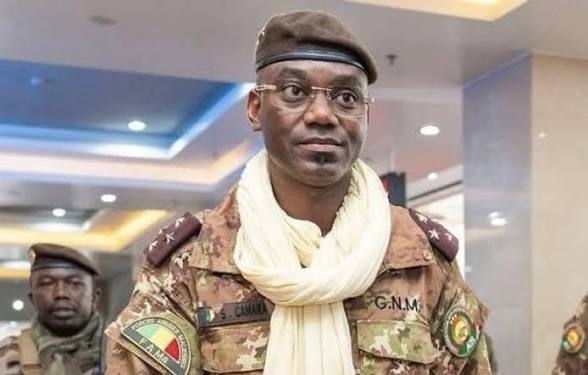
Revisiting the Malian Attacks and Their Implications for Nigeria
By Samuel Aruwan
While traveling between Kaduna, Jos and Kafanchan on Saturday, April 25, 2026, where I spent the night, I followed developments in Mali closely. My keen interest in the unfolding events was shaped by my background as a student of conflict sensitive reporting, which has taught me to pay attention not only to attacks themselves, but also to the statements, signals and patterns that emerge in their aftermath. Reports of coordinated attacks across several locations were troubling enough. As the day progressed, three separate statements emerged, one from ‘Jama’at Nasr al Islam wal Muslimin’, known as JNIM, another from the ‘Azawad Liberation Front’, the FLA, and a third from the Malian Transitional Government.
Taken together, those statements reveal important signals about the changing security landscape in the Sahel and offer lessons Nigeria should not ignore.
The first statement came from JNIM, which openly claimed responsibility for the attacks and publicly acknowledged working with the ‘Azawad Liberation Front’. It said its fighters targeted the Presidency in Koulouba, the Ministry of Defence, Modibo Keita International Airport in Bamako, and military positions in Kati. It also claimed battlefield gains in Mopti, Sevare, Gao and Kidal, describing the Kidal operation as one carried out with the participation of its partners in the ‘Azawad Liberation Front’.
That language deserves close attention. Armed groups do not casually describe one another as partners, especially when they come from different ideological traditions. The choice of words suggests growing cooperation built around shared strategic interests.
The FLA’s own statement removed any uncertainty. It declared that its forces had taken control of Kidal and openly stated that the operation was carried out in partnership with JNIM. It also acknowledged participation in attacks against military positions in Gao under the same coordination.
This was a direct admission of operational cooperation.
The FLA framed its campaign as a struggle for territorial liberation. It accused the Malian military and Russian forces of worsening civilian suffering and called for international political and humanitarian intervention. In doing so, it sought to place its military operations within a wider political contest over the future of Bamako.
Then came the Malian Government’s statement, delivered by Brigadier General Issa Ousmane Coulibaly, Minister of Territorial Administration and Decentralization. The government confirmed that armed terrorist groups carried out complex and coordinated attacks against Kati, Sevare, Gao, Kidal and Bamako, resulting in casualties and injuries, while insisting the attacks were contained and the situation brought under control.
One phrase stands out, complex and coordinated attacks.
That admission points to planning, synchronized movement, communication networks and operational discipline. It suggests armed groups that are learning, adapting and becoming more capable of carrying out simultaneous attacks over wide distances.
The pattern is not entirely unfamiliar. On the night of January 28 into January 29, 2026, armed fighters launched a coordinated assault on Diori Hamani International Airport in Niamey and the adjoining Air Base 101, targeting strategic military assets and critical infrastructure. Similar patterns have also been attempted in Nigeria, including terrorist attacks on military positions in Mallam Fatori.
The difference in Mallam Fatori was the response. Nigerian troops mounted a coordinated and overwhelming counter offensive, neutralised dozens of terrorists, recovered arms and valuable operational enablers, and denied the attackers the momentum they sought. That outcome shows the value of preparedness, sound intelligence, rapid coordination and sustained pressure.
Success in places such as Mallam Fatori must not be treated as an endpoint. It must be consolidated, a point I have consistently made, including in my earlier article, “Nigeria’s Military Victory in Mallam Fatori and the Imperative of Consolidation”.
Recent warnings closer to home make that even more necessary. On April 16, 2026, Premium Times, quoting a leaked internal security memo, reported that terrorist groups were working together and plotting attacks on critical infrastructure between Abuja and neighbouring Niger State. The report drew attention to strategic facilities considered attractive targets because of their symbolic and operational value. I am certain that if there is merit in the leaked memo, Nigeria’s security forces and intelligence agencies will leave nothing to chance.
Read together, events in Mali, Niamey and developments within Nigeria point in one direction. Armed groups across the Sahel are adapting, building links and refining tactics. What is happening across the region is no longer distant from Nigeria’s security reality.
Nigeria has carried a heavy burden in confronting terrorism, and the Armed Forces of Nigeria have made enormous sacrifices in that fight. I speak with conviction on this, having covered conflict as an embedded journalist and later served in public office, accompanying troops to the frontline and witnessing firsthand the courage, discipline and sacrifice that define their service.
That sacrifice must be matched by steady resolve.
Nigeria needs stronger intelligence gathering, tighter border surveillance, closer coordination among security agencies, sustained disruption of illicit arms flows and deeper regional cooperation. Diplomatic differences within West Africa should never weaken collective action against threats that move freely across borders and exploit every gap in coordination.
The warning signs are there. Nigeria must remain vigilant, consolidate recent gains and keep steady pressure on terrorist groups wherever they operate.
Aruwan is a postgraduate student at Ahmadu Bello University, Zaria.
Revisiting the Malian Attacks and Their Implications for Nigeria



Mwaghavul Militia Killed Three herders, Slaughter 36 cattle in unprovoked attack in Plateau
By: Zagazola Makama
Three Fulani herders have been killed and two others reported missing after armed Mwaghavul Militia attacked a group of herders at Alohom community in Sabon Gari District of Mangu Local Government Area of Plateau State.
The attack, which occurred on Saturday, Sept. 12, also resulted in the deaths of 36 cattle, while 12 other cattle sustained gunshot wounds, according to a military situation report obtained by Zagazola Makama.
Troops of Sector 8, Operation Enduring Peace, were alerted after receiving information that herders grazing in the area had come under attack. Soldiers deployed from Sabon Gari immediately moved to the location and found the bodies of three herders.
Military sources said the victims had suffered fatal injuries, while the dead cattle were found with gunshot wounds. The surviving herders told troops that two other members of their group were missing, although efforts to establish their whereabouts were ongoing.
Some Fulani eyewitnesses alleged that the attackers were militia men suspected to be from the Mwaghavul ethnic group in Alohom, Gaude and Mangu Halle general areas.
There were also allegations from some Fulani bystanders that some security personnel from sister agency were sighted around the area during the incident without making efforts to prevent the gruesome killings.
Sources said the allegation was also being investigated. Empty tear-gas canisters were reportedly recovered from the scene, although their circumstances and connection to the attack had yet to be established.
The incident has left the area tense, with troops conducting clearance patrols and dominating the general area to prevent further violence and identify those responsible.
A dangerous cycle
Security sources expressed concern that the attack could trigger the familiar cycle of reprisal violence between communities, particularly in an area where disputes and attacks involving herding communities have previously escalated rapidly.
The killing of three herders, the disappearance of two others and the destruction of livestock could fuel anger within the affected community, while any retaliatory attack could in turn produce fresh casualties.
The military has therefore warned the Fulani community against taking the law into its own hands, urging residents to allow constituted authorities to investigate the incident and bring those responsible to justice.
The situation demonstrates how attacks on civilians in Plateau can quickly move beyond the immediate victims, with the killing of people or livestock potentially provoking revenge attacks against other communities that had no direct involvement in the original incident.
The latest attack has also renewed concerns over what many affected communities perceive as selective condemnation of violence in Plateau State, particularly where victims are from the herder community.
For years, critics have accused The Plateau State Government, youth groups and advocacy platforms in Nigeria of responding more forcefully when attacks affect farming communities, while remaining comparatively muted when herders are killed, their cattle are attacked or their communities come under assault.
That perceived imbalance has become a source of deep resentment among herders and communities who argue that the value of a civilian life should not depend on ethnicity, religion or which community is accused of being the aggressor.
The danger in such selective outreach is that silence after one attack can become fuel for the next retaliation. When victims believe that authorities and influential voices will only speak when violence affects the other side, confidence in official channels weakens and the temptation to seek revenge outside the law grows.
Security officials have repeatedly warned that this cycle is particularly dangerous in Plateau, where a single killing can rapidly generate rumours, mobilise youths and provoke attacks against completely unrelated civilians.
Troops under Operation HARD KNOCK are continuing operations in the area to apprehend the perpetrators and prevent further escalation.
The military said its troops remain deployed across the general area to forestall any breakdown of law and order.
Mwaghavul Militia Killed Three herders, Slaughter 36 cattle in unprovoked attack in Plateau

UBEC, ADSUBEB distribute learning materials to support out-of-school children in Adamawa
Universal Basic Education Commission (UBEC) in collaboration with the Adamawa State Universal Basic Education Board (ADSUBEB) on Friday inaugurated the distribution of learning materials targeting out-of-school children across the state.
Speaking at the event in Yola, Dr Murtala Babayi, Executive Chairman, ADSUBEB appreciated President Bola Tinubu for his administration’s commitment to repositioning the education sector.
According to Babayi, no child should be left behind is not just a policy direction by the Tinubu administration but also a powerful national promise that we are proud to uphold today.
Babayi also commended the efforts of the first lady, Oluremi Tinubu for her advocacy for the welfare, dignity, and education of children especially the most vulnerable.
He said the commitment has become a beacon of hope and a source of inspiration to many across the country.
The Chairman said that the challenge of out-of-school children is not merely an educational issue but a social, economic, and moral concern that demands urgent and collective action.
“Every child out of school represents a dream deferred, a potential untapped, and a future at risk.
“Today, through this initiative, we are taking a bold and practical step to change that narrative”, he said.
According to him, the learning materials being distributed are more than just books and supplies but tools of transformation, instruments of empowerment, and symbols of renewed hope.
Babayi urged parents, guardians, and community leaders to ensure the children remain in school as a collective responsibility to secure their future.
Hajiya Amina Tafida, Zonal Coordinator UBEC in Adamawa, said the distribution of the materials is a collective effort to improve the quality of teaching and learning in public basic education schools across the state.
She said learning materials remain one of the most essential learning resources in any education system.
“When placed in the hands of learners and teachers at the right time and in the right quantity, they improve learners’ understanding, and support better academic performance.
“Today’s distribution is therefore a direct investment in the future of our children and the development of our state”, she said.
Tafida urged education secretaries across the state to ensure that the materials were distributed judiciously and strictly according to the enrollment figures of each school within their local government areas.
Mr Rimoh Jeremiah, Education Secretary of Demsa Local Government who spoke on behalf of his colleagues, assured judicious distribution of the materials and usage for maximum results.
The learning materials includes books, pencils, bags and Sandals among others.
UBEC, ADSUBEB distribute learning materials to support out-of-school children in Adamawa

ITF, NECA Train 30 Entrepreneurs to Turn Business Stories into Economic Value
…Eight-week programme targets weak business positioning, funding challenges
By: Michael Mike

The Industrial Training Fund (ITF) and the Nigeria Employers’ Consultative Association (NECA) have trained 30 entrepreneurs to overcome one of the major obstacles to business growth— the inability to communicate their value, attract customers and position their ventures for funding.
The intervention, delivered through an eight-week skills and storytelling programme, was designed to help business owners move beyond possessing technical or creative abilities to effectively presenting their products, services and economic contributions.
At the graduation ceremony in Abuja, the Executive Director of M-Search Creative Hub and M-Search Media, Zainab Salami, said the programme was conceived after the organisers identified storytelling and business positioning as persistent challenges among entrepreneurs.
She said many business owners had viable products and services but struggled to explain their value to customers, clients and potential investors, limiting their ability to grow and secure funding.
“When we were picking the participants, we wanted to make sure that we picked business owners. And we know that one issue they had was telling their stories and positioning themselves for customers, for clients and also for funding,” Salami said.
She explained that the training was intended to equip participants with practical tools to articulate their business journeys, demonstrate their impact and communicate the value they create for the economy.
“We wanted to make sure that they were able to position themselves, also talk about their value, talk about how they are also creating impact for the economy and make sure that they are able to tell their stories and become better storytellers that can improve Nigerian economic value basically,” she said.
The programme’s focus on storytelling reflects a growing recognition that business survival depends not only on the quality of a product or service but also on the ability of entrepreneurs to make their ventures visible, credible and attractive to the market.
Salami disclosed that the training featured mentors from Nigeria, the United Kingdom and South Africa, who provided practical frameworks on storytelling and business development.
She added that finance experts, including PhD holders in the field, also helped participants understand how businesses could combine profitability with value creation and economic impact.
“We had mentors across board. We had mentors from United Kingdom, we had from South Africa that were experts in storytelling and they were able to give them practical frameworks for them to be able to properly articulate what they were doing, their businesses,” she said.
Salami further explained that the financial component was designed to help participants appreciate the relationship between sustainable business growth, profit and wider economic contributions.
“We even had people from finance, PhD holders from finance that they were able to let them understand how your business can create impact, make profits and also provide value,” she added.
According to her, the organisers received 100 applications but selected only 30 participants to preserve the specialised nature of the programme and ensure that beneficiaries received adequate attention and practical guidance.
“We had 100 people, we had 100 applications but because we wanted to make it niche, we picked 30 participants for this cohort,” Salami said.
Representing the ITF-NECA Technical Skills Development Programme (TSDP), the Training Manager, ITF Modern Skills Training Centre, Abuja, Hayatu Abubakar Tamgol, said the initiative formed part of efforts to build a pool of skilled Nigerians capable of contributing meaningfully to the economy.
Tamgol said the ITF’s mandate was to encourage skills acquisition within Nigeria’s industrial and commercial sectors and develop indigenous manpower capable of meeting the changing needs of the economy.
“The Industrial Training Fund is a human resource development organisation that is empowered to encourage the acquisition of skills within the nation’s industry and commerce with a view to generate a pool of indigenous manpower sufficient to meet the needs of the economy,” he said.
He added that the organisation was committed to developing the competencies and capabilities of Nigerians to ensure that the country had sufficient skilled manpower to manage its economy.
“And in order to do that, the ITF needs to develop competencies and capabilities of Nigerians so as to have an adequate pool of Nigerians that are capable to manage the nation’s economy,” Tamgol said.
The ITF official said the organisation’s participation in the programme was aimed at ensuring that the skills acquired by youths and entrepreneurs could translate into employment, self-reliance and economic development.
Expressing satisfaction with the outcome of the training, Tamgol said the participants had demonstrated that the programme achieved its learning objectives.
“I’m coming in at the graduation time, and from what I have seen, and from the success stories that these trainees were able to share, I’m very satisfied that learning has taken place here,” he said.
He said both the ITF and NECA were satisfied with the results recorded during the programme, adding that skills development remained essential to tackling youth unemployment and promoting self-employment.
Tamgol also disclosed that the ITF, under the leadership of its Director-General, was implementing its flagship Skills of Artisans programme, which provides Nigerians across the country with opportunities to acquire practical skills.
He said the initiative was designed to enable beneficiaries to become self-employed, earn a livelihood and contribute to a stronger economy.
“The ITF presently, under the leadership of our Director General, is implementing her flagship programme, which is the Skills of Artisans programme. And this programme is giving Nigerians the opportunity, all over the country, for them to acquire skills, so as to be able to be self-employed, for them to be able to take care of themselves, so that Nigeria will be better off,” he said.
For one of the beneficiaries, the training offered a new understanding of the importance of deliberately communicating her personal and business journey.
She said the programme taught her that entrepreneurs risk losing control of their narratives when they fail to explain their experiences, vision and value effectively.
“Because one of the things we learn in class is, if you don’t tell your story, somebody will tell it for you and they will tell it wrongly,” she said.
The participant added that technical or creative ability alone was insufficient if customers, partners and investors remained unaware of the person behind the work or the value being created.
“One thing that I’ve learned is that no matter how good you are as a creative, if nobody knows you, it’s like a waste,” she said.
She said the training had equipped her to communicate her work more effectively, explain her vision and position her creative enterprise for greater visibility.
“For me now, learning the story now, I’m not just being a creative, I’m able to let people know what I do and my vision as a whole,” she added.
ITF, NECA Train 30 Entrepreneurs to Turn Business Stories into Economic Value

Mwaghavul Militia Killed Three herders, Slaughter 36 cattle in unprovoked attack in Plateau
Troops rescue kidnapped traders, recover stolen vehicle, arrest suspects in Katsina

Talata Mafara Attack: ISN Demands Intelligence Overhaul, Special Courts to Crush Banditry

Roger Federer’s Shock as DNA Results Reveal Myla and Charlene Are Not His Biological Children

THE PLIGHT OF FARIDA

FAILED COUP IN BURKINA FASO: HOW TRAORÉ NARROWLY ESCAPED ASSASSINATION PLOT AMID FOREIGN INTERFERENCE CLAIMS
-
 News3 years ago
Roger Federer’s Shock as DNA Results Reveal Myla and Charlene Are Not His Biological Children
-
Opinions5 years ago
THE PLIGHT OF FARIDA
-
 News1 year ago
FAILED COUP IN BURKINA FASO: HOW TRAORÉ NARROWLY ESCAPED ASSASSINATION PLOT AMID FOREIGN INTERFERENCE CLAIMS
-

 News2 years ago
EYN: Rev. Billi, Distortion of History, and The Living Tamarind Tree
-
 Opinions5 years ago
POLICE CHARGE ROOMS, A MINTING PRESS
-

 ACADEMICS3 years ago
A History of Biu” (2015) and The Lingering Bura-Pabir Question (1)
-

 Columns3 years ago
Army University Biu: There is certain interest, but certainly not from Borno.
-

 Politics1 year ago
2027: Why Hon. Midala Balami Must Go, as Youths in Hawul and Asikira/Uba Federal Constituency Reject ₦500,000 as Sallah Gift
