
Opinions
THE PLIGHT OF FARIDA


THE PLIGHT OF FARIDA
By: Eugenia Abu
It has often bothered me that twenty-six years after we arrived in Beijing and committed to the 12 critical areas of concern for the advancement of women worldwide that we are still talking about those things that undo us as humanity and disempower us as a nation. I was a proud delegate to the Beijing 1995 women’s conference and even then, conversations about giving women a fair and equitable chance to contribute to National development were met with all manners of obstacles but as Maya Angelou famously declared “Still we arise”.
As a people, Nigerians are some of the most amazing in the world, big hearted and giving, communal and charitable and brilliant to boot. But our realisation of the role our women can play in pushing the nation forward still needs a lot of work. And therein lies the plight of Farida. I tell Farida’s tale in order for us to understand the power of supporting any process that improves the plight of women in our land.
Yusuf could hear the groaning from his room. He turned severally on the bed, unable to sleep. His wife Maimuna sat up; her nightshirt drenched in sweat. It was difficult for her to sleep as well.
It was two years ago that they had agreed to marry off Farida, their first daughter to a man, about her father’s age. Farida had expressed her displeasure and told anyone who cared to listen that she wanted to go to school. Moreover, she did not like her suitor. But no one was listening. Her Father told her she would grow to like her suitor and explained further that it was for the family. Do you want us to die in penury? Farida looked at her mother with pleading eyes. Her mother nodded consent and looked the other way. Now Farida’s husband, Mallam Musa did not want her anymore and the reason is clear. She was now an expendable individual, used and dumped.
The groans from her room were sad and harrowing. At barely Sixteen, Farida was just a child and went on to carry a child. The entire process overwhelmed her fragile biology and destroyed her life. At the hands of a traditional birth attendant with little knowledge, she suffered the worst tear, lost her baby and ended up with Vesico Vagina Fistula. This is an opening that develops between the wall of the bladder and the vagina which leads to continuous leakage of urine. And incontinence This abnormal opening can be caused by injury from prolonged labour, surgery or an infection. This injury caused by prolonged labour often occurs in young brides carrying a baby which their bodies are not capable of dealing with.
In addition to the Fistula, Farida also suffered physical violence at the hands of her husband leaving a deep scar on her leg that caused her enormous pain. Add this to the stigma, the foul smell around her and the pain of no longer going to school. At only 18, Farida’s life has been cut short, school abandoned and the money the parents got from the marriage is not enough for her treatment and repair. Today as Farida wails, her parents look at each other in regret. Vivid as this story is. It is all true! Who will help Farida and how can we stop this violence against our daughters?
Also Read: Pres. Buhari Transmits 2022 Supplementary Budget To House…
Worldwide one in three girls are subjected to one form of gender-based violence or the other but Nigeria has the third highest cases of child marriage and female genital mutilation numbers, globally. Statistics show that 8% of girls aged between 15-18 are married before age 15, while 43% are married before age 18, in addition, girls between 0-14 years have undergone one form of genital mutilation or another. This is a huge deprivation of girls who end up like Farida, unable to help themselves or contribute to society. How many people in Nigeria really want their daughters to end up like Farida? I doubt that there are. Scholars and Medical Doctors, Stamakos et al, writing in the Indian Journal of Surgery in 2014 capture the most important factors contributing to Obstetric Fistulas in Africa as socio-economic.; early marriage, low social status for women, malnutrition and inadequately developed socio-economic infrastructures especially in poor areas. They put the prevalence of the disease in Africa and narrow it in Nigeria to the North.
I am particularly concerned that domesticating international instruments concerning women’s issues in Nigeria continue to face obstacles that are difficult to fathom.
The proposed Gender and equal opportunities Bill has made far reaching provisions for people like Farida and her parents. One of these provisions is found in section 13 captured under the title, the rights of persons living in rural communities. This section provides for education for both men and women living in rural areas particularly women to enable them to benefit directly from social security programmes and obtain all types of training and education both formal and informal would include that relating to functional literacy and opportunities through employment and self-employment. This section also provides for access to agricultural credit and loans, marketing facilities and appropriate technology for women. Can we all see the benefit to Farida’s parents and how Farida’s sad condition could have been avoided? No one would have needed to trade a girl-child for money.
The proposed Bill also advocates 18 years as the age of consent for marriage I believe that if things are in place as they ought to be, Farida would today be the pride of her family, marry well, assist her family because she is educated and contribute to a healthy family life which in turn leads to National development.
No nation succeeds by using only half of its resources. Nigerian women are 49.32% of the population. Times are changing and our nation must also change with the times. We must retain those parts of our culture that are positives and begin to do away with the ones that bring sorrow to people like Farida and her family. Women hold half the sky. Let us support our wives, daughters, aunt’s and friends. It is possible if we pass the Gender and Equal Opportunities Bill.
*Eugenia Abu is a Nigerian broadcast journalist, writer, poet and media consultant. She writes in from Abuja
THE PLIGHT OF FARIDA



ELECTIONS CAN WAIT: SAVING NIGERIA FROM COLLAPSE MUST COME FIRST
By Jonathan Ishaku
The rush toward the 2027 general elections amid Nigeria’s worsening security crisis raises a fundamental question: what is the purpose of an election in a state that is progressively losing control over significant portions of its territory, struggling to protect its citizens, and increasingly unable to perform the most basic functions of governance?
This is an uncomfortable question in a country that has spent the last quarter century celebrating electoral democracy. Yet it is a question that must be asked if Nigeria is to avoid drifting toward national catastrophe. Elections are important.
Democracy is important. Constitutional government is important. But none of these can survive if the state itself collapses. The first duty of any government is not the conduct of elections; it is the preservation of the nation.
Today, Nigeria confronts a multifaceted security crisis whose cumulative impact has long surpassed the threshold of conventional warfare. The nation is simultaneously battling Boko Haram and ISWAP in the North-East, bandit terrorism in the North-West, genocidal and ethnic-cleansing violence in parts of the North-Central, separatist violence in the South-East, organized kidnapping networks across large sections of the federation, and various forms of criminal violence that continue to undermine public authority.
The statistics are sobering. Millions of Nigerians remain internally displaced. Thousands are killed annually. Entire communities have been emptied. Farmers abandon their fields for fear of attack.
Schools have been shut down. Rural economies have collapsed across vast areas. Millions of children remain out of school. Food insecurity continues to deepen. In many places, armed non-state actors impose taxes, regulate movement, dictate local affairs, and exercise more practical authority than the government itself.
Yet, amid this gathering storm, the political class appears consumed by preparations for the next election cycle.
Political alignments are being negotiated. Campaign structures are being assembled. Alliances are being forged and broken. Presumably, too, resources that ought to be directed toward the preservation of national security are increasingly diverted toward political calculations. The nation appears to be preparing for an election while simultaneously losing an existential war.
This contradiction is both dangerous and unsustainable.
History provides useful guidance. Nations facing existential threats have often suspended normal political processes in order to focus on survival. During the Second World War, the United Kingdom postponed the general election due in 1940.
Parliament repeatedly extended its mandate because national leaders understood a simple reality: there can be no meaningful democratic contest while the nation is engaged in a struggle for survival. The priority was victory, not politics.
More recently, Ukraine has postponed elections because of its war with Russia.
Although Ukraine’s situation differs significantly from Nigeria’s, the underlying principle remains the same. Elections, however desirable, must not be allowed to undermine national survival.
Indeed, there is a strong argument that the impact of Nigeria’s crisis on governance is, in some respects, more devastating than that of Ukraine’s war.
Ukraine faces a clearly defined external enemy. The war has strengthened national cohesion and mobilized society behind a common purpose. Despite enormous destruction, the Ukrainian state remains largely intact. Government institutions continue to function. National identity has been reinforced.
The population understands the nature of the threat.
Nigeria’s challenge is far more complex and arguably more corrosive. The threats are multiple, dispersed, decentralized, and deeply embedded within society’s divisions. There is no single battlefield. There is no single enemy. There is no unified national mobilization. Instead, violence gradually hollows out state authority from within.
Entire communities negotiate directly with bandits because they have lost confidence in state protection. Families sell assets to pay ransom. Farmers pay levies to armed groups to gain access to their own farmlands. Local governments become little more than administrative shells. Schools are abandoned. Health facilities cease functioning. Roads become unsafe. Economic activities shrink.
This is not merely insecurity. It is the progressive erosion of sovereignty.
For this reason, the argument that Nigeria is not technically at war misses the point entirely. War is not defined solely by the presence of foreign armies crossing national borders. The real test is the degree to which violence threatens the state’s monopoly of force, disrupts governance, destroys livelihoods, displaces populations, and undermines national stability.
By these measures, Nigeria has long crossed the threshold of a war-like situation.
The consequences extend far beyond the battlefield. Education has become one of the major casualties. Thousands of schools have been closed or rendered inaccessible by insecurity. Millions of children have been denied learning opportunities. Entire generations risk growing up with limited education, diminished prospects, and increased vulnerability to recruitment by criminal and extremist groups.
Agriculture, the backbone of rural livelihoods, has also suffered enormously. Large areas of fertile land are either inaccessible or cultivated under constant threat. Farmers are kidnapped, murdered, or forced to pay protection levies to armed groups. The resulting decline in agricultural productivity contributes directly to food shortages and rising prices, worsening poverty and hunger.
The economic implications are equally severe. Investors avoid insecure regions. Businesses close or relocate. Transport costs rise because of insecurity along major routes. Public funds that should support development are diverted toward emergency security operations.
Communities already struggling with poverty sink deeper into deprivation.
The governance implications are perhaps the most troubling. In many areas, the state is no longer perceived as the primary guarantor of security. Citizens increasingly rely on self-help arrangements, vigilante groups, traditional structures, or direct negotiations with armed actors. Whenever citizens lose confidence in the state’s ability to protect them, the legitimacy of the state itself begins to erode.
Against this backdrop, the insistence that elections must proceed according to schedule deserves closer scrutiny.
Those who advocate an unalterable electoral timetable often invoke democracy. However, elections and democracy are not identical concepts. Elections are merely one instrument of democratic governance. By themselves, they do not guarantee accountability, competence, security, development, or justice.
Nigeria’s experience since 1999 demonstrates this reality. The country has held multiple election cycles, yet insecurity has increasingly worsened, poverty has deepened, infrastructure remains inadequate, corruption persists, and public confidence in institutions continues to decline. Elections have become routine, but good governance remains a challenge.
The assumption that another election, conducted amid escalating insecurity, will somehow solve these problems is therefore highly questionable. Neither Peter Obi nor Atiku Abubakar has the magic wand.
On the contrary, there is reason to fear that the electoral process itself may become compromised. How can elections be considered fully credible when millions of citizens are displaced from their homes? How can voter registration be effectively conducted in areas under the influence of armed groups? How can election officials safely access vulnerable communities? How can citizens freely participate when fear dominates daily life?
More importantly, how can political leaders devote the necessary attention to national security when they are simultaneously engaged in an intense struggle for political survival?
The pursuit of power inevitably consumes time, energy, resources, and attention. Elections magnify these distractions. Instead of concentrating on defeating insurgents, dismantling kidnapping networks, restoring rural security, and rebuilding state authority, political elites become preoccupied with campaigns, alliances, nominations, endorsements, defections, and electoral arithmetic.
The nation cannot afford such a diversion at this critical moment.
What is required instead is a comprehensive national security emergency. The federal government should seriously consider suspending partisan political activities and declaring a state of emergency focused specifically on national security and state preservation. Such a measure must be constitutionally grounded (involving the National Assembly), time-bound (specific timeframe), and subject to oversight. Its purpose would not be to destroy democracy but to preserve the conditions necessary for democracy to survive.
The entire nation should be mobilized toward a single objective like all nations at war: restoring security and recovering state authority. National resources should be redirected toward intelligence gathering, border security, protection of critical infrastructure, rural stabilization, and support for conflict-ravaged communities. The military, police, intelligence agencies, traditional institutions, local communities, and civil society must be integrated into a coordinated national effort.
This is not an argument against democracy. It is an argument for saving democracy from the consequences of state failure.
A nation does not exist because it conducts elections. Rather, it conducts elections because it exists as a functioning state. When the existence of that state is under severe threat, preserving it becomes the highest democratic responsibility.
The lesson from Britain in 1940 and Ukraine today is not that elections are unimportant. It is that there are moments in the life of a nation when survival must take precedence over political competition.
Nigeria may have reached such a moment.
History will not judge President Bola Tinubu by whether he held an election on schedule. History will judge him by whether he still a nation left to hold that election.
Jonathan Ishaku wrote in from Plateau.
ELECTIONS CAN WAIT: SAVING NIGERIA FROM COLLAPSE MUST COME FIRST
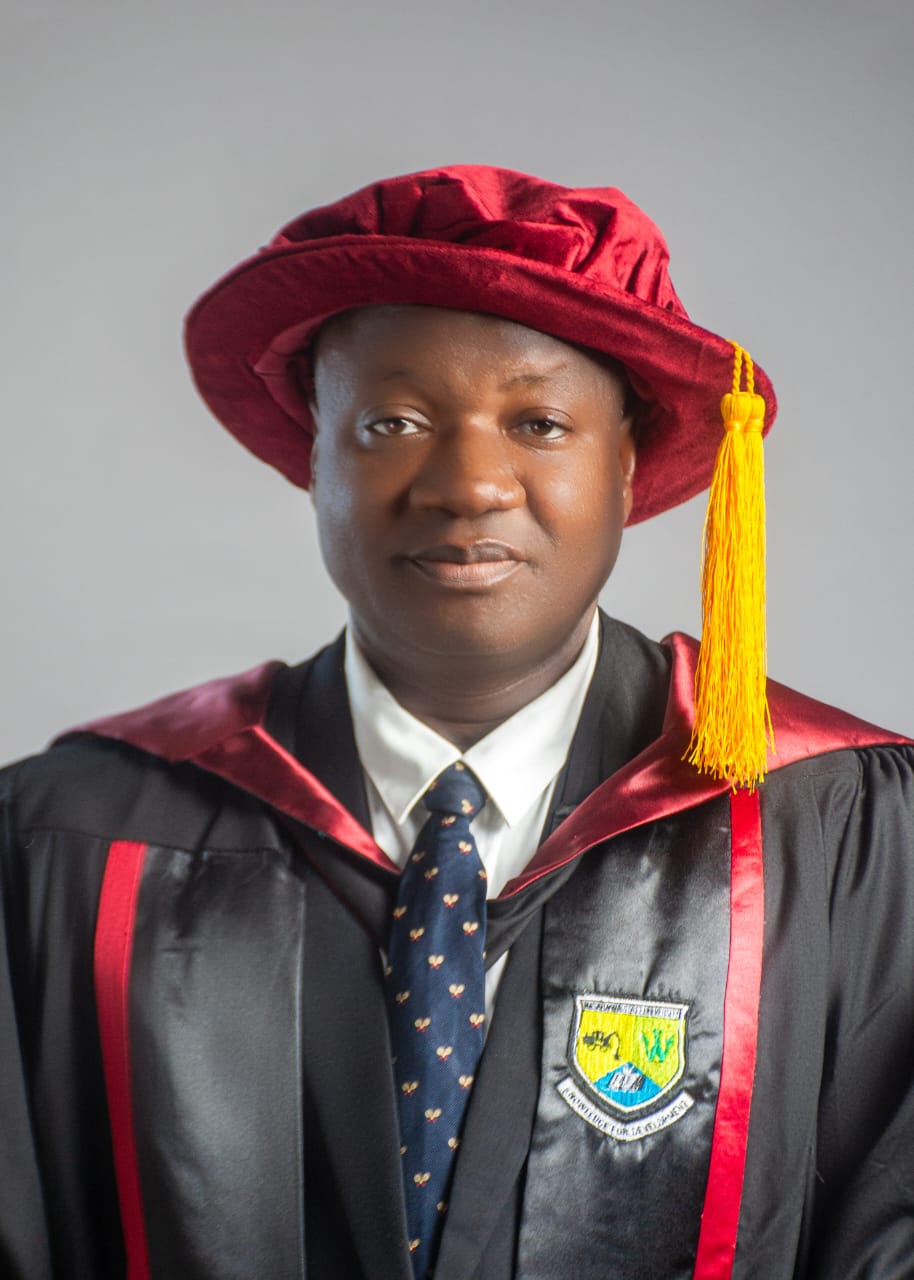
Nigeria Is Innovating. But Who Will Ensure No One Is Left Behind?
By: Michael Mike
A wake-up call to Science Journalists as innovation hubs prepare to open new frontiers
Nigeria is building the labs. But an important question remains: who will translate the science?
Across the country, a quiet transformation is underway. Innovation hubs are emerging spaces where ideas are tested, collaboration is nurtured, and solutions are imagined.
Initiatives such as the Mine Tech Innovation Hub, hosted at Nasarawa State University, Keffi and supported by UNDP under the leadership of Ms. Elsie Attafuah, are preparing a new generation to move research beyond theory and into real-world application. These hubs represent more than infrastructure; they embody ambition, creativity, and the promise of inclusive growth.
This is not just progress. It is possibility.
Yet at the heart of this transformation lies a critical challenge: while Nigeria’s innovation ecosystem is expanding, there remains a significant gap in translating scientific knowledge into accessible and actionable understanding. In many cases, solutions remain largely within laboratories and classrooms, while the communities they are meant to serve continue to grapple with persistent challenges.
The issue is not a lack of innovation.
The gap is translation.
Nigeria stands at a crossroads. With growing research capacity, a vibrant youth population, and increasing institutional support, the country has the potential to become a leader in innovation across Africa.
However, innovation in isolation does not guarantee impact. Without deliberate efforts to communicate and contextualize knowledge, breakthroughs risk remaining invisible, inaccessible, and ultimately underutilized.
As these hubs evolve into powerful ecosystems of growth and inclusion, a crucial question emerges: will innovation reach the people it is meant to serve—or will it remain out of reach and without impact?
This challenge directly affects progress toward SDG 9, which emphasizes industry, innovation, and infrastructure. Achieving these goals requires more than generating ideas; it requires ensuring that those ideas are understood, embraced, and applied in ways that improve lives.
This is where science journalism steps in as a gamechanger.
Innovation does not scale through technical language alone. It scales through understanding—through storytelling that connects research to reality. A community cannot engage with what it does not understand. A policymaker cannot act on what is not clearly communicated. An investor cannot support what has not been made visible.
Science journalists are not merely reporters; they are translators of complexity. They serve as bridges between break through and society, transforming abstract concepts into meaningful narratives that people can relate to and act upon.
Without this bridge, innovation risks being admired in principle but ignored in practice.
To close this gap, Nigeria must act deliberately, with all stakeholders treating science journalism as a strategic priority within the innovation ecosystem.
Further efforts to enhance access, training, and engagement for science journalists could significantly strengthen the impact of innovation initiatives
Storytelling is not an add-on or an afterthought—it is infrastructure.
Strengthening science communication within innovation ecosystems can enhance the translation of breakthroughs into accessible knowledge for communities, policymakers, and investors.
Nigeria’s path to innovation is now a reality unfolding.; it is an emerging force in the present. The systems are forming. The ideas are maturing. The opportunities are expanding. Yet progress alone is not enough.
If the story is not told, the impact will not be felt.
Science journalists must rise—not tomorrow, but now.
Because inclusive development is not achieved simply by creating solutions. It is achieved when those solutions are understood, embraced, and allowed to reach every corner of society. Otherwise, we risk building innovations that never leave the lab—and futures that never arrive.
About the Author
Dr. Nelson Okoko is a Geologist, Development Communication Specialist, science journalist, and social and behavioural communication expert based in Abuja. His work focuses on participatory communication and innovation ecosystems for inclusive development. He is the proponent of the Collaborative Sovereign Communication Theory (CSCT), a forward-looking framework redefining communication dynamic in development practice.
Nigeria Is Innovating. But Who Will Ensure No One Is Left Behind?
Opinions
OPINION: Operation Safe Corridor Is Not a Reward for Terrorists — It Is One of Nigeria’s Most Strategic Weapons Against Terrorism

OPINION: Operation Safe Corridor Is Not a Reward for Terrorists — It Is One of Nigeria’s Most Strategic Weapons Against Terrorism
By: Zagazola Makama
For more than a decade, Nigeria’s battle against terrorism has largely been viewed through the lens of military operations, troop deployments, air strikes, and battlefield victories. However, as the conflict evolved, security experts increasingly recognised that military force alone could not permanently end violent extremism.
This reality gave rise to Operation Safe Corridor (OPSC), a Federal Government initiative designed to complement kinetic operations through deradicalisation, rehabilitation, and reintegration of eligible low-risk individuals associated with terrorist groups.
Since its establishment, the programme has generated both support and controversy. While proponents describe it as a strategic security tool that weakens terrorist organisations from within, critics argue that it appears to offer opportunities to former insurgents while victims continue to struggle with the consequences of conflict.
The debate raises a fundamental question: can a country defeat terrorism through force alone, or must it also create pathways for disengagement and rehabilitation?
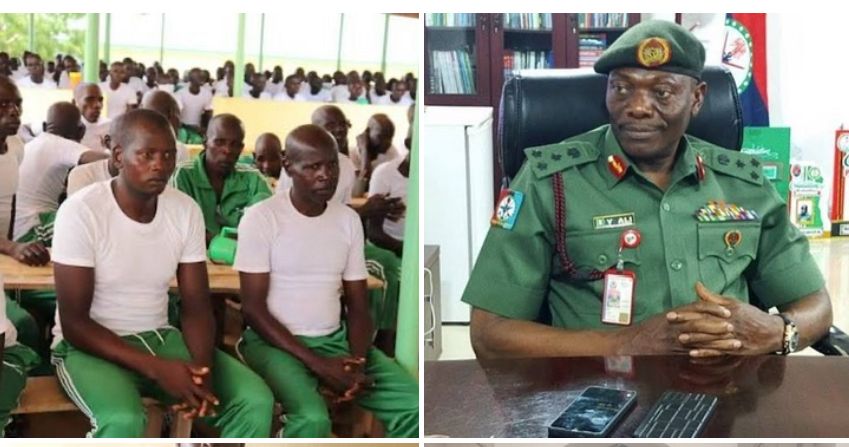
Recent explanations by the Coordinator of OPSC, Brig.-Gen. Yusuf Ali, provide useful insights into the rationale behind the programme and the challenges it seeks to address.
Contemporary counterterrorism strategies across the world increasingly combine military operations with non-kinetic interventions. The reason is simple. Insurgencies are sustained not only by weapons and fighters but also by recruitment networks, ideological indoctrination, economic desperation, coercion, fear, and social dislocation. Even successful military campaigns may struggle to achieve lasting peace if these underlying drivers remain unaddressed. Operation Safe Corridor was established to address this gap.
According to programme officials, it provides a controlled process through which eligible low-risk individuals who voluntarily surrender can be screened, rehabilitated, and prepared for reintegration into society. The underlying logic is that every successful defection reduces the manpower available to terrorist organisations while simultaneously encouraging others to abandon violence.
Perhaps the most persistent misconception surrounding OPSC is the belief that it serves as an open-door policy for all insurgents. Available information suggests otherwise. Officials insist that admission into the programme follows extensive intelligence profiling and legal review. Individuals who voluntarily surrender are subjected to screening by military and civilian intelligence agencies before their cases are reviewed by the Federal Ministry of Justice.
The Ministry determines who qualifies for rehabilitation and who should face prosecution under existing legal frameworks. This distinction is critical because public concerns often stem from fears that individuals responsible for serious crimes are simply being released back into society. The programme coordinator maintains that only individuals assessed as low-risk and legally eligible are admitted into the rehabilitation process.
For years, critics have reduced the complex national security programme into simplistic slogans. They call it “a reward for Boko Haram.” They describe it as “pampering terrorists.” Some even falsely claim it is a recruitment channel into the military. These accusations may generate applause on social media, but they disintegrate when closely examined.
The truth is that most of the loudest critics of Operation Safe Corridor have never visited the centre, studied its structure, legal framework, operational processes, or strategic objectives. They react emotionally to a conflict that has caused immense suffering, but emotion is not a substitute for security policy.
The reality is that Operation Safe Corridor is not an act of sympathy toward terrorists. It is an instrument of war. And it may be one of the most important non-kinetic weapons Nigeria has ever deployed against violent extremism.
Nigerians must understand that it is not an amnesty programme, pardon, compensation scheme, reward for terrorism, or a recruitment pathway into security agencies. It is a voluntary programme.
Contrary to popular belief that only Boko Haram members are rehabilitated, not everybody associated with terrorist organisations who enters Operation Safe Corridor comes from the North-East. There are Igbos from the South-East, Yorubas from the South-West, and individuals from other ethnic groups enrolled in the programme.
Additionally, those captured on the battlefield in the North-East do not automatically qualify. Those with prosecutable offences do not automatically qualify. Those assessed as high-risk do not qualify. Those involved in serious criminal activities can face prosecution.
This distinction is critical. Operation Safe Corridor does not decide who enters the programme. The Federal Ministry of Justice does. That fact alone destroys one of the biggest misconceptions surrounding the initiative.
One of the strongest arguments against Operation Safe Corridor is the claim that terrorists simply walk into the camp and are forgiven. Nothing could be further from the truth.
Before admission, individuals undergo extensive profiling involving military intelligence, civilian intelligence agencies, security services, legal authorities, psychologists, and health professionals. Their backgrounds are examined, their activities are investigated, their risk levels are assessed, and their legal status is reviewed. Only after this process are recommendations made.
The programme operates within a multi-agency framework involving more than seventeen Ministries, Departments, and Agencies. This means decisions are not taken by one commander, one agency, or one institution. They are subjected to scrutiny from multiple stakeholders.
Those found to have prosecutable cases can be sent for trial. Those categorised as low-risk may be referred for rehabilitation. This is not leniency; it is classification, and every serious counterterrorism system in the world relies on classification.
The most important question left unanswered is this: if there is no pathway out of terrorism, why would anyone surrender? One basic reality is that a terrorist organisation is weakened not only when fighters are killed. It is weakened when fighters abandon the organisation, as every surrender reduces its manpower, operational capability, intelligence-gathering capacity, and recruitment potential.
This is where Operation Safe Corridor and the Borno Model, an initiative of Borno state government become strategically important. The programmes creates a credible exit route. And that exit route has helped generate hundreds of thousands of surrenders over the years.
Every surrendered individual represents one less fighter available to conduct attacks, plant IEDs, gather intelligence, transport logistics, recruit new members, or support terrorist operations. In military terms, this is attrition from within.
Based on figures repeatedly cited by military authorities and reports on the deradicalisation programme, the number of Boko Haram/ISWAP members and their families who surrendered through the combined non-kinetic approach involving the Borno Model and Operation Safe Corridor has grown significantly over the years.
In 2018, when the window of opportunity was announced, the military reported that 146 Boko Haram members had voluntarily surrendered under Operation Safe Corridor. By 2019, authorities said over 1,370 fighters had surrendered, with some transferred into rehabilitation programmes.
Following the death of Boko Haram leader Abubakar Shekau in 2021, mass defections accelerated, with thousands of fighters and family members laying down their arms. Thousands of people trapped in the Sambisa Forest were able to escape.
In January 2023, the Chief of Defence Staff disclosed that more than 83,000 insurgents and their family members had surrendered. By 2025, military authorities updated the figure to approximately 120,000–129,000 Boko Haram/ISWAP fighters and family members who had surrendered.
For example, in 2026, Defence Headquarters stated that while over 300,000 terrorists and associated persons had surrendered over a decade across the North-East, only 2,615 ex-combatants had undergone rehabilitation under Operation Safe Corridor, with 2,016 graduating from the programme.
It is impossible to understand Nigeria’s recent gains against insurgency without acknowledging the role played by this mechanism. One of the biggest mistakes made by those opposing Operation Safe Corridor is assuming everyone associated with terrorist groups joined voluntarily. The reality is far more complicated.
It is important to note that those who surrendered include fighters, farmers, women, children, and other trapped populations who emerged from insurgent enclaves, not only active combatants.
Military authorities have consistently explained that only a low-risk fraction of the surrendered population qualifies for the formal Operation Safe Corridor deradicalisation programme after screening, profiling, and legal review.
Thousands of individuals were abducted, forced into service, married against their will, recruited as children, coerced through threats, and trapped by circumstances. Many women found within insurgent camps were themselves victims. Many children born within terrorist-controlled territories never chose that environment.
In the Sambisa Forest, there were dozens of villages with people trapped by terrorists. In Gwoza, there are still thousands of people trapped within terrorist enclaves. In the Lake Chad Tumbuns, many farmers and fishermen were trapped in ISWAP-controlled areas. Sometimes they became collateral victims during attacks on terrorist enclaves. Many foot soldiers were not ideological extremists.
Research cited by programme managers indicates that more than 60 percent of foot soldiers in extremist groups are not primarily driven by ideology. Many were coerced or manipulated, with threats of death if they attempted to escape.
A serious nation cannot treat all these categories identically. That is why modern counterterrorism relies on differentiation.
Another myth is that participants simply spend a few months relaxing before returning home. Again, the facts suggest otherwise.
The clients spend several months undergoing rehabilitation. During this period, extremist interpretations are challenged by trained scholars. Participants are exposed to alternative teachings that reject violence and promote lawful coexistence.
Years of conflict leave deep psychological scars. Counselling addresses trauma, fear, guilt, anxiety, behavioural conditioning, and emotional instability. Participants receive practical skills training designed to support lawful livelihoods.
Clients learn about citizenship, lawful conduct, and responsibilities within society.
The rehabilitation programme increasingly focuses on changing behaviour, addressing trauma, and creating alternatives to violence rather than attempting to achieve ideological transformation alone. Within OPSC, rehabilitation reportedly includes religious reorientation, psychosocial support, vocational training, civic education, behavioural assessment, and skills acquisition.
The objective is to help participants disengage from violence and develop the capacity to function productively within society.
One challenge in evaluating deradicalisation programmes is determining what success actually means. Is success measured by the number of people processed through the programme, by the number who do not return to violence, or by broader security outcomes?
Officials point to several indicators. On the other hand, some high-risk or captured terrorists have been detained for seven to eight years in Giwa Barracks and Kainji while prosecution of their cases continued.
Officials at the Joint Investigation Centre located at Giwa Barracks, Maiduguri, said it has so far investigated about 1,450 terrorism-related cases, while over 500 Boko Haram terrorists were subsequently convicted by the Federal Ministry of Justice in Kainji, Niger State.
The Commander of the facility, Brig.-Gen. Yusuf Audu, who disclosed this while outlining the structure, operations, and reforms of the multi-agency detention and investigation centre supporting counterterrorism efforts in the North-East, said the facility remains central to Nigeria’s fight against Boko Haram and ISWAP insurgents.
He disclosed that “recently, the centre moved over 500 suspects for trial, most of whom were convicted and are serving various jail terms,” adding that the development reflects improved coordination among security and justice institutions handling terrorism cases.
The existence of Operation Safe Corridor and the Borno Model is believed to have contributed to the surrender of over 300,000 individuals to Nigerian troops over time. Some of the rescued or surrendered victims have been reunited with their families by the Borno State Government, while Operation Safe Corridor has so far graduated more than 2,600 individuals from the programme since inception.
From a strategic perspective, these figures suggest that the programmes may be helping to reduce the pool of active fighters available to extremist groups, as every surrender represents not only one less combatant on the battlefield but also a potential source of intelligence and a signal to others that exit options exist.
Nevertheless, experts caution that long-term outcomes remain the most important measure.
The true test lies in whether reintegrated individuals remain peaceful, productive, and accepted within their communities years after completing rehabilitation.
Critics often portray Operation Safe Corridor as some bizarre Nigerian experiment. It is not. Comparable programmes exist worldwide. Somalia has implemented disengagement initiatives for defectors from Al-Shabaab. Colombia developed reintegration systems following the FARC conflict. Many countries facing insurgencies rely on combinations of military pressure and rehabilitation frameworks.
Consequently, acceptance of former associates of terrorist groups is often difficult. Many victims understandably question why resources appear to be directed toward former combatants while communities continue to struggle. This perception has become one of the most significant public relations and policy challenges facing OPSC.
Programme managers acknowledge the concern and argue that sustainable peace requires a balance between supporting victims and rehabilitating eligible returnees.
According to officials, victim-centred initiatives are increasingly being incorporated into broader stabilisation efforts, including psychosocial support and community recovery programmes.
Another major issue is funding. According to OPSC officials, Defence Headquarters and a few non-governmental organisations currently bear much of the financial responsibility for activities within the rehabilitation camp.
However, reintegration, the phase widely regarded as the most important remains significantly underfunded. Successful reintegration requires transportation, livelihood support, community sensitisation, monitoring, mentorship, and follow-up services.
Without adequate resources, there is a risk that individuals may return to environments characterised by unemployment, social rejection, and economic hardship.
Such conditions can undermine rehabilitation gains and increase vulnerability to relapse. Therefore, experts argue that the long-term success of OPSC will depend not only on what happens inside the camp but also on the strength of support systems available after graduation. International experiences also show that weak reintegration systems can undermine otherwise successful rehabilitation efforts.
This lesson appears particularly relevant to Nigeria, where economic challenges and community mistrust remain significant obstacles.
As insecurity continues to evolve, Operation Safe Corridor itself is undergoing transformation. Authorities are expanding deradicalisation infrastructure beyond the North-East, including facilities in Zamfara and planned structures in the North-Central region.
There is also increasing emphasis on victim support, community ownership, strategic communication, and livelihood programmes.
Ultimately, the debate surrounding OPSC reflects a broader question confronting modern counterterrorism efforts worldwide.
Can security be achieved solely through military victories, or does lasting peace require addressing the human dimensions of conflict?
While opinions remain divided, one point appears increasingly clear.
Military operations may remove immediate threats, but sustainable peace often depends on what happens after the guns fall silent. In that regard, Operation Safe Corridor represents Nigeria’s attempt to navigate the difficult balance between security, justice, rehabilitation, and long-term stability.
Whether the programme ultimately achieves its objectives will depend not only on the quality of rehabilitation within the camps but also on the nation’s ability to support victims, strengthen communities, and sustain reintegration long after participants leave the programme.
Zagazola Makama is a Counter-Insurgency Expert and Security Analyst in the Lake Chad Region.
OPINION: Operation Safe Corridor Is Not a Reward for Terrorists — It Is One of Nigeria’s Most Strategic Weapons Against Terrorism

Troops Neutralise Suspected Kidnapper While Attempting Escape in Plateau

Kashim Shettima: Of Betrayal, Power, and Survival.

ELECTIONS CAN WAIT: SAVING NIGERIA FROM COLLAPSE MUST COME FIRST

Roger Federer’s Shock as DNA Results Reveal Myla and Charlene Are Not His Biological Children
THE PLIGHT OF FARIDA

FAILED COUP IN BURKINA FASO: HOW TRAORÉ NARROWLY ESCAPED ASSASSINATION PLOT AMID FOREIGN INTERFERENCE CLAIMS
-
 News2 years ago
Roger Federer’s Shock as DNA Results Reveal Myla and Charlene Are Not His Biological Children
-
 News1 year ago
FAILED COUP IN BURKINA FASO: HOW TRAORÉ NARROWLY ESCAPED ASSASSINATION PLOT AMID FOREIGN INTERFERENCE CLAIMS
-

 News2 years ago
EYN: Rev. Billi, Distortion of History, and The Living Tamarind Tree
-
 Opinions4 years ago
POLICE CHARGE ROOMS, A MINTING PRESS
-

 ACADEMICS2 years ago
A History of Biu” (2015) and The Lingering Bura-Pabir Question (1)
-

 Columns2 years ago
Army University Biu: There is certain interest, but certainly not from Borno.
-

 Politics1 year ago
2027: Why Hon. Midala Balami Must Go, as Youths in Hawul and Asikira/Uba Federal Constituency Reject ₦500,000 as Sallah Gift
-

 Opinions2 years ago
Tinubu,Shettima: The epidemic of economic, insecurity in Nigeria
