
Feature
The Reunification of China is the Aspiration of the People and An Irresistible Historical Trend-On the Occasion of the Designation of Commemoration Day of Taiwan’s Restoration

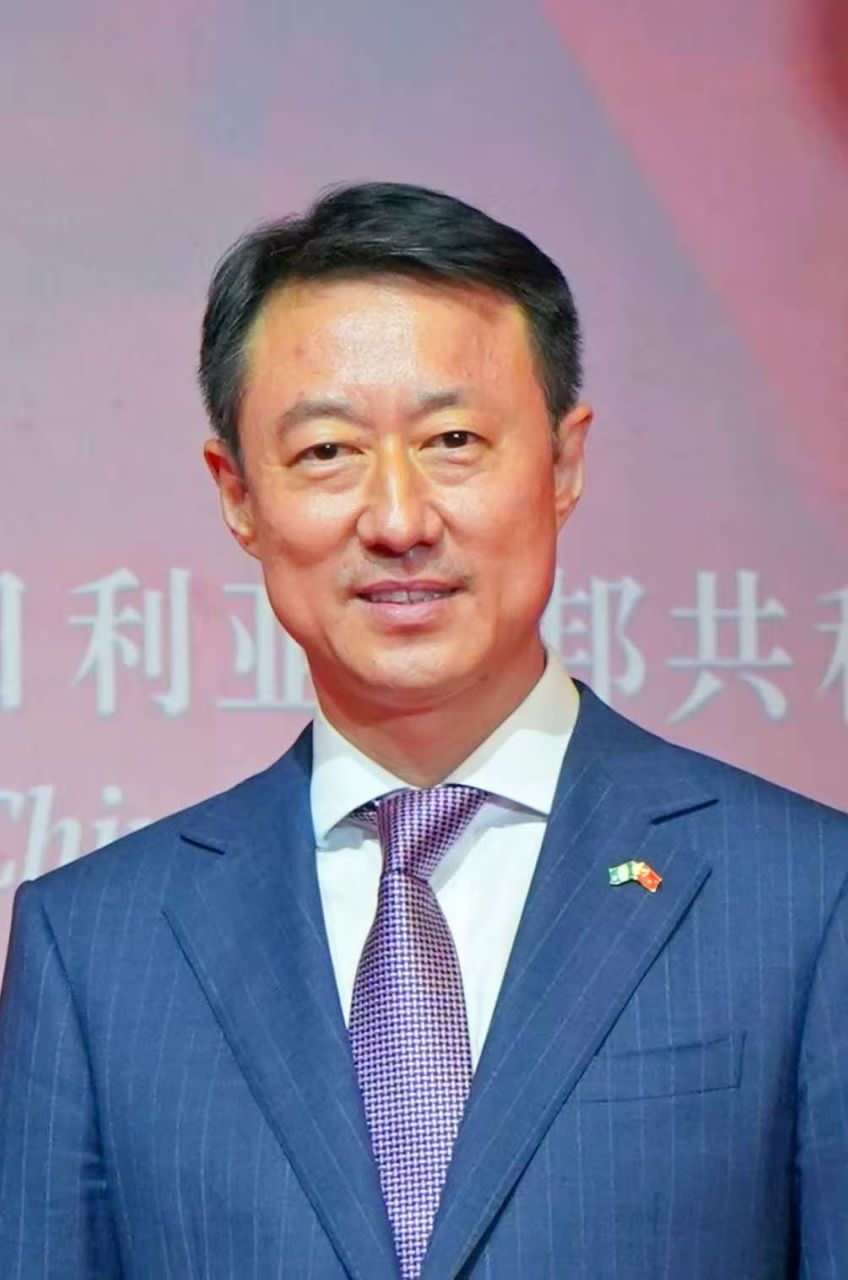
The Reunification of China is the Aspiration of the People and An Irresistible Historical Trend-
On the Occasion of the Designation of Commemoration Day of Taiwan’s Restoration
By: H.E. Yu Dunhai, Chinese Ambassador to Nigeria
October 25 may appear to be an ordinary day on the calendar, but for the entire Chinese nation, including our Taiwan compatriots, it carries a profound and distinctive significance.
On October 24, 2025, China’s national legislature adopted a decision in accordance with the Constitution,officially designating October 25 as the Commemoration Day of Taiwan’s Restoration. This decision has been warmly embraced by people on both sides of the Taiwan Strait. It not only reflects the unwavering commitment of all Chinese people to uphold the one-China principle, safeguard national sovereignty and territorial integrity, but also gives voice to the shared aspirations of all the Chinese people at home and abroad, including our Taiwan compatriots. This significant move will undoubtedly inspire people across the Taiwan Strait to carry forward the traditions of patriotism and the great spirit of the War of Resistance against Japanese Aggression, with the aim of achieving the complete reunification of the motherland and the great rejuvenation of the Chinese nation.
80 years ago, the Chinese people achieved a great victory in the Chinese People’s War of Resistance Against Japanese Aggression and the World Anti-Fascist War after 14 years of arduous and bloody struggles. The historic moment has witnessed Taiwan’s return to the motherland. On October 25, 1945, the ceremony to accept Japan’s surrender in the Taiwan Province of the China war theater of the Allied powers was held in Taipei. The Chinese government proclaimed that “As of today, Taiwan and the Penghu Islands have officially been reincorporated to China’s territory, and all lands, people and administrative affairs therein have been placed under Chinese sovereignty.” From that point on, Taiwan and the Penghu Islands returned to China’s sovereign jurisdiction.
Taiwan compatriots were freed from the shackles of colonial rule and joyfully celebrated their return to the motherland. The restoration of Taiwan to the motherland is a major outcome of the Chinese people’s victory in the War of Resistance against Japanese Aggression and the World Anti-Fascist War. It is an important part of the post-war international order and a historical fact enshrined in the Cairo Declaration and the Potsdam Proclamation, and must never be distorted or denied.
54 years ago, the Chinese government ushered in the historic moment of restoring its lawful seat in the United Nations after 22 years of resolute struggle against hegemonism and power politics. On October 25, 1971, the 26th Session of the United Nations General Assembly adopted Resolution 2758 by an overwhelming majority, deciding to restore all rights of the People’s Republic of China in the United Nations and recognizing the representatives of the Government of the People’s Republic of China as the only legitimate representatives of China to the United Nations. Once and for all, UNGA Resolution 2758 resolved, politically, legally and procedurally, the issue of the representation of the whole of China, including Taiwan, in the United Nations and other international institutions. It also made it clear that there can only be one seat representing China to the United Nations. No issue exists regarding the so-called “two Chinas” or “one China, one Taiwan”.
The One-China Principle embodied by UNGA Resolution 2758 has become an unshakable international consensus and a fundamental norm governing international relations. A total of 183 countries, including Nigeria, have established and developed diplomatic relations with China on the basis of the One-China Principle. The Taiwan authorities under the Democratic Progressive Party, in collusion with external forces, deliberately distort and challenge the One-China Principle and Resolution 2758, trumpeting the fallacy that Taiwan’s status is undetermined. This not only challenges China’s national sovereignty and territorial integrity, but also undermines the authority of the United Nations and the post-WWII international order. It is an absurd and dangerous attempt to turn back the wheel of history. No foreign interference with the One-China Principle shall be tolerated. No individual or force attempting to interfere in China’s internal affairs or distort UNGA Resolution 2758 will ever succeed.
Nigeria has consistently adhered to the One-China Principle and worked with China to uphold the authority of UNGA Resolution 2758 since the establishment of its diplomatic relations with China in 1971. During President Tinubu’s state visit to China last year, Nigeria reaffirmed in the Joint Statement its firm commitment to the One-China Principle, its opposition to any form of “Taiwan Independence” or interference in China’s internal affairs, and its firm support for all efforts made by the Chinese government to achieve national reunification. Over the past year, China-Nigeria relations have entered a fast track of development, with fruitful results in practical cooperation. Our two countries firmly support each other in safeguarding their respective national sovereignty and territorial integrity, and jointly promote prosperity and development. The building of a China-Nigeria community with a shared future has achieved tangible results, benefiting the peoples of both countries.
The Reunification of China is the Aspiration of the People and An Irresistible Historical Trend-
On the Occasion of the Designation of Commemoration Day of Taiwan’s Restoration


Feature
General Chris Musa, Hi-tech Fencing of Nigerian Porous Borders and the Foolish Pride of Sowore
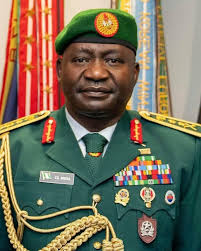
General Chris Musa, Hi-tech Fencing of Nigerian Porous Borders and the Foolish Pride of Sowore
By: Bodunrin Kayode
This is like a distraction to my daily routine in Maiduguri but there was no way my binoculars could miss the recent unnecessary rant of Yele Sowore who dared to demonize one of the warriors of the “hadin kai” theatre General Chris Musa by calling him a “foolish” man simply because he rightly suggested that we need a fence to protect residents from our known and unknown enemies. A high tech fence that can even compete with what the Israelis have against their known enemies. I told myself I had to leave whatever I was doing to defend the General and the Borno people. And to correct the ignorant impression he has painted with such misplaced comments.
Reading such despicable bile coming from someone who is not in touch with the trauma of Borno residents and has never visited even the capital city of Maiduguri spells volume about a man who wants to be the Commander in Chief of the armed forces yet so ignorant about Nigeria. He sounded so daft in his presentation that one begins to wonder if indeed he was educated as he claims to be. He actually spoke as if he was paid to do so because nothing happens in the vacuum in Nigeria these days.
You are very wrong Yele
Let me educate him on why this fence will help our war Commanders in the operation Hadin Kai especially if the contract would be given to military engineers who will build with one hand and handle weapons for protecting themselves with the other hand. This is because no civilian contractor will be safe enough to take such a big risk meant to stop insurgents to cross cross as they will.
Borno is the only State sharing massive borders with three African countries. Chad, Niger and Cameroon. That places the State in a very critical situation when it comes to the management of intelligence and warding off the criminals related to the 16 year old lingering insurgency war. It puts our Intel agencies at a vulnerable defensive state rather than proactive position of strength to help the military.
And indeed, like several other countries have done to protect their people, hi-tech fences were built with sentry towers to ward off external aggressors. In our case, those enemies of state who will get to terrorist cells in Libya, Mauritania and even the Magreb region to train and return with standby mercenaries to kill, steal and destroy the existence of our people. They have been doing it since 2009 and will not stop till General Chris Musa succeeds in positioning a memo that will sail through the national executive council for the first phase of the fence building spree to commence.
I watched Sowore vomit so much gibberish recently about General Chris Musa that i wonder if he knows that he can never rival the pedigree of the Minister of defence. He should equally know that he is just a confused brat in terms of pedigree compared to the towering image General Musa has built for himself. Sowore therefore is not qualified to de-market the Minister for any reason at all under the sun. He is rather the “foolish” one using his language, that needs to apologize to Gen Musa for talking out of point. How much will it cost to build the Israeli type of fence even if we must get it from the stolen commonwealth EFCC and ICPC are recouping daily for government?
Yele’s lack of focus and failed Presidential ambitions
Sometimes I wonder if we as Africans don’t believe in reverencing our role models rather than spending time firing arrows of the Pull Him Down syndrome (PHD) against them out of foolish pride and envy. That Yele contested for the position of President on the platform of an obscure party does not mean he is qualified to hold the political position of councillor even in his state Ondo. He should go start at the level of councillor to see how acceptable he is before daring to want to be our Commander in Chief which he will never get.
He even had the audacity to call General Musa “foolish man”. I don’t blame him, its because talk is always free in Nigeria. If not, that people like him give unnecessary importance to themselves even without electoral value who would have known him even as an ordinary ilaje boy. How on earth do you demonize a man who is fighting to save his country from eminent collapse so we do not have a repeat of what happened in Afghanistan here. A situation where after a long generational fight of asymmetric warfare, the Americans had to leave the county for their very enemies, the Taliban to take over the reigns of government.
I used to think Omoyele had some grits around his persona but it is obvious he is just a confused empty barrel fit for the noise he makes around himself.
Sowore who has never held a political position in his life should know that right thinking people in Nigeria do not take him serious because of the lack of focus in his pattern of activism. I wonder why anyone would think building a fence like other countries faced with terrorism is a stupid idea when he has not come to Borno for an informed survey on the matter. Sowore has really touched the raw nerve of Borno people by de-marketing an actionable idea which most of the informed residents here think will make sense. How foolish he looks now!
Yes Borno needs a hi-tech fence with all the sophistication of technology we can get
You really need to be in Borno state to understand why President Tinubu must build a fence to restrict infiltration of criminals into the country. For as long as there is a sahelian insurgency going on in Mali and Libya, we really need to build that fence as quickly as possible. Mali alone has a coalition of two groups liked to ISis and Al-qaeda while Libya is equally polluted because they have a massive power vacuum created after the death of Gaddafi. From Mali, fighters are passed through Niger into our territory.
For the information of Yele, Saudi Arabia built a fence to stop Iran long time ago from having incursions into their territory and today they can sleep with their two eyes closed. The Saudi Kingdom started the 900km fence against terrorists from Iran in 2014 and are trying to fence the entire country against extremists bent on bringing them to their knees. Pakistan equally has a 2,600 km fence with Afghanistan to prevent smuggling and religious extremism caused by incursions. Many countries with similar challenges are thinking about it so why should Nigeria be different? At least 40 countries have constructed security fences around their borders to avoid extremists infiltrating into their communities since 9/11. America isn’t exempted either.
So what is Sowore talking about? As far as I am concerned , he does not live in Borno and is not qualified to know what is biting the residents on ground. Someone should tell Sowore to stop that foolish rant he started against a solid professional like Minister Musa because it is an unsellable and unwinnable campaign. The proposed fence will generate over 5000 jobs and we in Borno are waiting for it.
Bodunrin Kayode writes in from Maiduguri
General Chris Musa, Hi-tech Fencing of Nigerian Porous Borders and the Foolish Pride of Sowore
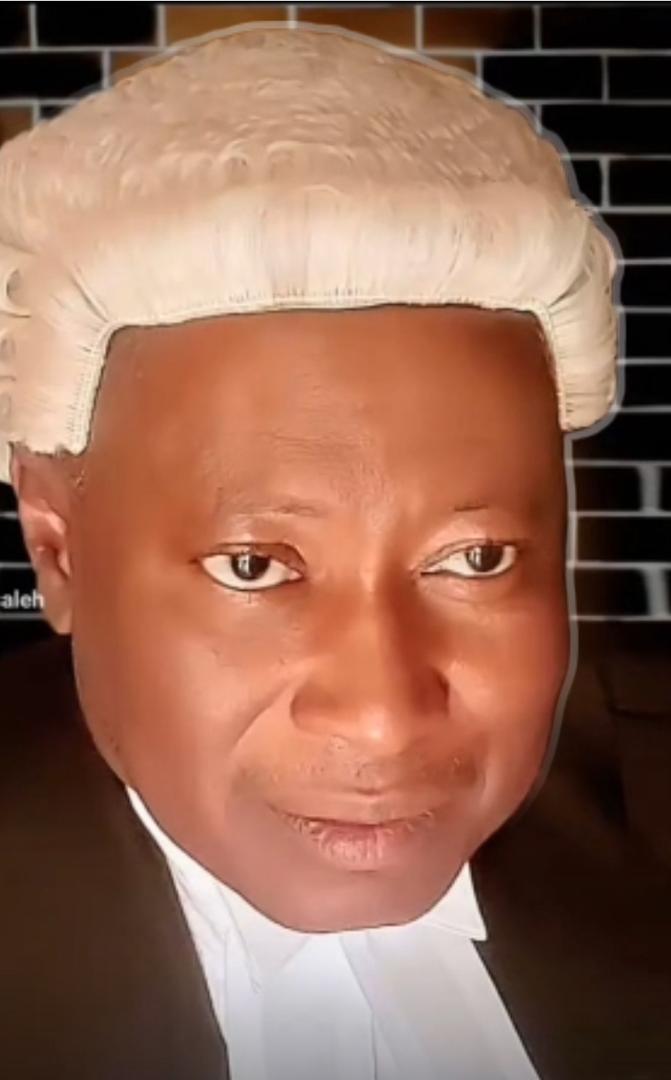
Public Institution Should be Run with Integrity, Efficiency and Vision- Justice Umar
By: Michael Mike
Honourable Justice Mainasara Ibrahim Kogo Umar, Chairman of the Code of Conduct Tribunal of Nigeria, embodies discipline, depth, and judicial conviction. A man of impeccable character and tested integrity, he is widely regarded as dependable in moments that demand courage and clarity. With decades of experience in legal practice, public service, and institutional leadership, he stands as one who has truly “been there and done that.”
His record reflects landmark contributions—both individually and collectively—shaping conversations around accountability, constitutional responsibility, and anti-corruption enforcement. Justice Kogo Umar represents a compelling study in legal pragmatism, institutional reform, and principled leadership.
In this interview with a select group of journalists, he speaks candidly about reforming the Tribunal, strengthening anti-corruption mechanisms, and his broader vision for justice and public governance in Nigeria, excerpts:
Question: Good afternoon sir, can we meet you?
My name is Mainasara Ibrahim Kogo Umar. I hail from Katsina State. I come from an aristocratic background, but over the course of my journey in unionism and activism, I became deeply influenced by Marxist ideals.
I have been involved in many spheres of life, particularly activism and legal practice. I have fought against corruption for several decades. Currently, I serve as the Continental President of the African Transparency Front, among other responsibilities.
I was appointed Chairman of the Code of Conduct Tribunal on 13th July 2024, after 23 years of leaving the organisation. I previously served here as a young lawyer and later as Chief Registrar of the Tribunal before pursuing other endeavours.
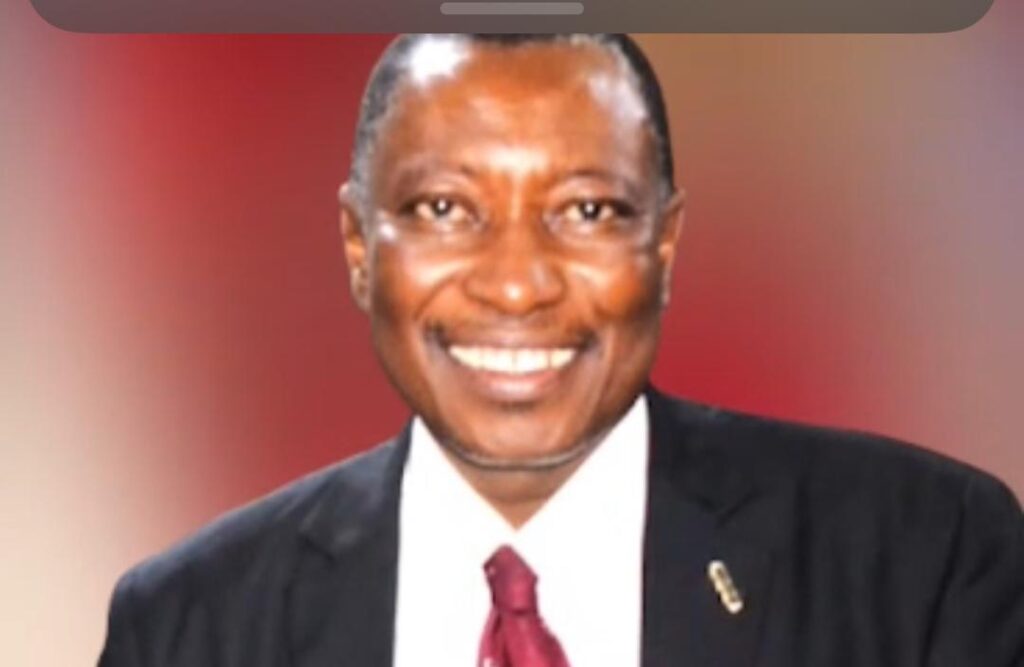
By God’s infinite mercy, I have returned as Chairman of the Code of Conduct Tribunal. My appointment generated some controversies because the President deemed it necessary to revitalise this very important institution.
The Code of Conduct Tribunal is the only judicial institution specifically mentioned in the Constitution under the Fifth Schedule. It tries public officers on matters relating to breaches of the Code of Conduct, abuse of office, illicit enrichment, ostentatious living beyond legitimate earnings, and issues of ethics and morality.
As Chairman, one must be above board. You are the arbiter who determines the personal and official conduct of public officers.
The Constitution clearly defines who public officers are. They include the President of the Federal Republic of Nigeria, the Vice President, ministers, members of the National Assembly, members of the diplomatic corps, service chiefs, judges—including Justices of the Supreme Court and the Chief Justice of Nigeria—members of academia in public institutions, and anyone at the federal, state, or local government level who earns a salary from public funds.
The Tribunal’s mandate is not restricted to asset declaration alone. Even if you declare your assets beyond three months after assuming office, you are already in breach. Subsequently, every four years—whether appointed, elected, or employed—it is mandatory to declare your assets. This serves as a benchmark to determine whether your acquisitions align with your legitimate earnings.
Public officers are not permitted to engage in private business or trade while in office, except farming. If you wish to enter politics, you must resign before contesting.
Upon appointment, the Chairman of the Tribunal can only be removed under three circumstances:
1. Upon attaining the age of 70;
2. By voluntary resignation;
3. For misconduct or breach of the Code of Conduct, in which case both chambers of the National Assembly must invoke their constitutional powers to remove the Chairman.
The Senate, on 20th November 2024, exercised this power and removed the former Chairman on grounds of abuse of office and misconduct. On 26th November 2024, the House of Representatives affirmed the removal with an overwhelming majority.
On 20th February 2025, the Secretary to the Government of the Federation presented my appointment letter, backdated to 20th November 2024. I was subsequently inaugurated by the President and sworn in on 7th October 2025.
What was the state of the Tribunal when you assumed office, and what are the current challenges and your vision?
When I assumed office, the Tribunal was in a very poor state. Staff morale was low, infrastructure was dilapidated, there was no electricity or water supply, and furniture was grossly inadequate.
I immediately restored electricity and water supply, reactivated boreholes, revitalised transformers, and sought technical assistance. Through outreach to international agencies, we secured computers, laptops, photocopiers, and other equipment.
I restructured the institution by expanding it from three departments to thirteen, aligning it with my vision.
One major vision is to transform the Tribunal into the Code of Conduct and Anti-Corruption Court, in line with Section 15(5) of the Constitution, which mandates the State to abolish corrupt practices and abuse of office. A bill to that effect has passed second reading at the National Assembly. If passed, anti-corruption agencies would prosecute relevant cases here.
How does the Tribunal collaborate with agencies like EFCC and ICPC?
Currently, the ICPC prosecutes at State High Courts, while the EFCC prosecutes at the Federal High Court. However, under the proposed reform, cases involving public officers could be prosecuted here.
This Tribunal operates summary jurisdiction. Before assigning hearing dates, I require lawyers to file all written submissions in advance. After reviewing them, hearings focus on adoption and cross-examination, and judgments are delivered promptly. Ideally, no case should last more than six weeks.
The Constitution prescribes specific penalties, including removal from office, disqualification from public office for up to ten years, and forfeiture of ill-gotten assets. These are without prejudice to other criminal penalties under the law.
We have also created departments for international liaison—including collaboration with Interpol and international courts—and enforcement of judgments.
How do you ensure fairness in high-profile cases?
The Tribunal does not initiate cases. The Code of Conduct Bureau investigates and refers cases, while the Attorney General prosecutes. We handle adjudication.
We do not consider status or public pressure—only facts, evidence, and the law. Decisions are reached collectively by a panel of three judges. Public expectation, institutional responsibility, and the demands of the law must be carefully balanced.
How many cases have been referred since your assumption of office?
I inherited thousands of cases, some dating back over two decades. After discussions with the Bureau, we agreed that only cases within a reasonable timeframe—preferably within three years of occurrence—should be referred to ensure effectiveness.
Currently, we handle between two and five cases weekly. The Bureau determines which cases to refer.
What is your vision for the Tribunal in the next five years?
In the next five years, the Tribunal should be placed on first-line charge to guarantee financial independence. We should expand to at least 36 judges, with judicial divisions across the six geopolitical zones and Abuja.
Funding must increase significantly to support infrastructure, security, and institutional growth.
I have served in public service for 36 years and have never taken illegal money. A significant portion of my earnings has gone to charity. My goal is to reposition this institution as a model of public governance and exemplary leadership.
Within five years, once the institution is fully reformed and functioning optimally, I intend to step aside. I do not wish to remain in office until retirement age. My mission is to rebuild, reposition, and leave behind a strong, sustainable institution.
I aim to demonstrate that public institutions can be run with integrity, efficiency, and vision.
Public Institution Should be Run with Integrity, Efficiency and Vision- Justice Umar
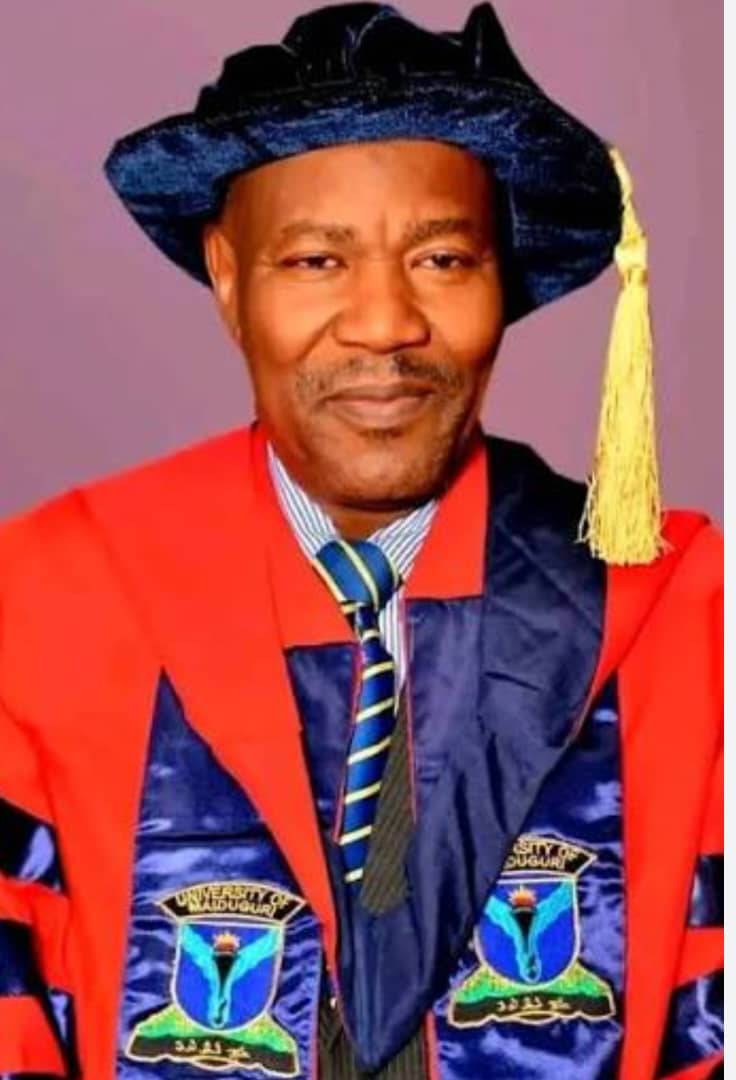
Celebrating the Legendary Malam Umaru A. Pate
By Hamza Idris
Tuesday, February 10, 2026, marks his last day as the Vice Chancellor of the Federal University Kashere, Gombe State.
The world saw him smiling as he bade farewell to the university community, as captured in stories and tributes by those who know him, and carried by multiple print and broadcast media platforms.
In journalism, his tenure at Kashere is what is aptly described as a success story, and his departure can fittingly be termed a glorious exit.
Many of us call him Malam as a mark of reverence because we find it very difficult to look into his eyes and call him Prof. The reason is simple: by the Grace of Allah, he made many of us what we are today.
Malam Pate was not alone in shaping our journey while we were at the Department of Mass Communication, University of Maiduguri (UNIMAID). We also had Malam Danjuma Gambo, Malam Abubakar Muazu, Malam Alhaji Musa Liman (late), Malam Mohammed Gujbawu (late), Malam Mustapha Mai Iyali, Malam Nasiru Abba Aji, Mr Udomiso, Mr Nwazuzu, Malam Musa Konduga, Malam Hassan A. Hassan, Madam Ramla (late), Malam Musa Giwa (late), and Malam Alabura (late). I hope I have got all the names correctly, among others. They all impacted our lives positively, and we remain eternally grateful.
But today is Malam Pate’s day, and HERE IS MY STORY ABOUT HIM, which I have told again and again at different fora, and which I am glad to tell once more today.
The best way to tell his story is by using the parable of the blind men and the elephant. Here it is:
Once upon a time, a group of blind men heard that a strange animal called an elephant had been brought to their village. None of them had ever encountered one before, so they decided to learn what it was like by touching it.
Each blind man approached the elephant from a different side.
The first man touched the elephant’s leg and said, “An elephant is like a pillar—strong and firm.”
The second man touched the tail and said, “No, the elephant is like a rope, thin and flexible.”
The third man touched the trunk and declared, “You are both wrong. An elephant is like a thick snake.”
The fourth man touched the ear and insisted, “An elephant is like a fan, wide and flat.”
The fifth man touched the tusk and said confidently, “The elephant is like a spear, hard and sharp.”
Soon, the blind men began to argue. Each believed he alone was right and that the others were wrong, even though each had touched only one part of the elephant.
A wise man who was passing by listened to their argument and said, “All of you are right, and all of you are wrong. Each of you has touched only a part of the elephant. Because you cannot see the whole thing, you think your part is the entire truth.”
The blind men fell silent, realizing that the truth was greater than any single perspective.
This parable clearly tells us the man Malam Pate. You only tell what you know about him but to him, all his proteges are his favourites.
After we graduated from UNIMAID in 2002 and completed our NYSC, I continued with the job that was available at the time—teaching.
In 2005, Daily Trust newspaper had a vacancy in Yola, Adamawa State, and the then Bureau Chief, Malam Abdullahi Bego (also an alumnus of Mass Communication, UNIMAID and currently the Commissioner of Information in Yobe State), was tasked with the responsibility of getting the right person and he reached out to Malam Pate to nominate anyone he felt could serve as State Correspondent in Adamawa.
Malam Pate then contacted one of our classmates, Amina Mohammed. However, for some obvious reasons, Amina did not take up the job. Instead, she informed Malam Pate that I was yet to secure a proper job in line with what I studied at the university.
He asked her to tell me to call him, which I did. Amina currently works at the information unit of Federal Medical Centre, Yola. I remain eternally grateful to her.
Malam Pate then linked me up with Malam Bego after vouching for my integrity and passion for the job—and that was it. I was offered automatic employment as a Reporter and Researcher—no interview, nothing.
This was over 20 years ago. Only God knows the number of people who secured jobs through Malam Pate. The mere mention of his name clears the pathway. It is very unlikely to visit five establishments in Abuja and any other state, provided they have a public affairs directorate, without seeing someone that got there through Malam.
It is very unlikely to visit any media organisation in Nigeria (newspaper, radio or television) without coming in touch with someone that benefited from Malam through training or mentoring. It is also very unlikely to visit any faculty or department of mass communication or journalism in any university or polytechnic in Nigeria, without seeing someone who studied under Malam, or benefitted from his supervision or mentorship in the course of his studies. He is a real benefactor.
Malam Pate is one of the guarantors on my CV. The other two are my former Editor-in-Chief, Malam Mannir Dan-Ali, and Malam Bego. Over the past 20 years, I have secured dozens of fellowships and trainings, both at home and abroad, largely because their names appear on my résumé. I also presented endless papers at high profile gatherings, all because some good people told others that yes, you can do it.
Ahead of the World Press Freedom Day in 2016 or thereabouts, Malam Pate called and asked me to write about my experience covering the Boko Haram crisis under the theme: Professionalism and Risk Management in the Reporting of Terror Groups and Violent Extremism in North-East Nigeria, How Journalists Survived to Report.
He, on his part, wrote the contextual aspect of the topic, shared the byline with me—even though he did the bulk of the work—and went on to present the paper in Helsinki, Finland.
Gladly, the same paper has found its way into at least two books, including Assault on Journalism, edited by Ulla Carlsson and Reeta Poythari, Nordicom, University of Gothenburg, Sweden (2017); and Multiculturalism, Diversity and Reporting Conflict in Nigeria, Evans Brothers (Nigeria Publishers) Limited, which he edited together with Professor Lai Oso (2017).
The paper has also been cited in many MSc and doctoral theses, both in Nigeria and around the world.
Indeed, Malam Pate is a father figure to many of us. Kindly share your experience in the comment section so that we can collectively celebrate this enigmatic figure.
Malam, as you open another chapter in your life after recording this milestone at the Federal University Kashere, may Allah continue to be your driving force, granting you good health and amity as you tirelessly change the face of journalism teaching and practice.
Celebrating the Legendary Malam Umaru A. Pate

Troops intercept 11 youths with donkeys during patrol in Borno

Troops, CJTF arrest three suspected Boko Haram logistics suppliers in Borno

Troops recover ammunition, logistics items in Kwara patrol operation

Roger Federer’s Shock as DNA Results Reveal Myla and Charlene Are Not His Biological Children

THE PLIGHT OF FARIDA

FAILED COUP IN BURKINA FASO: HOW TRAORÉ NARROWLY ESCAPED ASSASSINATION PLOT AMID FOREIGN INTERFERENCE CLAIMS
-
 News2 years ago
Roger Federer’s Shock as DNA Results Reveal Myla and Charlene Are Not His Biological Children
-
Opinions4 years ago
THE PLIGHT OF FARIDA
-
 News12 months ago
FAILED COUP IN BURKINA FASO: HOW TRAORÉ NARROWLY ESCAPED ASSASSINATION PLOT AMID FOREIGN INTERFERENCE CLAIMS
-

 News2 years ago
EYN: Rev. Billi, Distortion of History, and The Living Tamarind Tree
-
 Opinions4 years ago
POLICE CHARGE ROOMS, A MINTING PRESS
-

 ACADEMICS2 years ago
A History of Biu” (2015) and The Lingering Bura-Pabir Question (1)
-

 Columns2 years ago
Army University Biu: There is certain interest, but certainly not from Borno.
-

 Opinions2 years ago
Tinubu,Shettima: The epidemic of economic, insecurity in Nigeria
