
Politics
Those Asking Kwankwaso To Be Peter Obi’s Running Mate Are Not Politicians – Galadima

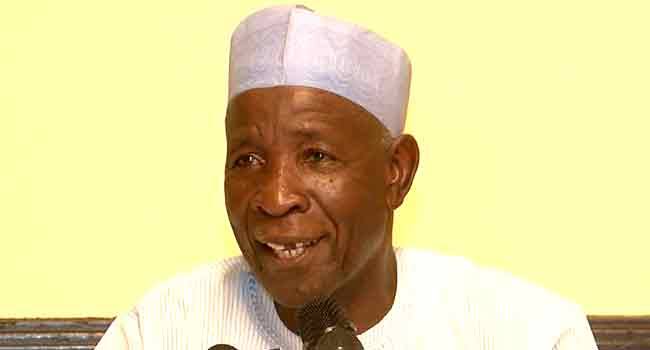
Those Asking Kwankwaso To Be Peter Obi’s Running Mate Are Not Politicians – Galadima
A member of the New Nigerian Peoples Party, NNPP, Buba Galadima has claimed that Nigerians clamouring for the party’s presidential candidate, Rabiu Kwankwaso to be the running mate of his (Kwankwaso) Labour Party counterpart, Peter Obi are not politicians.
Galadima made the claim on Monday while featuring on Arise Television’ Morning Show.
According to him, the Kwankwasian movement has been in force for the past 32 years, while that of Peter Obi started just two months ago, stressing that there is no way the NNPP candidate can deputize Obi.
He said, “Those who said Chief Peter Obi could not be Kwankwaso’s running mate are not politicians.
“They just started a movement two months ago while the Kwankwasian movement has been on ground for 32 years and the primary reason for the movement is for Kwankwaso to become President.
“No Nigerian has ever performed well while in office like Alhaji Kwankwaso. I understand that Peter Obi was the governor of Anambra State and he did his best but not like Kwankwaso.”
He argued that Kwankwaso has more educational qualifications than any other presidential candidate of any political party.
Those Asking Kwankwaso To Be Peter Obi’s Running Mate Are Not Politicians – Galadima


Politics
VP Shettima’s Invest Lagos Summit: A contest of narratives on both the Dangote and Abdulsamad empires.

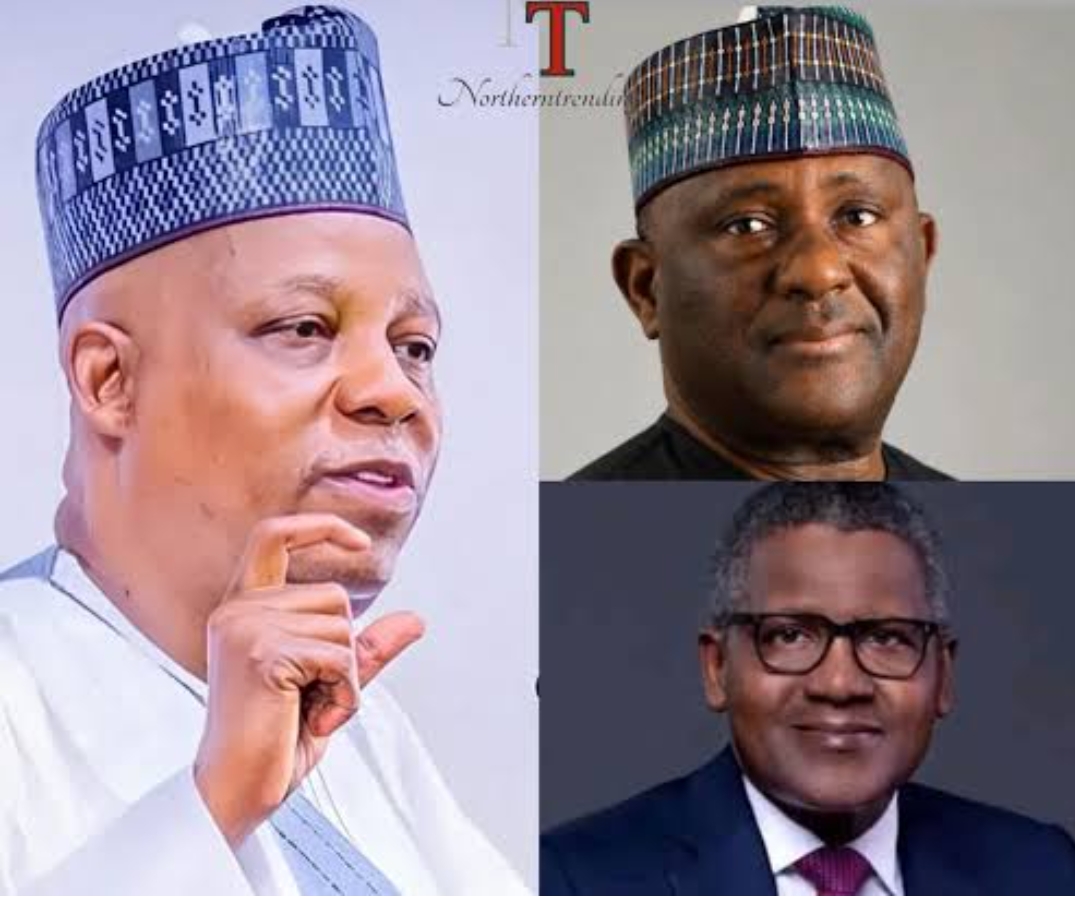
VP Shettima’s Invest Lagos Summit: A contest of narratives on both the Dangote and Abdulsamad empires.
By: Dr James Bwala
Vice President Kashim Shettima’s recent statement at the Invest Lagos Summit, which sparked significant controversy and backlash from various quarters, particularly regarding his remarks about Africa’s richest men, Aliko Dangote and Abdul Samad Rabiu. The vice president asserted that Lagos, not Kano, produced these business magnates, a comment that many interpreted as dismissive of Kano’s historical commercial significance. However, this reaction stems largely from a misinterpretation of Shettima’s words and an overlooking of the broader context in which his remarks were made. It is crucial to understand and defend the vice president’s statement, recognising the economic dynamics at play and the positive intent behind his message.
Vice President Shettima’s assertion that Lagos produced Africa’s richest men was not intended as an erasure of Kano’s rich commercial heritage or an undervaluing of the northern roots of these business icons. Instead, it was a contextual observation highlighting Lagos as the continent’s economic powerhouse and a pivotal hub where business ideas are scaled and transformed into thriving enterprises. Lagos is Africa’s largest sub-national economy, characterised by its vibrant market activities, infrastructural advantages, business-friendly policies, and an environment conducive to private sector growth. This city has historically served as a furnace where entrepreneurial ambitions find fertile ground to flourish and expand. Shettima’s point was that while the initial entrepreneurial instincts and businesses may have originated elsewhere, including Kano, it is within Lagos that these ventures matured into the colossal economic entities they are today.
READ ALSO: https://newsng.ng/radical-approach-ways-of-ending-the-menace-of-insecurity-in-nigeria/
The backlash, particularly from northern commentators and traditional leaders like Emir Muhammadu Sanusi II of Kano, reflects a common regional sensitivity towards identity and recognition. The Emir’s response centred on Kano’s longstanding reputation as a “centre of commerce”, emphasising the city’s role in shaping fundamental entrepreneurial skills and traditions inherited by figures like Dangote and Rabiu. While this perspective honours Kano’s historic significance, it inadvertently overlooks the nuance in Shettima’s statement—that the vice president did not deny Kano’s foundational influence but instead underscored Lagos’s role in providing a strategic platform for growth and scaling operations. The criticism arises from conflating birthplace or origin with the locus of economic success. Recognising Lagos as the city where these businesses “came to the limelight” is not a negation of their roots but an acknowledgement of pragmatic economic realities.
Shettima’s remarks must be viewed through the lens of economic pragmatism rather than political rivalry or regional contestation. Lagos has been, and remains, Nigeria’s commercial nerve centre and a critical node in Africa’s trade and investment networks. Its infrastructure, regulatory frameworks, access to ports, financial markets, and international connectivity create unique advantages that entrepreneurs can leverage to multiply their wealth and impact. Both Aliko Dangote and Abdul Samad Rabiu have attested to the enabling environment provided by Lagos State governments, which implemented policies fostering private-sector investments surpassing $30 billion. These acknowledgements underscore the integral role Lagos played in their skyrocketing success, validating Shettima’s emphasis on Lagos’s contributions without negating Kano’s entrepreneurial legacy.
READ ALSO: https://newsng.ng/radical-approach-ways-of-ending-the-menace-of-insecurity-in-nigeria/
It is also imperative to contextualise the timing and nature of the criticism directed at the vice president. Notably, some individuals and groups who vociferously objected to Shettima’s Lagos-centric remarks had remained conspicuously silent during other contentious moments, such as when the vice president defended the Dangote Refinery amid an industrial dispute with the Petroleum and Natural Gas Senior Staff Association of Nigeria (PENGASSAN) in late 2025. During that dispute, Shettima described Dangote as an “institution” deserving protection, a stance that drew criticism from labour unions but highlighted his consistent recognition of the vital role played by business leaders in Nigeria’s economic fabric. This selective outrage suggests that the current backlash is less about objective critique and more about entrenched regional loyalties or political manoeuvring as learnt in political communications.
The misrepresentation of Kashim Shettima’s position reveals a broader challenge in Nigerian public discourse—a tendency to pre-emptively judge and politicise statements without engaging with their substance or intent. The eagerness to attack the vice president before fully understanding the context exemplifies a mindset that undermines balanced evaluation and constructive debate. Instead of appreciating the VP’s highlighting of Lagos as an epicentre of enterprise and resilience, detractors have chosen to ignite divisive sentiments that distract from economic cooperation and national unity. This pattern of reaction fuels unnecessary regional tensions, which ultimately hinder the country’s collective progress.
READ ALSO: https://newsng.ng/radical-approach-ways-of-ending-the-menace-of-insecurity-in-nigeria/
From a professional standpoint, it is essential to champion nuanced communication and responsible leadership. Vice President Shettima’s remarks align with an economic truth that transcends parochial interests: that success in business often requires not just ingenuity and grit but access to supportive environments where ideas can scale. Nurturing such hubs—like Lagos—is vital for Nigeria’s sustained development and global competitiveness. Recognising and celebrating Lagos’s role, therefore, should not be viewed as an affront to other regions but as a call to replicate such enabling conditions nationwide. Every region, including Kano, must strive to provide similar platforms to nurture and propel their homegrown talents and enterprises.
Vice President Kashim Shettima’s comments at the Invest Lagos Summit were a factual, context-driven affirmation of Lagos’s status as Africa’s premier economic hub, where entrepreneurial ventures achieve their full potential. His statement was neither dismissive of Kano’s historic commercial contributions nor an attempt to diminish the foundational roles played by northern business traditions. Instead, it was a candid recognition of Lagos’s unique capacity to nurture and elevate business successes on an unprecedented scale. The vehement backlash—fueled by misinterpretation and regional sensitivities—serves as a reminder of the need for careful listening, thoughtful analysis, and avoidance of partisan attacks in national conversations. As Nigerians, we can foster unity and propel the country towards inclusive prosperity by embracing diverse pathways to success and acknowledging the layered realities of economic growth. Future critiques should engage constructively with leaders’ insights, considering both intent and context before passing judgements. Only through such mature discourse can Nigeria harness its full economic potential and build a harmonious, thriving society.
* James Bwala, PhD, writes from Abuja.
VP Shettima’s Invest Lagos Summit: A contest of narratives on both the Dangote and Abdulsamad empires.
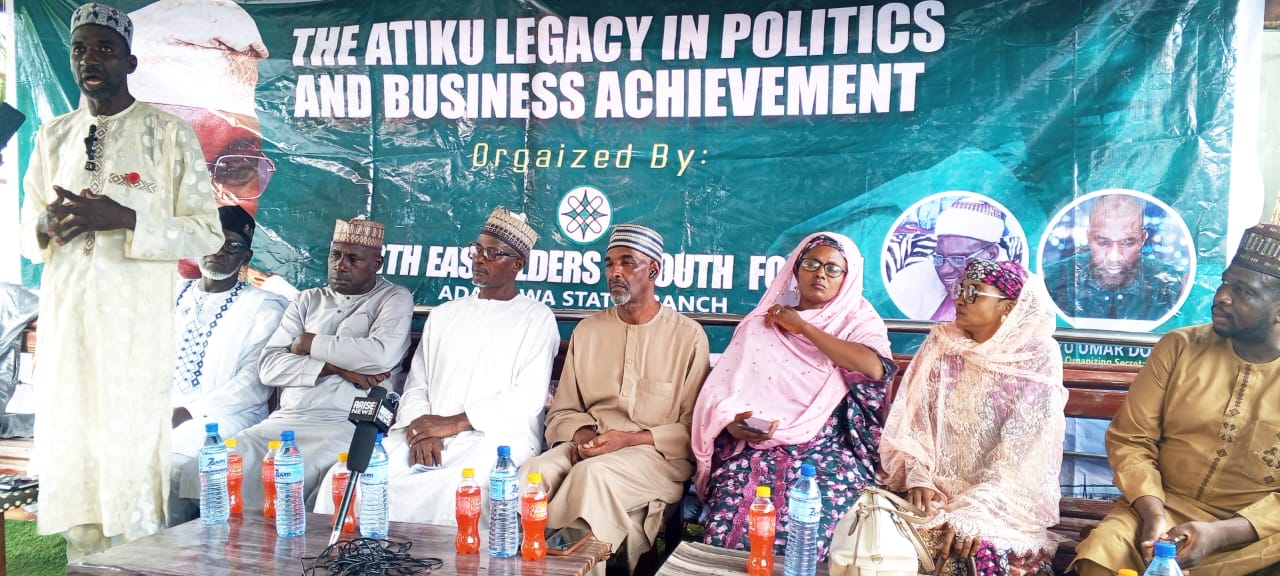
Forum condemns abusive language on Atiku
North-East Elders and Youth Forum, Adamawa Chapter has strongly rejected and condemned the abusive language attributed to the former Vice President Atiku Abubakar by the former Secretary to the Government of the Federation (SGF), Mr Babachir Lawal.
Hamza Sa’ad Dasin, the National Leader of the forum stated this during a press briefing in Yola that Lawal accused Atiku Abubakar of manipulating the recent ADC primary election results while describing him as a religious and tribal bigot.
“Well, that’s not the problem, because leaving or staying with the party remains his absolute right; the most alarming and worrisome approach by the former SGF was his utterances against the Former Vice President.
“Accusing him of being religious and tribal bigot, and even went further to calling him KACHALLA, which connotes direct linkage with banditry”, he said.
He said, Atiku Abubakar, socially and politically remains the symbol of unity Nigeria as he married from South West, South-East and North-East “So he is symbolically democratic even in his own house”.
Dasin further said that Atiku has a very large heart that accommodates all irrespective of religious, tribal or sectional inclinations.
“This can be ascertained by looking at the people surrounding him. He is a believer of cultural multiplicity.
“When Boko Haram entered Mubi in Adamawa State, Atiku used his personal resources to bring in hunters and traditional fighters from different parts of northern Nigeria to come and assist.
“And they eventually succeeded in driving them away, killing a large number of them. This is to tell you that Atiku has never, can never and will never be a supporter of banditry, so count him out of being a KACHALLA”, he said.
He further explained that Atiku is a well recognized Political Guru, not only in Nigeria but in the world.
“He is considered one of the best politicians in Africa and the world”, he said.
Forum condemns abusive language on Atiku
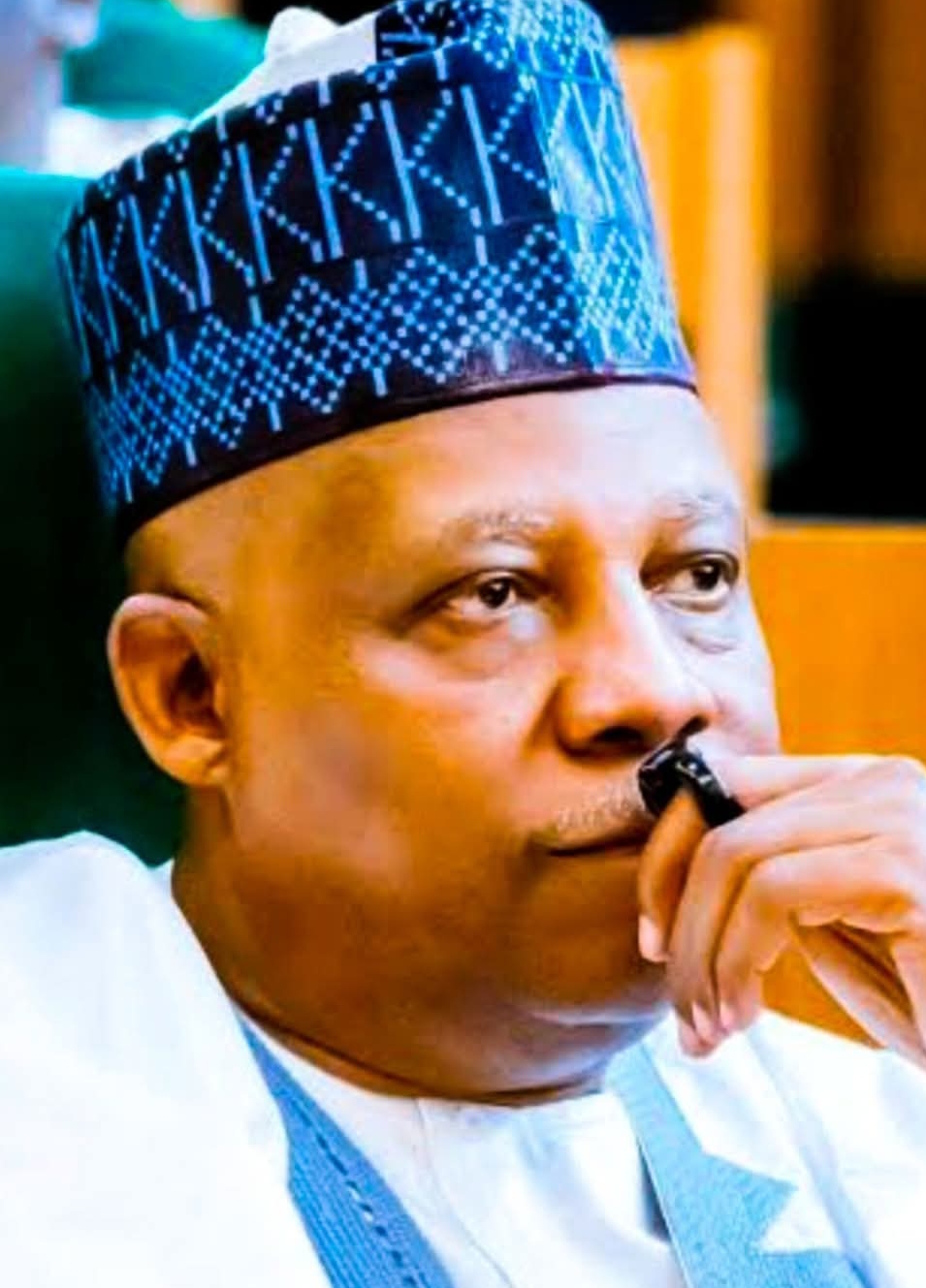
Kashim Shettima: Understanding Farooq Kperogi’s arguments on Tinubu’s 2027 ticket
By: Dr. James Bwala
The interplay of identity, symbolism, and electoral coalitions remains a defining feature of political calculations. Prof. Farooq Kperogi’s article, “The Shettima Danger for Tinubu,” brings to the fore a nuanced analysis of the 2023 Tinubu-Shettima political alliance and its implications for the upcoming 2027 elections. At first glance, one might dismiss Kperogi’s arguments as overblown or reductionist, interpreting the situation purely through a lens of personal relationships or conventional political maneuvers. However, a deeper examination reveals that Kperogi’s article is a persuasive and compelling warning about how ignoring the complex dynamics of identity blocs and political symbolism could imperil Tinubu’s ambitions. Kperogi’s insights, therefore, must be taken seriously by political actors, analysts, and stakeholders as they unravel the political future of Nigeria’s ruling party.
Kperogi’s central contentions revolve around what he terms “emotional cartography”—the phenomenon where voting behavior in Nigeria is strongly influenced by identity-based sentimental loyalty to ethnic, regional, and religious affiliations. The Tinubu–Shettima ticket of 2023 is not merely an example of a Muslim-Muslim alliance as popularly debated but rather a strategic partnership representing a powerful Yoruba–Northern Muslim electoral coalition. Tinubu, as a Yoruba political titan, symbolized the southwestern, populous, and politically vibrant Yoruba bloc, while Shettima represented the Northern Muslim electorate, a significant demographic force that has historically influenced election outcomes. This alliance functioned not just on religious credentials but on broader identity representation that allowed different groups to feel politically validated and included in governance.
READ ALSO: https://newsng.ng/2027-when-tinubus-endorsement-of-vice-president-kashim-shettimas-unwavering-support-speaks-volumes/
To understand the stakes, one must appreciate how Nigerian electoral politics operate under this framework. Identity politics, though often criticized for perpetuating division, remains a primary mechanism through which large sections of the population interpret their political interests and participation. For many Nigerians, political representation is not only about policies or ideology but also about whether they see their group’s history, values, and concerns visibly acknowledged and safeguarded. Kperogi emphasizes that emotional cartography generates an implicit contract: when a political ticket includes representatives from major ethnic and religious blocks, it reassures those constituencies that their place in the power structure is secure. Conversely, when this balance shifts or is disrupted, it risks alienating those blocs, triggering voter apathy, backlash, or realignment.
This dynamic makes the prospect of removing Shettima from the 2027 Tinubu ticket particularly perilous. According to Kperogi, Shettima’s presence was foundational to the 2023 electoral success because he symbolically anchored Northern Muslim support. The North is not monolithic, but the Northern Muslim constituency comprises a notable voting bloc that contributed significantly to Tinubu’s victory. Removing Shettima signals more than just a personnel change; it potentially conveys to Northern Muslims that their symbolic representation within the ruling coalition is being diminished or erased. Such a perception, Kperogi warns, would likely fracture existing alliances and result in a loss of critical votes during the next election cycle.
READ ALSO: https://newsng.ng/2027-when-tinubus-endorsement-of-vice-president-kashim-shettimas-unwavering-support-speaks-volumes/
Also, Kperogi critiques the assumption that replacing Shettima with a Northern Christian candidate would simply substitute one identity for another and thus maintain coalition stability. This overlooks key realities about the shifting affiliations and political histories of Northern Christians. Many Northern Christian voters have already gravitated toward alternatives such as Peter Obi, making them a less reliable base for Tinubu’s coalition vis-à-vis Northern Muslims. Hence, swapping Shettima for a Northern Christian does not guarantee a straightforward transfer of votes; instead, it risks weakening the Northern bloc’s overall cohesion in favor of less predictable political outcomes. In Kperogi’s assessment, this maneuver could cause Tinubu to lose more ground than he gains.
Beyond electoral arithmetic, Kperogi’s argument also extends into the broader realm of political sociology and conflict studies within Nigeria. Throughout history, Northern political elites have often leveraged religious identity—particularly Muslim solidarity—to mobilize voters and address perceived marginalization or exclusion in the national power matrix. Displacing Shettima, who embodies this Northern Muslim representation, could rekindle grievances and exacerbate fault lines that have periodically erupted into tension or violence. Thus, the “Shettima danger” not only encapsulates electoral risks but also potential destabilization of Nigeria’s delicate interethnic and interreligious equilibrium.
READ ALSO: https://newsng.ng/2027-when-tinubus-endorsement-of-vice-president-kashim-shettimas-unwavering-support-speaks-volumes/
Critically, Kperogi’s analysis does not endorse or glorify identity politics; rather, it pragmatically acknowledges it as an existing reality that shapes Nigerian political behavior. His contribution lies in highlighting that political actors who ignore these identity perceptions do so at their own peril. The idea that electoral success can be achieved solely through policy platforms or technocratic governance is, in Nigeria’s context, incomplete without considering the symbolism of inclusion and representation among diverse communities. Tinubu’s political fortunes, therefore, hinge upon maintaining a coalition that respects and reflects the ethnic and religious mosaic of Nigeria’s electorate.
Opponents of Kperogi’s view might argue that emphasizing identity risks perpetuating sectarianism and undermining efforts toward national integration. They may advocate for transcendence beyond primordial affiliations toward programmatic politics focusing on issues like economic development, security, and social justice. While such aspirations are noble and necessary for Nigeria’s long-term progress, the immediate political reality remains that identity-based emotional loyalty strongly influences voter behavior and political legitimacy. Dismissing this factor risks alienating vital constituencies and undermining political stability—a cost that Nigerian leaders cannot afford in the volatile current climate.
READ ALSO https://newsng.ng/2027-when-tinubus-endorsement-of-vice-president-kashim-shettimas-unwavering-support-speaks-volumes/
Indeed, Kperogi’s concept of emotional cartography offers a useful analytic framework to bridge the divide between identity politics critics and proponents. It encourages recognizing identity as a sociopolitical phenomenon shaped by history, culture, and lived experience rather than a mere obstacle to democracy. Through this lens, politicians like Tinubu must navigate identity sensibilities skillfully, balancing inclusivity and national unity without erasing distinct group identities. The Shettima matter exemplifies this challenge: it requires sensitivity to how symbolic representation operates alongside substantive governance to sustain broad-based political coalitions.
The assessment of the “Shettima danger” for Tinubu’s 2027 ticket should be regarded as a persuasive cautionary tale grounded in Nigeria’s political realities. Far from an academic abstraction, his insights illuminate why removing Shettima risks fracturing a crucial electoral coalition based on Yoruba and Northern Muslim alliances, thereby jeopardizing Tinubu’s political prospects. More importantly, it underscores how identity, symbolism, and emotional cartography continue to shape Nigerian politics in profound ways. For Tinubu and his party, success depends not only on policy effectiveness but also on adeptly managing the complex mosaic of representation and inclusion that defines Nigeria’s democratic landscape. To ignore Kperogi’s warnings is to court a political miscalculation with potentially far-reaching consequences for Nigeria’s fragile unity and democratic stability.
* James Bwala, PhD, writes from Abuja.
Kashim Shettima: Understanding Farooq Kperogi’s arguments on Tinubu’s 2027 ticket

Zulum Delivers Relief, Cash Support to 434 Ngoshe Residents Rescued from Boko Haram

DEMOCRACY AND THE COURAGE TO BELIEVE

Army Distributes Fertiliser to Farmers in Jigawa Under Civil-Military Cooperation Programme

Roger Federer’s Shock as DNA Results Reveal Myla and Charlene Are Not His Biological Children

THE PLIGHT OF FARIDA

FAILED COUP IN BURKINA FASO: HOW TRAORÉ NARROWLY ESCAPED ASSASSINATION PLOT AMID FOREIGN INTERFERENCE CLAIMS
-
 News2 years ago
Roger Federer’s Shock as DNA Results Reveal Myla and Charlene Are Not His Biological Children
-
Opinions4 years ago
THE PLIGHT OF FARIDA
-
 News1 year ago
FAILED COUP IN BURKINA FASO: HOW TRAORÉ NARROWLY ESCAPED ASSASSINATION PLOT AMID FOREIGN INTERFERENCE CLAIMS
-

 News2 years ago
EYN: Rev. Billi, Distortion of History, and The Living Tamarind Tree
-
 Opinions4 years ago
POLICE CHARGE ROOMS, A MINTING PRESS
-

 ACADEMICS2 years ago
A History of Biu” (2015) and The Lingering Bura-Pabir Question (1)
-

 Columns2 years ago
Army University Biu: There is certain interest, but certainly not from Borno.
-

 Politics1 year ago
2027: Why Hon. Midala Balami Must Go, as Youths in Hawul and Asikira/Uba Federal Constituency Reject ₦500,000 as Sallah Gift
