
News
Troops Recover 318 Rustled Livestock During Offensive Against Bandits in Katsina

Troops Recover 318 Rustled Livestock During Offensive Against Bandits in Katsina
By: Zagazola Makama
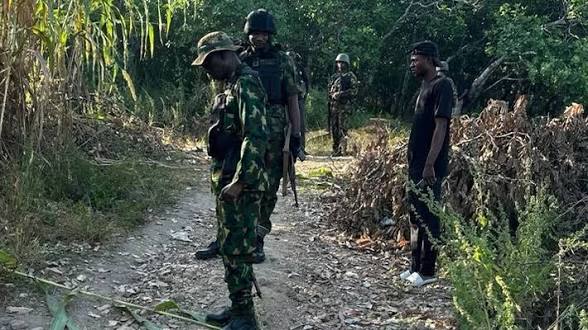
Troops of the 17 Brigade have recovered 318 rustled livestock during a major offensive operation targeting suspected bandit enclaves in Matazu Local Government Area of Katsina State.
Military sources said the operation, conducted on June 17, was launched on two fronts to clear criminal elements operating around Tuga and adjoining communities.
The sources disclosed that Intelligence, Surveillance and Reconnaissance (ISR) missions were carried out ahead of the ground assault, while air assets conducted precision strikes on three suspected terrorist locations to degrade the criminals’ capabilities before the advance of ground troops.
According to the sources, one column of troops advanced through Karaduwa, Farin Tafki, Saura and Radawa towards Tuga, while a second column moved through Sayaya, Gangule and Radawa to the objective area.
During the operation, troops successfully cleared several communities, including Karaduwa, Farin Tafki, Saura and Radawa, and intercepted 318 rustled livestock believed to have been stolen by bandits.
The recovered animals were subsequently moved to a military base for documentation and further action.
The troops also responded to attacks launched by suspected bandits on Tuga and Kuka Maidamisa villages. The attacks were reportedly carried out in retaliation against residents accused by the criminals of providing information that led to the rescue of kidnapped victims, including one Mrs Amina Abubakar.
Military sources said troops conducted further exploitation of the surrounding areas after securing the affected communities but did not encounter any additional significant threats.
The operation is expected to continue as security forces sustain pressure on criminal elements operating within the area.
Troops Recover 318 Rustled Livestock During Offensive Against Bandits in Katsina












BENUE POLICE ARRESTS FIVE PAKISTANIS, RECOVERS 35 MOBILE PHONES
By: Our Reporter
The Benue State Police Command has arrested five Pakistan nationals and recovered thirty-five (35) mobile phones in separate intelligence-led operations conducted in Otukpo and Ugbokolo areas.
A Statement by Police Public Relations Officer, DSP Orchia Peter Aondongu, indicates, that operatives of the Command, acting on credible intelligence, arrested three Pakistanis at Adoka Motor Park, Otukpo Local Government Area.
The suspects, were intercepted while attempting to board a vehicle to Adoka village.
During preliminary questioning, the suspects stated that they were in Otukpo for the purpose of marketing cosmetics and mobile gadgets, none of which were found in their possession.
In a separate operation, two other Pakistanis were arrested at a local hotel in Ugbokolo following credible intelligence received by the Police.
The two suspects claimed to be dealers in Android phones.
A search of their belongings led to the recovery of eleven (11) Tecno Camon 50 Pro mobile phones.
Further investigation and operational follow-up resulted in the recovery of additional twenty-three (23) Tecno Camon 50 Pro phones and one (1) Infinix Hot 60 phone, bringing the total number of recovered mobile phones to thirty-five (35).
The five suspects, who could not speak English fluently, have been transferred to the State Criminal Investigation Department (SCID), Makurdi, where discreet and comprehensive investigations are ongoing to establish the circumstances surrounding their presence in the State.
It is strongly suspected that the possession of those mobile phones is a decoy for their clandestine activities in the rural areas of the state.
The Commissioner of Police, Benue State Command, Cletus commends the officers involved in the operations and members of the public whose timely information contributed to the arrests and urges residents to remain vigilant.
BENUE POLICE ARRESTS FIVE PAKISTANIS, RECOVERS 35 MOBILE PHONES
News
Boko Haram: Zulum Hosts Sahel Countries, Ambassadors for High-Level Security Retreat in Maiduguri
Boko Haram: Zulum Hosts Sahel Countries, Ambassadors for High-Level Security Retreat in Maiduguri
By: Michael Mike
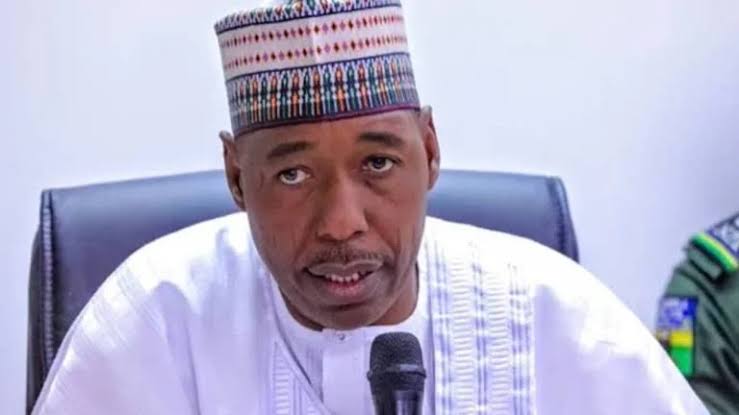
Borno State Governor, Prof. Babagana Zulum, has rallied Nigeria’s neighbours and key diplomatic partners to forge a stronger regional security alliance against Boko Haram, the Islamic State West Africa Province (ISWAP) and other terrorist groups threatening the stability of the Sahel.
Zulum made the call on Saturday in Maiduguri at a high-level security retreat attended by representatives of Sahel countries, ambassadors and senior Nigerian foreign-policy officials, where participants warned that terrorism, porous borders, displacement and violent extremism could no longer be confronted through isolated national responses.
The retreat, held at the conference hall of the Musa Usman Secretariat, placed Borno—the epicentre of Nigeria’s more than decade-long battle against Boko Haram—at the centre of renewed efforts to develop a coordinated regional response to the worsening security crisis across the Sahel.
The governor, who has consistently advocated a combination of military operations, humanitarian intervention, economic development and community-based measures, argued that the scale and transnational character of the threat required countries in the region to move beyond fragmented security arrangements.
He said military operations remained indispensable, but stressed that the battle against terrorism could not be won through kinetic operations alone.
According to him, the persistent insurgency and humanitarian crisis in the region demanded a comprehensive strategy capable of addressing both the immediate security threat and the conditions that allow violent extremism to thrive.
“While our armed forces continue their brave operations, we must enhance intelligence sharing, community-based border management, and joint stabilisation initiatives alongside the Multinational Joint Task Force (MNJTF),” Zulum said.
He maintained that stronger cooperation among countries sharing borders and historical ties was critical to preventing terrorists from exploiting territorial and institutional gaps to move fighters, weapons and resources across national boundaries.
The governor’s position reflects Borno’s experience in dealing with the Boko Haram insurgency, which has devastated communities, displaced millions of people and disrupted livelihoods across the Lake Chad Basin.
Beyond military pressure on terrorist groups, Zulum has repeatedly advocated deradicalisation, rehabilitation and reintegration programmes for repentant insurgents, alongside reconstruction, education, job creation and humanitarian support for affected communities.
He stressed that sustainable peace would require rebuilding communities ravaged by years of violence while restoring confidence between citizens and government institutions.
Earlier, the Minister of State for Foreign Affairs, Mr Sola Enikanolaiye, called for deeper regional cooperation to confront terrorism and other security threats confronting the Sahel.
Enikanolaiye said governments in the region must look beyond military responses and pay greater attention to the underlying conditions that fuel violent extremism, including poverty, unemployment, marginalisation and weak development structures.
He said a coordinated regional strategy would strengthen the capacity of affected countries to prevent terrorist groups from exploiting their borders and local grievances.
Also speaking, the Permanent Secretary, Ministry of Foreign Affairs, Dunoma Umara, underscored the strategic importance of peace and stability in the Sahel to Nigeria’s national interests.
Umara noted that Nigeria’s historical, cultural, economic and geographical ties with the region meant that instability in neighbouring countries would inevitably have implications for Nigeria’s security and economic prosperity.
He therefore called for sustained diplomatic and security engagement among countries in the region, stressing the need to strengthen existing mechanisms for cooperation.
The Ambassador of Chad to Nigeria, Brah Mahamat, also delivered a strong appeal for collective action, warning that differences in regional institutional affiliations must not be allowed to undermine the common fight against terrorism.
He said terrorist organisations do not recognise the political and institutional boundaries that divide countries in the region.
“Although we belong to different institutional groupings, this should in no way impede our common security. Let us be clear: the enemy cares little whether we belong to CEMAC, ECOWAS or the AES. Its aim is to continue slipping across our borders, exploiting the operational limitations we have imposed upon ourselves,” Mahamat said.
His remarks highlighted one of the major challenges confronting the region: the ability of terrorist networks to exploit gaps in border security and differences in political and security arrangements among neighbouring states.
The retreat therefore provided an opportunity for participating countries and diplomatic representatives to examine ways of improving intelligence cooperation, securing borders, strengthening joint military operations and developing stabilisation programmes for communities affected by terrorism.
The discussions also underscored the importance of the Multinational Joint Task Force, which brings together countries of the Lake Chad Basin in the fight against Boko Haram and associated terrorist organisations.
With terrorist networks increasingly operating across national boundaries, participants stressed that regional security cooperation must evolve alongside the threat.
For Borno, the retreat carries particular significance. Maiduguri has endured years of Boko Haram attacks and remains a key centre for Nigeria’s counter-insurgency operations in the Lake Chad Basin.
The decision to convene senior regional and diplomatic stakeholders in the city signals an effort to transform Borno from merely a frontline theatre of the insurgency into a platform for regional dialogue on how to end it.
The emerging consensus from the retreat was that defeating terrorism in the Sahel requires more than battlefield victories. It demands sustained intelligence cooperation, secure borders, resilient communities, economic opportunities, humanitarian assistance and coordinated political action.
As terrorist groups continue to exploit instability across the region, the challenge before Nigeria and its neighbours is increasingly clear: build a common security architecture capable of preventing the Sahel from becoming an even deeper theatre of transnational terrorism.
Boko Haram: Zulum Hosts Sahel Countries, Ambassadors for High-Level Security Retreat in Maiduguri

NAPTIP, EU, IIDEA Mobilise Media Against SGBV, Launch Dedicated Corps
…New initiative targets silence, impunity as journalists receive specialised training to expose sexual and gender-based violence
By: Michael Mike
The National Agency for the Prohibition of Trafficking in Persons (NAPTIP), in partnership with the European Union in conjunction with
International Institute for Democracy and Electoral Assistance(International IDEA), has launched a dedicated media corps to strengthen the capacity of journalists to investigate, report and sustain public attention on sexual and gender-based violence (SGBV) in Nigeria.
The initiative, unveiled in Abuja under the EU-supported End Sexual and Gender-Based Violence Programme, is designed to move media coverage of SGBV beyond episodic reporting and towards sustained investigative journalism capable of exposing perpetrators, institutional failures and the social conditions that allow violence against women, girls and other vulnerable persons to persist.
The partnership reflects growing recognition among stakeholders that the fight against sexual and gender-based violence cannot be won through law enforcement and judicial action alone, but requires a powerful and informed media capable of breaking the culture of silence surrounding abuse.
The dedicated Media Corps is expected to provide journalists with specialised knowledge and tools to report SGBV cases more accurately, ethically and sensitively, while ensuring that victims and survivors are not subjected to further harm through irresponsible reporting.
At the launch, stakeholders stressed the strategic role of the media in shaping public attitudes, holding institutions accountable and ensuring that cases of sexual violence do not disappear from public consciousness after the initial news cycle.
The intervention also seeks to strengthen collaboration between journalists, government agencies, civil society organisations and other actors involved in the prevention and response to SGBV.
For NAPTIP, the partnership comes at a critical time as Nigeria continues to confront the complex and often interconnected challenges of trafficking, sexual exploitation, violence against women and girls, and other forms of abuse.
Beyond reporting individual cases, the new media corps is expected to deepen public understanding of the structural dimensions of SGBV and draw attention to gaps in prevention, protection, prosecution and survivor support.
The EU, through its support for the programme, has continued to position strategic communication and public awareness as important components of efforts to combat gender-based violence and strengthen institutional responses.
Participants at the Abuja engagement emphasised that journalists must be equipped not only with reporting skills but also with an understanding of the legal, psychological and social dimensions of SGBV.
This, they noted, would enable the media to report cases without sensationalism, protect the identities and dignity of survivors where necessary, challenge harmful stereotypes and ensure that coverage does not inadvertently reinforce the very culture that enables abuse.
The initiative is therefore being viewed as more than another capacity-building programme. It represents an attempt to create a specialised community of journalists who can make SGBV a sustained national accountability issue.
Stakeholders maintained that effective journalism can help expose patterns of abuse, amplify the voices of survivors, interrogate institutional responses and place pressure on relevant authorities to act.
They also called for stronger cooperation between the media and agencies responsible for tackling sexual violence, arguing that journalists should have access to credible information while respecting due process, privacy and the rights of survivors.
The launch comes against the backdrop of persistent concerns over under-reporting of sexual and gender-based violence, fear of stigmatisation, victim-blaming, weak access to justice and the reluctance of many survivors to speak publicly about their experiences.
These challenges, stakeholders observed, make responsible journalism particularly important in ensuring that victims are heard without being re-victimised.
With the establishment of the Media Corps, NAPTIP and the EU are seeking to build a more informed and specialised media response that can help transform public discourse around SGBV from one driven largely by isolated incidents into a sustained national conversation on prevention, accountability and justice.
The ultimate test of the initiative, however, will lie not merely in the number of journalists trained, but in whether the intervention produces deeper investigations, stronger accountability journalism and greater public pressure for institutions to protect victims and prosecute perpetrators.
For a country confronting persistent cases of sexual and gender-based violence, stakeholders said, silence remains one of the most powerful allies of perpetrators.
The new media corps is intended to make sure that silence no longer has the final word.
NAPTIP, EU, IIDEA Mobilise Media Against SGBV, Launch Dedicated Corps

BENUE POLICE ARRESTS FIVE PAKISTANIS, RECOVERS 35 MOBILE PHONES

Troops Intercept 55 Cows, Arrest 13-Year-Old Herder Over Alleged Farm Destruction in Plateau

IBUAM: The Challenges of a Specialized University

Roger Federer’s Shock as DNA Results Reveal Myla and Charlene Are Not His Biological Children

THE PLIGHT OF FARIDA

FAILED COUP IN BURKINA FASO: HOW TRAORÉ NARROWLY ESCAPED ASSASSINATION PLOT AMID FOREIGN INTERFERENCE CLAIMS
-
 News2 years ago
Roger Federer’s Shock as DNA Results Reveal Myla and Charlene Are Not His Biological Children
-
Opinions4 years ago
THE PLIGHT OF FARIDA
-
 News1 year ago
FAILED COUP IN BURKINA FASO: HOW TRAORÉ NARROWLY ESCAPED ASSASSINATION PLOT AMID FOREIGN INTERFERENCE CLAIMS
-

 News2 years ago
EYN: Rev. Billi, Distortion of History, and The Living Tamarind Tree
-
 Opinions5 years ago
POLICE CHARGE ROOMS, A MINTING PRESS
-

 ACADEMICS2 years ago
A History of Biu” (2015) and The Lingering Bura-Pabir Question (1)
-

 Columns2 years ago
Army University Biu: There is certain interest, but certainly not from Borno.
-

 Politics1 year ago
2027: Why Hon. Midala Balami Must Go, as Youths in Hawul and Asikira/Uba Federal Constituency Reject ₦500,000 as Sallah Gift
