
News
U.S. congress calls for bilateral pact, tougher measures over Christian persecution in Nigeria


U.S. congress calls for bilateral pact, tougher measures over Christian persecution in Nigeria
By: Zagazola Makama
The United States House of Representatives has called for a new bilateral agreement with Nigeria aimed at protecting vulnerable Christian communities, strengthening counter-terrorism cooperation and addressing sectarian violence across the country.
The call followed deliberations by the House Appropriations Committee and the House Foreign Affairs Committee on what lawmakers described as “the persecution of Christians in Nigeria.”
In a joint position, U.S. lawmakers commended President Donald Trump for redesignating Nigeria as a Country of Particular Concern (CPC) over religious freedom violations, saying the move would help hold perpetrators accountable and compel stronger protective measures by Nigerian authorities.
According to the committees, the U.S. President urged members of Congress, including Congressman Riley Moore and House Appropriations Chairman Tom Cole, to investigate and produce a report on violence against Nigerian Christians.
Appropriations Vice Chair Mario Díaz-Balart reportedly hosted an investigative roundtable and led a congressional delegation to Nigeria, while House Foreign Affairs Committee Chairman Brian Mast and Africa Subcommittee Chairman Chris Smith convened hearings to gather evidence from government and civil society witnesses.
The committees concluded that Nigeria has witnessed prolonged sectarian violence, particularly in parts of the North Central and northern states, where Christian communities have been affected by attacks from armed groups, including insurgent and militia factions.
They alleged that thousands of Christians had been killed over the past two decades, with churches, schools and farmlands destroyed, and many residents displaced. The report also raised concerns over the application of blasphemy laws in some northern states, alleging that such provisions have been used to silence dissent and target religious minorities.
While acknowledging Nigeria as a key U.S. partner in Africa, the lawmakers stressed that the Nigerian government must demonstrate stronger political will by committing financial and security resources to reduce and eliminate violence.
Recommendations
The committees proposed a bilateral U.S.–Nigeria agreement focused on: Protection of vulnerable Christian communities. Elimination of jihadist and militia violence. Expansion of economic cooperation. Countering external adversarial influence, including from China and Russia.
They recommended that Nigeria co-fund humanitarian assistance programmes, especially in the North Central, and strengthen early-warning and rapid-response security mechanisms.
The lawmakers also called for the removal of armed militias from confiscated farmlands to enable displaced communities to return home, alongside expanded security cooperation with the United States, including possible divestment from Russian military equipment in favour of U.S. platforms. Additional proposals included technical support for disarmament, demobilisation and reintegration initiatives, support for livestock reforms and ranching programmes, and enhanced recruitment and capability development within Nigeria’s security forces.
The report further urged comprehensive counter-terrorism cooperation against foreign terrorist organisations operating in the region.
Other measures outlined include sanctions against individuals or groups found to participate in or tolerate religious violence, continued visa restrictions on perpetrators, and consideration of reviewing the classification of certain armed militia groups as Foreign Terrorist Organizations under U.S. law.
The committees also recommended stronger financial oversight, anti-money laundering measures, and disruption of terror financing networks, as well as increased oversight of U.S. assistance to Nigeria through a Government Accountability Office (GAO) audit.
Zagazola report that the proposals, if adopted, could deepen U.S.–Nigeria security cooperation but may also introduce diplomatic sensitivities, particularly regarding internal security classifications, religious legislation and trade measures.
Nigerian authorities have consistently maintained that security challenges in the country are complex, involving criminality, insurgency, communal conflicts and banditry rather than a singular religious war.
Zagazola note that sectarian and communal violence in Nigeria often involves cycles of attack and reprisal between agrarian and pastoral communities, insurgent activities in the North-East, and criminal banditry in the North-West.
As of press time, there was no official response from the Nigerian Government regarding the latest congressional recommendations.
The development, however, signals heightened U.S. legislative scrutiny of Nigeria’s security situation and could shape future bilateral engagements on security and regional stability.
U.S. congress calls for bilateral pact, tougher measures over Christian persecution in Nigeria


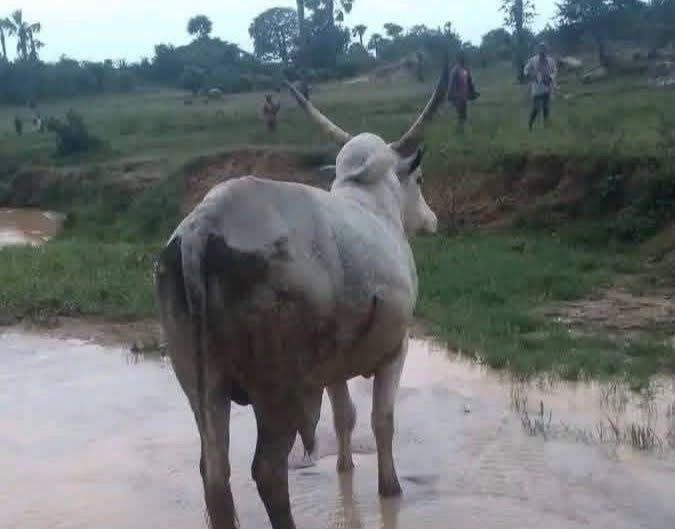
Suspected Mwaghavul Militia Attack on Herders Reported in Mangu, Cattle Shot in Plateau
By: Zagazola Makama
Suspected armed Mwaghavul militia members have reportedly attacked herders around Kombilin in Panyam District of Mangu Local Government Area of Plateau State, shooting an unspecified number of cattle.
Security sources told Zagazola Makama that the incident occurred at about 4:30 p.m. on Sunday, Oct. 4, 2026.
Preliminary reports indicated that the assailants, suspected to be members of a Mwaghavul militia group, targeted herders in the area and opened fire on their cattle.
The exact number of cattle killed or injured in the incident had yet to be established as details were still emerging.
The circumstances surrounding the attack, including whether any persons were injured or killed, remained unclear at the time of reporting.
Further details are being awaited as efforts continue to establish the full circumstances of the incident.
Suspected Mwaghavul Militia Attack on Herders Reported in Mangu, Cattle Shot in Plateau

North-East Governors Push Regional Energy Agenda, Seek Speedy Completion of Mambila Hydropower
By: Our Reporter
The Northeast Governors’ Forum (NEGF) says it has transformed power supply from a problem that each state handles independently to a shared regional energy agenda for the sub-region.
It also wants member states to take full advantage of the new electricity law and the region’s abundant sunshine to expand solar and mini-grid technologies.
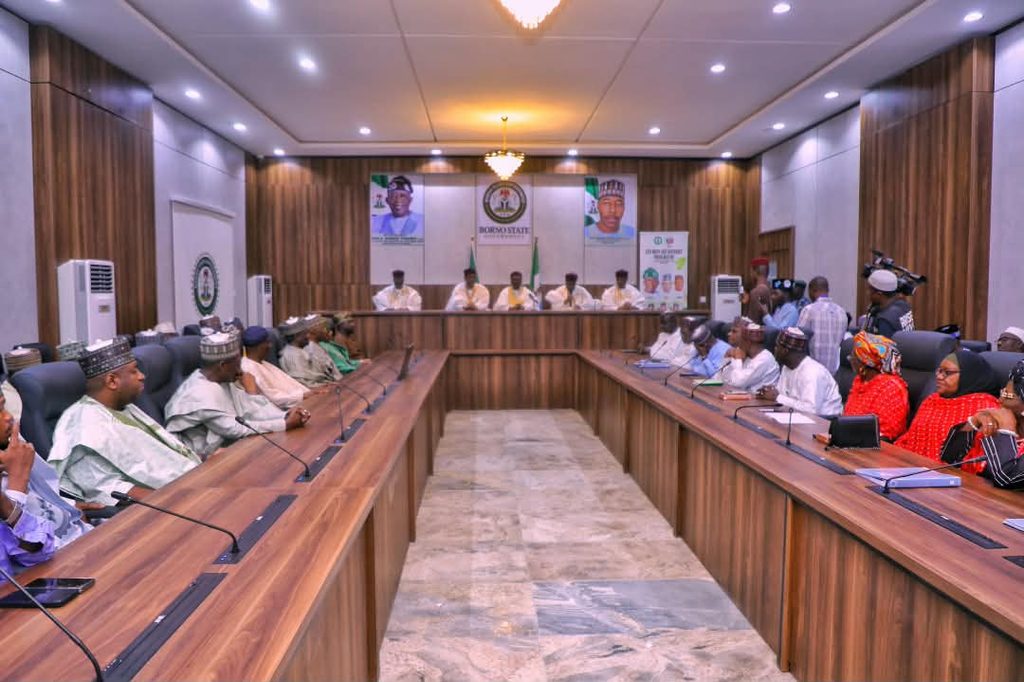
The position was stated in an eleven-point communiqué issued in Maiduguri on Saturday at the end of the Forum’s 13th meeting.
The communiqué, signed by Forum’s chairman and Borno State Governor, Professor Babagana Umara Zulum, and read by the Vice Chairman of the Forum and Adamawa State Governor, Alhaji Ahmodu Umoru Fintiri.

The governors noted that the Dadinkowa hydropower plant in Gombe State now feeds the national grid.
They described this as one result of their joint efforts to provide power and energise the sub-region.
The Forum restated its long-standing concern over what it called the seeming neglect of the Mambila hydropower plant in Taraba State, urging the Federal Government to use the recent arbitration ruling, which cleared the project’s legal encumbrance, to speed up the plant’s completion and take-off.

The Forum agreed to partner with Green Ville Energy to build more Compressed Natural Gas (CNG) and Liquefied Natural Gas (LNG) stations across the region to cut transport costs.
The Governors also thanked the Federal Government, through the North East Development Commission (NEDC), for providing 10,000 electric tricycles, 10 electric buses and 300 electric taxis, which are expected to be launched later this month to ease the burden of transportation.
They also resolved to set up a North-East regional air shuttle, which, according to them, would make it faster and easier to move people and goods within the region and to other parts of the country.
The Forum commended President Bola Tinubu for paying renewed attention to the PortHarcourt–Jos–Bauchi–Gombe–Maiduguri rail corridor, the Akwanga–Jos–Bauchi–Gombe–Biu–Maiduguri highway, and frontier oil exploration at Kolmani.
However, it called on the Federal Government to revisit oil exploration activities that began but later stalled in Magumeri and Gubio Local Government Areas of Borno State.
On security, the governors acknowledged the appreciable success recorded against the insurgency, commending the courage and sacrifice of the Armed Forces and other security agencies.
The Forum noted that the North-East has one of the youngest populations in the country. It recommitted to providing young people with quality education, vocational and entrepreneurial skills, technology, and meaningful jobs.
On the environment, the Forum condemned the extent of damage caused by deforestation and resolved to partner with the Forestry Research Institute to train forest experts in the region.
The meeting was attended by Governor Zulum, Governor Ahmadu Umaru Fintiri of Adamawa State and Governor Muhammadu Inuwa Yahaya of Gombe State. Bauchi State and Yobe State were represented by their Deputy Governors, Rt. Hon. Mohammed Auwal Jatau, and Alhaji Idi Barde Gubana. The Deputy Governor of Borno State, Umar Usman Kadafur, was also in attendance.
Since its inaugural meeting in Gombe in March 2020, the Forum said its greatest achievement has been its members’ unity, noting that this unity has given the region a collective voice delivering real infrastructural development.
The 14th meeting of the Forum is scheduled to hold in Gombe on December 18 and 19, 2026.
North-East Governors Push Regional Energy Agenda, Seek Speedy Completion of Mambila Hydropower
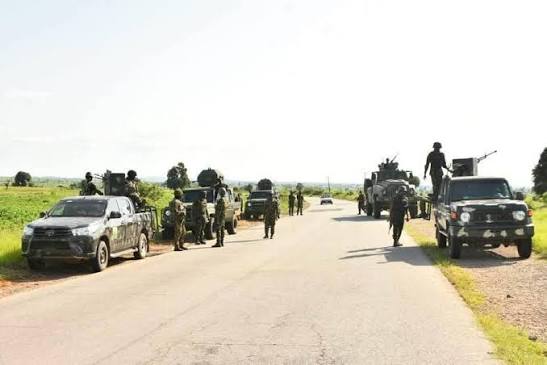
Army, Police, DSS launch aggressive operation to rescue 20 abducted NYSC members in Imo
By: Zagazola Makama
The Nigerian Army, Police, Department of State Services (DSS) and other security agencies have intensified search-and-rescue operations to secure the release of 20 prospective National Youth Service Corps (NYSC) members abducted along the Owerri–Onitsha Road in Imo State.
The victims were reportedly kidnapped on Oct. 1 around Umunoha, with security forces subsequently launching coordinated operations to track down the perpetrators and rescue the abductees.
Security sources told Zagazola Makama that troops of the 34 Artillery Brigade, alongside personnel of the Nigerian Navy, Nigerian Air Force, Nigeria Police Force, DSS, Nigeria Security and Civil Defence Corps and local vigilantes, launched an offensive operation in Amakohia Forest at about 5:30 a.m. on Saturday, Oct. 3.
The operation followed intelligence gathered during efforts to trace the kidnappers and establish their possible locations.
The sources said the kidnappers had contacted the families of seven victims using telephone numbers belonging to the abducted persons and demanded a ransom of N50 million for each victim.
Operatives of the DSS reportedly geolocated the telephone numbers used for the ransom calls, providing intelligence to support efforts to track the suspects.
In a related development, the Inspector-General of Police, IGP Olatunji Disu, has deployed the Deputy Inspector-General of Police in charge of Operations, DIG Shehu Umar Nadada, to Imo State to provide operational direction for the rescue mission.
The DIG arrived in the state with two commissioners of police and conducted an on-the-spot assessment of the incident and ongoing search-and-rescue efforts by the Imo State Police Command.
The assessment involved the Commissioner of Police, Imo State Command, CP Audu Garba Bosso; Commissioner of Police, Federal Operations, CP Akpan Anifiok; the Commissioner of Police in charge of the Police Mobile Force; and other service commanders and members of the command’s management team.
The police delegation reviewed operational strategies, personnel deployment and available operational assets, while issuing additional directives to strengthen the coordinated response.
The Police said tactical teams and operational assets had been deployed across identified areas, with intelligence-led tracking efforts being intensified in collaboration with other security agencies.
DIG Nadada assured the public that the Police would sustain the operation until the abducted persons were safely rescued and the perpetrators apprehended.
He urged residents to remain calm and vigilant, while encouraging anyone with credible information that could assist the operation to contact the Police or the nearest security formation. He added that information received would be treated confidentially.
As of the time of filing this report, the joint operation was ongoing, with security agencies yet to announce the rescue of the 20 abducted prospective corps members.
The authorities have urged the public to avoid spreading unverified information that could undermine ongoing operations.
Army, Police, DSS launch aggressive operation to rescue 20 abducted NYSC members in Imo

2027: Tinubu Deserves Second Term, Says First Lady Oluremi unveils APC women campaign council, orders nationwide mobilisation for ‘total victory

After al-Minuki, Joint Army, DSS, Amotekun Operation Kills Another ISWAP Leader Planning Terrorist Attacks

Seven Passengers Reportedly Shot Near Bukuru Roundabout in Plateau

Roger Federer’s Shock as DNA Results Reveal Myla and Charlene Are Not His Biological Children

THE PLIGHT OF FARIDA

FAILED COUP IN BURKINA FASO: HOW TRAORÉ NARROWLY ESCAPED ASSASSINATION PLOT AMID FOREIGN INTERFERENCE CLAIMS
-
 News3 years ago
Roger Federer’s Shock as DNA Results Reveal Myla and Charlene Are Not His Biological Children
-
Opinions5 years ago
THE PLIGHT OF FARIDA
-
 News1 year ago
FAILED COUP IN BURKINA FASO: HOW TRAORÉ NARROWLY ESCAPED ASSASSINATION PLOT AMID FOREIGN INTERFERENCE CLAIMS
-

 News3 years ago
EYN: Rev. Billi, Distortion of History, and The Living Tamarind Tree
-
 Opinions5 years ago
POLICE CHARGE ROOMS, A MINTING PRESS
-

 ACADEMICS3 years ago
A History of Biu” (2015) and The Lingering Bura-Pabir Question (1)
-

 Columns3 years ago
Army University Biu: There is certain interest, but certainly not from Borno.
-

 Politics1 year ago
2027: Why Hon. Midala Balami Must Go, as Youths in Hawul and Asikira/Uba Federal Constituency Reject ₦500,000 as Sallah Gift
