
National News
UN Calls for stronger media partnership to achieve SDGs, advocates for factual and evidence-based reporting

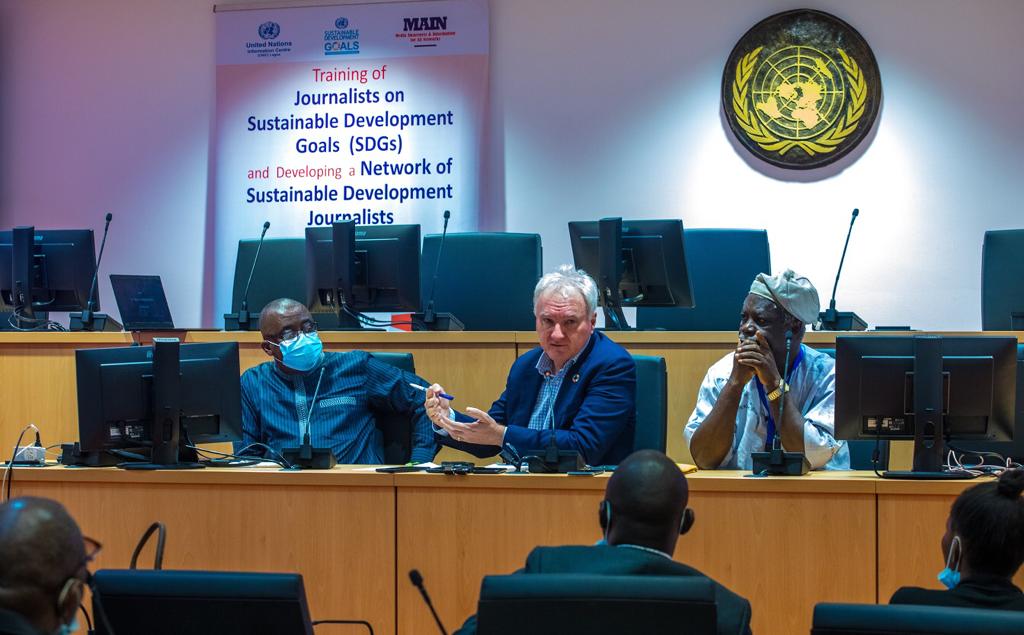
UN Calls for stronger media partnership to achieve SDGs, advocates for factual and evidence-based reporting
By: Michael Mike
The United Nations Resident and Humanitarian Coordinator for Nigeria, Matthias Schmale has called for a stronger partnership with the media in the implementation of the Sustainable Development Goals (SDGs).
He said he would enhance achieving the Agenda 2030 for sustainable development in Nigeria.
Schmale said: “Media play a critical role in achieving Agenda 2030, which includes ensuring citizens are well-informed to enable them to form opinions based on facts. Factual and evidence-based reporting is critical at this period of fake news.
The United Nations Resident and Humanitarian Coordinator for Nigeria made the call at the closing of a two-day training of journalists on SDGs, and developing a Nigeria Network of Sustainable Development Journalists, organized by the United Nations Information Centre (UNIC) Lagos, in collaboration with Media Awareness and Information For All Network (MAIN), and held on 24 – 25 March at the UN House Abuja.
According to him, the media, need to help spread factual information about the SDGs and to hold government and institutions accountable for what is being done and the progress being achieved.
Schmale further explained that the “UN is supporting the government of Nigeria to address its challenges and to realise its development aspirations and the transformative change. They cannot do it alone. The United Nations also cannot do it alone. We need stronger partnerships, and the media fit well into this partnership.”
On gender equality, the Resident Coordinator called on the media to intensify profiling successful Nigerian women to motivate other women and girls to break the gender barriers. “Nigeria has the first African woman to lead the WTO; my boss, the Deputy Secretary General of the UN, Amina Mohammed is also a Nigerian woman. A third of CEOs of Banks are women and Nigeria has the highest number of female representatives on Boards of private sector organisations in Africa. Media need to do more in profiling many successful Nigerian women for the purpose of learning and motivating other women.” He observed.
Schmale added that the United Nations was in the middle of developing, with the government of Nigeria, a Sustainable Development Cooperation Framework for the next five years.
Also Read: NGO donates wheelchairs to 75 PLWDs in Jigawa
In his presentation titled, “Gender Equality And SDGs: The Role of Journalists in ensuring progress”, the Deputy Country Representative of UN Women to Nigeria and the ECOWAS, Lansana Wonneh, emphasized that unless progress on gender equality was accelerated, the global community would fail to achieve the SDGs.
According to him, @Gender equality is a right and at the centre of the SDGs. Fulfilling this right is the best chance to address economic crisis; lack of health care; climate change; violence against women; and escalating conflicts.” He said and called on journalists to amplify the voice of vulnerable women in their reportage, while ensuring accountability in the commitments made to women through appropriate budget allocations and delivery of services.
He added: “Acknowledge women’s voice so that other women get motivation and support. Make the society aware of women’s right to equal access to opportunities and provide information and interpretations to policy makers for formulating policies on local gender issues.”
Earlier, the Senior Technical Adviser in the Office of the Senior Special Assistant to the President on SDGs, Dr. Bala Yunusa, noted that the SDGs could not be achieved with stand-alone programmes and projects. “They must be carefully integrated into national and sub-national policies and development plans.” He explained.
Special Adviser on SDGs to the FCT Minister of State, Hajiya Ahmed, in her remarks commended UNIC and MAIN for organising the media training. She was represented by Mr. Ona Ndubuisi.
The Chairman of MAIN, Prof. Lai Oso, in his overview of the training, noted that none of the 17 goals of SDG could be achieved without active cultivation and cooperation of the media. The media, according to him, have become central to the initiation, execution and public support of any policy and programme of development.
He said: “It is in realization of the importance of communication and the media that the need to train, equip and deploy an informed media to achieve SDG goals has become imperative.”
The participants were decorated with the ‘SDGs-Wheel’ pins by the Resident Coordinator who designated them as ‘Champions of SDGs’, to further strengthen their commitment to promoting the SDGs and sustainability journalism.
The project, “Training of journalists on Sustainable Development Goals (SDGs) and developing a Nigeria Network of Sustainable Development Journalists”, was aimed at deepening journalists’ knowledge of sustainable development, to engender high-quality journalistic practice that holds government accountable to Agenda 2030.
It was also aimed to strengthen the capacity of participants in sustainability reporting with emphasis on economic, social and environmental dimensions; to improve participants’ knowledge of the role of women in sustainable development; and to establish a “Nigeria Network of Sustainable Development Journalists” that will engage regularly to report and view development initiatives in Nigeria from the prism of sustainability.
The training of journalists on SDGs in the six geo-political zones of Nigeria will move to Uyo, Akwa-Ibom State on 6 – 7 April; Enugu, Enugu State on 28 – 29 April and end at Lagos on 10 – 11 May 2022.
UN Calls for stronger media partnership to achieve SDGs, advocates for factual and evidence-based reporting




EbonyLife Place Opens in London, Deepens UK-Nigeria Creative Ties
EbonyLife Place, a new cultural and entertainment destination dedicated to African and Black creativity, has opened in London, in a development expected to further strengthen creative, trade and investment ties between Nigeria and the United Kingdom.
The venue, created by Nigerian media entrepreneur and EbonyLife Group Founder and Chief Executive Officer, Mo Abudu, officially opened on Thursday and is located at 208 Wandsworth Road, between Battersea Power Station and Nine Elms.
The opening is being positioned as a significant milestone in UK-Nigeria creative collaboration and is expected to create about 40 direct jobs in London.
It also aligns with the ongoing UK-Nigeria Economic, Trade and Investment Partnership (ETIP), which seeks to deepen economic cooperation between both countries, including through stronger links in the creative industries.
EbonyLife Place London brings film, food, fashion, art, music and entertainment together under one roof, providing a platform for established and emerging creative talents from Africa and the wider Black diaspora.
At the centre of the new destination is the 160-seat Amani Auditorium, described as the UK’s only cinema dedicated exclusively to African and Black film.
The auditorium will showcase Nollywood and other African films alongside productions from the UK, Caribbean, United States and other parts of the global Black diaspora.
Beyond cinema, the auditorium will host masterclasses, industry panels, fireside conversations, keynote sessions, live acoustic performances as well as cultural and business events.
Speaking on the development, Abudu said the new venue was designed to bring the richness of African and Black creativity together through films, food, fashion, art, music and stories.
She said the vision extended beyond Nigeria to Africa and the global Black diaspora, adding that the venue would provide a platform for creators from cities including Lagos, London, Accra, Kingston and New York.
The Mayor of London, Sadiq Khan, welcomed the development, describing EbonyLife Place London as a “fantastic addition” to the city’s cultural offering.
Khan said the venue would showcase films by African and Black filmmakers alongside music, art, fashion and food, describing it as a destination for celebrating Black creativity from around the world.
The Mayor had visited EbonyLife Place in Lagos last year during his trade mission to Africa, where he and Abudu hosted a London edition of Lagos Canvas, bringing together figures from Lagos’ art and entertainment industries to promote creative links and partnerships.
Lagos State Governor, Babajide Sanwo-Olu, also welcomed the London expansion, describing it as an international extension of a vision that originated in Lagos.
“EbonyLife Place was born in Lagos in 2019, and it is wonderful to see this proudly Lagosian vision now taking its place in London,” Sanwo-Olu said.
He described the London venue as more than a new cultural destination, saying it represented a celebration of African creativity, culture and storytelling and a bridge between Lagos and the rest of the world.
The London destination also features The Afrobeat, a 40-seat restaurant offering contemporary African cuisine; Fèhìntì Lounge; Maji Concession and Bar; Zuri Retail, an African concept store; and the Living Wall Gallery for contemporary African and diaspora art and photography.
Music will also feature prominently in its programme, with live performances, listening parties and curated experiences involving established African and diaspora artistes as well as emerging musicians, DJs and new sounds.
The venue’s opening programme includes a partnership with Film Africa, described as the UK’s largest annual festival celebrating African cinema.
According to the organisers, EbonyLife Place will operate a year-round programme of screenings, performances, exhibitions, conversations, networking events, showcases and collaborations involving African and Black creative communities.
A membership scheme is also expected to be introduced, although details of the various membership tiers will be announced later.
The opening marks another stage in Abudu’s long-standing effort to build international platforms for African storytelling and creative talent.
EbonyLife was established as an African media brand and has subsequently developed partnerships with major international entertainment organisations, including Netflix, Sony Pictures and BBC Studios.
Abudu has also received international recognition, including being named among TIME magazine’s 100 Most Influential People in the World and Forbes’ 100 Most Powerful Women.
The establishment of EbonyLife Place in London therefore extends an existing Lagos-based creative brand into one of the world’s major cultural and entertainment markets.
The development also comes as Nigeria and the UK continue efforts to expand economic cooperation beyond traditional sectors, with the creative economy increasingly viewed as an area capable of generating jobs, investment and international opportunities for Nigerian talent.
With its focus on Nigerian, African and Black stories and creators, EbonyLife Place London is expected to provide another platform through which Nigerian creative products can reach international audiences while strengthening links between the country’s creative industry and the wider global market.
EbonyLife Place Opens in London, Deepens UK-Nigeria Creative Ties
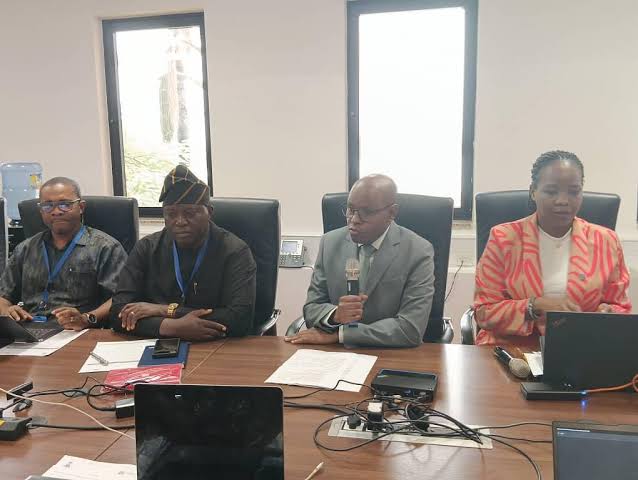
UNESCO, FG Seek Ethical Framework for Neurotechnology in Nigeria
By: Michael Mike
The United Nations Educational, Scientific and Cultural Organisation (UNESCO), the Federal Government and the scientific community have called for the development of an ethical and regulatory framework to guide the responsible development and application of neurotechnology in Nigeria.
The call was made on Wednesday in Abuja at a two-day stakeholders’ roundtable on the ethics of neurotechnology, where experts warned that rapid advances in technologies capable of interacting with the human nervous system could create profound challenges for human dignity, privacy, autonomy and fundamental rights.
Speaking at the event, UNESCO Representative to Nigeria, Dr. Isaias Barreto da Rosa, said neurotechnology was opening extraordinary possibilities in healthcare, rehabilitation, education and inclusion, but warned that the closer technology came to the human brain, the more fundamental the ethical questions became.
He said neurotechnology could improve understanding of the brain, enhance diagnosis and treatment, support rehabilitation and enable people living with disabilities to communicate and live more independently.
However, Barreto da Rosa said neurodata could be among the most sensitive forms of personal information, raising questions about who controls such data, how meaningful consent could be guaranteed, and how mental privacy, autonomy and freedom of thought could be protected.
He also warned against the possibility of neurotechnology widening existing inequalities rather than reducing them.
“These questions cannot be addressed after the technology has already transformed our societies. Ethics must evolve alongside innovation, not struggle to catch up with it,” he said.
The UNESCO representative recalled that the organisation’s member states adopted the Recommendation on the Ethics of Neurotechnology in November 2025, describing it as the first global normative framework dedicated to the field.
He said the recommendation built on UNESCO’s longstanding work on bioethics, science and emerging technologies, including its Recommendation on the Ethics of Artificial Intelligence.
According to him, the central principle was that scientific progress must remain at the service of humanity, human rights and the common good.
Barreto da Rosa noted that Nigeria had already contributed to the international process that produced the recommendation, with Nigerian experts and the Neuroscience Society of Nigeria participating in consultations that helped shape the global framework.
He said the task before Nigerian stakeholders was to translate the global principles into national reflection, policies and action.
“For Nigeria, this is also a question of opportunity,” he said, noting that the country’s universities, research institutions, medical community, technology ecosystem and young innovators had the capacity not only to participate in the future of neurotechnology but also to help shape its governance in Africa.
He urged stakeholders to examine who benefits from neurotechnology, who bears its risks, who has access to it, whose rights must be protected and who should be accountable when things go wrong.
The National Project Focal Point in the Federal Ministry of Innovation, Science and Technology, Dr. Adebayo Adeyemi, said the Federal Government considered the consultation timely, given the opportunities and risks associated with neurotechnology.
Adeyemi, who conveyed the goodwill of the Minister of Innovation, Science and Technology, Dr. Kingsley Udeh, said the minister was passionate about the initiative and welcomed the appointment of a national project focal point.
He said the UNESCO recommendation adopted in November 2025 provided clear boundaries and safeguards for the use, application and promotion of neurotechnology globally.
According to him, the immediate task was to interpret those recommendations within the Nigerian context.
“What is expected from this two-day meeting is that we are to be able to put those recommendations in a perspective that represents Nigeria, a perspective that will be able to speak to our realities,” he said.
Adeyemi said developing a Nigerian perspective would make it easier to formulate relevant policies and enforce regulations capable of responding to the country’s specific circumstances.
He also described the consultation as an opportunity for Nigeria to assume a leadership role in contributing to the global framework on neurotechnology.
He urged participants to bring their expertise and diverse professional experiences to the deliberations to produce practical outcomes applicable to Nigeria and Africa.
The President of the Neuroscience Society of Nigeria, Prof. Angela Danborno, said the ethical debate had become more urgent as advances in neuroscience and technology were transforming understanding of the human brain and opening new possibilities for diagnosis, treatment, rehabilitation, education and human-machine interaction.
Danborno identified brain-computer interfaces, neuroimaging, artificial intelligence, neuromodulation and other emerging neurotechnologies as areas with enormous potential to improve human health and wellbeing.
She noted that the importance of the subject was reflected in the theme of the society’s 2026 conference, “Neuroeducation and Neurotechnology.”
However, she said the benefits of emerging technologies must be weighed against their potential implications for individual rights and freedoms.
“Who owns and controls neural data? Who has the right to access information about a person’s brain? How do we protect mental privacy and cognitive liberty? How do we ensure informed consent when technologies become increasingly complex?” she asked.
Danborno stressed that the questions were not theoretical but required immediate consideration as neurotechnology continued to advance globally and found greater application in Nigerian society.
She particularly drew attention to optogenetics, an emerging neurotechnology involving the precise investigation and modulation of neural circuits.
According to her, the technology’s potential to manipulate specific neural circuits raised ethical questions around autonomy, informed consent, safety, genetic modification, identity, privacy and the possibility of altering behaviour or cognition.
Danborno said these concerns made emerging technologies particularly relevant to discussions on ethics and governance.
She called for Nigeria’s approach to be grounded in its unique social, cultural, economic and healthcare realities.
“For Nigeria, the conversation must also be grounded in our unique social, cultural, economic, and health-care system,” she said.
The neuroscientist stressed that scientific progress and ethical responsibility must advance together, warning that innovation should not come at the expense of human dignity, autonomy, privacy, justice and fundamental human rights.
Also speaking, a representative of the Federal Ministry of Health, Ado Danladi, said the ministry was particularly interested in the initiative because of the health benefits and ethical concerns associated with neurotechnology.
Danladi, who conveyed the greetings of the Minister of Health, the Permanent Secretary of the Federal Ministry of Health and Social Welfare, and the Director of Planning, Research and Statistics, said neurotechnology could play an important role in addressing a range of health conditions.
He cited Parkinson’s disease among organic conditions that could benefit from neurotechnology, while also noting its potential application in addressing conditions such as anxiety and depression.
However, he said the growing availability of neurotechnological devices and applications had raised important questions about the ethical implications of their use, particularly where they generated sensitive neurodata.
“How should this data be protected? Who uses this data? To what benefit, and all that?” he asked.
Danladi said the questions were particularly important as Nigeria sought to establish appropriate safeguards for the use of emerging neurotechnologies.
He described the UNESCO initiative as a pioneering effort and said Nigeria had an opportunity to position itself among countries taking the lead in protecting human dignity and maintaining ethical standards in scientific research.
He assured that the Federal Ministry of Health would align with UNESCO on the initiative to ensure that Nigeria was properly positioned to contribute to the emerging global governance of neurotechnology.
Danladi said the ministry would support efforts to promote ethical standards in research and the responsible application of neurotechnology in healthcare.
He urged participants to use the two-day consultation to develop recommendations capable of guiding Nigeria’s response to the opportunities and risks presented by the rapidly evolving field.
Barreto da Rosa, meanwhile, urged scientists, policymakers, medical professionals and innovators to go beyond asking whether a technological possibility existed.
He challenged them to also ask whether it should be done, under what conditions and for whose benefit.
He said the measure of scientific progress was not only what humanity could discover but how wisely and fairly such discoveries were applied.
UNESCO, he assured, would continue working with Nigeria to advance ethical governance, scientific capacity, inclusive innovation and international cooperation as neurotechnology continues to evolve.
UNESCO, FG Seek Ethical Framework for Neurotechnology in Nigeria

FG Declares October 1 Public Holiday as Nigeria Mark’s 66th Independence Anniversary
By: Michael Mike
The Federal Government has declared Thursday, October 1, 2026, a public holiday to commemorate Nigeria’s 66th Independence Anniversary.
The Minister of Interior, Dr. Olubunmi Tunji-Ojo, announced the declaration on behalf of the Federal Government in a statement issued on Wednesday by the Permanent Secretary of the Ministry, Dr. Magdalene Ajani.
The minister congratulated Nigerians at home and abroad, urging citizens to use the anniversary to reflect on the nation’s journey since independence and renew their commitment to building a more united, peaceful and prosperous country.
Tunji-Ojo emphasised the importance of peace and stability to national development, calling on Nigerians to emulate the patriotism and love for country demonstrated by the nation’s founding fathers.
He said Nigeria’s diversity remains a major strength and expressed optimism that a better and more prosperous nation is achievable through collective determination.
“As we celebrate 66 years of our independence, we should always remember that there is hope for our country and our diversity is our strength, and our collective determination remains the foundation upon which a stronger and more prosperous nation will be built,” the minister said.
The minister also reaffirmed the Federal Government’s commitment to the Renewed Hope Agenda of President Bola Ahmed Tinubu, stating that the administration would continue working towards a better Nigeria for all citizens.
He urged Nigerians to make the Independence anniversary an opportunity to demonstrate unity, patriotism, peaceful coexistence and mutual respect, while honouring the sacrifices of the country’s past heroes.
Tunji-Ojo further assured citizens that the Federal Government remains committed to strengthening national security, improving public safety and creating an environment where Nigerians can live, work and pursue their legitimate aspirations with confidence.
Nigeria gained independence from British colonial rule on October 1, 1960, and will mark its 66th Independence Anniversary on Thursday.
The minister wished Nigerians a happy 66th Independence Anniversary.
FG Declares October 1 Public Holiday as Nigeria Mark’s 66th Independence Anniversary

Farmer Injured in Machete Attack Allegedly by Herdsmen in Plateau

Suspected Fulani bandits Kill Man, Block Road in Plateau Community

NHRC seeks death penalty moratorium as 3,000 inmates languish on death row

Roger Federer’s Shock as DNA Results Reveal Myla and Charlene Are Not His Biological Children

THE PLIGHT OF FARIDA

FAILED COUP IN BURKINA FASO: HOW TRAORÉ NARROWLY ESCAPED ASSASSINATION PLOT AMID FOREIGN INTERFERENCE CLAIMS
-
 News3 years ago
Roger Federer’s Shock as DNA Results Reveal Myla and Charlene Are Not His Biological Children
-
Opinions5 years ago
THE PLIGHT OF FARIDA
-
 News1 year ago
FAILED COUP IN BURKINA FASO: HOW TRAORÉ NARROWLY ESCAPED ASSASSINATION PLOT AMID FOREIGN INTERFERENCE CLAIMS
-

 News3 years ago
EYN: Rev. Billi, Distortion of History, and The Living Tamarind Tree
-
 Opinions5 years ago
POLICE CHARGE ROOMS, A MINTING PRESS
-

 ACADEMICS3 years ago
A History of Biu” (2015) and The Lingering Bura-Pabir Question (1)
-

 Columns3 years ago
Army University Biu: There is certain interest, but certainly not from Borno.
-

 Politics1 year ago
2027: Why Hon. Midala Balami Must Go, as Youths in Hawul and Asikira/Uba Federal Constituency Reject ₦500,000 as Sallah Gift
