
Uncategorized
UNICEF: Over 9 million youth empowered through innovative partnerships in Nigeria

UNICEF: Over 9 million youth empowered through innovative partnerships in Nigeria
By Our Reporter
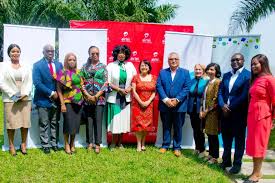
The UNICEF Generation Unlimited Nigeria (GenU 9JA) Public-Private-Youth-Partnership Platform today convened its annual Steering Committee at the Airtel Headquarters in Lagos to celebrate three years of groundbreaking achievements and set ambitious targets for the future. This meeting reaffirmed GenU 9JA’s commitment to transforming the lives of millions of Nigerian youths by connecting them to opportunities for skills development, digital learning, and livelihood pathways. The meeting was attended by GenU 9JA partners from the government, private sector, civil society, UN organizations, and young people from across Nigeria.
Since its inception, UNICEF GenU 9JA has empowered over 9 million young Nigerians, surpassing the three-year target of 7.5 million. This milestone positions the initiative well on its journey to achieving its 2030 goal of connecting 20 million young people with opportunities for growth and impact. The committee reviewed progress across its three core pillars: connectivity and digital learning, workplace readiness, and youth engagement. Key partners presented updates on their respective contributions, underscoring how collaboration has driven success.
Speaking at the event, Carl Cruz, CEO of Airtel Nigeria, emphasized the transformative potential of digital access, citing the ongoing UNICEF-Airtel Reimagine Education Program, a part of the GenU 9JA initiative. “Airtel is proud to play a role in ensuring no young Nigerian is left behind in this digital age. We are encouraged by the success recorded so far among the 1,260 schools connected through our partnership,” he said.
Somachi Chris-Asoluka, CEO of the Tony Elumelu Foundation (TEF), highlighted the impact of youth entrepreneurship: “Young people are the engines of Africa’s economic transformation. Since 2015, the TEF Entrepreneurship Programme has empowered over 20,000 young entrepreneurs, creating more than 400,000 jobs. Our BeGreen Africa initiative will now support over 400 young entrepreneurs in Nigeria, Kenya, Morocco, Senegal, and South Africa with green-focused training, mentorship, and seed capital to advance sustainable ventures.”
Cristian Munduate, UNICEF Nigeria Representative, reiterated the urgency for continued investment in youth: “The future of any nation lies in the hands of its children and youth. By providing skills, opportunities, and a platform for engagement, we are not only changing individual lives but also shaping a brighter future for Nigeria.”
UNICEF: Over 9 million youth empowered through innovative partnerships in Nigeria


Uncategorized
COAS Says New Nigeria Army Depot Amasiri Edda Will Produce New Generation of Combat-Ready Soldiers, Boost Force Expansion, National Unity
COAS Says New Nigeria Army Depot Amasiri Edda Will Produce New Generation of Combat-Ready Soldiers, Boost Force Expansion, National Unity
By Zagazola Makama
The Chief of Army Staff (COAS), Lt.-Gen. Waidi Shaibu, has described the establishment of the Depot Nigerian Army, Amasiri, Ebonyi State, as a landmark achievement in the Federal Government’s ongoing efforts to strengthen national security, deepen national integration and expand the Nigerian Army’s capacity to respond to emerging security challenges.
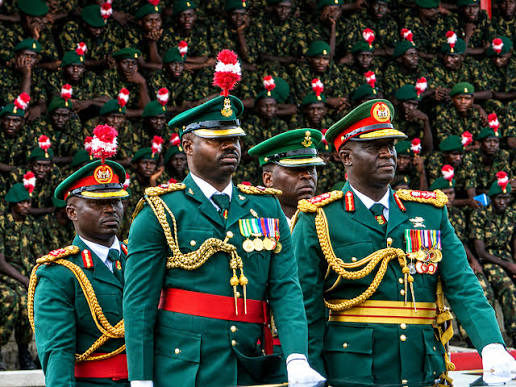
Shaibu stated this on Wednesday during the maiden Passing-Out Parade of the pioneer recruits of the newly established Depot Nigerian Army, Amasiri, in Edda Local Government Area of Ebonyi State.
The COAS said the event represented a defining moment in the history of the Nigerian Army, marking not only the successful completion of military training by the pioneer intake but also the beginning of a new chapter in the Army’s force generation and training architecture.
Addressing a gathering that included the Executive Governor of Ebonyi state, senior serving and retired military officers, members of the Federal Executive Council, heads of security agencies, traditional rulers, captains of industry, community leaders and families of the recruits, Shaibu said the depot’s establishment reflected the Federal Government’s commitment to equitable national development and strengthening the country’s security institutions.
He acknowledged former Chiefs of Army Staff and retired senior officers present at the ceremony, members of the Nigerian Army Officers’ Wives Association (NAOWA), led by its President, Dr. Hajia Sa’adatu Hassan Shaibu, heads of security agencies, traditional rulers led by His Royal Majesty Eze Charles Nkuma, as well as host communities of Amasiri and Edda for their support.
The Army Chief noted that the depot, established on Nov. 25, 2025, is strategically located in Ebonyi State and remains the third recruit training depot of the Nigerian Army as well as the first primary recruit training institution established in the South-East geopolitical zone.
According to him, the decision to establish the institution in the South-East demonstrates the Federal Government’s unwavering commitment to promoting national cohesion and ensuring balanced development across all parts of the country.
“The establishment of the Depot Nigerian Army represents a landmark achievement in our national journey towards security, unity and equitable development.
“Without doubt, today’s event represents the realisation of a noble vision and another major milestone in the ongoing transformation of our Armed Forces towards effectively addressing the contemporary security challenges confronting our beloved nation,” he said.
Shaibu added that to the people of the South-East, especially Ebonyi State, the depot would remain a symbol of national integration, shared responsibility and collective commitment to peace, security and national development.
The COAS explained that beyond its strategic importance to the region, the depot would significantly reduce operational and training pressure on the Nigerian Army’s existing recruit depots in Zaria and Osogbo.
According to him, it also signals the emergence of another centre of excellence for producing highly trained and professional soldiers capable of meeting the country’s present and future security needs.
“On my part as the Chief of Army Staff, the establishment of this depot not only eases the operational and training pressure on the existing depots in Zaria and Osogbo, but also heralds the emergence of a new generation of professionally trained soldiers from this prestigious institution.
“It is equally a proud moment for Depot Nigerian Army, Amasiri, which despite being newly established, has successfully and effectively trained and nurtured this pioneer intake under rigorous conditions,” he said.
Shaibu disclosed that the recruits graduating during the ceremony formed part of the first batch of 14,000 personnel under the Federal Government’s Strategic Force Expansion Initiative, which would eventually produce 28,000 additional soldiers for the Nigerian Army.
He expressed profound appreciation to President Bola Ahmed Tinubu, Commander-in-Chief of the Armed Forces, for providing the strategic direction that led to the establishment of the depot and approving the resources required for its successful take-off.
According to him, the President’s support reflects the Federal Government’s determination to continuously strengthen the institutional capacity of the Nigerian Army by producing highly trained, disciplined and mission-ready soldiers in sufficient numbers.
“As the character of warfare and asymmetric threats continues to evolve, so too must our capacity to prepare men and women entrusted with safeguarding the security and territorial integrity of our great nation,” he said.
The COAS also commended the Governor of Ebonyi State, Rt. Hon. Francis Ogbonna Nwifuru, for his unwavering support and partnership, particularly for facilitating the historic groundbreaking ceremony held on Jan. 13, 2026.
“I want to put on record that Your Excellency has written your name in gold as one of the founding fathers of this depot,” he said.
He equally appreciated members of the Federal Executive Council, retired and serving senior military officers from the South-East and other stakeholders whose collective efforts contributed to the successful establishment of the institution.
Shaibu reserved special commendation for the Commandant, instructors and training staff of the depot for successfully transforming civilians into disciplined soldiers through rigorous military training.
“I commend your professionalism, resilience and dedication in transforming these young civilians into soldiers whom the Nigerian Army can confidently deploy into battle.
“This aligns with my Command Philosophy, which seeks to transform the Nigerian Army into a more professional, adaptable, combat-ready and resilient force capable of decisively discharging its constitutional responsibilities within a joint and multi-agency environment,” he said.
The Army Chief added that the instructors had laid a solid foundation for the recruits to effectively support ongoing counter-terrorism, counter-insurgency and internal security operations across the country.
Addressing the graduating soldiers, Shaibu reminded them that while they had successfully completed basic military training, the passing-out parade merely marked the beginning of a lifelong journey of learning and professional development.
He noted that although Amasiri is the third recruit training depot in the Nigerian Army, it had already distinguished itself in tactical-level training, as reflected in the impressive parade and weapon proficiency demonstrations by the pioneer recruits.
“As you pass out today, you must understand that the training you have received here is intended to prepare you for the tasks ahead and serve as the foundation for your future military education and operational experience,” he said.
The COAS observed that Nigeria’s security environment had become increasingly complex, with terrorism, insurgency, banditry, separatist violence, transnational organised crime, cyber threats and the proliferation of small arms and light weapons posing unprecedented challenges to national and regional stability.
He therefore urged the recruits to understand from the outset that defending Nigeria would require courage, sacrifice, discipline and unwavering commitment to duty.
Shaibu assured that the Nigerian Army would continue to review and strengthen its recruit training curriculum to meet evolving operational realities.
According to him, greater emphasis is now being placed on combat fitness, weapon handling, marksmanship, fieldcraft, minor tactics and leadership development to produce soldiers capable of operating effectively in contemporary battlefields.
“The training you underwent here was deliberately designed to prepare you for the realities of our operational environment.
“As you proceed into the field, remember that the Nigerian people will look up to you not only as defenders of the nation but also as symbols of hope, courage and national unity,” he said.
The COAS reminded the recruits that the Oath of Allegiance they took was not merely ceremonial but a solemn covenant with the Federal Republic of Nigeria.
“When you took the Oath of Allegiance, you pledged to defend Nigeria with your lives.
“Those words are not mere ceremonial requirements but a solemn covenant between you and your country.
“I therefore encourage you to wear your uniform with pride, carry your weapons with responsibility and always treat your comrades with dignity and respect,” he said.
Shaibu urged the soldiers to uphold the core values and traditions of the Nigerian Army throughout their careers, stressing that professionalism, discipline, loyalty and patriotism would remain the hallmarks of military service.
He expressed confidence that the pioneer graduates of the depot would justify the confidence reposed in them and contribute significantly to ongoing operations aimed at restoring peace and safeguarding Nigeria’s sovereignty and territorial integrity.
COAS Says New Nigeria Army Depot Amasiri Edda Will Produce New Generation of Combat-Ready Soldiers, Boost Force Expansion, National Unity
COAS Commends Ebonyi Governor for Strengthening Security, Supporting Nigerian Army
By Zagazola Makama
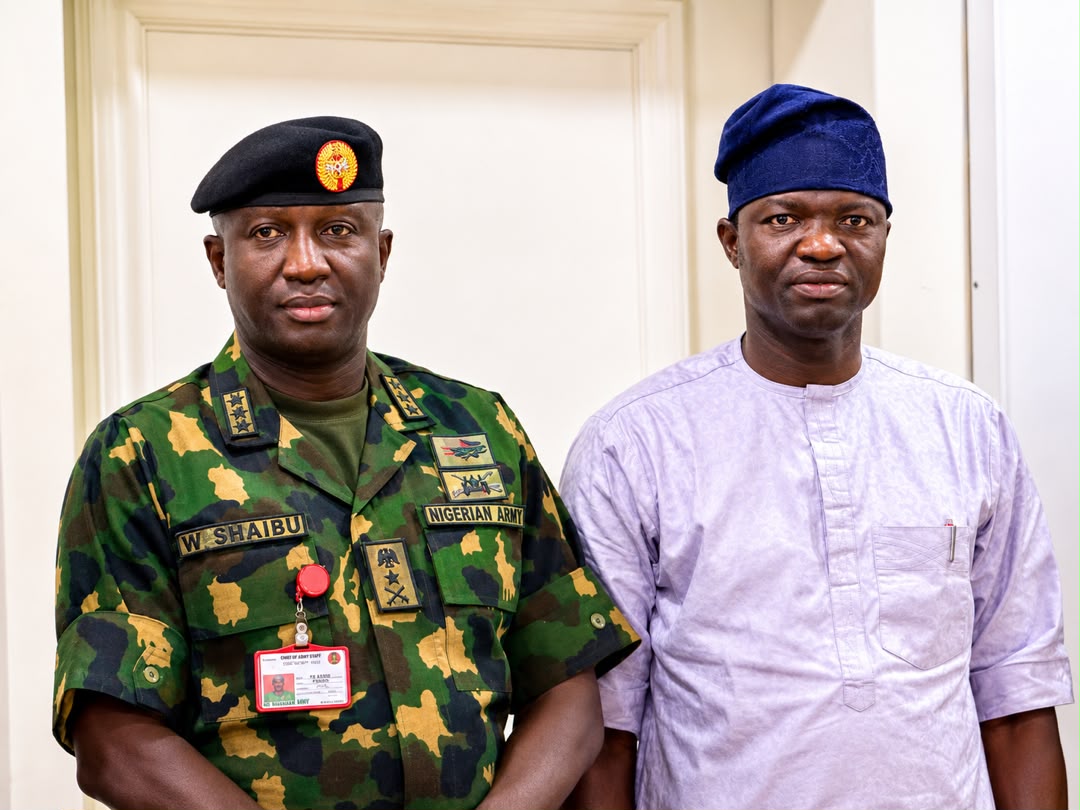
The Chief of Army Staff (COAS), Lt.-Gen. Waidi Shaibu, has commended the Governor of Ebonyi State, Francis Nwifuru, for his unwavering support to the Nigerian Army, describing the state government’s contributions as instrumental to enhancing security and military operations in the state.
The COAS gave the commendation on Tuesday during a curtesy call at the Government House in Abakaliki ahead of the passing-out parade of recruits of the 99 Regular Intake at the Nigerian Army Depot, Mmasiara, Ebonyi State.
Shaibu congratulated the governor on his achievements since assuming office, noting that the security situation across Ebonyi had improved significantly under his administration.
“It is on record that since your assumption of office, the security situation in the state has improved tremendously,” he said.
The Army Chief described the establishment of the Nigerian Army Depot at Mmasiara as a historic milestone for the South-East, saying it was made possible through the approval of President Bola Ahmed Tinubu as part of efforts to promote inclusivity and equitable distribution of military institutions across the country.
According to him, the depot represents a strategic investment in manpower development and will significantly boost the Nigerian Army’s operational strength in addressing the country’s evolving security challenges.
He also praised the Ebonyi State Government for facilitating the seamless acquisition of land for the establishment of the depot.
“I am aware of your generous support right from the inception of the project. You ensured that the land for the depot was made available without any encumbrances, thereby enabling the Nigerian Army to commence the project without delay,” he said.
Shaibu further acknowledged Governor Nwifuru’s interventions in promoting peace and stability in the state, particularly his efforts in resolving communal crises.
The COAS also lauded the governor for supporting the construction of a military hospital within the depot, describing the project as critical to the welfare of recruits undergoing intensive military training.
He explained that the hospital would provide essential medical services for trainees and personnel, thereby enhancing the operational capacity and sustainability of the new training institution.
In addition, Shaibu commended the governor for donating three operational vehicles to the military formation, describing the gesture as further evidence of the state’s commitment to strengthening security.
He reiterated that collaboration between state governments and the military remains indispensable in addressing contemporary security challenges across Nigeria.
“The support of state governments is critical to ensuring that the Nigerian Army effectively performs its constitutional responsibilities wherever it is deployed,” he stated.
The Army Chief also expressed appreciation to the people of Ebonyi State for providing a peaceful and hospitable environment for military formations operating in the state.
He noted that the state currently hosts several key Nigerian Army establishments, including the Command Secondary School in Abakaliki, an infantry battalion, an engineering regiment, a corps regiment and the newly established Nigerian Army Depot at Mmasiara.
Shaibu concluded by thanking Governor Nwifuru and the people of Ebonyi State for their continued partnership with the Nigerian Army, expressing optimism that the collaboration would further enhance peace, security and development in the state and the South-East region.
Responding, Ebonyi State Governor, Francis Nwifuru, expressed profound appreciation to the Chief of Army Staff for what he described as the Nigerian Army’s unwavering commitment to restoring peace and strengthening security across the state.
The governor said the establishment of the Nigerian Army Depot at Mmasiara was a landmark development that would remain one of the greatest federal investments in Ebonyi State, noting that the institution would not only enhance military capacity but also stimulate economic and social development in the region.
Nwifuru credited the improved security situation in the state to the professionalism, courage and intelligence-driven operations of troops deployed to Ebonyi, stressing that residents were now enjoying unprecedented peace.
“Before I even think of calling for assistance, the Army has already responded. That is the level of commitment we have witnessed. Nigerians should appreciate the sacrifices these officers are making because they are truly working,” the governor said.
He disclosed that since the deployment of the current military commanders to the state, Ebonyi had not recorded any successful attack by suspected members of the outlawed Eastern Security Network (ESN), attributing the achievement to proactive military operations and close collaboration between the state government and security agencies.
According to him, the operational approach adopted by the military has significantly disrupted criminal activities, with security forces routinely foiling planned attacks through timely intelligence and swift intervention.
Nwifuru reaffirmed his administration’s commitment to supporting the Nigerian Army with logistics and other operational requirements, saying security remained the foundation for sustainable development.
“We are deeply grateful to the Chief of Army Staff and the officers and soldiers serving in Ebonyi. Their sacrifices have restored confidence among our people, and we will continue to partner with the Nigerian Army to sustain the peace we are enjoying,” he said.
COAS Commends Ebonyi Governor for Strengthening Security, Supporting Nigerian Army
Troops Arrest Senior Corrections Officer Over Alleged Arms Trafficking in Enugu
By: Zagazola Makama
Troops of Operation UDO KA have arrested an Assistant Superintendent of Corrections allegedly linked to an arms trafficking syndicate during a follow-up operation in Enugu State.
Sources disclosed that the suspect, identified as Ekweme Clement Onyebuchi, was apprehended at about 6:11 p.m. on Monday at Okpara Square, No. 11 Independence Layout, in Enugu North Local Government Area.
The sources said the operation was conducted by troops of the 82 Division Garrison in conjunction with personnel of the Division Provost Group, following ongoing investigations into the arrest of suspected arms racketeers on June 30.
According to the sources, troops recovered two United States-made pistols, two rounds of 9mm Luger ammunition and one vehicle during the operation.
Preliminary investigations, the sources said, indicated that the suspect had earlier been identified and arrested as part of a syndicate allegedly involved in the illegal sale of arms and ammunition to suspected criminal elements.
The suspect and the recovered exhibits are currently in military custody as investigations continue to unravel the activities and network of the alleged arms trafficking syndicate.
The arrest is part of ongoing security operations aimed at dismantling illegal arms supply networks and curbing the proliferation of weapons in the South-East.
Troops Arrest Senior Corrections Officer Over Alleged Arms Trafficking in Enugu

COAS Says New Nigeria Army Depot Amasiri Edda Will Produce New Generation of Combat-Ready Soldiers, Boost Force Expansion, National Unity

FG Moves to Stem Human Trafficking, Irregular Migration as Over 1,000 Nigerians Return from Crisis Routes

MSF Ends Kano Diphtheria Emergency Mission After Vaccinating 835,000 Children

Roger Federer’s Shock as DNA Results Reveal Myla and Charlene Are Not His Biological Children

THE PLIGHT OF FARIDA

FAILED COUP IN BURKINA FASO: HOW TRAORÉ NARROWLY ESCAPED ASSASSINATION PLOT AMID FOREIGN INTERFERENCE CLAIMS
-
 News2 years ago
Roger Federer’s Shock as DNA Results Reveal Myla and Charlene Are Not His Biological Children
-
Opinions4 years ago
THE PLIGHT OF FARIDA
-
 News1 year ago
FAILED COUP IN BURKINA FASO: HOW TRAORÉ NARROWLY ESCAPED ASSASSINATION PLOT AMID FOREIGN INTERFERENCE CLAIMS
-

 News2 years ago
EYN: Rev. Billi, Distortion of History, and The Living Tamarind Tree
-
 Opinions5 years ago
POLICE CHARGE ROOMS, A MINTING PRESS
-

 ACADEMICS2 years ago
A History of Biu” (2015) and The Lingering Bura-Pabir Question (1)
-

 Columns2 years ago
Army University Biu: There is certain interest, but certainly not from Borno.
-

 Politics1 year ago
2027: Why Hon. Midala Balami Must Go, as Youths in Hawul and Asikira/Uba Federal Constituency Reject ₦500,000 as Sallah Gift
