
Uncategorized
EU, NHRC Collaborate to Safeguard Human Rights in Nigeria

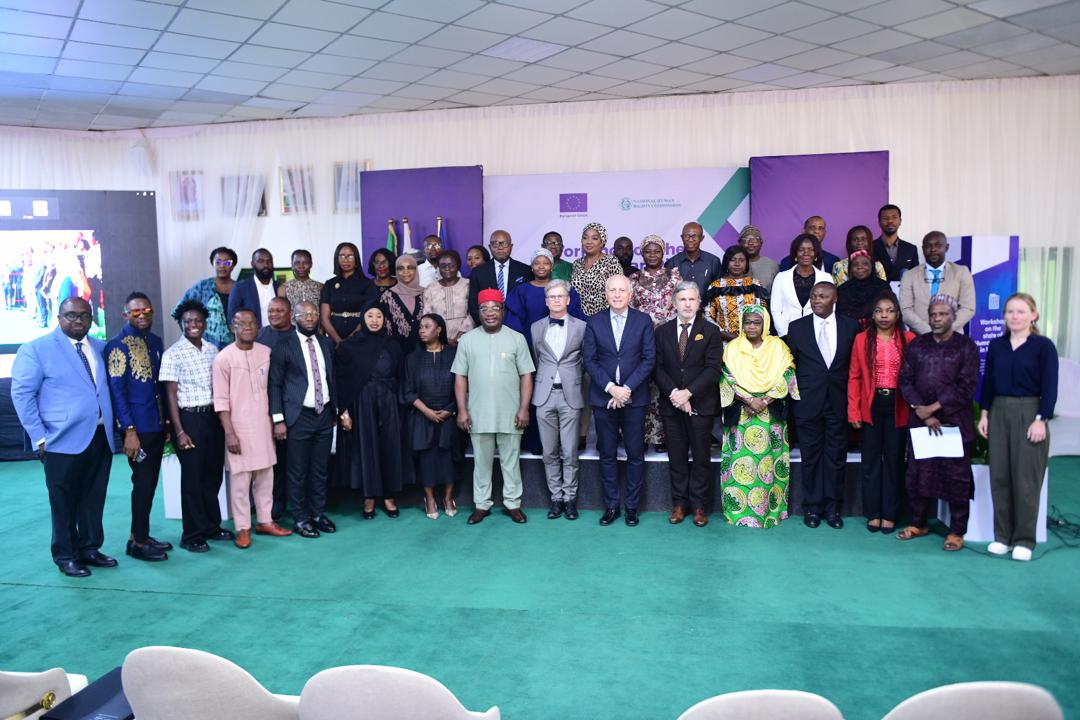
EU, NHRC Collaborate to Safeguard Human Rights in Nigeria
Inaugurate Human Rights Defenders Forum
By: Michael Mike
The European Union (EU) and the National Human Rights Commission (NHRC) has collaborated in the fight against violation of human rights in Nigeria, joining forces to inaugurate the Human Rights Defenders Forum aimed at combating the numerous challenges of safeguarding human rights in the country.
Speaking at the Civil Society Consultation on the State of Human Rights in Nigeria and the Inauguration of the Human Rights Defenders Forum, which had in attendance Portugal Ambassador, Paulo Santos and Belgium Ambassador, Pieter Leenknegt, the Executive Secretary, NHRC, Tony Ojukwu lamented that in recent years, “we have witnessed alarming trends, including restrictions on the rights of individuals and organisations to operate freely, and threats against those who dare to speak truth to power.”
He insisted that: “These developments serve as a stark reminder that the protection of human rights is an ongoing struggle that requires continuous vigilance, action, and cooperation from all sectors of society.”
Ojukwu noted that: “Today marks a significant milestone in our collective efforts to advance human rights and protect the defenders who tirelessly work to uphold these rights, even in the face of adversity.
“We are gathered here not only to discuss the current state of human rights in our country but also to chart a way forward—one that ensures greater protection for civil liberties, fosters democratic consolidation, and safeguards the fundamental rights of all Nigerians, especially those who stand up for the rights of others.”
He said: “As we know, the human rights landscape in Nigeria is a complex and evolving one. While we have made strides, challenges remain, especially regarding the protection of civic space and the safety of human rights defenders.”
Ojukwu said: “Three major events preceded today’s events which are worth mentioning. First was the End bad governance protests in August. The second is the arraignment of minors recently witnessed in Abuja. Third was the presentation of the report of the Special Independent Investigative Panel on Human Rights Violations in Counter-Insurgency Operations in the North East.
“These three events underscore the state of human rights in Nigeria and present for us discussion points on our institutions and mechanisms. Their outcomes also present us with hope and opportunities to base our present and future actions that will ensure that human rights of vulnerable Nigerians are protected. I thank all those whose actions have been responsible for the outcomes of these historic events.”
He said: “We are deeply grateful to the European Union Delegation to Nigeria for partnering with the National Human Rights Commission in organizing this forum.
The EU’s unwavering commitment to promoting human rights and supporting civil society efforts across the globe is commendable, and we are honoured to work with them in Nigeria.
“The discussions we will have today are centered on three crucial themes that are at the heart of any democracy: the right to electoral participation and democratic consolidation, the protection of civil liberties, civic space and human rights defenders, and the pressing issue of digital rights and privacy protection. These issues are not merely theoretical—they are practical challenges that impact our daily lives and the future of Nigeria as a democratic state.”
He added that: “The inauguration of the Human Rights Defenders Forum today underscores the importance of creating a unified platform for those who work at the frontlines of human rights protection. The forum will serve as a space for defenders to share experiences, exchange ideas, and strategize on how to address the myriad challenges they face. It is crucial that we stand together to provide human rights defenders with the necessary support and ensure their safety at the frontlines.”
Also speaking at the occasion, the Deputy Head of Delegation, European Union Delegation to Nigeria and ECOWAS, Zissimos Vergos said human rights is “a topic that is not only essential but always incredibly timely and central to the European Union’s foreign policy, constituting our institutional core and soul: our unwavering support for a continuous active, open and transparent dialogue on the state of democracy and human rights around the world including our host country, Nigeria, this great country and its great people that you represent here today.”
He noted that: “We live in an era underlined by both remarkable advancements and unprecedented challenges; an era where we would have expected that global partnerships underlined by visionary and rationale conversations for a better and more inclusive world would have been the norm; instead we all see that the basic ingredients for such a successful recipe of hope and global solidarity are still missing; for us in the European Union, we firmly believe that democracy, inclusive societies and human rights are indispensable ingredients for such recipe to work; many solutions to the problems surrounding us originate from the inability to on-board the citizens of the world in a process of social, financial and political inclusion; simply to allow them to feel that they belong and that they can trust a shared societal project; we see it and feel it everywhere around us.”
He added that “global conflicts and geopolitical shifts have highlighted the importance of international cooperation and the protection of human rights.
“The collective consciousness on the urgent need to defend democracy and human rights is reflected upon the ever growing global citizens’ movements and advocacy for equality, justice, and inclusion; an urgent and pressing demand for societal change is present with youth in the forefront; it is important that we all listen and take stock.
“The world is in an urgent need for peace, healing and reconciliation. Human rights, with their universal and inalienable qualities, offer a solid framework for conversation. Narratives of authoritarianism, populism, extremism, conflict entrepreneurship, compounded by poverty, inequality and increasingly the adverse impact of climate change on livelihoods risk to derail essential conversations on urgently needed global corrections and critical decisions regarding investment in a common future.Efforts to safeguard human dignity, freedom, and equality remain crucial.”
The notion of global leadership in the mind of the citizens anywhere in the world, is strongly correlated with footprints of social, financial and political inclusion; the degree of success of such citizens’s value chain’ depends on the fundamentals of inclusive democratic governance and human rights; there are no shortcuts and where they are tried they just disrupt and generate conflict and division.”
He noted that: “Nigeria, as the largest democracy in Africa, plays a pivotal role in the continent’s political landscape. The other African countries, but also the world rightly so, are looking up to Nigeria and its multi-ethnic and multi-religious democratic trajectory and paradigms.
“The European Union, recognises the importance of partnering with Nigeria in itinerary to democratic governance and human rights.”
EU, NHRC Collaborate to Safeguard Human Rights in Nigeria


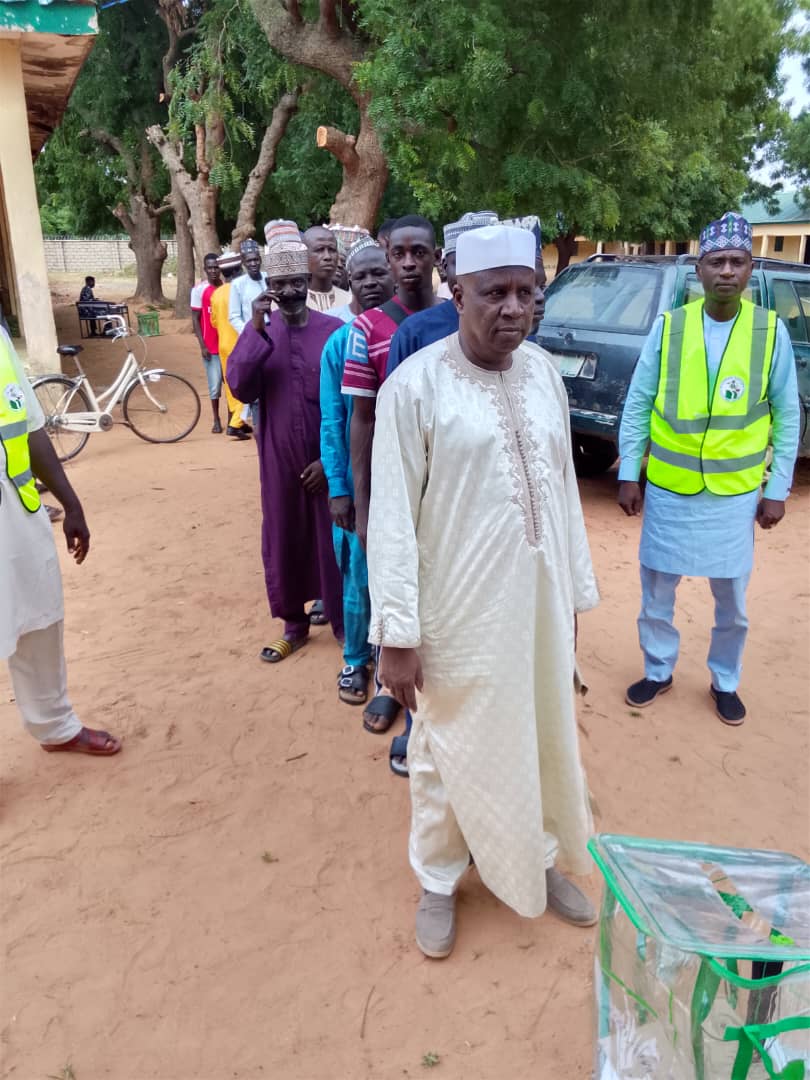
LG elections are very important—Yobe works commissioner.
By: Yahaya Wakili
Yobe State Commissioner for Works, Hon. Engr. Umaru Wakil Duddaye, has described the local government election as very important and closed to the grassroots.
Engr. Duddaye announced this today, while briefing the journalists shortly after casting his vote at the Duddaye polling unit in the state’s local government council election at the Duddaye/Fakaru ward in the Nangere local government area of Yobe state.
“When you are dealing with the people from the grassroots, you must talk of local government; therefore, the election is very important in the democratic system, and people are exercising their right to vote for the candidate of their choice,” Duddaye said.
According to him, we have 20 polling units in Duddaye/Fakarau ward, and all the polling stations have had the election materials delivered in time, and the chairman is already on the seat. It is a continuity process, and he urged him to carry the legacy of Apc and Governor Mai Mala Buni and the President of the Federal Republic of Nigeria, Asiwaju Bola Ahmed Tinubu GCFR.
He further maintained that the party’s success is our expectation now that the political season is here, and we hope, as APC members, we have the right to vote for APC, adding that, here in Nangere local government, there are so many projects that are being executed by the APC government.
“APC is working; we expect everybody to vote for Asiwaju Bola Ahmed Tinubu. The president tirelessly works to ensure that the country’s economy has significantly improved beyond expectations. It was noted that the Yobe state government, led by His Excellency Governor Mai Mala Buni, is also making efforts.
Engr. Duddaye revealed that we have our own candidates, we hope everybody from the top to bottom will vote for APC, we have to deliver all 24 members of the state house of assembly, 6 houses of representatives, 3 senators, and our governor, Baba Malam Wali Mni, and inshallah, Bola Ahmed Tinubu GCFR will be the next president in 2027.
LG elections are very important—Yobe works commissioner.

Herder assaulted over alleged destruction of farm crops in Jos North
By: Zagazola Makama
A herder, identified as Abubakar Abdullahi, has been assaulted by a farmer, Mr Caleb Bulus, following an alleged dispute over the destruction of farm crops in Kwanga village, Jos North Local Government Area of Plateau State.
Security sources told Zagazola Makama that the incident occurred at about 4:45 p.m. on Sept. 25, 2026, when troops of Sector 1, Sub-Sector 12, responded to a report of the assault.
The herder reportedly sustained injuries during the incident and was evacuated to the Jos University Teaching Hospital (JUTH) for medical attention.
The suspect, Bulus, was arrested and handed over to Keystone Authority, Jos, for further investigation and appropriate action.
Security sources said the incident was being monitored to prevent the dispute from escalating into further communal tension in the area.
Herder assaulted over alleged destruction of farm crops in Jos North
Uncategorized
COAS unveils Nigerian Army Airborne School, tasks troops on special operations readiness
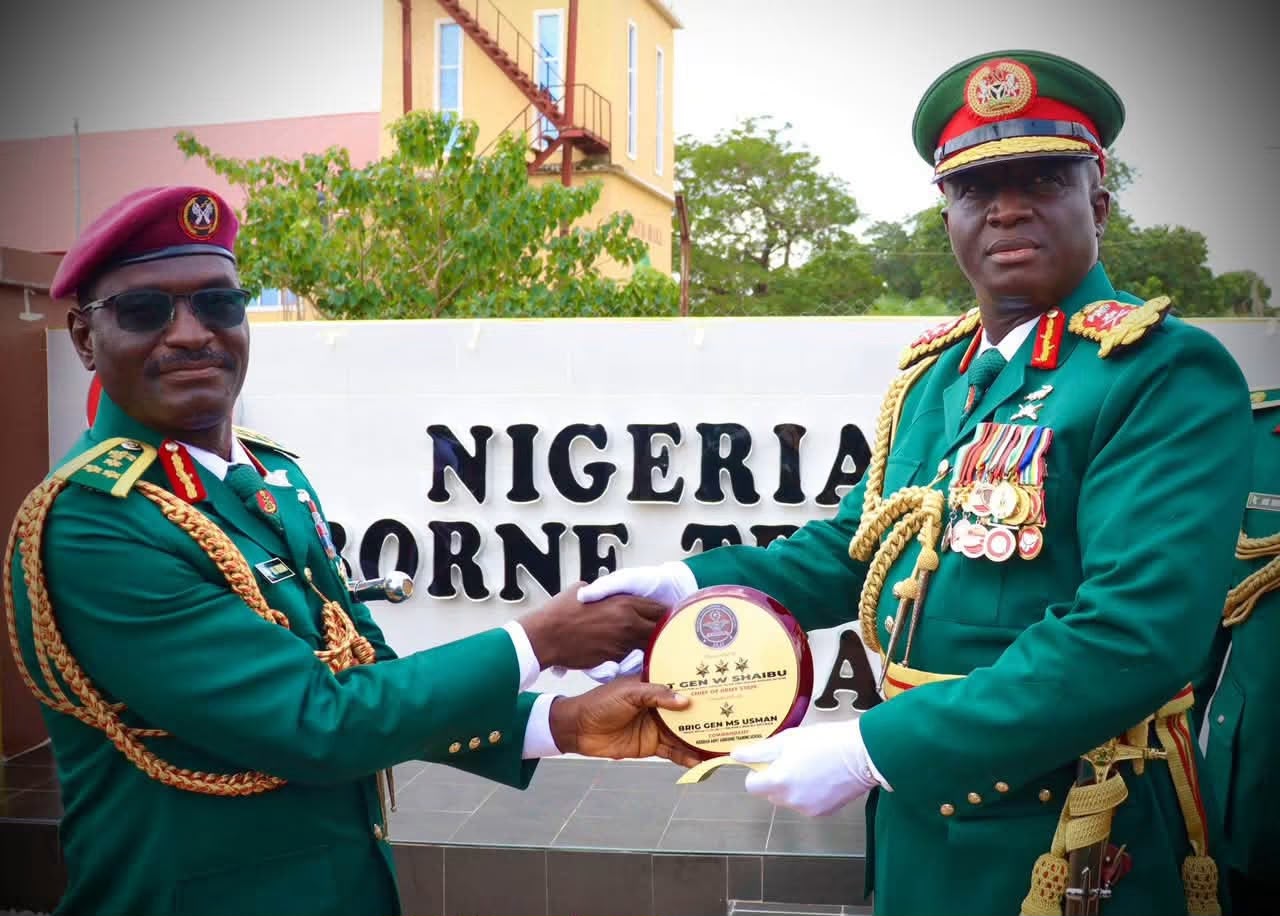
COAS unveils Nigerian Army Airborne School, tasks troops on special operations readiness
By: Zagazola Makama
The Chief of Army Staff (COAS), Lt. Gen. Waidi Shaibu, has unveiled the Nigerian Army Airborne Training School at Jaji Military Cantonment, Kaduna State, with a charge to personnel to attain the highest standards of specialised training and operational readiness.
Shaibu, who unveiled the School on Friday, September 25, 2026, said the establishment of the institution represents a strategic investment in developing highly skilled, agile and mission-ready personnel capable of undertaking complex airborne and special operations.
He said the changing character of warfare and the increasing sophistication of asymmetric threats require a force that is highly trained, adaptable and capable of operating effectively across difficult and diverse operational environments.
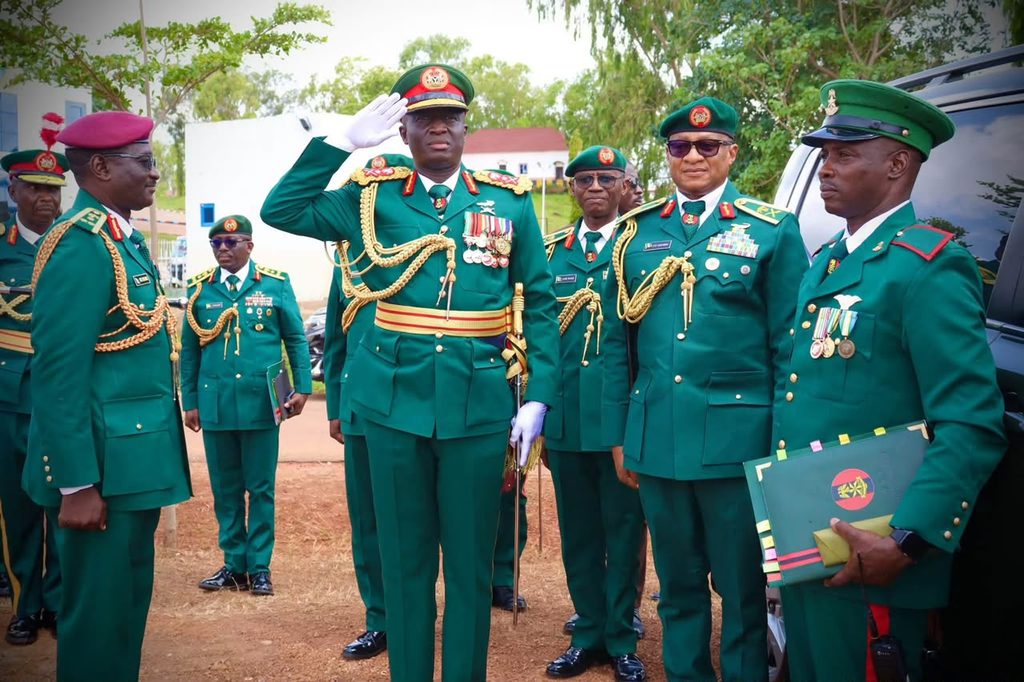
According to him, airborne and special operations capabilities are increasingly important to contemporary military operations, particularly in counter-terrorism, counter-insurgency and other asymmetric security environments.
The COAS therefore tasked the Commandant and instructors of the new School to develop and continually refine rigorous, operationally relevant training programmes that reflect global best practices while addressing Nigeria’s peculiar security challenges.
He said the School would serve as a centre of excellence for airborne operations, parachuting, air assault and other specialised military skills.
Shaibu explained that the initiative would enhance combat readiness and operational flexibility, while strengthening the Army’s ability to rapidly deploy appropriately trained personnel in support of joint and multi-agency operations.
The Army Chief assured the institution of continued support from Army Headquarters through the provision of necessary infrastructure, equipment and manpower required to fulfil its mandate.
He said the initiative formed part of ongoing efforts to build a more professional, adaptable, combat-ready and resilient Nigerian Army capable of effectively discharging its constitutional responsibilities.
Earlier, the Commandant of the Nigerian Army Airborne School, Brig. Gen. Muhammed Sani Usman, said the institution had been upgraded from a wing of the Nigerian Army School of Infantry, Jaji, into a full-fledged school.
Usman explained that the upgrade was driven by the Army’s continuing force-development efforts and the need to strengthen specialised capabilities, particularly those required to complement the operational employment of Nigerian Army Aviation.
The establishment of the School is expected to provide a dedicated institutional framework for developing personnel with specialised airborne capabilities and improving the Army’s capacity to generate forces for rapidly evolving operational requirements.
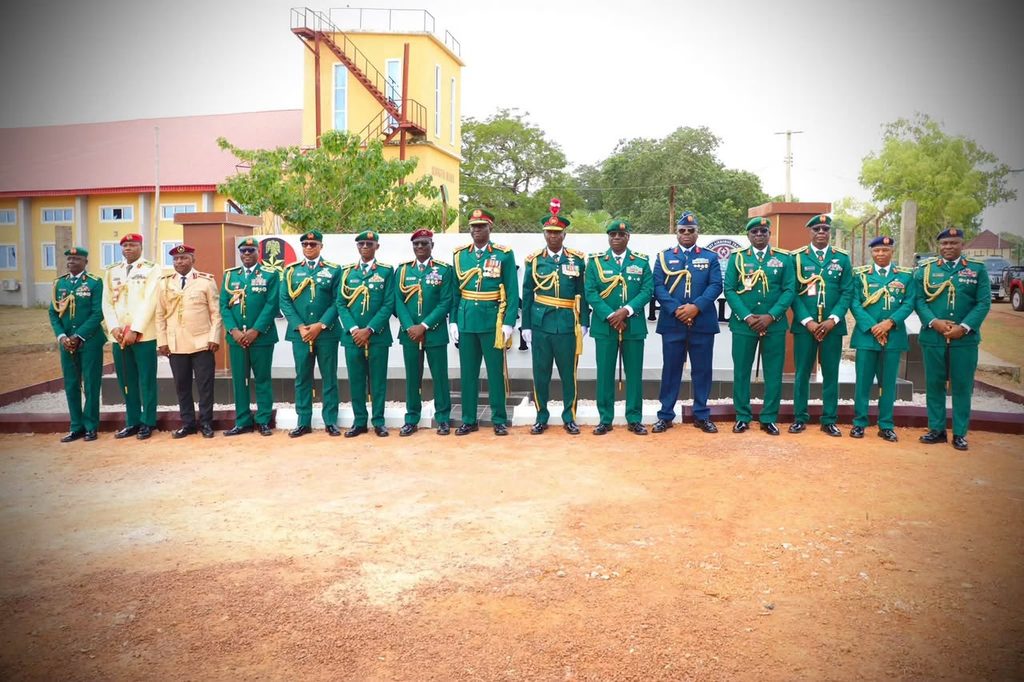
The event underscores the Army’s broader emphasis on specialised force development as it confronts increasingly complex security challenges requiring speed, mobility, precision and interoperability across conventional and asymmetric operational environments.
COAS unveils Nigerian Army Airborne School, tasks troops on special operations readiness

LG elections are very important—Yobe works commissioner.

35-year-old woman allegedly k!lls her co-wife with pestle in Bauchi

Army operationalises 28 Armoured Brigade in Kebbi, strengthens security presence in North-West

Roger Federer’s Shock as DNA Results Reveal Myla and Charlene Are Not His Biological Children

THE PLIGHT OF FARIDA

FAILED COUP IN BURKINA FASO: HOW TRAORÉ NARROWLY ESCAPED ASSASSINATION PLOT AMID FOREIGN INTERFERENCE CLAIMS
-
 News3 years ago
Roger Federer’s Shock as DNA Results Reveal Myla and Charlene Are Not His Biological Children
-
Opinions5 years ago
THE PLIGHT OF FARIDA
-
 News1 year ago
FAILED COUP IN BURKINA FASO: HOW TRAORÉ NARROWLY ESCAPED ASSASSINATION PLOT AMID FOREIGN INTERFERENCE CLAIMS
-

 News3 years ago
EYN: Rev. Billi, Distortion of History, and The Living Tamarind Tree
-
 Opinions5 years ago
POLICE CHARGE ROOMS, A MINTING PRESS
-

 ACADEMICS3 years ago
A History of Biu” (2015) and The Lingering Bura-Pabir Question (1)
-

 Columns3 years ago
Army University Biu: There is certain interest, but certainly not from Borno.
-

 Politics1 year ago
2027: Why Hon. Midala Balami Must Go, as Youths in Hawul and Asikira/Uba Federal Constituency Reject ₦500,000 as Sallah Gift
