
Uncategorized
VP Shettima Demands More Private Sector Engagement In Healthcare Reforms


VP Shettima Demands More Private Sector Engagement In Healthcare Reforms
** Commissions Sulaiman Adebola Adegunwa Trauma Centre in Ogun
By: Our Reporter
Vice President Kashim Shettima has called for increased private sector participation in the ongoing reforms in the health sector and healthcare development across Nigeria.
He reaffirmed the Federal Government’s commitment to addressing critical deficits in the health sector through strategic partnerships and investments, noting however that the private sector has a very crucial role to play because the “government alone cannot shoulder this burden.”

The Vice President who stated this on Saturday when he commissioned the Sulaiman Adebola Adegunwa Trauma Centre in Sagamu, Ogun State, said the health facility is a vital addition to the nation’s emergency care infrastructure and a symbol of the government’s dedication to saving lives.
Senator Shettima revealed that President Bola Ahmed Tinubu has approved a “comprehensive Health Sector Renewal Investment Initiative, including the creation of over 8,800 new Primary Healthcare Centres across the country and the upgrade of existing tertiary institutions to handle trauma, oncology, and infectious disease control.

“In a nation facing rising urbanisation, motorisation, and industrial risks, trauma care is no longer optional—it is essential,” VP Shettima added, describing the facility as “a lifeline and a symbol of preparedness in a nation that cares.”
He commended the Adegunwa family’s initiative, urging more philanthropists and corporate organisations to “rise beyond personal achievement and invest in nation-building.”
Describing the initiative as a model of private sector contribution to public health, VP Shettima said, “This centre is more than a birthday gift; it is a gift to humanity. It is a lifeline—a sanctuary where the wounded can find healing, and where families in despair can find hope”.

The facility built by the Sulaiman Adebola Adegunwa Foundation within the Olabisi Onabanjo University Teaching Hospital aligns with the Federal Government’s Health Sector Renewal Investment Initiative aimed at overhauling Nigeria’s healthcare delivery system.
“The Administration is investing in a National Health Insurance Scheme that leaves no Nigerian behind, and a Digital Health Information Management System that ensures data drives diagnosis and delivery,” the Vice President stated.
The commissioning ceremony coincided with the 80th birthday celebration of Alhaji Sulaiman Adebola Adegunwa, a former chairman of Sterling Bank Plc and CEO of Essay Holdings Limited, the parent company of Rite Foods Limited.
In his remarks, the Governor of Ogun State, Prince Dapo Abiodun, described the celebrant, Adegunwa, as “a philanthropist, entrepreneur and an astute businessman,” who even at the age of 80 has achieved greatness at all times.
Noting that the gathering was not only to honour Adegunwa but to also celebrate a legacy, a milestone and the father of modern philanthropy, Governor Abiodun expressed delight in commissioning the Trauma Centre donated by Pa Adegunwa to Olabisi Onabanjo University Teaching Hospital.
The Governor said it is a monumental facility established for the benefit of humanity and the betterment of mankind.
“In 2019 when I assumed office, this university was on its knees. It was like a ghost town; nobody came here for medical attention. It was one of the worst places I visited in my first term in office. In line with the recommendation of the committee we set up, we constituted the hospital governing board which did not exist for many years. I want to thank the Chief Medical Director for the great job she has done and the achievement that we are seeing today,” he stated.
Governor Abiodun thanked Vice President Shettima, who he described as a friend and a leader, saying it is gratifying to celebrate great leaders while they are still alive, thereby motivating others to do more.
Also, the donor and celebrant, Asiwaju Adebola Adegunwa, thanked the governor and all those who made the project a reality, noting that he is reminded by a passage in the Quran which enjoins everyone to spend from that which has been provided for them before it no longer exists.
He said right from his 56th birthday he had made a promise to give back to his community and impact as many lives as possible.
“Olabisi Onabanjo University holds a special place in my heart. On February 21, 1979, when the institution was still known as Obafemi Awolowo College of Health and Science, a group of six distinguished people visited my office to seek support for the institution.
“That meeting led to the establishment of a modern audio centre which I donated in celebration of my 58th birthday on April 4, 1995, and today, it’s still me with pride here with the current Chief Medical Director of the same hospital, Dr. Oluwabunmi Fatungase, among many who benefited from the medical facility during her medical training,” he explained.
Also speaking, the Chairman of the Board of Management, Olabisi Onabanjo University Teaching Hospital, Sagamu, Dr Kunle Hassan, said the trauma centre was designed to provide emergency medical care, management of trauma-related cases and significantly enhance the hospital’s capacity to deliver quality healthcare services to the people.
Hassan pledged that the management of the hospital would ensure effective utilisation of the facility and its maintenance so that it will continue to serve the community for generations to come.
He expressed profound gratitude to the donor, Chief Sulaiman Adebola Adegunwa, his foundation and members of his family for the remarkable gift.
“We had a budget of N800 million and instead of N800 million, he (Adegunwa) spent over N2 billion to build and equip the facility,” he said.
On his part, Oba Babatunde Adéwálé Àjàyí, the Akarigbo and Paramount Ruler of Remoland, while commending Chief Adegunwa for his selfless service to humanity, advocated for more federal presence in Remoland.
“Mr. Vice President, please convey to Mr. President, His Excellency, Asiwaju Bola Tinubu, our best wishes and let me note that we have a way of communicating privately but sometimes we say certain things publicly so that our people will know that we are trying.
“We need a lot of federal presence in Remoland. As of today, there is no single federal university or federal polytechnic in Remoland,” the traditional ruler said.
VP Shettima Demands More Private Sector Engagement In Healthcare Reforms


Niger Military Report Confirms Loss of Equipment After Attack on GNN Position
By: Zagazola Makama
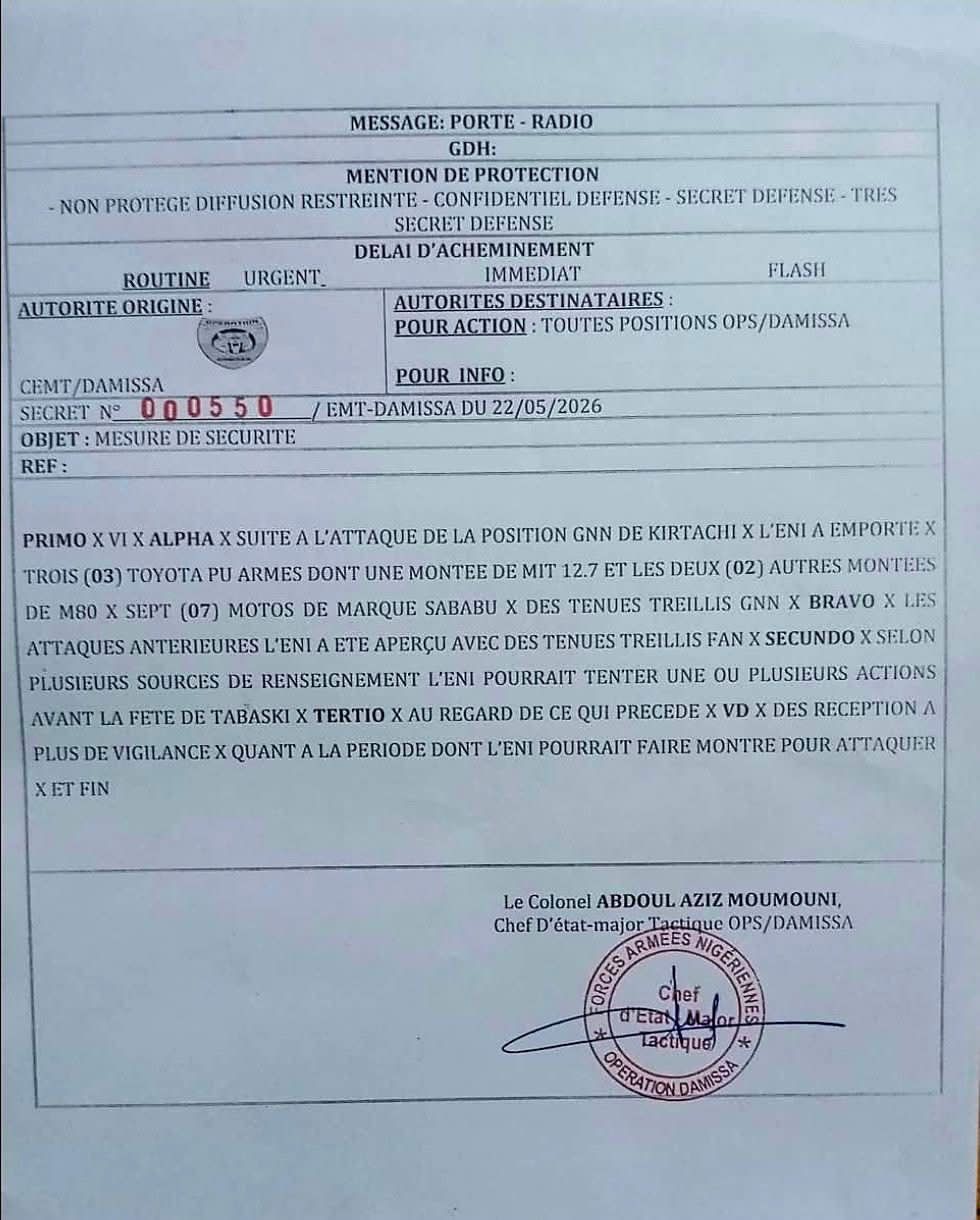
A classified internal military communication marked “Secret Defense” has confirmed significant losses of equipment following an attack on a Nigerien Gendarmerie Nationale (GNN) position in Kirtachi, in the Tillabéri Region in Niger Republic.
The internal radio message, dated May 22, 2026, indicated that the attack was carried out by suspected fighters of the Jama’at Nusrat al-Islam wal-Muslimin (JNIM), during which several military assets were reportedly seized.
According to the document, the attackers made away with three armed Toyota pickup vehicles. One of the vehicles was said to be mounted with a 12.7mm heavy machine gun, while the remaining two were fitted with M80-type weapons.
The report further stated that seven motorcycles, locally referred to as “Sababu,” were also taken, alongside GNN uniforms and related operational gear.
Preliminary figures contained in the same communication put the casualty toll at 12 security and defence force personnel killed, while four others were reported missing following the incident.
The document also reportedly urged heightened alertness across operational positions in the region, warning of possible further attacks ahead of the upcoming Tabaski celebrations.
Security sources have not yet issued an official public statement confirming the details contained in the leaked communication.
Niger Military Report Confirms Loss of Equipment After Attack on GNN Position
Senior Military Officer Dies in Road Traffic Accident Along Kaduna–Zaria Expressway
By: Zagazola Makama
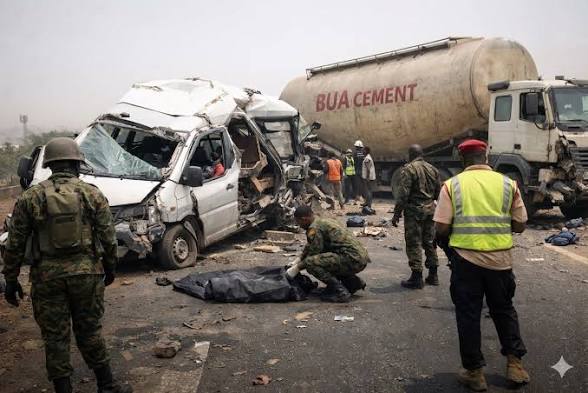
A senior military officer, Maj. S. Sayyadi of Headquarters Infantry Corps Command (ICC), has died in a road traffic accident along the Zaria–Kaduna Expressway near the Julius Berger gate, close to Jaji Military Cantonment.
Security sources disclosed that the incident occurred on May 21 when the officer’s vehicle reportedly collided with a Sino truck that had slowed down to access the China Civil Engineering Construction Corporation (CCECC) railway project site located at the New Barracks area in Jaji Military Cantonment.
Following the accident, medical teams from the Armed Forces Command and Staff College (AFCSC) and ICC were swiftly mobilised to the scene, where the officer was confirmed dead due to severe head injuries.
His remains were evacuated to a medical facility before being conveyed to Katsina State in a military ambulance for burial arrangements.
The late officer was laid to rest in Katsina State according to Islamic rites.
Sources said that Military authorities have expressed condolences to the family of the deceased, describing the incident as a tragic loss.
Senior Military Officer Dies in Road Traffic Accident Along Kaduna–Zaria Expressway
Uncategorized
Hidden Wounds Across Borders: Thousands of Women in Nigeria, Somalia Suffer in Silence as Obstetric Fistula Crisis Deepens
Hidden Wounds Across Borders: Thousands of Women in Nigeria, Somalia Suffer in Silence as Obstetric Fistula Crisis Deepens
By: Michael Mike
Thousands of women in Nigeria and Somalia are battling one of the world’s most devastating childbirth injuries — obstetric fistula — amid poverty, weak healthcare systems, insecurity and limited access to emergency maternal care, according to humanitarian medical workers.
A statement on Friday by Médecins Sans Frontières (MSF), stated that from northern Nigeria to southwestern Somalia, women who survived prolonged and obstructed labour are now living with chronic pain, incontinence, stigma and social isolation after losing control of their bladder or bowel following traumatic childbirth complications.
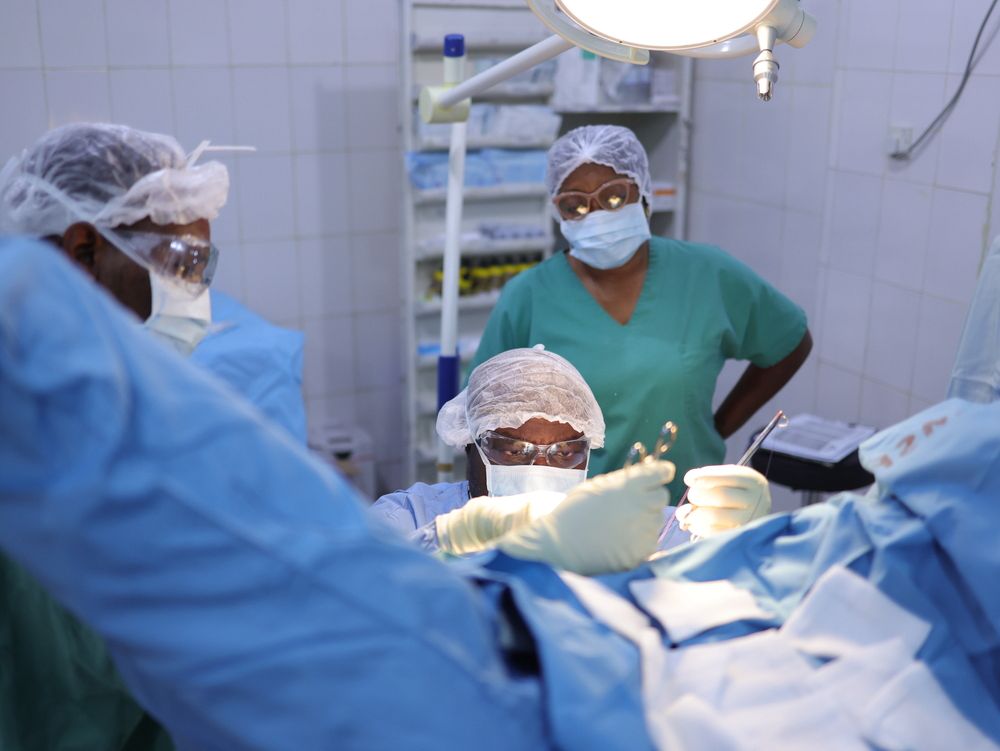
At Jahun General Hospital in northern Nigeria and Bay Regional Hospital in Somalia, according to the statement, teams from Médecins Sans Frontières (MSF) and local health authorities are struggling to provide life-changing reconstructive surgery and rehabilitation services to affected women whose lives have been shattered by the condition.
For many of the patients, the injury came after days of labour without access to emergency caesarean sections or skilled medical care — a reality that continues to endanger women in fragile and conflict-affected regions.
The statement said Aisha (not her real name), a young Nigerian woman from Yobe State, arrived at Jahun General Hospital emotionally broken after losing her baby during childbirth and suffering severe internal injuries that left her incontinent.
On the other side of the continent, Hodan (equally not her real name), a Somali woman married off as a teenager, endured eight years of silence and humiliation after a prolonged labour during her first pregnancy left her with the same condition.
“I did not know there was treatment,” Hodan said after finally reaching the fistula unit in Baidoa.
According to MSF, obstetric fistula occurs when prolonged obstructed labour damages tissues between the birth canal and the bladder or rectum, leaving women leaking urine or stool continuously. In about 90 per cent of cases, the baby does not survive.
Medical experts said the condition is closely linked to child marriage, teenage pregnancy, malnutrition, female genital mutilation and the collapse or absence of emergency obstetric services.
In both Nigeria and Somalia, those risk factors are compounded by insecurity, displacement, poor transportation and overstretched health systems, forcing many women to attempt childbirth at home or in poorly equipped facilities.
Dr. Raphael Kananga said many patients arrive at hospitals only after suffering irreversible injuries.
“Most of the women who reach us have already given birth somewhere else or tried to, often at home, and often after several days of labour,” he said.
“By the time they arrive at our hospital, they have already sustained an injury, often with additional infections and complications. Surgical repair is possible, but this should have been prevented from happening in the first place.”
The 55-bed fistula ward at Jahun General Hospital has become a critical lifeline for women across northern Nigeria. Since its establishment in 2008, more than 6,000 reconstructive surgeries have been carried out there.
In 2025 alone, 295 women were admitted, while 224 underwent surgery. Between January and March 2026, another 64 women were admitted, with 48 already receiving surgical treatment.
Care at the facility includes free surgery, physiotherapy, psychological counselling, nutrition support and long-term rehabilitation, with many patients spending up to three months recovering.
Aisha, who has already undergone two surgeries and is awaiting a third procedure, said meeting other survivors gave her hope.
“At first, I thought I would never be cured,” she said. “Then I came here and saw other women with the same condition. I realised I was not alone.”
In Somalia, the fistula unit at Bay Regional Hospital, opened in 2025 with support from MSF and Somalia’s Ministry of Health, remains one of the few specialised centres in the country capable of handling such cases.
Since its launch, only 38 women have received treatment there, even though several thousand more are estimated to require urgent care nationwide.
Frida Athanassiadis said many women live with fistula for years before learning that treatment exists.
“Fistula care is not only about surgery,” she said. “It is about listening, counselling, and helping women rebuild their confidence.”
Healthcare workers warn that demand for fistula care in both countries far exceeds available capacity.
Jahun General Hospital remains the only facility in Jigawa State capable of performing vesicovaginal fistula reconstructive surgery, while Bay Regional Hospital is the only specialised centre in Somalia’s Southwest State.
Humanitarian organisations said the persistence of obstetric fistula reflects deeper failures in maternal healthcare systems across parts of Africa, where preventable childbirth complications continue to claim lives and destroy futures.
Medical experts insisted that fistula is entirely preventable through proper antenatal care, access to trained midwives, timely referrals and emergency caesarean sections before prolonged labour causes permanent tissue damage.
MSF and health officials are now calling for urgent investments in maternal and newborn healthcare services, including skilled birth attendance, emergency obstetric care and expanded fistula treatment programmes for women already living with the condition.
For survivors like Aisha and Hodan, however, the struggle goes beyond physical healing — it is also about reclaiming dignity after years of pain, silence and exclusion.
Hidden Wounds Across Borders: Thousands of Women in Nigeria, Somalia Suffer in Silence as Obstetric Fistula Crisis Deepens

2027: When Tinubu’s endorsement of Vice President Kashim Shettima’s unwavering support speaks volumes

Troops Arrest Suspected Security Impersonator In Plateau

Security forces Conduct Show of Force In Jos, Bukuru During Church Services

Roger Federer’s Shock as DNA Results Reveal Myla and Charlene Are Not His Biological Children

THE PLIGHT OF FARIDA

FAILED COUP IN BURKINA FASO: HOW TRAORÉ NARROWLY ESCAPED ASSASSINATION PLOT AMID FOREIGN INTERFERENCE CLAIMS
-
 News2 years ago
Roger Federer’s Shock as DNA Results Reveal Myla and Charlene Are Not His Biological Children
-
Opinions4 years ago
THE PLIGHT OF FARIDA
-
 News1 year ago
FAILED COUP IN BURKINA FASO: HOW TRAORÉ NARROWLY ESCAPED ASSASSINATION PLOT AMID FOREIGN INTERFERENCE CLAIMS
-

 News2 years ago
EYN: Rev. Billi, Distortion of History, and The Living Tamarind Tree
-
 Opinions4 years ago
POLICE CHARGE ROOMS, A MINTING PRESS
-

 ACADEMICS2 years ago
A History of Biu” (2015) and The Lingering Bura-Pabir Question (1)
-

 Columns2 years ago
Army University Biu: There is certain interest, but certainly not from Borno.
-

 Politics12 months ago
2027: Why Hon. Midala Balami Must Go, as Youths in Hawul and Asikira/Uba Federal Constituency Reject ₦500,000 as Sallah Gift
