
Uncategorized
VP SHETTIMA DEPARTS ABUJA FOR DAVOS TO ATTEND 2025 WORLD ECONOMIC FORUM MEETING

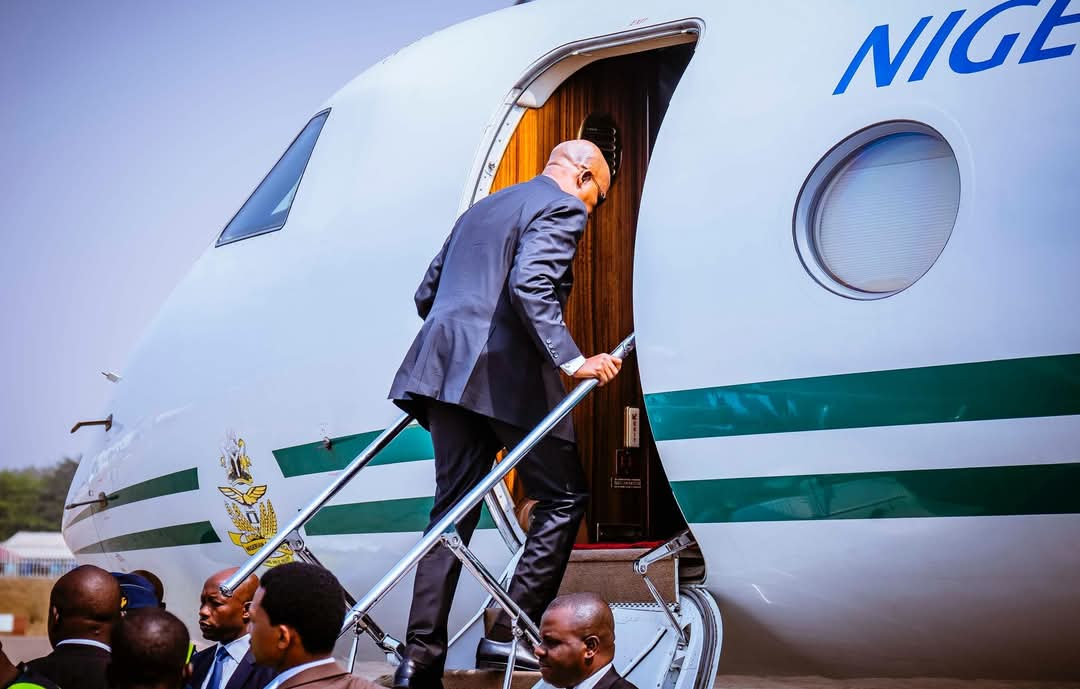
VP SHETTIMA DEPARTS ABUJA FOR DAVOS TO ATTEND 2025 WORLD ECONOMIC FORUM MEETING
By: Our Reporter
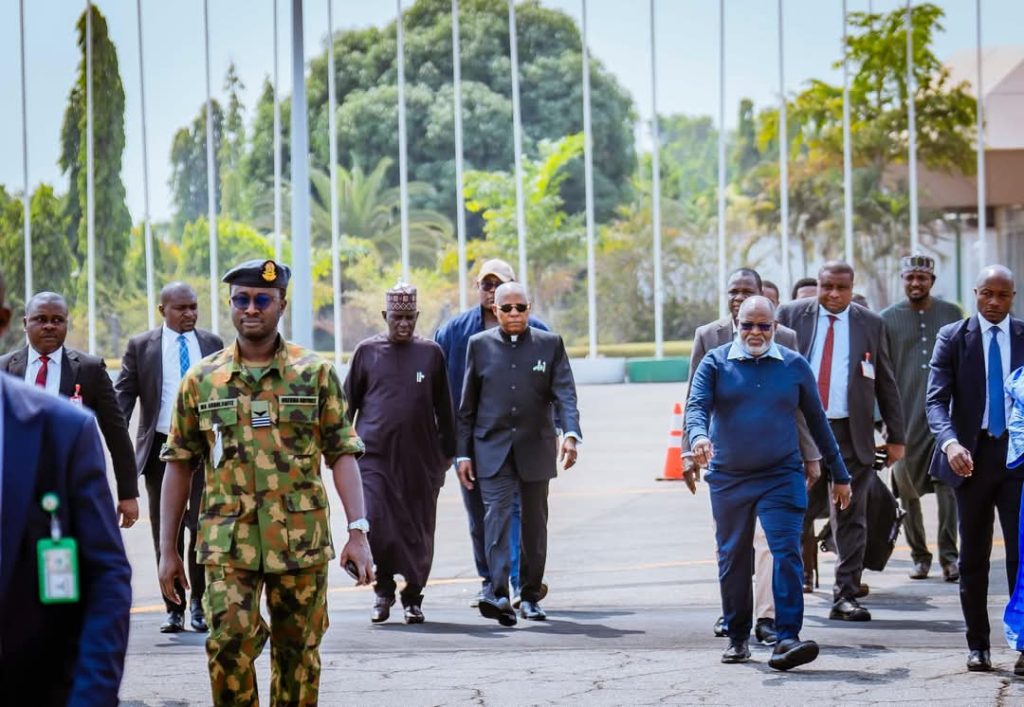
Vice President Kashim Shettima has departed Abuja to represent Nigeria at the 2025 annual meeting of the World Economic Forum (WEF) scheduled for Davos, Switzerland.
The Vice President will join world leaders, top business executives and representatives of development partners at the meeting to discuss the state of the world economy with the view to improving its conditions.
While in Davos, the Vice President will hold bilateral meetings with other leaders as well as participate in workshops and forums slated for the annual gathering.
Among events slated for the VP include, a workshop entitled, “Roadmap to Co-create Investment Opportunities for Africa’s Frontier Markets”, organised by the African Development Bank in collaboration with the World Economic Forum to boost the flow of capital into Africa’s frontier markets, to scale solutions that build a prosperous, inclusive and resilient continent. It is slated for the Congress Centre in Jakobshorn.
Top on the agenda will be an announcement of the Humanitarian and Resilience Investing (HRI) Roadmap for Africa, in partnership with the African Development Bank (AfDB), and foster partnerships between public and private sector leaders interested in mobilizing investment in Africa’s frontier markets, among others.
The Vice President will also attend a dinner for heads of state, government and international organizations, as well as Annual Meeting 2025 Crystal Awardees, the International Business Council and Strategic Partners slated for Kurpark Village, Eiger.
Senator Shettima will also co-chair a forum on “Turning Digital Trade into a Catalyst for Growth in Africa” slated for the Pischa Congress Centre.
The session will provide a dynamic platform for forward-thinking dialogue on digital trade and the crucial role of the private sector in advancing the implementation of the AfCFTA Digital Trade Protocol adopted by the AU heads of state/government in January 2024.
VP Shettima will attend, as a panelist, a Stakeholder Dialogue entitled, “Global Risks 2025”. The Global Risks Report highlights an increasingly volatile global landscape, marked by accelerating geopolitical, technological and environmental challenges. The event is slated for the Aspen 2 Congress Centre in Davos.
The VP who will be accompanied by top government functionaries including Minister of Industry, Trade and Investment, Dr Jumoke Oduwole, and Executive Secretary of Nigerian Investment Promotion Commission (NIPC), Aisha Rimi, will return to Abuja at the end of his engagements in Davos.
VP SHETTIMA DEPARTS ABUJA FOR DAVOS TO ATTEND 2025 WORLD ECONOMIC FORUM MEETING


Uncategorized
Vice President Kashim Shettima has arrived in Zamfara to formally receive Governor Dauda Lawal into the All Progressives Congress (APC)
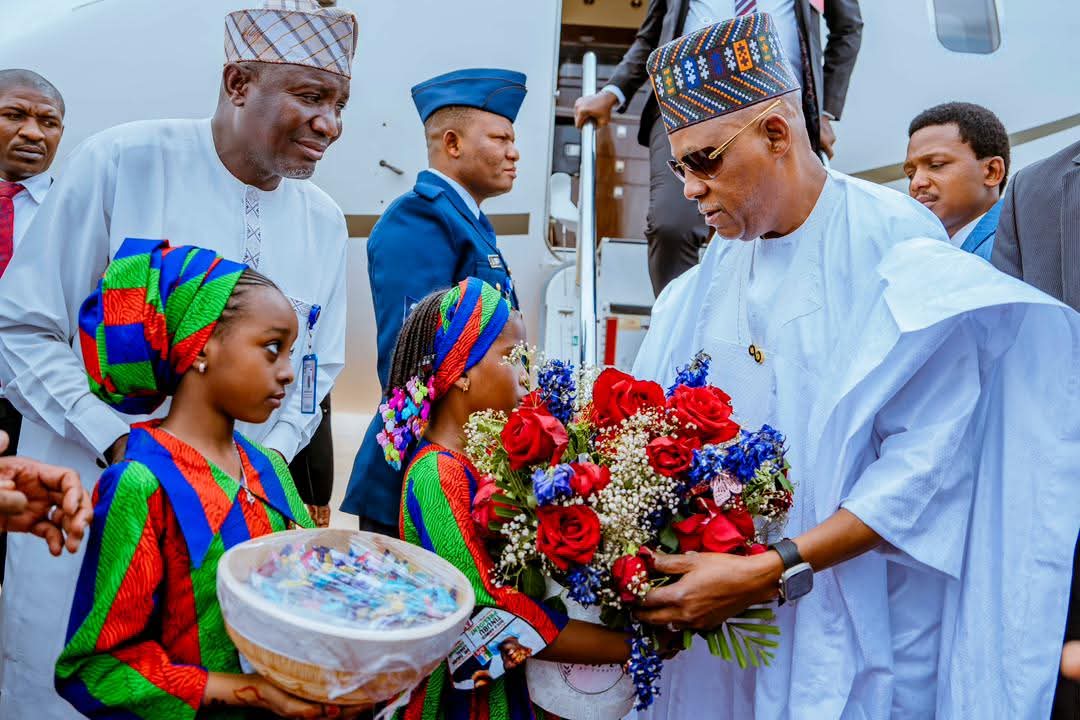
Vice President Kashim Shettima has arrived in Zamfara to formally receive Governor Dauda Lawal into the All Progressives Congress (APC)
By: Our Reporter
The Vice President, representing President Bola Ahmed Tinubu, is billed to receive members of the governor’s cabinet and thousands of supporters into the APC fold at a grand reception at the Gusau Trade Fair Complex.
The Vice President was received by the governor, governors of Jigawa, Kaduna, Ogun, and Adamawa States; Umar Namadi, Uba Sani, Dapo Abiodun, and Ahmadu Umaru Fintiri as well as the governors of Plateau, Kano, and Sokoto States; Caleb Mutfwang, Abba Kabir Yusuf, and Ahmad Aliyu Sokoto.
Also on ground to receive him is the Deputy Senate President, the Speaker of the House of Representatives, the APC National Chairman, APC governors Forum Chairman, Governor Hope Uzodinma of Imo State, as well as ministers, party chieftains, and other dignitaries.
Vice President Kashim Shettima has arrived in Zamfara to formally receive Governor Dauda Lawal into the All Progressives Congress (APC)
Uncategorized
ECOWAS, Energy China Explore Partnership to Strengthen West Africa’s Power Infrastructure
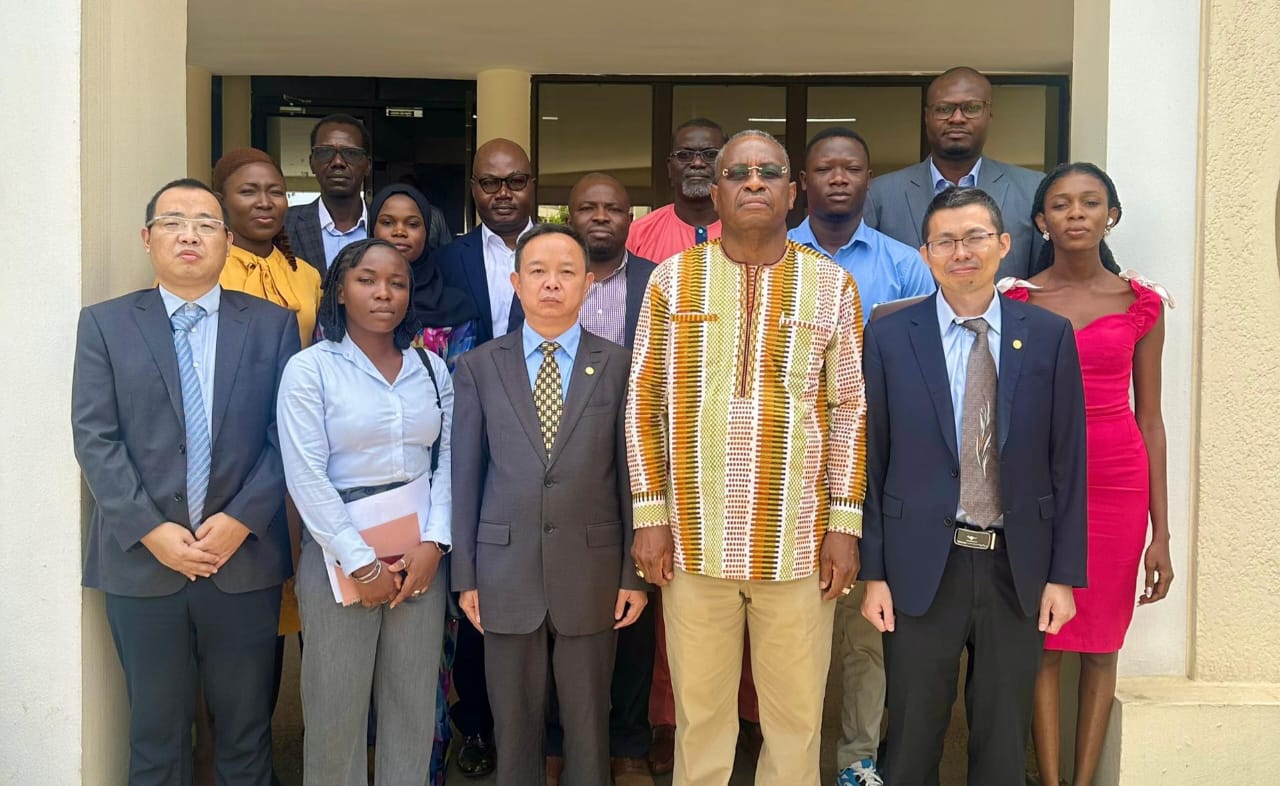
ECOWAS, Energy China Explore Partnership to Strengthen West Africa’s Power Infrastructure
By: Michael Mike
The Economic Community of West African States (ECOWAS) has begun discussions with Energy China International (CEEC) to deepen cooperation on the development of regional energy infrastructure aimed at expanding electricity access and strengthening power systems across West Africa.
The engagement took place during a meeting in Abuja, Nigeria, where officials from the ECOWAS Energy and Mines Directorate met with CEEC representatives to advance dialogue on priority regional energy projects.
The session also included participants from the West African Power Pool (WAPP), the regional body responsible for coordinating electricity generation and transmission among West African countries.
During the meeting, participants reviewed project portfolios, technical capabilities and potential financing channels designed to accelerate growth in the region’s power sector and support broader infrastructure development.
Discussions focused on exploring partnership opportunities and funding options for ECOWAS priority initiatives covering power generation, electricity transmission and distribution infrastructure.
Acting Director of Energy and Mines at ECOWAS, William Baidoe, provided an overview of the Directorate’s mandate and ongoing programmes aimed at improving energy access across the region. These include projects to expand electricity distribution networks as well as initiatives to develop energy storage systems that can enhance the stability and reliability of power supply.
Also speaking at the meeting, Director of Planning, Investment Programming and Environmental Safeguards at WAPP, Kodjo Afidegnon, outlined the status of several priority projects under the ECOWAS Master Plan for the Development of Power Generation and Transmission Infrastructure (2019–2033).
Among the flagship initiatives highlighted were the CLSG interconnection project linking Côte d’Ivoire, Liberia, Sierra Leone and Guinea; the North Core project connecting Nigeria, Niger, Burkina Faso and Benin; the OMVG interconnection linking Senegal, The Gambia and Guinea-Bissau; and the Medium Backbone project connecting Nigeria, Benin, Togo, Ghana and Côte d’Ivoire.
Afidegnon noted that the projects present significant financing and investment opportunities for development partners and international energy companies.
On behalf of CEEC, General Manager Huang Aijun highlighted the company’s expertise in conventional and renewable energy, grid expansion, power planning and electricity transmission infrastructure. He reaffirmed the company’s interest in supporting ECOWAS priority projects through technical support and access to diverse funding sources.
Both parties agreed to maintain close engagement on the identified projects in order to assess their development status and explore concrete areas of collaboration.
ECOWAS said the discussions reflect its continued efforts to build strategic partnerships and mobilise investments to improve electricity access, strengthen grid reliability and promote sustainable infrastructure development across West Africa.
ECOWAS, Energy China Explore Partnership to Strengthen West Africa’s Power Infrastructure
Sallah: FRSC deploys 620 personnel in Gombe
The Federal Road Safety Corps, Gombe Sector Command, has deployed no fewer than 620 personnel and operational logistics for the 2026 Eid-el-Fitri Special Patrol Operations.
Mr Samson Kaura, the Sector Commander of FRSC in the state disclosed this in Gombe while speaking in an interview with journalists.
Kaura said that the operation had commenced on Tuesday to end on March 22.
“The Federal Road Safety Corps, Gombe Command has deployed 620 personnel comprising regular and special marshals and operational logistics for the 2026 Eid-el-Fitr Special Patrol Operations.
“This is being done bearing in mind the kind of heavy traffic that comes with such festive period, so we are acting promptly to ensure safe and smooth travels during the Sallah celebrations,” he said.
In addition, he said 10 patrol vehicles, four ambulances and a tow truck were also deployed to serve the motoring public.
“We will enforce adherence to traffic regulations towards ensuring safety during the Sallah celebration.
“We advise drivers against engaging in dangerous driving, over speeding, route violations, overloading, use of phones while driving.
“We urge everyone to observe all traffic rules and regulations towards ensuring easy flow of traffic as personnel would be stationed on major routes.
“We must be mindful of the fact that it is only the living that can celebrate, so let’s drive safety and prioritise safety over speed or profits.
“Underage driving will not be permitted and use of drugs while driving too; we have commenced special patrol for enforcement and control of traffic,” he said.
Kaura further reiterated the command’s warnings against underage driving, particularly during the Sallah celebration in the state.
He said the call was imperative as child driving remained one of the causes of crash, alongside over speeding, overloading, dangerous driving and use of drugs and phone while driving.
He said that it had been observed that persons below 18 years drive cars, motorcycles and tricycles which he said was not permitted, stating that the FRSC would enforce compliance in that regard.
The sector commander assured the motoring populace of the command’s commitment to ensure safety while seeking their cooperation.
“I wish the Muslim faithful Happy celebration while assuring them of our readiness to serve them professionally,” he said.
Sallah: FRSC deploys 620 personnel in Gombe

NGX boss restates commitment to gender equality

General Chris Musa, Hi-tech Fencing of Nigerian Porous Borders and the Foolish Pride of Sowore

Benue troops neutralize one terrorist, arrest four suspects in Gwer West LGA

Roger Federer’s Shock as DNA Results Reveal Myla and Charlene Are Not His Biological Children

THE PLIGHT OF FARIDA

FAILED COUP IN BURKINA FASO: HOW TRAORÉ NARROWLY ESCAPED ASSASSINATION PLOT AMID FOREIGN INTERFERENCE CLAIMS
-
 News2 years ago
Roger Federer’s Shock as DNA Results Reveal Myla and Charlene Are Not His Biological Children
-
Opinions4 years ago
THE PLIGHT OF FARIDA
-
 News11 months ago
FAILED COUP IN BURKINA FASO: HOW TRAORÉ NARROWLY ESCAPED ASSASSINATION PLOT AMID FOREIGN INTERFERENCE CLAIMS
-

 News2 years ago
EYN: Rev. Billi, Distortion of History, and The Living Tamarind Tree
-
 Opinions4 years ago
POLICE CHARGE ROOMS, A MINTING PRESS
-

 ACADEMICS2 years ago
A History of Biu” (2015) and The Lingering Bura-Pabir Question (1)
-

 Columns2 years ago
Army University Biu: There is certain interest, but certainly not from Borno.
-

 Opinions2 years ago
Tinubu,Shettima: The epidemic of economic, insecurity in Nigeria
