
National News
We Must Develop Our Agric Sector To Self-sufficiency, VP Shettima Tells Governors

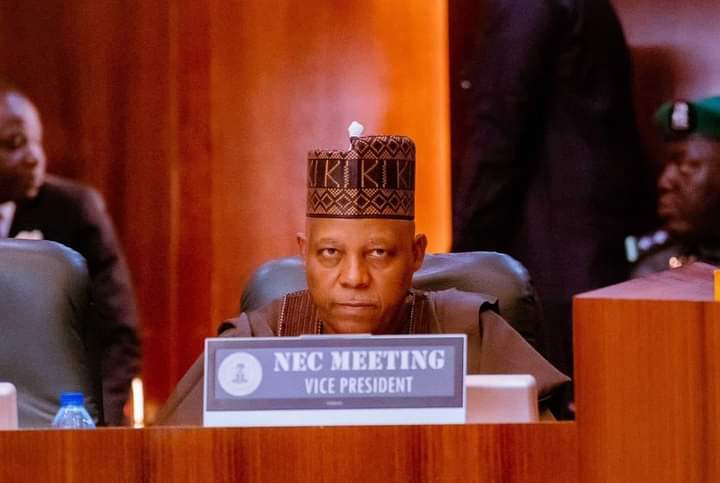
We Must Develop Our Agric Sector To Self-sufficiency, VP Shettima Tells Governors
By: Our Reporter
The Vice President, Sen. Kashim Shettima, has implored Governors of the 36 states of the federation to work towards revamping Nigeria’s agricultural sector, with a view to reducing dependence on food imports and attaining greater food self-sufficiency.
This, he noted, resonates well with the investments and commitment of the African Development Bank (AfDB) to establishing Specialised Agro Processing Zones (SAPZ) in the country.
Sen. Shettima gave the charge on Thursday during the 137th meeting of the National Economic Council (NEC) held at the Council Chamber of the Presidential Villa, Abuja.
The Vice President is the Chairman of NEC, a statutory body that has the mandate to advise the President on the nation’s economic affairs, with the Governors of the 36 states of the federation, the Governor of the Central Bank of Nigeria (CBN), Minister of Finance and other stakeholders as members.
While delivering his opening address at the meeting, VP Shettima said, “Our upcoming task must be rooted in recognizing the agrarian nature of our economy. We must strive for deliberate value addition in the agricultural sector, moving away from commodity exports towards job creation.
“Collaboration is vital in enabling the Specialized Agro Processing Zones (SAPZ) Programme spearheaded by the Ministry of Agriculture and Rural Development in partnership with the Africa Development Bank (AfDB).
“Your Excellencies, we must develop our agricultural sector towards self-sufficiency and exporting processed agricultural products in line with the African Union’s Africa 2063 Agenda. This also aligns with AfDB’s investments and commitment to establishing the SAPZ. Collaboratively, we should harness our agricultural comparative and complementary advantages across the value chains of priority crops within the SAPZ.”
The Vice President also hinted about the possibility of engaging the private sector in tackling floods and other natural disasters, saying considering the financial implications of managing natural disasters, the government cannot do it alone.
He continued: “While urging unity as the nation’s hope, I am aware of the financial implications of managing natural disasters. We cannot tackle this alone. Innovative capital pools from the private sector can help share and mitigate fiscal and economic risks posed by such disasters. This approach has been successful in other African countries, preparing for low-probability yet highly disruptive ‘black swan’ events.
“Once again, we find ourselves bearing the weight of the nation. Since our last gathering, much has transpired, with each event punctuated by the nation’s reactions. None of us here requires a reminder of the direction we are headed or what is required to ensure that we stand together through the storm to fulfill our promises to the people. It gives me great pleasure to welcome you back, back to the 137th meeting of the National Economic Council, our engine room”.
Recalling that President Bola Ahmed Tinubu had recently highlighted eight presidential priorities for his administration, which serve as a conduit to his Renewed Hope Agenda, Shettima told the governors and other members of Council to get “involved in seeking both short-term palliative and enduring solutions to the consequences of our reforms.”
We Must Develop Our Agric Sector To Self-sufficiency, VP Shettima Tells Governors



VP SHETTIMA CLARIFIES REMARKS ON NORTHERN GOVERNORS’ SUPPORT FOR PRESIDENT TINUBU
By: Our Reporter
The Office of the Vice President wishes to clarify remarks by Vice President Kashim Shettima concerning the support President Bola Ahmed Tinubu received from northern governors in the build-up to his emergence as the presidential candidate of the All Progressives Congress (APC).
The Vice President’s reference to six northern governors who believed in and supported President Tinubu was specifically about political consultations and alignments preceding the APC presidential primary in June 2022.
It was not a comment on the position of northern APC governors following President Tinubu’s emergence as the party’s candidate, nor was it intended to question their support during the 2023 presidential election.
Following the presidential primary, APC governors in the North rallied around the party’s candidate and played important roles in the campaign and electoral efforts that culminated in President Tinubu’s victory in the 2023 general election. Indeed, it is worthy of note that it was after the declaration of President Tinubu as winner of the 2023 presidential primaries that all other governors across the country rallied round and followed suit. That declaration by the northern governors hence became the aligning moment across all political divides in the quest for power shift.
VP Shettima holds the northern governors and other leaders of the APC in high regard and recognises their individual and collective contributions to the success of the party and the emergence of President Tinubu.
The Vice President regrets any interpretation of his remarks that may have suggested otherwise and hopes this clarification places the comments in their proper context.
VP Shettima also appreciates the Nigerian media for its longstanding professionalism and constructive engagement with his office and urges continued accuracy and context in the reporting of public remarks as the country approaches another political season.
VP SHETTIMA CLARIFIES REMARKS ON NORTHERN GOVERNORS’ SUPPORT FOR PRESIDENT TINUBU
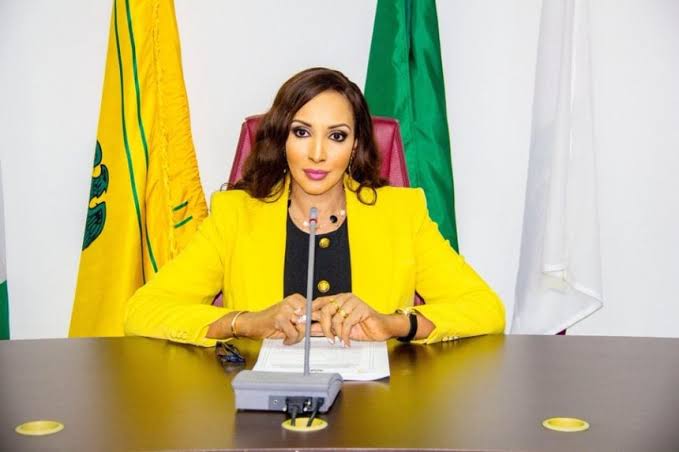
Foreign Minister Warns Diplomats: Route All Official Business Through My Ministry
By: Michael Mike
Minister of Foreign Affairs, Ambassador Bianca Odumegwu-Ojukwu, on Wednesday warned foreign missions to stop bypassing her ministry to deal directly with the Presidency and other arms of government, declaring that the Ministry of Foreign Affairs remains the only official channel to the Nigerian government.
Odumegwu-Ojukwu issued the warning on Thursday at her first formal briefing with the Diplomatic Corps since assuming office as substantive Foreign Minister.
“This Ministry is your diplomatic home. My doors remain open,” she told ambassadors, high commissioners and international organisations, but added that official requests must be routed through the ministry to ensure coordination and institutional memory.
“Bypassing established channels risks conflicting information, duplication and avoidable misunderstandings. We are not an obstacle. We are your bridge to the Nigerian Government,” she said.
The Minister said Nigeria will pursue strategic autonomy under President Bola Ahmed Tinubu — choosing its friends and positions strictly on national interest, mutual respect and reciprocity.
“Strategic autonomy does not mean isolation. It means preserving Nigeria’s sovereign right to determine relationships that best serve our people,” she declared.
She said Tinubu’s foreign policy is anchored on Four Ds — Demography, Development, Democracy and Diaspora — and described Nigeria’s posture as Nigeria-centered, Africa-conscious and globally engaged.
Odumegwu-Ojukwu announced a push to revive dormant Joint Commissions and Bi-National Commissions, insisting that diplomatic warmth must produce tangible results in trade, investment, security, education and technology.
She thanked foreign capitals for prompt Agrément for Nigeria’s ambassadorial nominees and pledged faster presentation of Letters of Credence for envoys in Abuja.
On consular frictions, she hit at prolonged visa delays for Nigerians.
“We respect every country’s sovereign right to determine its visa policy, but excessively long waiting periods create considerable difficulties for legitimate travellers, students, businesspersons and families,” she said, urging efficiency and transparency.
She reaffirmed Nigeria’s commitment under the Vienna Conventions to protect diplomatic personnel and premises and urged missions to report security concerns promptly.
Odumegwu-Ojukwu said Nigeria remains open for trade, investment and technology partnership but insisted on sovereign equality and reciprocity, warning that no country can tackle terrorism, climate change, cyber insecurity and irregular migration alone.
She said Nigeria will stay active in ECOWAS, AU, UN and Commonwealth and continue to demand a stronger African voice in global decisions.
Foreign Minister Warns Diplomats: Route All Official Business Through My Ministry

FG Sets December Deadline for 95% NIN Coverage
By: Michael Mike
The Federal Government has set December 2026 as the deadline to achieve 95 per cent coverage of Nigeria’s population under the National Identification Number (NIN) system, signalling an accelerated push to make digital identity the foundation of access to public services, financial transactions and social interventions.
The target was announced yesterday by the Chief of Staff to the President, Femi Gbajabiamila, who represented President Bola Ahmed Tinubu at the 2026 National Day of Identity celebration.
Gbajabiamila said the national identity database had expanded from about 80 million NINs at the beginning of the administration to nearly 140 million, describing the growth as a major step towards bringing more Nigerians and legal residents into the formal economic and public-service system.
The government’s latest drive effectively places identity registration at the centre of its efforts to improve how citizens are identified, how public resources are distributed and how people access government and financial services.
Gbajabiamila said the significance of the expansion went beyond the number of records captured, arguing that every NIN represented an individual who could increasingly participate in the formal economy and establish a verifiable relationship with government institutions.
“Behind every NIN is a Nigerian with a recognised identity; a citizen or resident who can increasingly participate in the formal economy, access government services, establish financial relationships, and be better protected by the institutions of the Nigerian state,” he said.
The government is seeking to close the remaining identity gap through a ward-level enrolment programme designed to take registration to communities rather than requiring citizens to travel long distances to designated centres.
According to Gbajabiamila, free enrolment is now being taken to all 8,809 wards across the country, while more than 5,000 enrolment agents have been trained to make the process more accessible to persons with disabilities, older citizens and other vulnerable groups.
The initiative is significant in a country where the absence of reliable identity records has complicated the planning and delivery of public programmes, particularly where government needs to determine who is eligible for specific interventions and where beneficiaries are located.
Gbajabiamila said the recently enacted National Identity Management Commission Act 2026 had strengthened the statutory framework governing identity management, including provisions on data protection, mandatory NIN usage in critical sectors and tougher penalties for identity-related offences.
He described trusted identity as an essential component of a modern economy, placing it alongside infrastructure such as roads, electricity, telecommunications and financial systems.
In her part, the Director-General and Chief Executive Officer of the National Identity Management Commission (NIMC), Dr.Abisoye Coker-Odusote, said the Commission had also recorded substantial growth in enrolment, with the national register now containing the identities of more than 140 million Nigerians and legal residents.
She attributed much of the increase to the Ward-to-Ward Enrolment Project, which has extended NIMC services to the country’s 8,809 wards.
Beyond enrolment, Coker-Odusote said the Commission was attempting to change the experience of citizens who already have NINs by reducing the time required to update their records.
She said the NIMC Self-Service Modification Platform had processed close to two million record updates, cutting modification processes that previously took weeks to between 24 and 48 hours through a citizen’s phone.
The Commission is also preparing to move the identity programme from predominantly digital records to physical credentials, with Coker-Odusote announcing that Nigerians are expected to begin receiving physical National e-ID Cards before the end of the year.
She said the biometric cards would combine identity verification with access to government benefits and financial payments, including functionality that would allow them to be used in locations with limited internet connectivity.
“The physical card is not a promise for the distant future; it is actively in the deployment pipeline, and I am pleased to announce that Nigerians will begin holding physical e-ID cards in their hands before the year ends,” she said.
The developments are coming against the backdrop of broader efforts by the government to build a digital public infrastructure in which a verifiable identity can serve as the link between citizens and multiple public and private services.
Coker-Odusote said the new law had also expanded NIMC’s regulatory responsibilities and its role in Nigeria’s Digital Public Infrastructure.
She said the legislation designated NIMC as the National Root Certification Authority for the country’s Public Key Infrastructure and aligned its operations with the Nigeria Data Protection Act 2023.
The implications of the identity expansion are already being felt beyond the traditional identity-management sector, with the education ministry seeking to use NIN-linked information to address persistent weaknesses in education data.
The Minister of Education, Dr. Tunji Alausa, said accurate identity information was necessary to properly track pupils, students and teachers and improve planning across the education system.
He said the sector serves between 75 million and 80 million students across basic, post-basic and secondary education, making reliable identity information critical to determining the scale and location of educational needs.
Alausa said the absence of accurate data had made it more difficult to effectively identify out-of-school children, deploy teachers and ensure that government interventions reached their intended beneficiaries.
“We cannot tackle the challenge of out-of-school children. We cannot identify and effectively target the intervention of every child without accurate data,” he said.
He added that linking identity information to education records could reduce multiple registrations and fraudulent claims while improving the ability of government to direct resources towards genuine beneficiaries.
The Minister of Interior, Olubunmi Tunji-Ojo, similarly linked the identity programme to national security, economic development and social inclusion, saying reliable population information would improve government’s ability to determine where public infrastructure and interventions were required.
He said verified identity data could support decisions on the location of schools, healthcare interventions and social protection programmes, while also improving the distribution of public resources.
Tunji-Ojo nevertheless called for identity services to become more accessible, particularly for Nigerians living outside the country, and urged closer cooperation among government agencies, telecommunications companies, private businesses and local communities.
He also urged Nigerians who had not obtained their NIN to enrol, stressing that the expansion of the identity system must be accompanied by adequate safeguards for citizens’ privacy.
The Federal Government’s December target therefore places NIMC and its partners under pressure to bridge the remaining gap in a matter of months, while ensuring that rapid expansion does not come at the expense of the accuracy, security and protection of the identity information being collected.
The government’s stated objective is not merely to increase the number of NINs in the database, but to establish a trusted identity infrastructure capable of supporting public administration, economic participation, social protection, education, security and digital services across Nigeria.
FG Sets December Deadline for 95% NIN Coverage

SMEDAN, Korea, UNDP Break Ground on $12m Abuja Entrepreneurship Centre

VP SHETTIMA CLARIFIES REMARKS ON NORTHERN GOVERNORS’ SUPPORT FOR PRESIDENT TINUBU

Twelve years on: A tribute to Braimoh, Hedima and other fallen heroes

Roger Federer’s Shock as DNA Results Reveal Myla and Charlene Are Not His Biological Children

THE PLIGHT OF FARIDA

FAILED COUP IN BURKINA FASO: HOW TRAORÉ NARROWLY ESCAPED ASSASSINATION PLOT AMID FOREIGN INTERFERENCE CLAIMS
-
 News3 years ago
Roger Federer’s Shock as DNA Results Reveal Myla and Charlene Are Not His Biological Children
-
Opinions5 years ago
THE PLIGHT OF FARIDA
-
 News1 year ago
FAILED COUP IN BURKINA FASO: HOW TRAORÉ NARROWLY ESCAPED ASSASSINATION PLOT AMID FOREIGN INTERFERENCE CLAIMS
-

 News2 years ago
EYN: Rev. Billi, Distortion of History, and The Living Tamarind Tree
-
 Opinions5 years ago
POLICE CHARGE ROOMS, A MINTING PRESS
-

 ACADEMICS3 years ago
A History of Biu” (2015) and The Lingering Bura-Pabir Question (1)
-

 Columns3 years ago
Army University Biu: There is certain interest, but certainly not from Borno.
-

 Politics1 year ago
2027: Why Hon. Midala Balami Must Go, as Youths in Hawul and Asikira/Uba Federal Constituency Reject ₦500,000 as Sallah Gift
