
News
West Africa’s Insecurity, Food Challenges, Scientific Solutions to be Evolved

West Africa’s Insecurity, Food Challenges, Scientific Solutions to be Evolved
By: Michael Mike
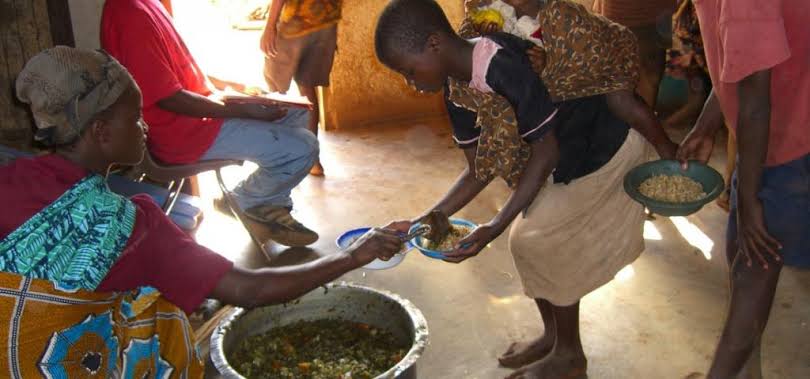
Scientific solutions are to be evolve to solve challenges of insecurity, food shortage and other development issues currently affecting the West Africa.
This was the resolution at the the three- day Constitutive General Assembly of the West African Network of the National Academies of Sciences (WANNAS) in Abuja, where a Nigerian scientist, Professor Oyewale Tomori was elected as the Bureau chairman.
In an interview with journalists after his election, Tomori said the group’s main objective is to begin to bring scientific solutions to challenges of insecurity, food shortage and other development issues currently affecting the region.
While explaining the rational for priorities given to the sectors, Tomori said agriculture and security will help to improve the lives of the citizens and make them even more productive.
He said: “I think the areas of concern for us in Africa and West Africa in particular, the health area, the issue of food, agriculture, and even security and safety, those are the areas that science can come in.”
“That is why I am really glad that together, instead of doing it individually as an academy in our different countries we are working together, because our problems are common, our problems are the same, and therefore when we bring all talents in the region we will look at these problems and solve them.
“We will be working together as a region, learning from each other, some countries have solved their problems, others have not, we are going to work together as a region.”
Tomori had served as the regional Virologist for the World Health Organisation Africa Region from 1994 to 2004 before he was appointed as the pioneer Vice Chancellor of Redeemers University in Ogun State, South West Nigeria, a tenure that ended in 2011.
Others elected as officials of the WANNAS Bureau were Senegal’s Professor Moctar Touré, as 1st Vice Chairman; while Ghana’s Professor Benjamin Ahunu, was elected 2nd Vice Chairman.
Professor Makalé Traoré of Guinea was elected 3rd Vice Chairman, Professor Crépin Bipene of Ivory Coast emerged as Bureau Secretary-General, Burkina Faso’s Prof. Pare Afsita, was elected as Treasurer.
The General Assembly also elected Professor Holo Théodore of Benin and Prof. Gumedzoé Mawuena of Togo as co-authors.
The General Assembly also established the headquarters of WANNAS in Yamoussoukro, Ivory Coast.
According to the adopted report of the WANNAS General Assembly at the end of its meeting, the West African scientists made various recommendations for ECOWAS.
These included the recommendation that ECOWAS should encourage collaboration among the National Academies of Sciences in ECOWAS member countries and facilitate the Roadmap’sWest Africa’s Insecurity, Food Challenges, Scientific Solutions to be Evolved
Scientific solutions are to be evolve to solve challenges of insecurity, food shortage and other development issues currently affecting the West Africa.
This was the resolution at the the three- day Constitutive General Assembly of the West African Network of the National Academies of Sciences (WANNAS) in Abuja, where a Nigerian scientist, Professor Oyewale Tomori was elected as the Bureau chairman.
In an interview with journalists after his election, Tomori said the group’s main objective is to begin to bring scientific solutions to challenges of insecurity, food shortage and other development issues currently affecting the region.
While explaining the rational for priorities given to the sectors, Tomori said agriculture and security will help to improve the lives of the citizens and make them even more productive.
He said: “I think the areas of concern for us in Africa and West Africa in particular, the health area, the issue of food, agriculture, and even security and safety, those are the areas that science can come in.”
“That is why I am really glad that together, instead of doing it individually as an academy in our different countries we are working together, because our problems are common, our problems are the same, and therefore when we bring all talents in the region we will look at these problems and solve them.
“We will be working together as a region, learning from each other, some countries have solved their problems, others have not, we are going to work together as a region.”
Tomori had served as the regional Virologist for the World Health Organisation Africa Region from 1994 to 2004 before he was appointed as the pioneer Vice Chancellor of Redeemers University in Ogun State, South West Nigeria, a tenure that ended in 2011.
Others elected as officials of the WANNAS Bureau were Senegal’s Professor Moctar Touré, as 1st Vice Chairman; while Ghana’s Professor Benjamin Ahunu, was elected 2nd Vice Chairman.
Professor Makalé Traoré of Guinea was elected 3rd Vice Chairman, Professor Crépin Bipene of Ivory Coast emerged as Bureau Secretary-General, Burkina Faso’s Prof. Pare Afsita, was elected as Treasurer.
The General Assembly also elected Professor Holo Théodore of Benin and Prof. Gumedzoé Mawuena of Togo as co-authors.
The General Assembly also established the headquarters of WANNAS in Yamoussoukro, Ivory Coast.
According to the adopted report of the WANNAS General Assembly at the end of its meeting, the West African scientists made various recommendations for ECOWAS.
These included the recommendation that ECOWAS should encourage collaboration among the National Academies of Sciences in ECOWAS member countries and facilitate the Roadmap’s implementation by mobilising funding for WANNAS success. implementation by mobilising funding for WANNAS success.
West Africa’s Insecurity, Food Challenges, Scientific Solutions to be Evolved


Zulum moves to resettle Konduga IDPs in four months
By: Bodunrin Kayode
Borno State Governor, Professor Babagana Zulum, has announced the planned closure of Konduga internally displaced persons (IDP) camp within the next four months.
This follows the successful closure of Bama IDP camp, the largest displacement facility outside the state capital and the planned shutdown of Gwoza camp.
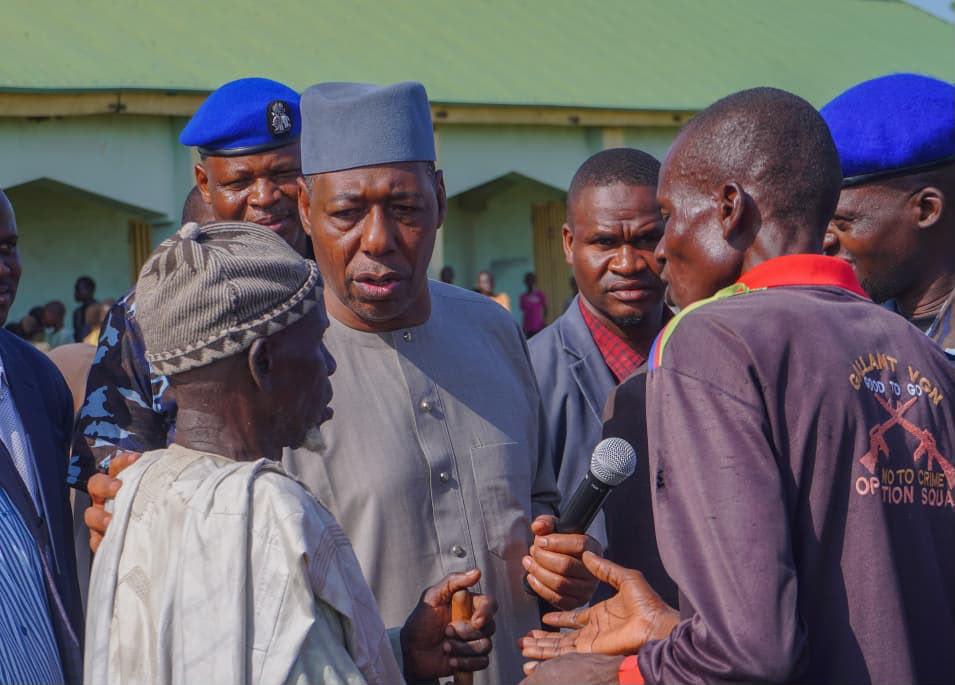
Speaking to newsmen during a recent visit to the camp, Zulum, however, stressed that the relocation is entirely voluntary and no one will be forced to resettle where they are not willing to go.
The Governor has consistently maintained that returning to ancestral homes or other areas of choice must be based on the displaced persons’ expressed willingness.
He said, “We are not carrying out the resettlement process immediately; we are here to discuss with the IDPs so that in the next four months they will be resettled in a dignified manner. I believe you heard from the IDPs that they are willing to return home. Return shall be voluntary, not by force”.
During his visit to Konduga, Governor Zulum inspected resettlement houses currently under construction in Amarwa and later proceeded to Maiwa in Mafa LGA. The Amarwa resettlement city, for which the governor had earlier laid the foundation, is being built to shelter displaced persons living in camps.
In Maiwa, the state government is constructing massive housing units as part of the ongoing resettlement programme. The resettlement houses are equipped with public facilities like a primary healthcare centre, a water facility, and other basic amenities.
Zulum was accompanied by the member of the House of Representatives, Engr Bukar Talba; the Member of the House of Assembly for Konduga, Hon. Bukar Modu; the Commissioner for Local Government and Emirate Affairs, Sugun Mai Mele; and other senior government officials.
Zulum moves to resettle Konduga IDPs in four months
Zulum Announces Closure of Konduga IDP Camp as Borno Accelerates Resettlement Drive
…Inspects ongoing housing projects in Amarwa, Maiwa
By: Michael Mike
Borno State Governor, Professor Babagana Zulum, has announced plans to close the Internally Displaced Persons (IDP) camp in Konduga Local Government Area as part of efforts to accelerate the state’s ongoing resettlement programme.
The move comes shortly after the successful closure of the Bama IDP camp, which was the largest displacement camp outside Maiduguri, as well as preparations for the shutdown of the Gwoza IDP camp.
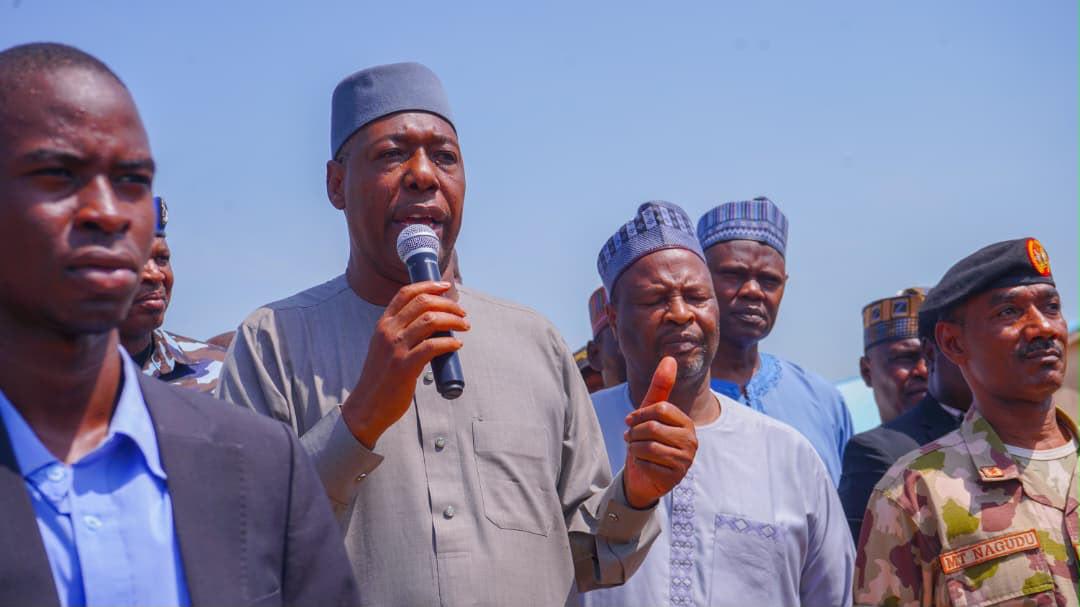
Governor Zulum, who disclosed the plan during a visit to Konduga, said the resettlement of displaced persons would be carried out in a dignified and voluntary manner, stressing that no resident would be forced to return to any location against their will.
The governor said the government would engage with the displaced communities before the process begins, noting that the return of IDPs must be based on their readiness and willingness.
“We are not carrying out the resettlement process immediately; we are here to discuss with the IDPs so that in the next four months they will be resettled in a dignified manner. I believe you heard from the IDPs that they are willing to return home. Return shall be voluntary, not by force,” Zulum said.
During the visit, the governor inspected ongoing construction work at the Amarwa resettlement city, where housing units are being developed for displaced families. The project, which was earlier inaugurated by the governor, is designed to provide a permanent settlement option for residents currently living in camps.
Governor Zulum also visited Maiwa in Mafa Local Government Area, where the state government is constructing additional housing units under its resettlement initiative.
The housing projects include essential social infrastructure such as primary healthcare centres, water facilities and other basic amenities aimed at ensuring sustainable living conditions for returnees.
The Borno State Government has continued to prioritise the rebuilding of communities affected by years of insurgency, with the closure of IDP camps forming part of a broader strategy to restore normalcy, rebuild livelihoods and support the safe return of displaced residents.
Governor Zulum was accompanied on the inspection tour by the member representing Bama/Ngala/Kala-Balge Federal Constituency in the House of Representatives, Engr. Bukar Talba; the Konduga State House of Assembly member, Hon. Bukar Modu; Commissioner for Local Government and Emirate Affairs, Sugun Mai Mele; and other senior government officials.
Zulum Announces Closure of Konduga IDP Camp as Borno Accelerates Resettlement Drive

Troops Arrest Two Suspected Terrorist Informants, Cattle Rustlers in Yobe Market
By Zagazola Makama
Troops of Operation HADIN KAI have arrested two suspected terrorist informants and cattle rustlers during a joint operation with local hunters at the Buni Yadi Friday Market in Gujba Local Government Area of Yobe State.
Military sources told Zagazola Makama that the operation was carried out at about 2:00 p.m. on July 24 by troops of 27 Task Force Brigade in conjunction with members of a hunters’ group acting on intelligence.
The suspects were identified as Muhammadu Sani, 32, from Mainahari in Biu Local Government Area of Borno State, and Buba Umaru, 40, from Garin Jauro in Fune Local Government Area of Yobe State.
According to the sources, the operation turned violent when one of the suspects attacked a member of the hunters’ group with a cutlass while resisting arrest.
The hunter sustained severe head injuries during the attack and was immediately attended to, while the troops overpowered and apprehended the suspects.
Preliminary investigations revealed that Muhammadu Sani confessed to serving as a logistics supplier and informant for Boko Haram terrorists for nearly seven years.
He also admitted to leading terrorists to the residences of two local residents, where the insurgents successfully rustled cattle during separate attacks.
Military sources said the confession is expected to assist ongoing intelligence efforts aimed at dismantling terrorist support networks operating within communities across the North-East.
The two suspects are currently in the custody of 27 Task Force Brigade and are undergoing further investigation to determine the extent of their involvement in terrorist logistics, intelligence gathering and cattle rustling activities.
Security officials said the arrest underscores the critical role played by local intelligence and collaboration between troops and community-based security groups in identifying individuals who provide logistical support and operational information to terrorist elements.
They added that troops of Operation HADIN KAI will continue to target terrorist collaborators, informants and logistics networks as part of ongoing efforts to deny insurgents the local support structures that sustain their operations across the North-East.
Troops Arrest Two Suspected Terrorist Informants, Cattle Rustlers in Yobe Market

Zulum moves to resettle Konduga IDPs in four months

My Binoculars: What has Remi Tinubu got to do with Akara, Kulikuli, Boli, Dodo and Ekpa

Zulum Announces Closure of Konduga IDP Camp as Borno Accelerates Resettlement Drive

Roger Federer’s Shock as DNA Results Reveal Myla and Charlene Are Not His Biological Children

THE PLIGHT OF FARIDA

FAILED COUP IN BURKINA FASO: HOW TRAORÉ NARROWLY ESCAPED ASSASSINATION PLOT AMID FOREIGN INTERFERENCE CLAIMS
-
 News2 years ago
Roger Federer’s Shock as DNA Results Reveal Myla and Charlene Are Not His Biological Children
-
Opinions4 years ago
THE PLIGHT OF FARIDA
-
 News1 year ago
FAILED COUP IN BURKINA FASO: HOW TRAORÉ NARROWLY ESCAPED ASSASSINATION PLOT AMID FOREIGN INTERFERENCE CLAIMS
-

 News2 years ago
EYN: Rev. Billi, Distortion of History, and The Living Tamarind Tree
-
 Opinions5 years ago
POLICE CHARGE ROOMS, A MINTING PRESS
-

 ACADEMICS2 years ago
A History of Biu” (2015) and The Lingering Bura-Pabir Question (1)
-

 Columns2 years ago
Army University Biu: There is certain interest, but certainly not from Borno.
-

 Politics1 year ago
2027: Why Hon. Midala Balami Must Go, as Youths in Hawul and Asikira/Uba Federal Constituency Reject ₦500,000 as Sallah Gift
