
News
Zulum announces N1 Billion support to UMTH for Kidney Transplant

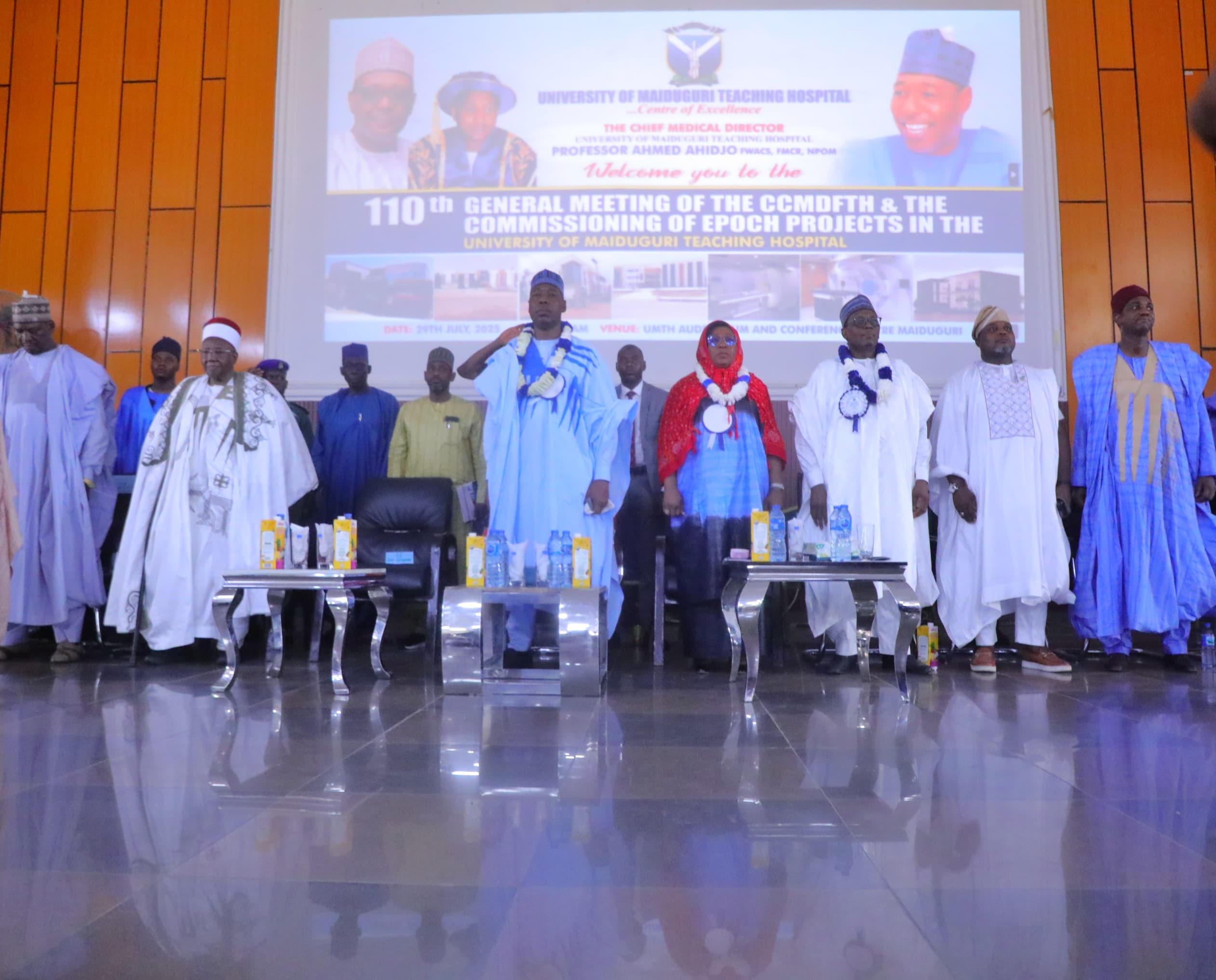
Zulum announces N1 Billion support to UMTH for Kidney Transplant
By: Our Reporter
Borno State Governor, Professor Babagana Umara Zulum, has announced a N1 billion financial support package for the University of Maiduguri Teaching Hospital (UMTH) to facilitate kidney transplants for underprivileged patients from the state.
Demonstrating immediate commitment, Governor Zulum authorised an initial deposit of N250 million to cover transplants for 50 indigent patients.
The governor made the announcement during the 110th General Meeting of the Committee of Chief Medical Directors and Medical Directors of Federal Tertiary Institutions in Nigeria, alongside the commissioning of the epoch-making projects at UMTH.
He confirmed that the remaining N750 million would be disbursed in three instalments.
“I am pleased to announce that Borno State government will deposit the sum of N250 million to support kidney transplant of 50 patients. I am ready to contribute N1 billion as government’s contribution towards supporting the less privileged indigenes of the State ,” Zulum stated.
“The Borno State government therefore pledges to support this initiative and is ready to provide all the partnership required to sustain the provision of kidney transplant to less privileged patients at UMTH. This is only the beginning—I promise to do even more,” he added.
Governor Zulum commended UMTH for its strides in specialised healthcare, particularly its recent successful kidney transplants.
“I was told both the patients and donors are doing very well. Indeed this is a landmark achievement and a great relieve to patients most importantly to those who cannot afford the cost of transplant,” he remarked.
Speaking on the State Emergency Medical and Ambulance Services (SEMAS), the governor confirmed that ten new fully equipped ambulances would be deployed across health facilities by the week’s end. This, he stressed, would bolster the Maternal and Newborn Mortality Reduction Innovation Initiative.
“As a Government, we pledge our full support for the sustenance and scale-up of the Maternal and Newborns Mortality Reduction Innovation Initiative programme. We view it not as a standalone initiative, but as a critical complement to our broader health reform agenda,”.
“We are committed to ensuring that Maternal and Newborn Mortality Reduction Innovation Initiative succeeds in providing comprehensive antenatal care, emergency obstetric services, skilled birth attendance, postnatal follow-up and routine immunisation to protect our children from preventable diseases,” he stressed.
Minister of Health and Social Welfare, Professor Mohammed Ali Pate, lauded Governor Zulum for fostering collaboration between state and federal governments to deliver equitable, affordable healthcare.
“Governor Zulum exemplifies teamwork by working closely with the federal government to enhance healthcare quality and accessibility in Borno,” Pate said.
Chief Medical Director, University of Maiduguri Teaching Hospital, Professor Ahmed Ahidjo acknowledged the state’s N500 million intervention following the 2024 floods, had helped to restore critical services, including the renovation of Trauma and Kidney Centres, procurement of medical consumables and the reactivation of oxygen plant.
The event was attended by dignitaries including Minister of Health and Social Services Prof. Mohammed Ali Pate, National Assembly members, Ambassador Babagana Kingibe (GCON), the Shehu of Borno, Alhaji Dr. Abubakar Ibn Umar Garbai El-Kanemi, Head of Civil Service of the Federation, Dr. Esther Didi Walson-Jack, former deputy governor, Hon. Usman Mamman Ndurkwa and over 70 Chief Medical Directors and Medical Directors.
Zulum announces N1 Billion support to UMTH for Kidney Transplant


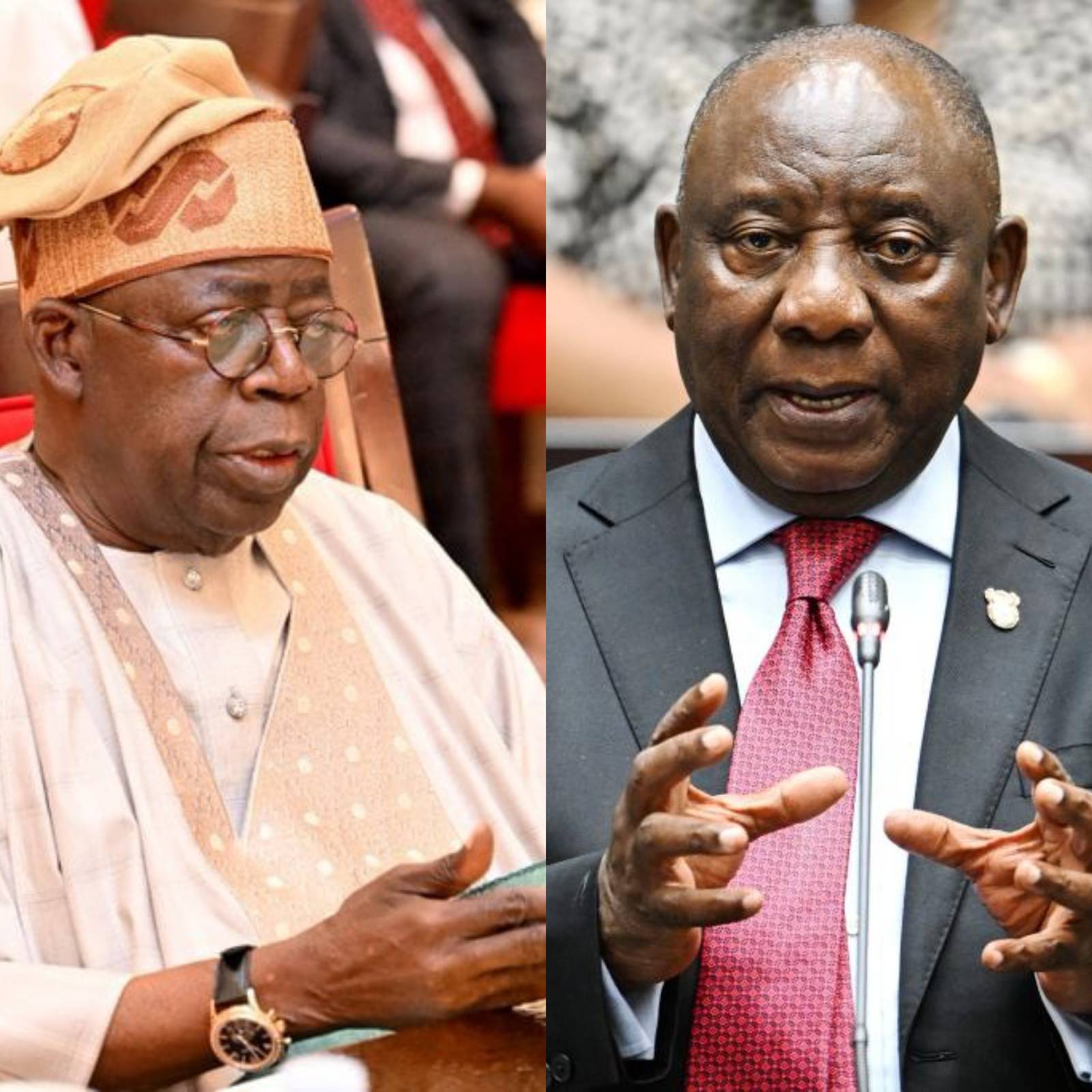
Nigeria Condemns Killing of Two Citizens in South Africa, Warns All Options Remain Open
By: Michael Mike
The Federal Government has strongly condemned the killing of two Nigerian nationals in South Africa, accusing security operatives and criminal elements of targeting Nigerians amid rising xenophobic violence, and warning that it may be forced to activate “all options” if the attacks continue.
In a statement issued on Sunday by the spokesperson of the Ministry of Foreign Affairs, Kimiebi Ebienfa, the government demanded immediate investigations into the killings and the prosecution of those responsible, while expressing concern over what it described as an alarming pattern of extra-judicial killings and growing hostility towards Nigerians living in South Africa.
According to the ministry, one of the victims, Emeka Charles Iroegbu, was allegedly killed on June 28 in Sunnyside, Pretoria, by officers of the Tshwane Metro Police, who reportedly subjected him to what the government described as “gruesome interrogation techniques.”
The ministry said the same police officers were also allegedly responsible for the extra-judicial killing of another Nigerian, Nnaemeka Mathew Andrew Ekpenyong, on April 20, noting that despite the identities of the four officers being known to the South African Police Service, no arrests had been made.
It added that another Nigerian, Musa Yunana Joe, popularly known as “Big Joe,” was also shot dead in front of his shop on June 28 in Witbank, Mpumalanga, by yet-to-be-identified gunmen.
The government said the incidents occurred against the backdrop of increasing attacks on foreigners in South Africa, raising serious concerns about the safety of Nigerians and other foreign nationals.
It alleged that some individuals were deliberately portraying hardworking Nigerians as criminals in order to justify attacks against them.
“The continuing pattern of such terrible incidents is clearly evidence of complicity on the part of security operatives, especially officers of the Tshwane Metro Police, which raises the question of state responsibility under international law,” the statement said.
Nigeria also condemned recent comments reportedly made by a spokesperson of the South African Government, who allegedly asked Nigerians leaving South Africa because of ongoing xenophobic protests to disclose where illegal drugs were hidden.
The Ministry described the remarks as derogatory, unprofessional and capable of inciting hatred and violence against Nigerians.
It further criticised anti-immigrant groups, including March on March and Operation Dudula, accusing them of promoting violence and hate against fellow Africans and warning that their leaders could face regional and international criminal liability.
The Federal Government stressed that allegations of wrongdoing against any individual should be handled through lawful judicial processes rather than mob action or extra-judicial killings.
It called on South African authorities to urgently investigate the recent killings alongside other unresolved cases involving Nigerian victims and ensure that those responsible are prosecuted.
The government expressed sympathy to the families of the deceased and pledged to continue engaging South African authorities at the highest diplomatic level until justice is achieved.
It also advised Nigerians living in South Africa to remain calm, obey the law, stay vigilant, relocate to safer neighbourhoods where necessary, and avoid areas experiencing violent demonstrations while diplomatic efforts continue.
The ministry noted that numerous South African citizens and businesses operate freely and safely in Nigeria without harassment, arguing that South Africa has a reciprocal obligation to guarantee the safety of Nigerians legally residing in the country.
It warned that the continued targeting of Nigerians was unacceptable and stated that if the situation persisted, “all options remain on the table,” adding that some measures could be activated should what it described as “intolerance and apartheid-style behaviour” against foreigners continue.
The government, however, appealed to Nigerians at home to remain peaceful and refrain from retaliatory actions, reaffirming its commitment to dialogue and diplomacy in line with Nigeria’s foreign policy of African unity, brotherhood and solidarity.
The Ministry also disclosed that the evacuation of registered Nigerians from South Africa is ongoing.
Nigeria Condemns Killing of Two Citizens in South Africa, Warns All Options Remain Open

Six Villagers Killed as Terrorists Attack Sokoto Community, Rustle Livestock
By: Zagazola Makama
Suspected terrorists have killed six villagers and rustled an unspecified number of livestock during an attack on Koludo Village in Bodinga Local Government Area of Sokoto State.
Security sources told Zagazola Makama that combined troops of the 8 Division Strike Team, 18 Field Engineer Regiment, 28 Support Engineer Regiment, and the Nigeria Police responded to a distress call following the attack at about 7:10 a.m. on Friday.
The sources said that upon arrival at the village, the security team confirmed that the attackers had invaded the community, killed six residents, and made away with livestock before fleeing.
The troops immediately launched a pursuit of the fleeing terrorists along their withdrawal routes but were forced to halt the operation after the suspects escaped into marshy terrain, which hindered further movement.
Security forces have maintained vigilance in the area while efforts are ongoing to track down the perpetrators and prevent further attacks.
Six Villagers Killed as Terrorists Attack Sokoto Community, Rustle Livestock
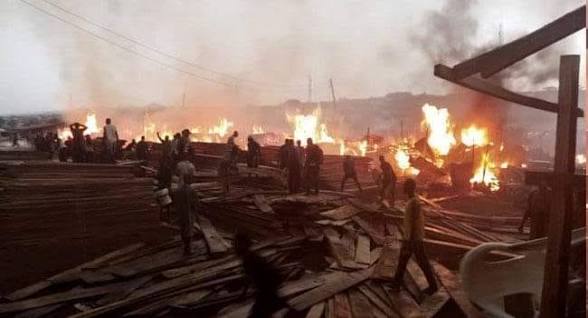
Fire razes about 50 shops at Ibadan market
By: Zagazola Makama
A fire outbreak has destroyed about 50 shops at the Bode Market area of Ibadan, Oyo State, with no casualties recorded.
Police sources said the incident occurred at about 2:00 a.m. on Friday following reports from members of the public.
A team of police operatives led by the Divisional Police Officer of Mapo Division responded to the scene, while firefighters were immediately contacted to contain the blaze.
The fire was eventually extinguished through the combined efforts of firefighters and residents.
Police cordoned off the area to prevent hoodlums from taking advantage of the situation to loot affected shops.
Although about 50 shops were completely destroyed by the fire, no lives were lost and no injuries were reported.
The cause of the fire has yet to be determined, while the value of the property destroyed is still being assessed.
Police said investigations into the incident have commenced.
Fire razes about 50 shops at Ibadan market

Nigeria Condemns Killing of Two Citizens in South Africa, Warns All Options Remain Open

Troops Repel Terrorist Attack on Forward Operating Base in Zamfara

Six Villagers Killed as Terrorists Attack Sokoto Community, Rustle Livestock

Roger Federer’s Shock as DNA Results Reveal Myla and Charlene Are Not His Biological Children

THE PLIGHT OF FARIDA

FAILED COUP IN BURKINA FASO: HOW TRAORÉ NARROWLY ESCAPED ASSASSINATION PLOT AMID FOREIGN INTERFERENCE CLAIMS
-
 News2 years ago
Roger Federer’s Shock as DNA Results Reveal Myla and Charlene Are Not His Biological Children
-
Opinions4 years ago
THE PLIGHT OF FARIDA
-
 News1 year ago
FAILED COUP IN BURKINA FASO: HOW TRAORÉ NARROWLY ESCAPED ASSASSINATION PLOT AMID FOREIGN INTERFERENCE CLAIMS
-

 News2 years ago
EYN: Rev. Billi, Distortion of History, and The Living Tamarind Tree
-
 Opinions5 years ago
POLICE CHARGE ROOMS, A MINTING PRESS
-

 ACADEMICS2 years ago
A History of Biu” (2015) and The Lingering Bura-Pabir Question (1)
-

 Columns2 years ago
Army University Biu: There is certain interest, but certainly not from Borno.
-

 Politics1 year ago
2027: Why Hon. Midala Balami Must Go, as Youths in Hawul and Asikira/Uba Federal Constituency Reject ₦500,000 as Sallah Gift
