
News
CIVIL SOCIETY, LEGAL EXPERTS BACK KING DAKOLO’S SUIT AGAINST SHELL’S UNJUST NIGER DELTA SELLOFF


CIVIL SOCIETY, LEGAL EXPERTS BACK KING DAKOLO’S SUIT AGAINST SHELL’S UNJUST NIGER DELTA SELLOFF
By: Michael Mike
A coalition of civil society organisations – Social Action Nigeria, the Health of Mother Earth Foundation (HOMEF), the International Working Group on Petroleum Pollution and the Just Transition in the Niger Delta (IWG), the Bayelsa State Non-Governmental Organisations Forum (BANGOF), HEDA Resource Centre, Kebetkache Women Development and Resource Centre, and others – stands in firm solidarity with His Royal Majesty, King Bubaraye Dakolo, Agada IV of Ekpetiama Kingdom and Chair of the Bayelsa State Council of Traditional Rulers, as the Federal High Court, Yenagoa, convenes today for the first hearing of the suit filed against Shell, the Minister of Petroleum Resources, the Nigerian Upstream Petroleum Regulatory Commission (NUPRC), and the Attorney General of the Federation.
The suit challenges Shell’s attempt to divest its onshore oil assets and exit the Niger Delta without first decommissioning obsolete infrastructure, remediating environmental damage, and compensating the Ekpetiama people for long-standing harm. It raises fundamental issues about the constitutional and environmental rights of the Niger Delta’s indigenous communities, Shell’s corporate liability, and the Nigerian government’s responsibility to protect its citizens.
A struggle for justice and dignity in the Niger Delta.
In the statement of claim, King Dakolo outlines how Shell’s operations in the Gbarain oil fields – located within the Ekpetiama Kingdom in Yenagoa Local Government Area of Bayelsa State -have led to massive oil spills, gas flaring, and the destruction of fishing and farming livelihoods. The community’s rivers, forests, and farmlands have been rendered toxic and unsustainable for life and livelihoods.
The plaintiffs argue that Shell’s planned divestment of its interest in the Shell Petroleum Development Company (SPDC) without fulfilling its environmental obligations in accordance with the Nigerian Constitution and laws is illegal and unjust, and that the Nigerian state, through the Minister of Petroleum Resources, NUPRC, and the Attorney General, has failed in its duty to prevent such corporate evasion of responsibility.
King Dakolo and the Ekpetiama people seek to stop Shell’s planned divestment until Shell accounts for its environmental devastation, remediates polluted sites, decommissions obsolete infrastructure, and compensates the host communities affected by over six decades of irresponsible oil extraction.
This suit represents a stand for the rights of host communities and the rule of law in Nigeria. The plaintiffs are asking the court to:
- Declare that Shell’s proposed divestment without environmental remediation and decommissioning is unlawful;
- Compel the NUPRC and federal authorities to fulfill their constitutional and statutory responsibilities;
- Uphold the constitutional rights of affected communities under the Nigerian Constitution (right to life and dignity);
- Prevent the transfer of assets and liabilities to successor companies without legal and environmental accountability.
According to Barrister Chuks Uguru, lead counsel for the plaintiffs, “this action against SPDC, Shell Corporation, Renaissance Group, and federal agents is over the unlawful divestment of oil assets in Ekpetiama Kingdom whose members have the fundamental right to a clean and healthy environment under the Nigerian Constitution and the African Charter.”
Backed by facts: the Bayelsa Commission report
This case is grounded in the extensive findings of the Bayelsa State Oil and Environmental Commission (BSOEC), composed of experts from Europe, North America, and Africa. The Commission revealed that:
- Bayelsa State suffers from some of the worst oil pollution levels in the world, resulting from the operations of Shell and other international oil companies;
- Over 1.5 million people in Bayelsa are impacted by hydrocarbon pollution;
- Communities have been exposed to Chromium, benzene and other cancer-causing chemicals far exceeding World Health Organisation safety limits;
- Oil spills have contaminated nearly all primary water sources, forcing residents to rely on visibly polluted creeks and ponds;
- Soil samples revealed extremely high levels of Total Petroleum Hydrocarbons (TPH), rendering lands unfit for agriculture;
- Air quality measurements near Shell facilities recorded particulate matter and soot far above permissible health thresholds;
- In some communities, fish stocks have declined by over 70%, impacting food security and livelihoods;
- Shell and other oil companies have failed to carry out proper decommissioning and cleanup, leaving rusting, leaking pipelines and abandoned wellheads that continue to pollute.
Shell, the largest operator, was named as a primary culprit.
“This divestment is a crude attempt by Shell to run away from the disaster it created,” said His Royal Majesty, King Bubaraye Dakolo. “We demand justice, not abandonment. Shell must clean up, compensate, and decommission. Only then can it leave.”
This is a test case for corporate accountability
The case has drawn broad support from national and international civil society groups concerned about environmental justice and a just energy transition.
“Shell wants to exit with profit, leaving behind toxic air, poisoned water, and broken communities,” said Dr. Isaac Asume Osuoka, Director of Social Action Nigeria. “We are here to say: no more. Planned onshore asset selloffs by transnational oil corporations must not become a license to flee environmental accountability in the Niger Delta extraction sites, which is home to human beings.”
“The Niger Delta cannot be a sacrificial zone for fossil fuel greed,” added Reverend Nnimmo Bassey, Executive Director of the Health of Mother Earth Foundation (HOMEF). “We stand in solidarity with King Dakolo and the people of Ekpetiama Kingdom in demanding that Shell pay for the damage it has done before it walks away.”
“The evidence is clear. Seventy years of fossil fuel production in Nigeria’s Niger Delta has destroyed ecosystems, economies, environments and human habitats. If just transition is to be more than just a slogan, clean up, restoration, and repair must be mandatory for oil companies divesting, before they up sticks and leave,” said Dr. Kathryn Nwajiaku‑Dahou, Director of the Politics and Governance Programme at ODI Global and co-Convener of the IWG.
International dimensions: precedent for transition justice
Developments in the Niger Delta, which contains the most polluted oil and gas production sites in the world world, have relevance for the global transition away from fossil fuels. That is why this case poses urgent questions about what a just transition means for communities here and others in the tropical regions of the Global South, which are at the frontlines of fossil extraction.
“This case sets a precedent in Nigeria, the Gulf of Guinea region, and globally,” said Professor Engobo Emeseh, Head of the School of Law at the University of Bradford, United Kingdom, speaking for the Legal and Justice Committee of the IWG. “It says clearly: there can be no just energy transition without corporate accountability, environmental restoration, and community consent.”
Call to the judiciary: uphold the law, defend the people
We call on the Federal High Court to act decisively to:
- Restrain Shell and its partners from finalising any asset sale or divestment until full compliance with environmental and human rights obligations is demonstrated;
- Compel regulators like the NUPRC to enforce the Petroleum Industry Act and protect host communities;
- Affirm the rights of indigenous peoples of the Niger Delta to clean environments, safe livelihoods, and full consultation.
“This is a crucial moment in Nigeria’s environmental and legal history,” according to Olanrewaju Suraju, Director of HEDA Resource Centre. “The court has a unique opportunity to uphold justice, protect the rule of law, and demonstrate that no corporation is above accountability in Nigeria.” - CIVIL SOCIETY, LEGAL EXPERTS BACK KING DAKOLO’S SUIT AGAINST SHELL’S UNJUST NIGER DELTA SELLOFF


Nigeria Resolves Passport Authentication Hurdles, Enters ICAO Global Trust Network
By: Michael Mike
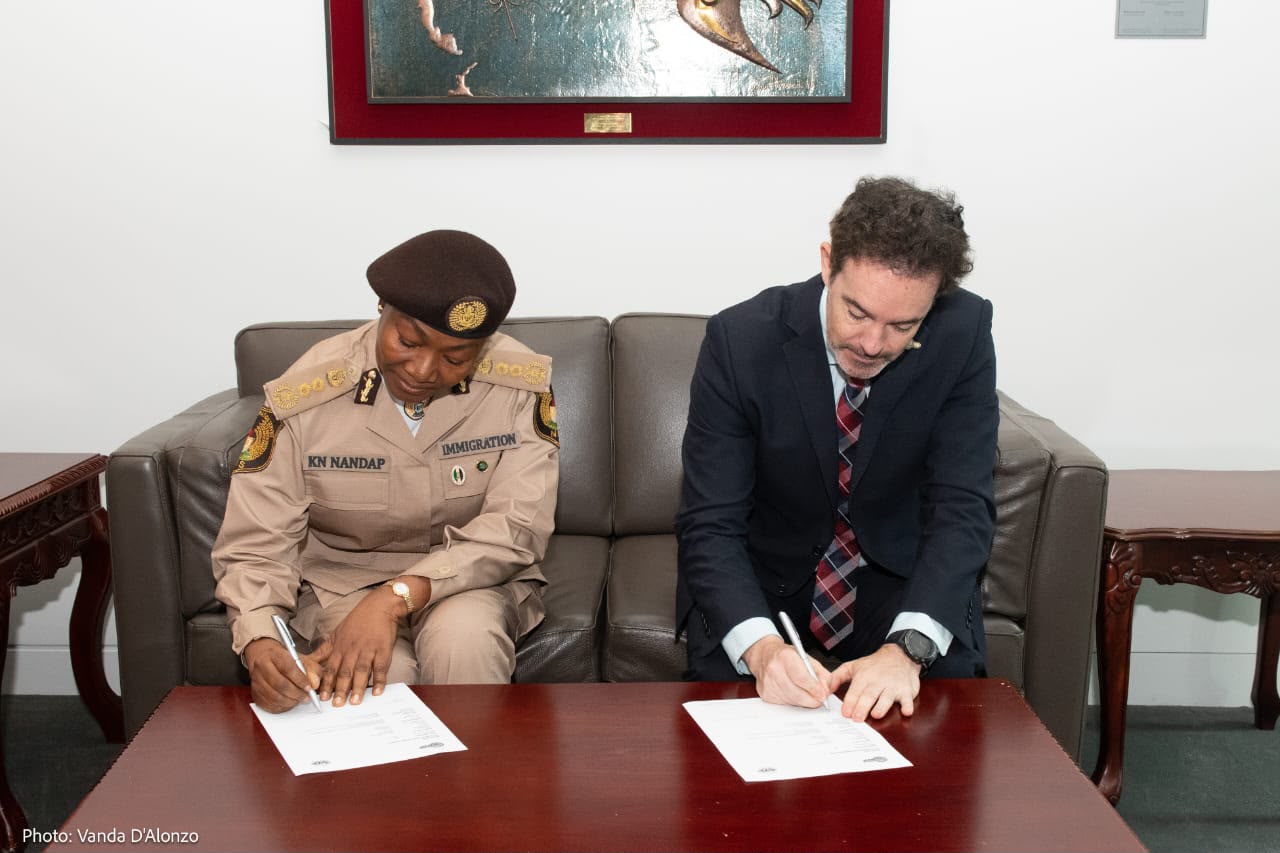
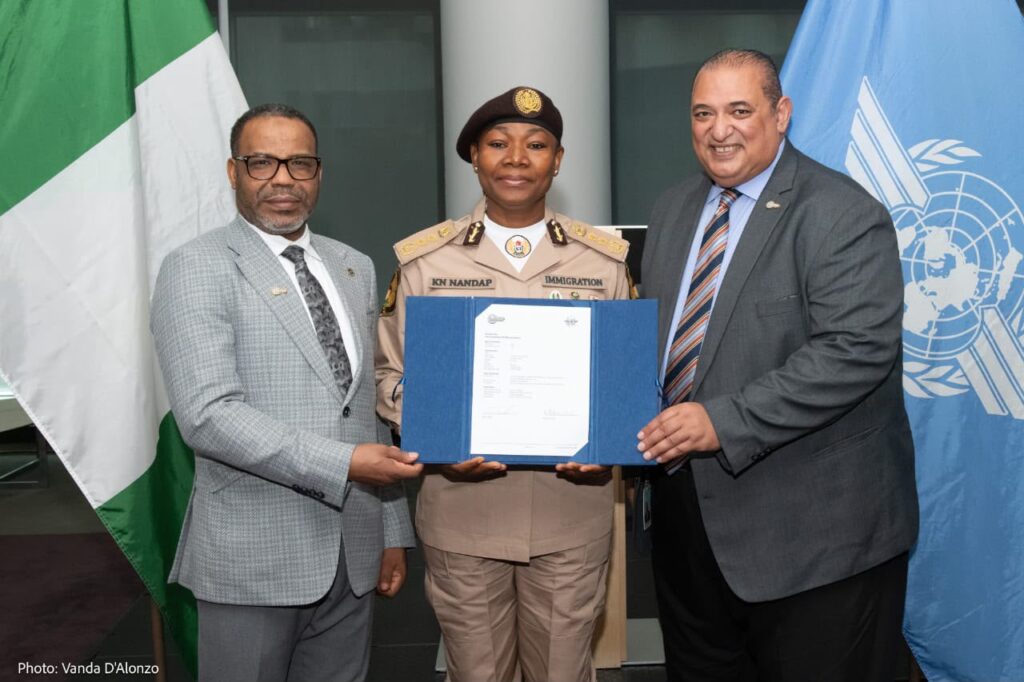
Nigeria has taken a major step towards eliminating international verification challenges associated with its passports after successfully importing all its Country Signing Certificate Authorities (CSCAs) into the International Civil Aviation Organisation (ICAO) Public Key Directory (PKD).
The milestone, achieved under the President Bola Ahmed Tinubu-led Federal Government through the Ministry of Interior headed by Hon. Olubunmi Tunji-Ojo, is expected to strengthen the global authentication of Nigerian passports and improve the seamless verification of the country’s electronic travel documents at international border control points.
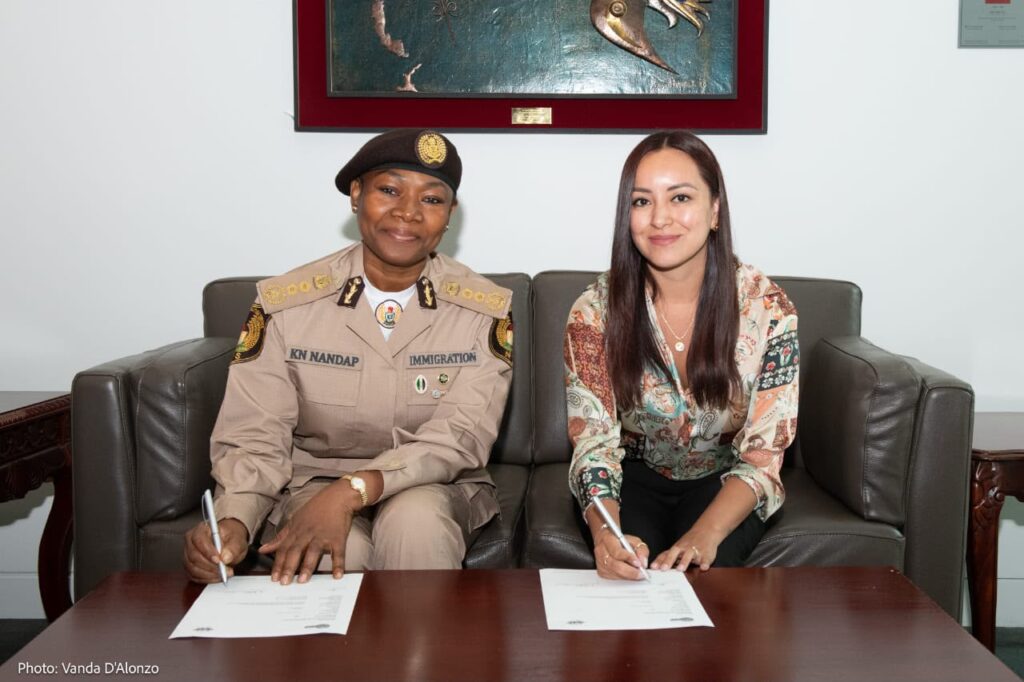
The successful importation of Nigeria’s existing CSCAs into the ICAO PKD was formally marked at the ICAO Headquarters in Montreal, Canada, on Monday, July 13, 2026.
The exercise was led by the Comptroller-General of the Nigeria Immigration Service (NIS), Kemi Nandap, and was undertaken primarily to resolve passive authentication challenges previously encountered by some holders of Nigerian passports at selected foreign border control points.
With the completion of the process, Nigeria has established the necessary chain of trust within the ICAO PKD framework, enabling border control systems in ICAO PKD member states to verify Nigerian passports more seamlessly and with greater confidence.
The development is particularly significant in an era in which international travel is increasingly dependent on secure digital identity systems and the electronic authentication of travel documents. The ICAO PKD serves as a global mechanism for sharing the cryptographic information required by participating countries to authenticate electronic passports and verify that they are genuine and have not been tampered with.
The NIS, in a statement by his spokesman, Akinsola Akinlabi said the achievement represents a significant advancement in Nigeria’s digital identity and border security architecture, while reinforcing the integrity and international interoperability of Nigerian travel documents.
It further underscored the Federal Government’s efforts to modernise Nigeria’s migration and border management systems in line with the Renewed Hope Agenda of President Tinubu.
The Service said the successful completion of the process would contribute to smoother international border clearance for Nigerian passport holders and reduce authentication-related obstacles that could cause delays or complications during international travel.
The development also highlights Nigeria’s growing participation in international cooperation on digital identity, travel document security and border management, as countries across the world intensify efforts to combat document fraud, identity theft and other forms of transnational crime.
The Immigration Service said the achievement reflected its continued investment in secure digital identity management and international border security cooperation, adding that it reaffirmed its commitment to ensuring that Nigerian travel documents meet global standards of security, reliability and interoperability.
Akinlabi, said the development would promote seamless border clearance for holders of Nigerian passports across participating international border control systems.
The successful integration of Nigeria’s CSCAs into the ICAO PKD is therefore expected to mark a new phase in the country’s passport diplomacy, with the government seeking to ensure that Nigerian travellers can enjoy greater recognition, reliability and efficiency in the global travel ecosystem.
Nigeria Resolves Passport Authentication Hurdles, Enters ICAO Global Trust Network

Petition Seeks Probe of NEPC CEO Over Alleged Financial Misconduct, Abuse of Office, Nepotism
…As New Allegations Add to Earlier Auditor-General Query Over N230.5 Million Foreign Travel Expenditure….
By Zagazola Makama
A petition has called on Nigeria’s anti-corruption, oversight and law enforcement agencies, ICPC, EFCC to launch an independent, impartial and comprehensive investigation into a series of allegations involving the Executive Director/Chief Executive Officer of the Nigerian Export Promotion Council (NEPC), Mrs. Nonye Ayeni.
The latest petition adds to earlier public concerns surrounding the NEPC boss following an audit query by the Office of the Auditor-General of the Federation (OAGF), details of which were previously reported by SaharaReporters, alleging breaches of Federal Government directives regulating official foreign travel amounting to N230.5 Million.
Despite undergoing investigations at various Nigeria’s anti graft agencies, corruption and abuse of office had persisted in the NEPC.
The latest petition, which stressed that all allegations should be investigated strictly in accordance with due process and the rule of law, urged investigators to determine the facts solely on the basis of credible evidence while ensuring that any individual against whom the allegations are not substantiated is fully exonerated.
According to the petition, the allegations relate to financial misconduct, abuse of office, administrative irregularities, nepotism, violations of the Public Service Rules and other actions allegedly affecting the administration of the Council.
One of the central allegations concerns the suspected diversion of approximately ₦500 million, said to represent about 20 per cent of the Council’s quarterly subvention intended to support Nigeria’s non-oil export sector.
The petition alleged that the funds were diverted through a coordinated arrangement involving certain Directors and State Coordinators, with portions of allocations to state offices allegedly transferred through a Bureau de Change operator for conversion into United States dollars before being remitted through an official in the Accounts Department.
It called on investigators to conduct a comprehensive forensic audit of the Council’s finances, including bank records, payment vouchers, electronic transactions, communication records and other financial documents, to establish whether such transactions occurred.
The petition also raised allegations of falsification of official service records, claiming that several Directors who ought to have retired from the Federal Public Service remained in office after their personnel records, including dates of birth, were allegedly altered.
It requested investigators to compare current personnel records with original employment documents, nominal rolls and historical service records to determine whether any unlawful alterations were made.
Another issue highlighted in the petition concerns the alleged irregular engagement of retired officers on contract appointments.
According to the petition, retired members of staff were allegedly re-engaged without transparent procedures and contrary to established Federal Public Service guidelines, with claims that some appointments were intended to favour individuals perceived to be loyal to the current management.
The petition requested a detailed review of all contract appointments involving retired officers to determine whether they complied with existing laws, regulations and Federal Government policies.
The petition further alleged that the NEPC Chief Executive sought blanket approval from the Honourable Minister of Industry, Trade and Investment to appoint External Directors of her choice.
According to the allegations, the approval was intended to facilitate the appointment or return of certain retired loyalists into strategic positions within the Council.
The petition urged investigators to examine all correspondence relating to the request and determine whether the process complied with applicable legal and administrative procedures.
The petition also alleged widespread nepotism and abuse of administrative authority, claiming that professionally qualified officers had been removed from positions consistent with their expertise and replaced by individuals allegedly selected on the basis of personal loyalty or ethnic affiliation rather than merit.
Among the examples cited was the alleged transfer of a professionally certified ICAN accountant from the Internal Audit Department to an operational unit unrelated to his professional qualifications, while another officer was reportedly appointed in his place.
It also alleged that the Council’s certified Procurement Officer was redeployed from the Procurement Unit to a state office and replaced by an officer who allegedly lacked the required professional procurement certification.
According to the petition, if established, such actions could amount to violations of the Public Service Rules and undermine merit-based administration.
The petition equally alleged that several substantive Directors had been denied office accommodation and administrative privileges ordinarily associated with their positions.
It claimed the affected Directors were perceived as outspoken officers who consistently advised management to comply with due process in the administration of Council affairs. Investigators were urged to determine whether such actions amounted to victimisation, abuse of administrative authority or unfair labour practices.
The petition also questioned the management of official foreign travel and estacode payments.
It alleged that estacode and other travel allowances were approved and paid to certain officials regarded as loyal to management for overseas trips they allegedly never undertook.
The petition requested investigators to examine travel approvals, immigration records, airline tickets, boarding records, passport entry and exit stamps, estacode payments and other related expenditure documents to verify whether public funds were improperly disbursed.
It also raised concerns over what it described as unusually high expenditure during official foreign trips, including alleged excessive spending on shopping and related expenses.
According to the petition, investigators should review travel approvals, estacode payments, procurement records, receipts and expenditure documents to determine whether public funds were properly utilised and whether all spending complied with financial regulations.
The petition further alleged that management frequently failed to properly delegate authority to appropriate Directors whenever the Chief Executive embarked on official domestic or international engagements.
According to the petition, this practice allegedly disrupted efficient administration and should be examined to determine compliance with established administrative procedures.
On staff welfare and workplace culture, the petition alleged that employees had complained of intimidation, abusive language, victimisation and an unwillingness by management to accept professional advice. It stated that the alleged conduct had created a hostile working environment that negatively affected staff morale and institutional performance.
The petition recommended that investigators independently verify these claims through interviews with serving and former members of staff. It also alleged inadequate engagement between the Council’s leadership and exporters, saying many stakeholders reportedly found it difficult to secure official meetings with the Chief Executive despite the Council’s statutory responsibility to support Nigeria’s export sector.
According to the petition, investigators should assess whether stakeholder engagement practices were consistent with the Council’s mandate and principles of good public administration. Another allegation contained in the petition was that the Chief Executive allegedly claimed that proceeds from the alleged financial misconduct were used to influence or obtain protection from certain public officials.
The petition urged investigators to independently determine whether such statements were made and, where necessary, investigate any individuals who may be implicated while ensuring due process.
As part of the requested investigation, the petition called for a forensic audit of the Council’s finances; examination of bank records, payment trails and electronic transactions; verification of personnel files, retirement records and nominal rolls; review of contract appointments involving retired officers; examination of procurement processes and foreign travel expenditures; verification of estacode payments against actual travel records; review of correspondence relating to appointments and approvals; interviews with staff, whistleblowers, exporters and other stakeholders; and assessment of compliance with the Public Service Rules, Financial Regulations, the Public Procurement Act and other applicable laws.
The petition stated that its objective was to promote transparency, accountability, integrity and the prudent management of public resources entrusted to the Nigerian Export Promotion Council for the development of Nigeria’s non-oil export sector.
It emphasised that all findings should be based solely on credible evidence, due process and the rule of law, adding that anyone found culpable should be held accountable in accordance with the law, while any person against whom the allegations were not substantiated should be fully exonerated.
Earlier Auditor-General Query
The fresh petition comes months after the Office of the Auditor-General of the Federation reportedly issued an audit query against Mrs. Ayeni over her official foreign travel expenditure during the 2024 fiscal year.
According to a report by SaharaReporters, the audit alleged that Mrs. Ayeni embarked on numerous international trips in 2024 at a total cost of ₦230,540,843, contrary to Federal Government directives aimed at reducing public expenditure.
The report said auditors found that the NEPC chief undertook four international trips in the first quarter of 2024, two trips in the second quarter, two in the third quarter and seven international trips in the fourth quarter.
The Auditor-General’s report reportedly cited Circular No. PRS080/ADM/GEN/I dated Sept. 18, 2023, and another directive dated Feb. 21, 2024, both issued by the Secretary to the Government of the Federation, which restricted publicly funded international travel by government officials to a maximum of two trips per quarter.
The audit also reportedly referred to the March 12, 2024 circular signed by the Chief of Staff to the President, Mr. Femi Gbajabiamila, which suspended publicly funded foreign trips from April 1, 2024, except where expressly approved.
According to SaharaReporters, the audit alleged that Mrs. Ayeni continued embarking on numerous foreign trips despite the restrictions and questioned whether several of the journeys met the test of necessity or relevance to the statutory mandate of the NEPC.
Among the examples cited was an alleged payment of ₦16.8 million for airfare and estacode to attend the opening of a Zenith Bank branch in Paris, France, an event which the auditors reportedly questioned on the grounds that it was allegedly unrelated to the Council’s official mandate.
The audit also reportedly raised concerns over overlapping travel schedules involving trips to Las Vegas, Abu Dhabi, Ghana and Qatar within closely connected dates, questioning whether all the events could have been attended as claimed and whether excess estacode, if any, was refunded.
According to SaharaReporters, the Office of the Auditor-General recommended that the entire ₦230.54 million spent on the disputed foreign trips be recovered and refunded to government coffers, describing the expenditure as inconsistent with government financial regulations and fiscal discipline measures introduced by the Tinubu administration.
Though the spokesperson for the Nigerian Export Promotion Council, Mr. Aliu Seidu Sadiq, denied the previous allegations and disputed the claim that the Chief Executive undertook foreign trips amounting to the figure stated in the audit report, the matter was still under investigation.
Mrs. Ayeni and the Nigerian Export Promotion Council had not publicly responded to the latest allegations contained in the petition at the time of filing this report while efforts to obtain comments from Mrs. Nonye Ayeni and the NEPC before publication were unsuccessful.
Zagazola Media Network

Police Arrest Two Suspected Robbers, Recover Stolen iPads in Yobe
By Zagazola Makama
Operatives of the Yobe State Police Command have arrested two suspected armed robbers and recovered three stolen iPad handsets following an attack on two farmers in Fune Local Government Area of the state.
Security sources told Zagazola Makama that the case was reported at about 9:00 a.m. on July 12 at the Damagun Divisional Police Headquarters by Alhaji Aliyu Bularafa of Lawan Kalam Village in Ngelzarma District, who was accompanied by Ya’u Suleiman.
According to the report, at about 2:45 a.m. on July 11, two armed men, wielding cutlasses, knives and sticks, broke into the victims’ room located on their farm while they were asleep.
The assailants reportedly attacked the two men, inflicting serious injuries before carting away three iPad handsets and wristwatches.
Following the report, detectives led by ASP Nuhu visited the scene and tracked the suspects through footprints left at the crime scene.
The investigation led to the arrest of Idriss Gako and Babangida Abdulrahman, both of Lantewa Village.
Police recovered the three stolen iPad handsets from the suspects during the operation.
The suspects remain in police custody while investigations continue to determine whether they are linked to other robbery incidents in the area.
Police Arrest Two Suspected Robbers, Recover Stolen iPads in Yobe

Tinubu commends Buni over successful primaries in Yobe

Troops intercept suspected ISWAP logistics suppliers, recover food, veterinary supplies in Borno

Over 90% of Nigeria’s Inmates are State Offenders, Between 30-50% Shouldn’t Have Been Jailed – Tunji-Ojo

Roger Federer’s Shock as DNA Results Reveal Myla and Charlene Are Not His Biological Children

THE PLIGHT OF FARIDA

FAILED COUP IN BURKINA FASO: HOW TRAORÉ NARROWLY ESCAPED ASSASSINATION PLOT AMID FOREIGN INTERFERENCE CLAIMS
-
 News2 years ago
Roger Federer’s Shock as DNA Results Reveal Myla and Charlene Are Not His Biological Children
-
Opinions4 years ago
THE PLIGHT OF FARIDA
-
 News1 year ago
FAILED COUP IN BURKINA FASO: HOW TRAORÉ NARROWLY ESCAPED ASSASSINATION PLOT AMID FOREIGN INTERFERENCE CLAIMS
-

 News2 years ago
EYN: Rev. Billi, Distortion of History, and The Living Tamarind Tree
-
 Opinions5 years ago
POLICE CHARGE ROOMS, A MINTING PRESS
-

 ACADEMICS2 years ago
A History of Biu” (2015) and The Lingering Bura-Pabir Question (1)
-

 Columns2 years ago
Army University Biu: There is certain interest, but certainly not from Borno.
-

 Politics1 year ago
2027: Why Hon. Midala Balami Must Go, as Youths in Hawul and Asikira/Uba Federal Constituency Reject ₦500,000 as Sallah Gift
