
News
Defence and Interior Ministries Deepen Strategic Partnership on National Security

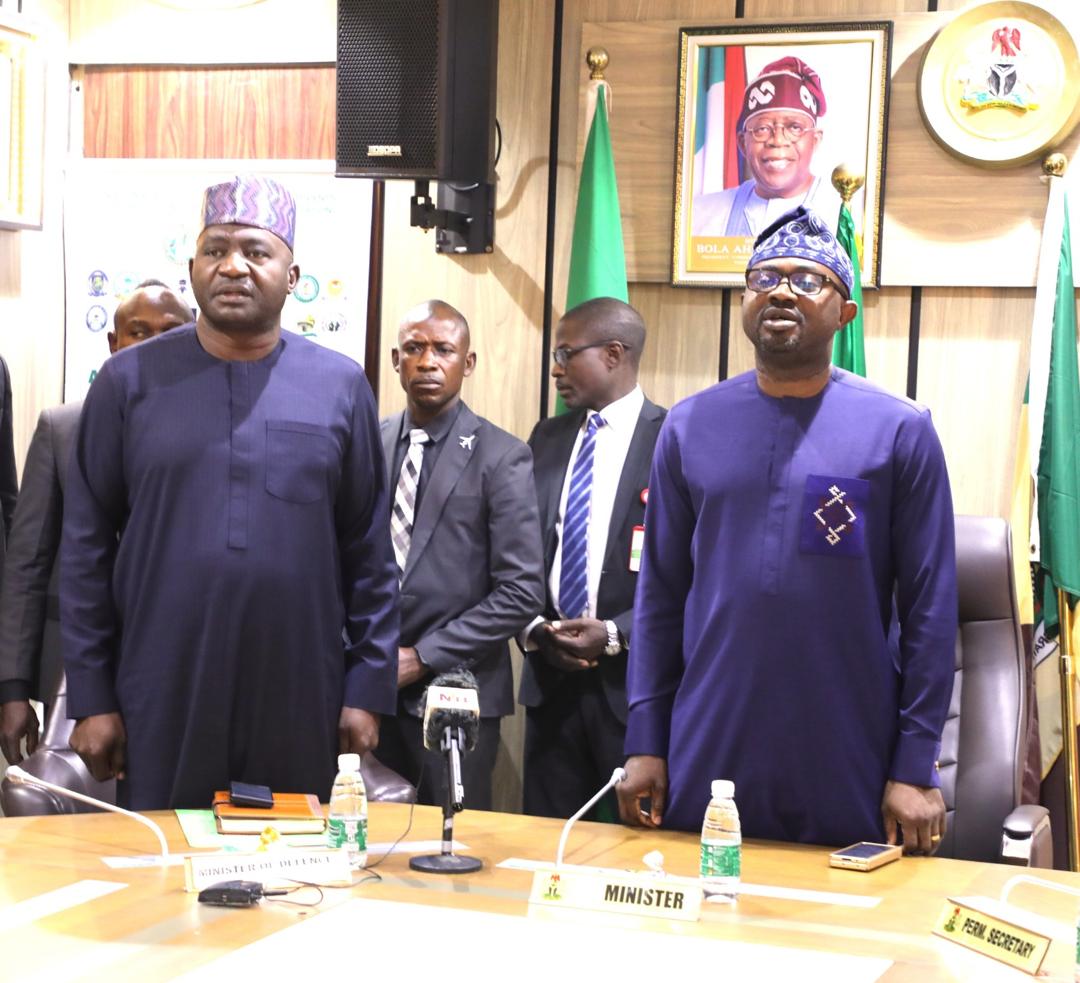
Defence and Interior Ministries Deepen Strategic Partnership on National Security
By: Michael Mike
The Federal Government has moved to strengthen coordination between the Ministries of Defence and Interior as part of efforts to build a more unified and effective national security framework capable of responding to Nigeria’s evolving security threats.
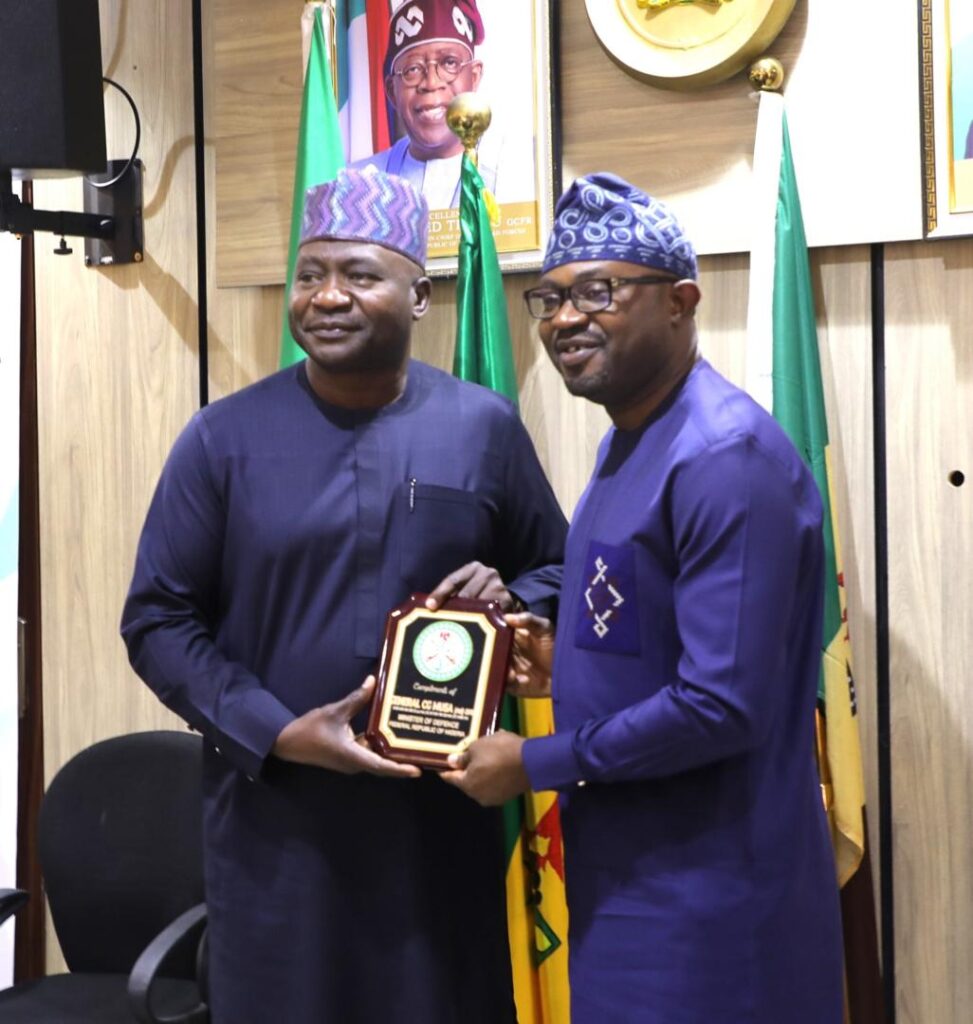
This followed a high-level meeting in Abuja on Friday when the Minister of Defence, Gen. Christopher Musa (Rtd) paid a courtesy visit to the Minister of Interior, Hon. Olubunmi Tunji-Ojo, at his office.
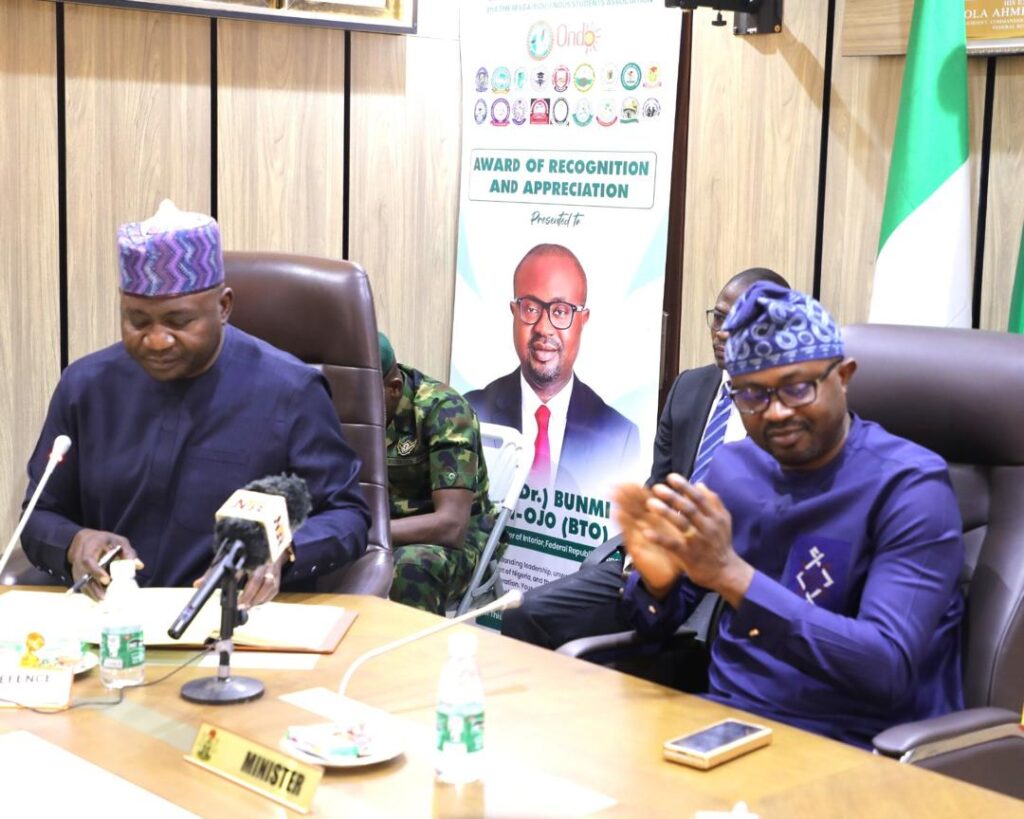
Receiving the Defence Minister, Tunji-Ojo reaffirmed the government’s commitment to a stronger, intelligence-driven security structure anchored on collaboration between internal and external security agencies.
He described national security as resting on three key pillars—intelligence, internal security, and defence—adding that weakness in any of these areas threatens the entire system.
“If one leg of this tripod is weak, the whole structure is endangered,” Tunji-Ojo said.
The Interior Minister appreciated President Bola Tinubu for his confidence in Gen. Musa and commended the Defence Minister for bringing his experience to bear on national security coordination.
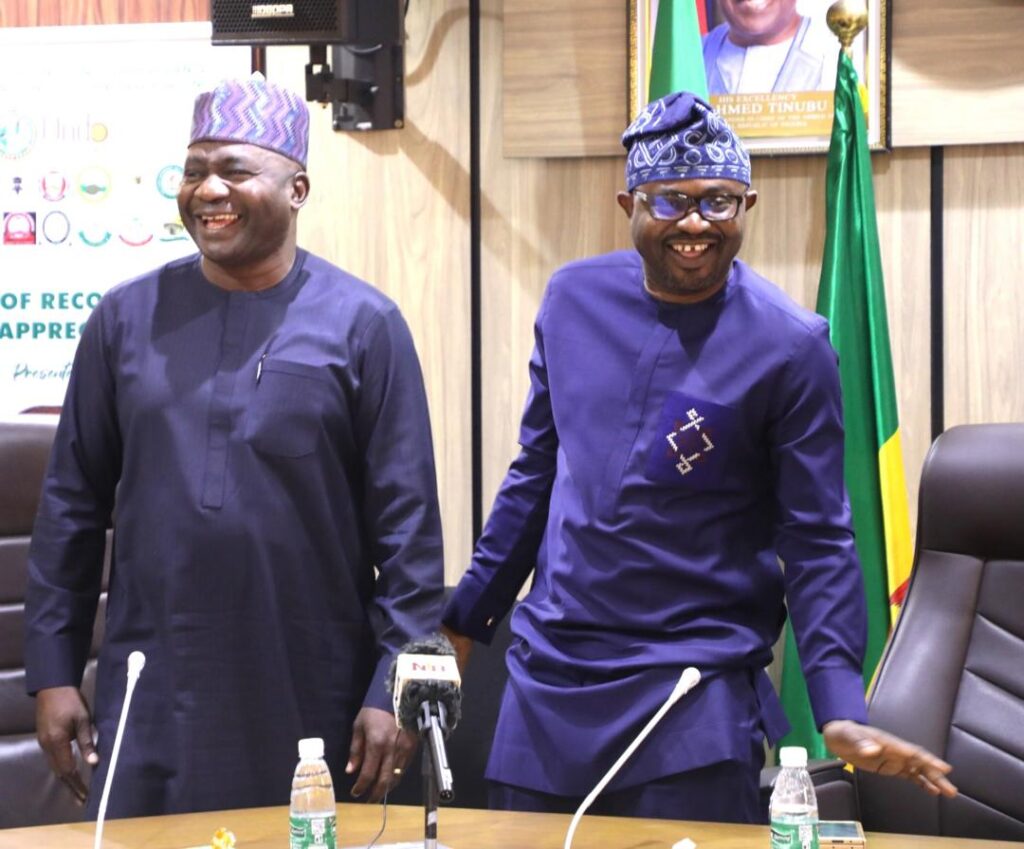
He cautioned against rivalry and territorialism among security institutions, stressing that Nigerians care more about performance and safety than ministerial boundaries.
Tunji-Ojo identified border security as a critical priority, particularly through the Nigerian Immigration Service, noting that porous borders expose the country to transnational crimes, terrorism, and illegal migration.
He said: “A safe border is a safe nation. If you cannot secure your borders, you cannot guarantee national safety.”
Speaking on the role of the Nigeria Security and Civil Defence Corps (NSCDC), Tunji-Ojo clarified that the agency was not created to duplicate police duties but to function as a specialised body tasked with protecting critical national infrastructure.
He listed schools, oil and gas facilities, telecommunications, power installations, and solid mineral sites as key assets under NSCDC protection, describing attacks on such facilities as “economic terrorism.”
He called for stronger cooperation between the NSCDC and the military, including enhanced training and intelligence sharing.
Tunji-Ojo also highlighted the need for improved data management across security agencies and proposed the establishment of an inter-ministerial technical committee to harmonise security operations between the Defence and Interior ministries.
He insisted that: @We must eliminate communication gaps, block divisions, and work as one organic security structure that delivers results for Nigerians.”
In his remarks, Gen. Musa commended the Ministry of Interior for its reforms and efforts in strengthening internal security through agencies such as the Nigerian Immigration Service, NSCDC, Nigerian Correctional Service, and the Federal Fire Service.
He described security as the foundation of national development, stressing that “without security, there is no progress.”
Musa noted that modern security threats—such as terrorism, insurgency, banditry, and cross-border crimes—have blurred the line between internal and external security, making inter-agency cooperation more critical than ever.
He however noted that: “No single agency has a monopoly on intelligence. We must work together, share information, and operate in synergy.”
The Defence Minister proposed the creation of a joint technical security committee comprising representatives from both ministries and paramilitary agencies to meet quarterly and assess security challenges.
He also advocated for secure technology platforms to enable real-time intelligence sharing between the Defence Intelligence Agency and Interior agencies, including Immigration, NSCDC, and the Nigerian Correctional Service.
Musa assured that the Ministry of Defence would continue to support capacity-building for internal security agencies through specialised training in counterterrorism, intelligence gathering, and crisis response.
He further noted that correctional facilities could serve as valuable intelligence sources in tackling crime and insecurity.
Both ministers agreed that a stronger alliance between Defence and Interior would reduce pressure on the military, improve internal security efficiency, and ultimately deliver a safer Nigeria.
“We must do things differently. Working together is the only way Nigeria can win,” Musa concluded.
Defence and Interior Ministries Deepen Strategic Partnership on National Security


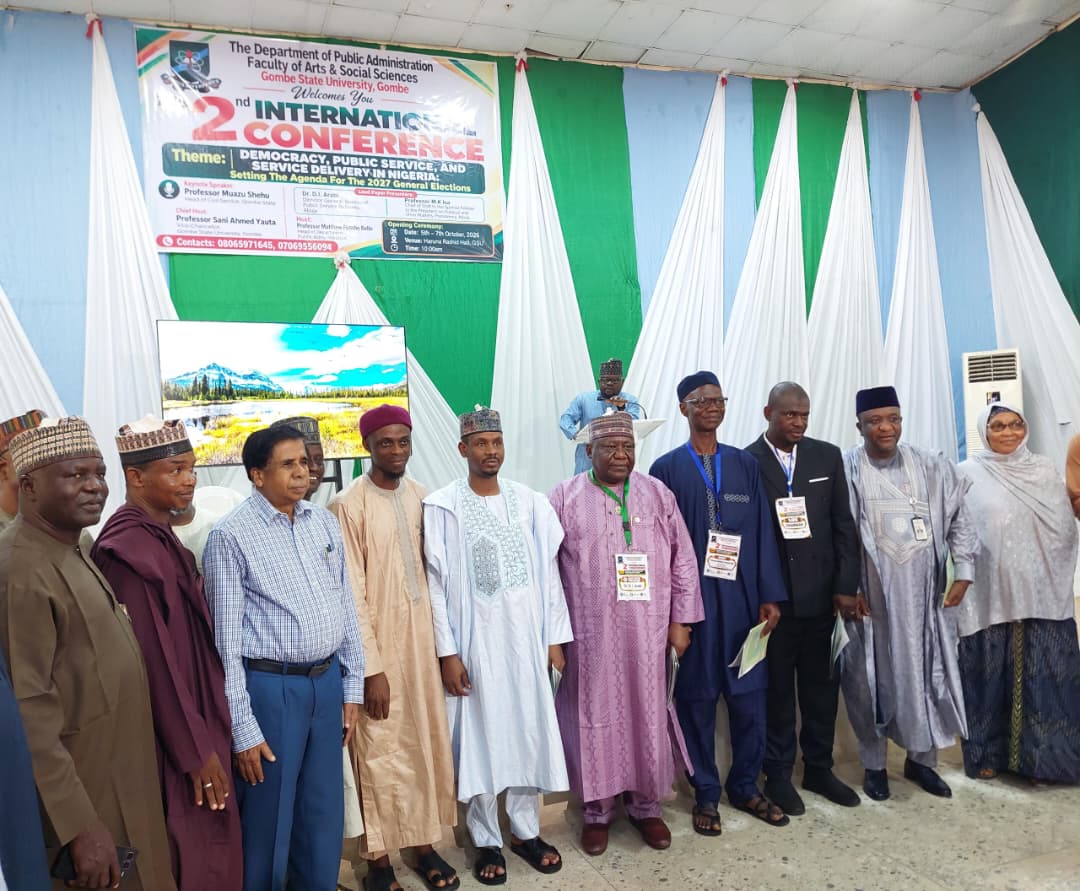
Bureau urges states to deepen public service reforms
By Elizabeth Ogunjobi
The Bureau of Public Service Reforms (BPSR) has urged sub-national governments to emulate Federal Government efforts to institutionalise systemic public service reforms.
Dr Dasuki Arabi, BPSR Director-General, made the call on Tuesday in Gombe while presenting a paper at Gombe State University’s conference.
He stressed the need for sustained reforms focused on digital governance, human capital development and performance management to optimise service delivery.
Arabi said replicating Federal Government reforms across states would promote a whole-of-government approach capable of improving public service delivery nationwide.
He said reforms initiated by President Bola Tinubu had helped reposition Nigeria among emerging countries making progress in public service delivery.
According to him, the reforms have strengthened the civil service while addressing challenges affecting effective public service delivery.
“The introduction of government financial integrated management information system for payment of contracts and services and the National Strategy of Public Service Reforms have yielded gains,” Arabi said.
He listed Performance Management, e-culture and the Federal Civil Service Strategy among initiatives that had contributed to improving public service performance.
“These reforms have built public confidence as private sector investment is coming,” Arabi said.
He cited the Dangote Refinery’s offer and foreign participation in Nigeria’s stock exchange as indications of growing investor confidence in the country.
“More than 60 per cent of participants in our stock exchange are not Nigerians,” the Director-General said.
Arabi said BPSR’s ambition was to position Nigeria among the world’s 20 best-performing public services through sustained institutional reforms.
He said: “We are not there, but we have institutions of government that have surpassed that.
“Our tax, our revenue agency is one of the best in the world. Our stock exchange is one of the best in the world.
“The Insurance Commission is the best in Africa and the tenth in the world.”
He, however, said more needed to be done, particularly by states, to ensure reforms were coordinated with Federal Government efforts.
“I think we are moving, but we need to do more, especially if whole-of-government approach by the states work with the Federal Government,” he said.
Arabi urged states to embrace reforms and make citizen engagement and effective public service delivery central to their governance priorities.
He said only Gombe, Kaduna, Enugu, Ogun and Lagos states had provided information on their reform activities to the BPSR.
“All other states are lagging behind. The data is on our website. If you want to check, you can see,” he said.
Prof. Ahmed Yauta, Vice-Chancellor, Gombe State University, represented by his deputy, Prof. Rasheed Abdulganiy, commended the organisers for convening the conference.
Yauta said the conference would contribute to strengthening public service reforms and improving governance in Gombe State.
Prof. Muazu Shehu, Gombe State Head of Service and keynote speaker, said meaningful public service reforms required combining research evidence with reliable data.
Shehu said Gombe State had deliberately embraced governance reforms that distinguished the state through improved governance and service delivery.
He urged policymakers to establish dedicated research units within government agencies and departments to support evidence-based decision-making.
According to him, such units should collect, analyse and apply data to decisions capable of positively affecting governance and service delivery.
Prof. Matthew Bello, Head of the Department of Public Administration, Gombe State University, said the conference would strengthen reform implementation and service delivery in Gombe.
He said the objective was to ensure reforms touched citizens’ lives and contributed to improved governance in the next administration.
Bello added that conference presentations would be translated into actionable plans and published in a book of proceedings.
He said copies would subsequently be sent to government agencies and other relevant stakeholders for consideration and implementation.
The News Agency of Nigeria (NAN) reports that the conference’s theme is ‘Democracy, Public Service and Service Delivery in Nigeria: Setting the Agenda for the 2027 General Elections’.
Bureau urges states to deepen public service reforms
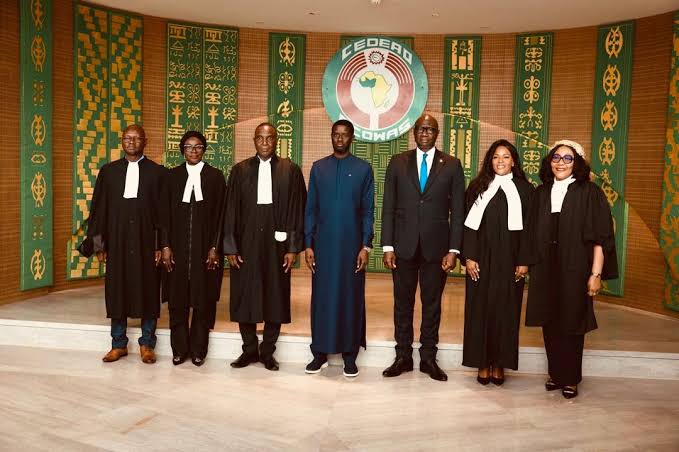
ECOWAS Swears in Five Judges as Faye Demands Stronger Public Trust in Regional Justice
By: Michael Mike
The Economic Community of West African States (ECOWAS) on Tuesday swore in five new judges of its Community Court of Justice, with Chairman of the Authority of Heads of State and Government, President Bassirou Diomaye Faye of Senegal, charging them to strengthen public confidence in regional justice through impartial, credible and independent decisions.
Faye administered the oath of office to the judges at the ECOWAS Commission headquarters in Abuja, urging them to discharge their responsibilities without fear, favour or external influence as the region grapples with political, economic, security and environmental challenges.
The new judges are Désiré Henri Aihou of Benin; Justice Awa Bah of The Gambia; Charlyne Brumskine of Liberia; Henrietta Uzoamaka Didigu of Nigeria; and Dr Yaouza Ouro-Sama of Togo.
The ECOWAS Chairman said the Court had a crucial role to play in protecting citizens’ rights, ensuring fairness in the application of community laws and restoring confidence in regional institutions at a time when the region required stronger commitment to the rule of law.
“Through its decisions, it protects rights, serves as a reminder of everyone’s obligations, and strengthens trust in our institutions,” Faye said.
He urged the judges to allow the oath they had taken to guide them throughout their four-year tenure, particularly when determining cases brought before the Court.
Faye charged them to examine cases according to their conscience, deliver justice fairly and exercise their judicial responsibilities impartially without yielding to pressure from any quarter.
“That is why I urge you, throughout the duration of your mandate, to constantly keep in mind—especially at the moment of decision-making—the foundation of your oath,” he said.
The ECOWAS Chairman said the credibility of the Court would ultimately be measured by the quality of its judgments and the confidence those decisions inspired among citizens.
He urged the new judges to build on the Court’s achievements while contributing to efforts to modernise its operations and make regional justice more effective, accessible and accepted by the people.
The new judges were appointed for a four-year, non-renewable term by the ECOWAS Authority of Heads of State and Government at its 69th Ordinary Session in Lungi, Sierra Leone, on July 19, 2026.
Their appointment followed the December 2025 Supplementary Act SA.1/12/25 relating to the Community Court of Justice.
Under Article 3 of the Act, the Court is to comprise five independent judges selected from nationals of member states who possess high moral character and the qualifications required for appointment to a Supreme Court or equivalent judicial office.
Candidates must also demonstrate recognised competence in international law, particularly community or regional integration law, and have at least 20 years of professional experience.
Article 5 requires every judge to take an oath of office or make a solemn declaration before the Chairman of the Authority of Heads of State and Government before assuming judicial responsibilities.
The five new judges succeeded Justice Ricardo Cláudio Monteiro Gonçalves of Cape Verde; Justice Sengu Mohamed Koroma of Sierra Leone; Justice Dupe Atoki of Nigeria; Justice Gberi-Bè Ouattara of Côte d’Ivoire; and Justice Edward Amoako Asante of Ghana, whose four-year tenure had expired.
Faye commended the outgoing judges for their service and contribution to the development of community law and the region’s integration process.
“Through their stewardship and commitment, they have brought community law to life and contributed to building an ECOWAS that is mindful of the principles of justice, respectful of individual rights, and resolutely oriented toward integration,” he said.
Earlier, ECOWAS Commission President, General Birame Diop, said the swearing-in ceremony represented more than the formal assumption of judicial office, describing it as a commitment by the new judges to the citizens of the community and to a common legal order.
He said the oath required the judges to put aside personal interests and external influences and serve community law with honour, loyalty, impartiality and conscience.
“The oath marks the moment when the individual sets aside their personal interests and all external influences to serve only community law,” Diop said.
According to him, the ceremony also demonstrated that member states, at the highest political level, recognised the authority of the Court and were committed to respecting its independence.
Diop described the Community Court as one of ECOWAS’s most visible and accessible institutions, particularly because individuals can approach it to seek redress for violations of their rights.
“By opening its doors to individuals, the Community has given concrete meaning to the idea of an ECOWAS of the peoples, and no longer just of States,” he said.
He said the Court’s jurisprudence, particularly in the area of human rights, had attracted attention beyond West Africa and represented an important contribution to the region’s legal development.
Diop, however, stressed the need for stronger cooperation among the ECOWAS Commission, Judicial Council, Community Court, Parliament and member states, arguing that judicial independence and institutional dialogue should reinforce rather than undermine each other.
He disclosed that work was underway on the possible establishment of an Appellate Chamber for the Community Court.
According to him, a committee comprising representatives of community institutions had been constituted to examine the proposal, while recommendations from a recent international conference in Dakar would feed into the deliberations.
He said the ECOWAS Commission was prepared to contribute fully to the process.
Diop also urged member states to strengthen cooperation with the Court to ensure effective implementation of its decisions and consolidate the rule of law across the region.
The new judges are expected, upon assumption of duty, to elect a President and Vice-President from among themselves for two-year terms.
Their arrival comes at a consequential period for ECOWAS, with the Court expected to remain a key institution for the protection of citizens’ rights and the interpretation and enforcement of community law.
ECOWAS Swears in Five Judges as Faye Demands Stronger Public Trust in Regional Justice
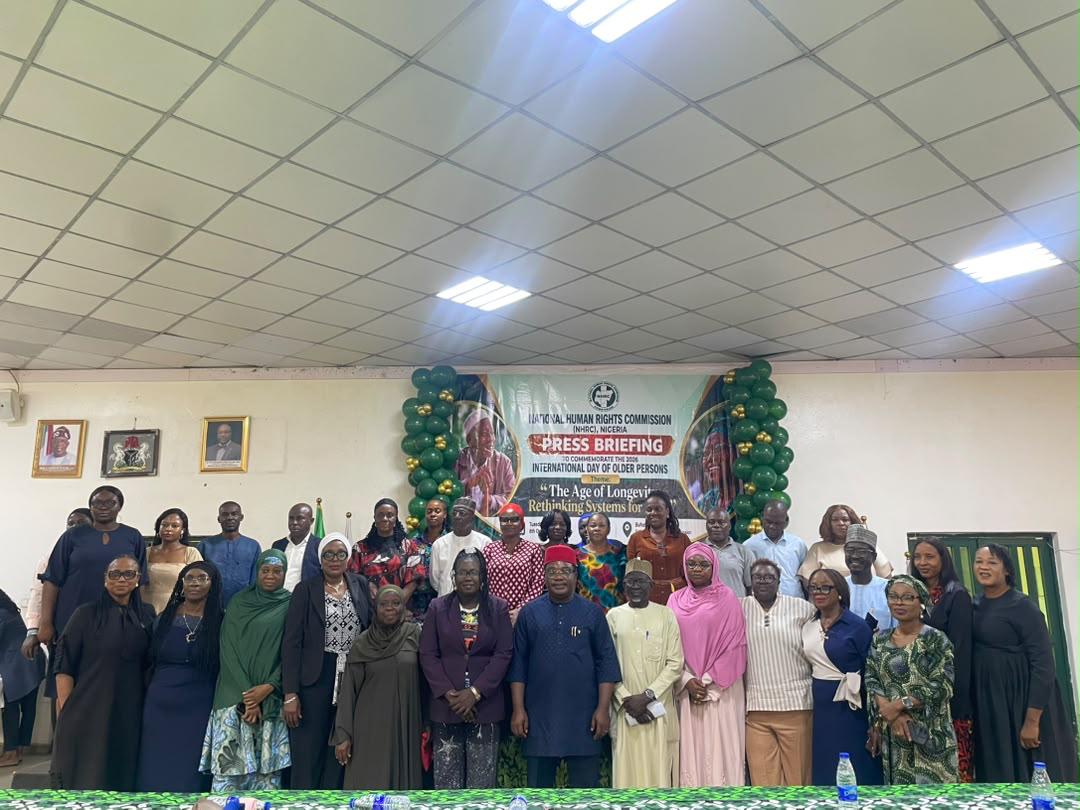
NHRC: Nigeria Must Overhaul Systems as Ageing Population Faces Poverty, Abuse
By: Michael Mike
Nigeria’s growing population of older persons is confronting a social protection system that remains ill-equipped to guarantee their dignity, security and independence, the National Human Rights Commission (NHRC) has warned.
The Commission said yesterday that poverty, inadequate income, weak social protection, limited access to healthcare, delayed pensions, social isolation, age discrimination, abandonment, abuse and property dispossession were leaving many older Nigerians vulnerable.
The Executive Secretary of the NHRC, Dr Tony Ojukwu, who raised the concerns in Abuja at the Commission’s commemoration of the 2026 International Day of Older Persons, said Nigeria must fundamentally rethink its policies, institutions and social protection systems to respond to longer lives.
The commemoration, held under the theme, “The Age of Longevity: Rethinking Systems for Longer Lives,” brought together government institutions, civil society organisations and other stakeholders to examine the rights and welfare of older persons.
Ojukwu said the increasing length of human life should be regarded as an achievement rather than a burden, but warned that longevity would have little meaning if additional years were characterised by poverty, ill-health, insecurity, neglect and exclusion.
He said the critical question for Nigeria was no longer simply how long its citizens lived, but whether they could live their later years in good health, dignity, security, equality and with the ability to participate meaningfully in society.
“Older persons are right holders and active members of our society, and their voices must be reflected in decisions and policies that affect their lives,” he said.
The NHRC boss rejected the perception of older persons as merely dependent recipients of assistance, stressing that they remained parents, grandparents, professionals, entrepreneurs, farmers, community leaders, caregivers, mentors and custodians of culture and institutional memory.
He said their contribution to national development should be recognised and protected through policies that allow them to remain active and independent for as long as possible.
Ojukwu said the protection of older persons was fundamentally a human rights issue, noting that growing older did not strip anyone of the rights guaranteed under the Constitution and international human rights instruments.
He listed among those rights dignity, equality and non-discrimination, life, healthcare, social security, adequate living standards, family life, property, participation, access to justice and freedom from violence, abuse, exploitation and neglect.
He said Nigeria already had a legal and policy foundation for protecting older persons through the Constitution, the National Human Rights Commission Act, the National Senior Citizens Centre Act and the National Policy on Ageing.
He also cited the International Covenant on Economic, Social and Cultural Rights, Convention on the Rights of Persons with Disabilities, United Nations Principles for Older Persons, Madrid International Plan of Action on Ageing, African Charter on Human and Peoples’ Rights and the Protocol to the African Charter on the Rights of Older Persons in Africa as important instruments underpinning the rights of older people.
Ojukwu disclosed that international discussions were ongoing towards the development of a dedicated Convention on the Rights of Older Persons, which he said would strengthen the global framework for protecting the elderly.
“Why should older persons not have a Convention?” he asked, arguing that older people deserved a dedicated international legal instrument just as children and persons with disabilities had specific conventions protecting their rights.
The NHRC Executive Secretary said ageing did not affect all Nigerians in the same way, with some groups facing significantly greater risks.
He identified older women, particularly widows, as vulnerable to discriminatory cultural practices, inheritance disputes, poverty and gender discrimination.
Older persons living with disabilities, those in rural communities, people living alone and elderly Nigerians affected by displacement, poverty or humanitarian emergencies, he added, faced additional barriers.
“Ageing is not a single experience,” Ojukwu said, insisting that policies must reflect differences in gender, disability, economic circumstances, location, health and social conditions.
He warned against a culture in which elderly people were excluded from decisions affecting their own lives because relatives assumed they knew what was best for them.
Using his family as an example, he recalled how his family had once considered relocating his mother to the United States because most of his siblings lived there.
She eventually returned because she was uncomfortable with the cold weather.
For Ojukwu, the experience illustrated the need to listen to older persons before making decisions on their behalf.
“Talk to them and find out what they want. You’ll be surprised that what they want may even be easier for you to provide than what you are thinking for them,” he said.
Ojukwu said the NHRC was strengthening its institutional response to the challenges confronting older persons through advocacy, public enlightenment, monitoring, investigation of complaints, stakeholder engagement and capacity building.
He disclosed that the Commission had established and trained older persons’ desk officers across its state offices to bring ageing-related issues closer to communities nationwide.
He said the NHRC was also engaging stakeholders on implementation of the African regional framework on the rights of older persons while strengthening responses to elder abuse and other violations.
The Executive Secretary called for a broader change in societal attitudes towards ageing, warning against stereotypes that equate old age with incapacity, dependency or lack of productivity.
“Growing older is a natural part of the human life cycle. The dignity of a person does not diminish because of age,” he said.
He urged the media to play a greater role by exposing abuse and neglect, holding duty bearers accountable and highlighting the contributions of older persons rather than portraying them exclusively as vulnerable dependants.
The President of the Civil Society for the Rights of Older Persons in Nigeria (COSROPIN), Senator Eze Darlington Ajoku, said the country must move beyond annual celebrations and translate policies on ageing into concrete action.
Ajoku called for stronger healthcare, social protection, housing, transportation, pensions, employment and community support systems.
He also advocated greater investment in geriatric healthcare, caregiver support, lifelong learning and age-friendly communities, as well as the meaningful participation of older persons in decision-making.
Describing older persons as “rights-holders, not recipients of charity alone,” Ajoku said their contributions to Nigeria’s development must be recognised.
“Let us move from celebration to action, from policy to implementation, and from ageing with vulnerability to ageing with dignity,” he said.
The vulnerability of older persons was also brought into focus against the backdrop of Nigeria’s displacement crisis.
The Federal Commissioner of the National Commission for Refugees, Migrants and Internally Displaced Persons (NCFRMI) said Nigeria had, as of September 1, 2026, 140,927 refugees and asylum seekers and 3,679,757 internally displaced persons.
He said older men and women, including persons with disabilities, formed part of these displaced populations and required humanitarian responses that recognised their specific needs.
Older displaced persons, he stressed, should be treated as rights holders rather than simply beneficiaries of humanitarian assistance.
The NCFRMI said its protection activities incorporated rights to life, dignity, healthcare, food, shelter and age-friendly care, adding that it was ready to deepen collaboration with the NHRC and other stakeholders.
Ojukwu said the responsibility for protecting older Nigerians could not rest solely with the NHRC or government agencies.
He called on federal, state and local governments, civil society organisations, development partners, traditional and religious institutions, families, communities and caregivers to strengthen their collective response.
The NHRC said it would continue to receive and investigate complaints, monitor situations affecting older persons and engage duty bearers on stronger implementation of existing laws and policies.
For Ojukwu, the objective should be to ensure that longer lives do not translate into longer periods of vulnerability, but into years marked by dignity, security, participation and respect for fundamental rights.
NHRC: Nigeria Must Overhaul Systems as Ageing Population Faces Poverty, Abuse

Bureau urges states to deepen public service reforms

ECOWAS Swears in Five Judges as Faye Demands Stronger Public Trust in Regional Justice

NHRC: Nigeria Must Overhaul Systems as Ageing Population Faces Poverty, Abuse

Roger Federer’s Shock as DNA Results Reveal Myla and Charlene Are Not His Biological Children

THE PLIGHT OF FARIDA

FAILED COUP IN BURKINA FASO: HOW TRAORÉ NARROWLY ESCAPED ASSASSINATION PLOT AMID FOREIGN INTERFERENCE CLAIMS
-
 News3 years ago
Roger Federer’s Shock as DNA Results Reveal Myla and Charlene Are Not His Biological Children
-
Opinions5 years ago
THE PLIGHT OF FARIDA
-
 News1 year ago
FAILED COUP IN BURKINA FASO: HOW TRAORÉ NARROWLY ESCAPED ASSASSINATION PLOT AMID FOREIGN INTERFERENCE CLAIMS
-

 News3 years ago
EYN: Rev. Billi, Distortion of History, and The Living Tamarind Tree
-
 Opinions5 years ago
POLICE CHARGE ROOMS, A MINTING PRESS
-

 ACADEMICS3 years ago
A History of Biu” (2015) and The Lingering Bura-Pabir Question (1)
-

 Columns3 years ago
Army University Biu: There is certain interest, but certainly not from Borno.
-

 Politics1 year ago
2027: Why Hon. Midala Balami Must Go, as Youths in Hawul and Asikira/Uba Federal Constituency Reject ₦500,000 as Sallah Gift
