
News
Neglected Highways in Ogoja – A Tale of Mismanagement and Lost Opportunities,

Neglected Highways in Ogoja – A Tale of Mismanagement and Lost Opportunities,
By Mike Udam
The deteriorating state of the highways in Ogoja is a cause for deep concern, and the recent release of 400 million naira to the contractor, one Emma Ventures Investment Limited, highlights the long-standing negligence and impunity we have endured.
Here are some critical aspects you need to know about this dire situation:
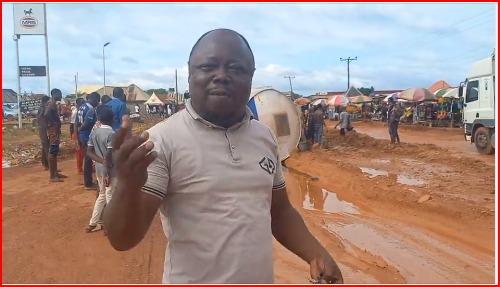
The deplorable condition of this road has unintentionally led to the growth of the food business in Egoja Ndim, Ukpe, Mbagidi and Adagom communities. With trucks struggling to navigate through the deep pothole-ridden road and being forced to remain in the line for hours because of the fall of one truck blocking access, local food vendors have found a thriving market in providing sustenance to weary travelers. What is seen as a challenge and pain to the truck drivers and other passangers has become an opportunity for these enterprising individuals who now cook and sell to the stranded truck and tanker drivers and their crewmen.
Ndok Junction, once a bubbling business spot and sit out joint, has now become an unlikely tourist attraction. Men, seeking reprieve from the pressures of home life, gather to witness the astounding meandering skills displayed by truck drivers navigating these treacherous bad spots. It’s a spectacle born out of necessity but has unintentionally become a source of entertainment. Once a truck driver passes through successfully, he gets a huge ovation.
The alarming negligence extends to the point where unknown individuals have broken through the prevention barrier at Moniaya bridge. This reckless act has opened the floodgates for trucks that cannot meander through the bad spot to pass through the town, wreaking havoc on our colonial-era roads and bridges. It’s a clear sign of the deterioration reaching critical levels.
On the other hand, Vehicle Inspection Officers (VIO) and other related agencies, which used to thrive on the highway due to constant checks and monitoring, are now at a loss. With the roads in such a deplorable state and trucks lined up for over 13km and only one lane created for small vehicles, there are no longer vehicles to regulate, and their personal revenue has dwindled. This has also compromise road safety of all road users.
Shockingly, despite the awareness of the dire situation by the Ogoja big men and other political leaders of thought, none of them saw fit to remind the governor to direct the visiting minister of works to inspect the failed Ndok Junction section of the Federal Highway. The visiting minister remained in Calabar and then returned to Abuja, showcasing a lack of political will that is frustrating, to say the least. Our leaders must prioritize the well-being of their constituents over political considerations.
I know if Dave Umahi was in Ogoja to see things for himself, the contractor would have been sent to jail.
It’s a glaring tragedy that 400 million naira has been allocated for road repair, only to seemingly vanish into thin air. The people are left in deep distress and agony, while the promise of improved infrastructure remains unfulfilled. This mismanagement of funds is not only a financial loss but also a betrayal of the trust placed in our leaders.
This dire state of affairs transcends political affiliations. Whether you support BAT, Atiku, or Obi, it’s immaterial in the face of the suffering inflicted by bad governance. We are all ensnared in the web of mismanagement and indifference. It’s high time we unite as a community to demand accountability and change from our leaders.
The state of the highways in Ogoja is not just a matter of inconvenience; it’s a reflection of the systemic issues plaguing our governance. It’s high time our leaders take responsibility, order the state ministry of works to address these pressing issues, and seek reimbursement from the federal government. The people of Ogoja deserve better, and the time for change is long overdue. We must stand together to demand the infrastructure and governance we rightfully deserve.
I am calling on our amiable governor to pick up the phone and call the attention of the minister of works to order the contractor urgently back to site.
While the minister will be looking for the file of the contractor to sanction, the governor should immediately swing into action by ordering urgent palliative measures to fix those bad spots that have made life unbearable for all residents of Ogoja. Keeping quiet will embolden impunity.
Mike Udam contributed this article from Ogoja through mikeudam@yahoo.com
Neglected Highways in Ogoja – A Tale of Mismanagement and Lost Opportunities,


Troops repel bandits’ attack in Agatu
Benue
By Zagazola Makama
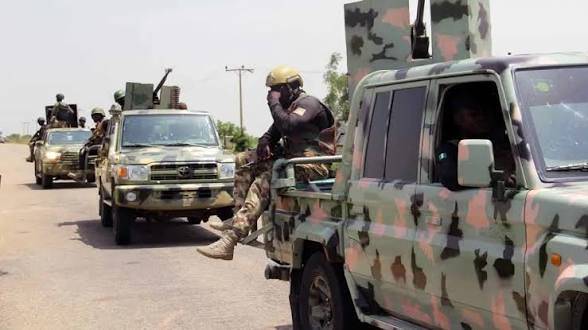
Troops of the Nigerian Army, in collaboration with the police, repelled an attack by suspected armed bandits on a joint patrol team in Agatu Local Government Area of Benue State.
Security sources said the incident occurred at about 9:00 a.m. on April 4, when the troops on routine patrol encountered the armed bandits.
According to the sources, the bandits opened fire on sighting the troops, leading to a gun duel.
“The troops responded decisively, forcing the bandits to retreat after a brief exchange of fire,” the source said.
The attackers reportedly fled through a nearby river, taking advantage of the difficult terrain.
The sources confirmed that no casualty was recorded among the troops during the encounter.
Following the incident, troops have intensified patrols and commenced combing operations in surrounding bushes to track down the fleeing suspects.
The operation is part of ongoing efforts by the military to curb banditry and sustain peace in the area.
Troops repel bandits’ attack in Agatu
Benue
Six more top bandit leaders eliminated alongside Ado Allero’s son in Zamfara offensive
By Zagazola Makama
Additional details have emerged on the identities of notorious bandit leaders eliminated during the recent military offensive in Tsafe Local Government Area of Zamfara State, where the son of feared kingpin Ado Allero and scores of fighters were neutralised.
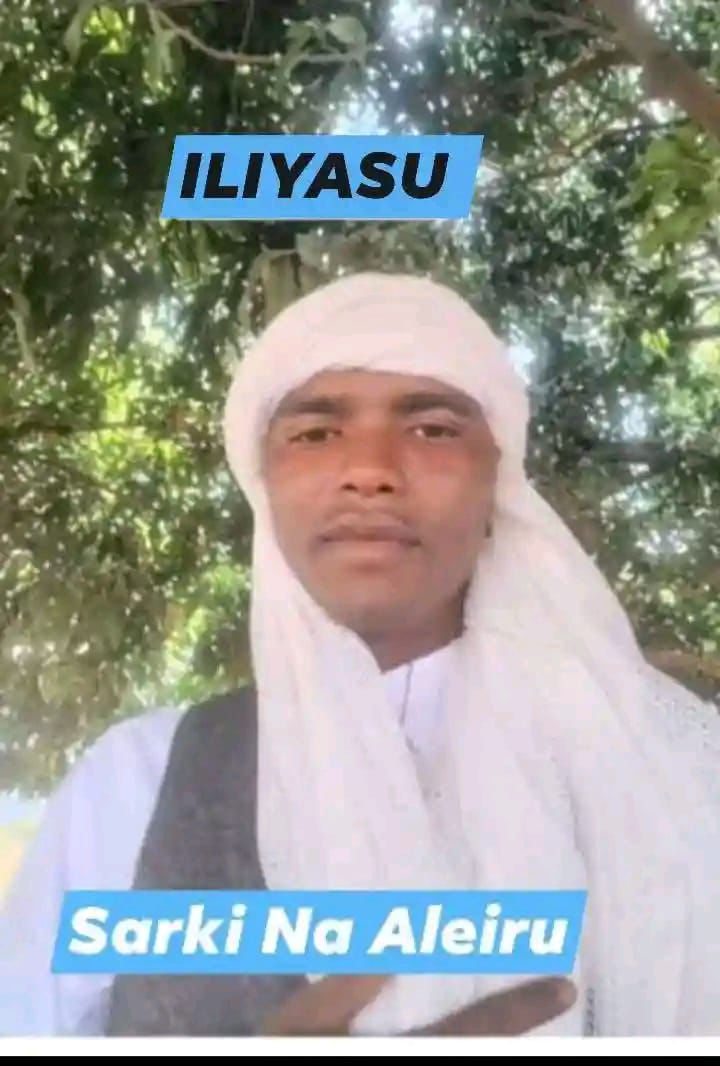
At the heart of the operation was the elimination of Kachalla Iliya Sarki, the son of Ado Allero, alongside more than 65 fighters and several high-ranking commanders who had long orchestrated attacks, kidnappings, and cattle rustling across Zamfara and neighbouring states.

For years, the forests of Tsafe, Shinkafi, and Zurmi have served as operational bases for heavily armed groups, with Allero’s network emerging as one of the most feared. The death of his son, widely regarded as a rising figure within the hierarchy, is not just a tactical success, it is a symbolic strike at the core of the group’s command structure.
Security sources confirmed that the offensive, which targeted multiple camps in Munhaye and surrounding forest enclaves, led to the elimination of several key commanders.

Among them was Kachalla Biyabiki, a notorious kidnapping kingpin linked to numerous abductions in the western Tsafe axis. Intelligence indicated he had at least 10 victims in captivity at the time of his death, with ransom negotiations ongoing.
Also killed was Kachalla Dogon Bete, a feared field commander known for leading violent raids on rural communities and coordinating cattle rustling operations.
Other commanders neutralised include Kachalla Dan Bakolo, believed to be responsible for arms supply and logistics; Kachalla Na’Isa, a sub-commander involved in enforcement operations; Kachalla Yellow, linked to reprisal attacks; and Kachalla Mudi, associated with kidnapping activities along rural transit routes.

Together, these figures formed a critical part of the operational backbone of banditry in the Tsafe–Shinkafi corridor.
“These individuals were key actors within the network. Their neutralisation has disrupted command and control structures in the area,” a security source said.
The offensive, which targeted multiple camps in Munhaye and surrounding forest enclaves, also resulted in the destruction of hideouts and recovery of weapons and other logistics.
However, security experts warn that the killing of such high-profile figures—particularly the son of Ado Allero—may provoke retaliatory attacks by fleeing elements seeking revenge.
Troops have consequently intensified clearance operations, aerial surveillance, and aggressive patrols across Tsafe, Shinkafi, and adjoining areas to prevent regrouping and forestall possible reprisals.
Efforts are ongoing to track down remaining loyalists and dismantle residual cells operating within the wider Zamfara-Katsina forest corridor.
In Zamfara’s forests, where power shifts quickly and alliances are fluid, today’s victory can only be secured by tomorrow’s vigilance.
Six more top bandit leaders eliminated alongside Ado Allero’s son in Zamfara offensive
Why truth, not narratives, will end the killings in Plateau’s endless cycle of bloodshed
By Zagazola Makama
In Plateau State, the sound of gunfire is no longer shocking. It is expected. What follows each incident has also become predictable outrage, media attention, blames and accusations, as well as a rush to frame the tragedy within familiar narratives.
The latest reports of miners lynched by unknown gunmen have once again drawn national and international attention. Youth leaders, clerics, and advocacy groups are already describing the incident in sweeping terms, some branding it as genocide.
But beneath the headlines lies a more complicated and more troubling reality. Plateau is not witnessing isolated acts of violence. It is caught in a deeply entrenched cycle of reprisals, where attacks and counter-attacks have become the norm, and where truth is often buried beneath sentiment and selective narratives.
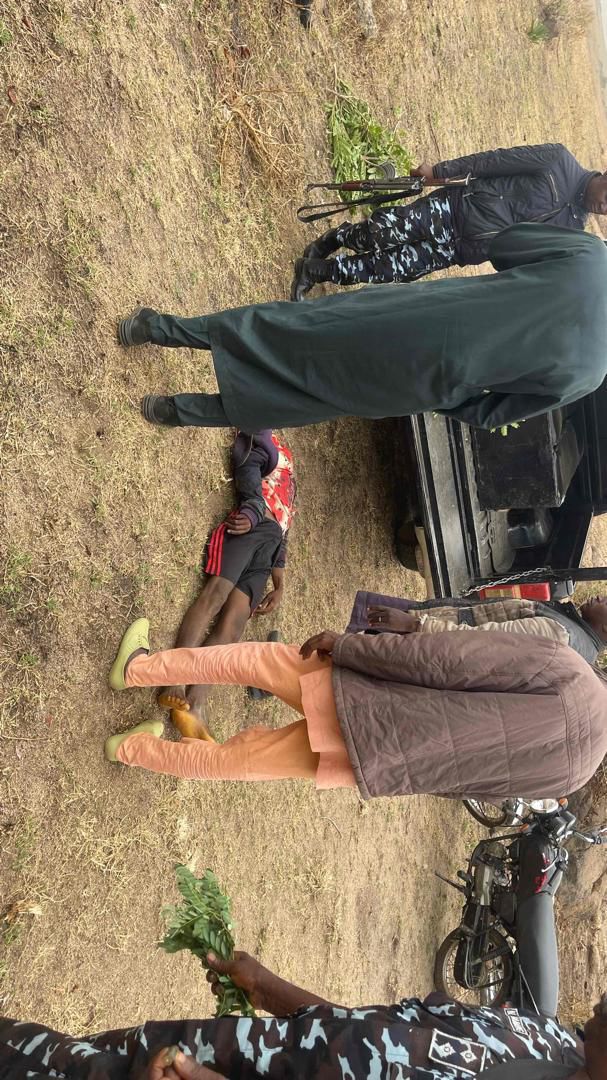
In the early hours of April 3, troops responded to a distress call from Sabongida village in Jos South Local Government Area. What they found was grim: the lifeless, beheaded body of a 30-year-old herder, identified as Shafiyu, lying in the bush. Security sources indicated that the killing was allegedly carried out by suspected Berom youths. Before the shock of that incident could settle, retaliation came swiftly.
Later that same day, armed men attacked an illegal mining site in Gyel village, Riyom Local Government Area. Three miners, including Samuel Davou, were killed in cold blood, while others fled for safety as troops moved in to secure the area. What might appear as separate incidents are, in reality, part of a continuous chain of violence, one feeding directly into the other.
Across Plateau, recent events reveal a troubling pattern that has defined the conflict for years.
On March 25, the body of Abdullahi Mohammed , a Fulani boy, was discovered in a shallow grave in Mangu Local Government Area, raising suspicions of targeted killing. On the same day in Riyom, irrigation farms belonging to several farmers were destroyed, by Fulani herdsmen, an act capable of provoking immediate retaliation.
Three days later, on March 28, gunmen assassinated Alhaji Bilyaminu Julde, a prominent Fulani community leader and Ardo of Gindiri, in Barkin Ladi. The attack, carried out at his residence, sent ignited tensions through the Fulani community and set off alarm bells across the state.
That same day, another flashpoint emerged in Riyom, where stray cattle destroyed farmlands in Tahoss village an incident that further strained relations between farmers and herders.
By April 2, violence had escalated again. In Bokkos Local Government Area, troops foiled an attack by suspected armed herders following a clash with vigilantes over grazing disputes. One vigilante sustained gunshot injuries.
Then came April 3, a day that encapsulated the crisis. Aside from the killing of the herder in Sabongida and the retaliatory attack on miners in Gyel, more killing were reported in Jos South.
On the same day, troops in Barkin Ladi recovered suspected rustled cattle reportedly taken by the Birom armed militia, while in Riyom, another Fulani youth was allegedly killed in an isolated attack. Each of these incidents is not just an entry in a security log. They are links in a chain, each one strengthening the justification for the next.
The Plateau conflict has increasingly been framed through singular lenses, often ethnic or religious. While these dimensions exist, they do not fully capture the complexity of what is happening on the ground. What emerges from security reports and field accounts is a cycle of reciprocal violence involving armed elements across communities. Fulani herders have been attacked and killed. Berom farmers and miners have also been targeted in deadly reprisals.
Yet, public discourse often pointing fongers only one side of the suffering.
This selective framing creates a dangerous distortion. It fuels anger, deepens divisions, and makes reconciliation even more difficult. More importantly, it prevents a clear understanding of the crisis one that is essential for any meaningful solution.
As observed by Simon Kolawole, the conflict has become a cycle of “attacks and counter-attacks, reprisals and counter-reprisals.”
In such an environment, violence becomes normalized. Communities begin to see retaliation not as a crime, but as justice.
Without accountability, peace remains elusive,”he said in his latest article, titled The Killing fields in plateau State.
In Plateau State, the search for peace has become a long, uncertain journey with no immediate destination in sight. Despite sustained military deployments and repeated calls for calm, deadly attacks continue to rage across communities, reinforcing a grim reality: this is a conflict deeply rooted in cycles of violence, mistrust, and silence.
For many residents, the first instinct after every attack is to look toward the government, Security forces and President Bola Ahmed Tinubu. Questions are asked why were the troops not there? Why was the intelligence not acted upon? Why are communities left exposed?
These concerns are valid. The primary responsibility of any government is the protection of lives and property. Yet, beneath these criticisms lies a difficult truth that is often left unspoken. In many cases, the same communities that demand protection are unwilling to confront the problem from within.
Across flashpoints in Riyom, Barkin Ladi, Bokkos, and Mangu, patterns have consistent which suggest that perpetrators of violence are not faceless outsiders operating in isolation. They are often known by name, by face, by affiliation. But they are rarely exposed. Instead, a culture of silence prevails. Fear, loyalty, and sometimes complicity prevent communities from identifying or handing over those responsible for attacks.
This silence creates a protective shield around perpetrators, allowing them to strike repeatedly without consequences. The result is a dangerous cycle: attacks occur, blame is assigned externally, and the real actors remain embedded within the communities.
There have been instances where youth leaders publicly blamed Fulani groups for atrocities even in cases where the victims themselves were Fulani. Such claims stretch logic and risk undermining credibility. The argument that a group would attack itself, rustle or poison its own livestock, and transport it into rival territory solely to assign blame raises fundamental questions.
While misinformation is a powerful tool in conflict, it cannot fully explain away patterns that are repeatedly documented by security agencies. These narratives, rather than promoting justice, deepen mistrust and inflame passions, making reconciliation more difficult.
This cycle has blurred the lines between victim and aggressor. Communities that mourn their dead today may be accused of launching attacks tomorrow. In such an environment, truth becomes contested, and justice becomes subjective. A herder is killed, reprisal follows.
Miners are attacked, revenge is planned.
Cattle are rustled, retaliation is inevitable. Each incident becomes both consequence and justification.
Intelligence gathering, the backbone of effective security operations depends heavily on local input. When communities withhold information, protect suspects, or distort facts, security agencies are left to operate in the dark.
This creates gaps that perpetrators exploit.
Blaming the government alone, without acknowledging this dynamic, presents an incomplete picture of the crisis.
Security forces have remained active, responding to distress calls, conducting patrols, and attempting to stabilize volatile areas. Yet, their presence has not been enough to stop the killings. The reality is that no amount of military deployment can fully secure a population that is unwilling to cooperate.
One of the most dangerous drivers of the conflict is impunity. For decades, perpetrators of violence in Plateau have rarely been brought to justice. Killings are recorded, condemned, and eventually forgotten until the next incident occurs.
Community, religious and youths leaders, who should serve as stabilizing forces, are increasingly unable to control armed youth groups. Such interventions are rare and often overshadowed by more powerful forces of anger and revenge. In many cases the leaders are the once directly fueling the crises and encouraging the youths to take up arms to carry out reprisals attacks.
The nature of the Plateau conflict makes it resistant to purely military solutions. This is not a conventional war with clear battle lines. It is a fragmented conflict driven by local grievances, economic competition, and historical mistrust.
Calls for heavy-handed interventions, including suggestions of foreign military involvement, fail to recognize this reality. Force alone cannot resolve a conflict that is rooted in social and communal dynamics.
If Plateau is to break free from this cycle, the first step must be honesty. The violence must be acknowledged for what it is a series of interconnected attacks involving multiple actors, not a one-sided campaign. Only then can meaningful solutions emerge.
This is not just a story of victims and aggressors. It is a story of a society caught in a loop of vengeance, where yesterday’s victim can become today’s perpetrator. Until the truth is confronted in its entirety without bias, without omission peace will remain elusive.
The government must move beyond reactive security measures and take decisive steps to address the root causes of the conflict. This includes ensuring accountability, strengthening intelligence capabilities, and facilitating genuine dialogue among communities.Equally important is the role of local leaders. They must rise above partisan interests and work actively to restrain their followers, promote peace, and reject all forms of violence regardless of who commits them.
Zagazola Makama is a Counter Insurgency Expert and Security Analyst in the Lake Chad Region
Why truth, not narratives, will end the killings in Plateau’s endless cycle of bloodshed

Troops repel bandits’ attack in AgatuBenue

Troops recover another bodies of four herders, targeted and killed by Kaduna

Six more top bandit leaders eliminated alongside Ado Allero’s son in Zamfara offensive

Roger Federer’s Shock as DNA Results Reveal Myla and Charlene Are Not His Biological Children

THE PLIGHT OF FARIDA

FAILED COUP IN BURKINA FASO: HOW TRAORÉ NARROWLY ESCAPED ASSASSINATION PLOT AMID FOREIGN INTERFERENCE CLAIMS
-
 News2 years ago
Roger Federer’s Shock as DNA Results Reveal Myla and Charlene Are Not His Biological Children
-
Opinions4 years ago
THE PLIGHT OF FARIDA
-
 News12 months ago
FAILED COUP IN BURKINA FASO: HOW TRAORÉ NARROWLY ESCAPED ASSASSINATION PLOT AMID FOREIGN INTERFERENCE CLAIMS
-

 News2 years ago
EYN: Rev. Billi, Distortion of History, and The Living Tamarind Tree
-
 Opinions4 years ago
POLICE CHARGE ROOMS, A MINTING PRESS
-

 ACADEMICS2 years ago
A History of Biu” (2015) and The Lingering Bura-Pabir Question (1)
-

 Columns2 years ago
Army University Biu: There is certain interest, but certainly not from Borno.
-

 Opinions2 years ago
Tinubu,Shettima: The epidemic of economic, insecurity in Nigeria
