
Uncategorized
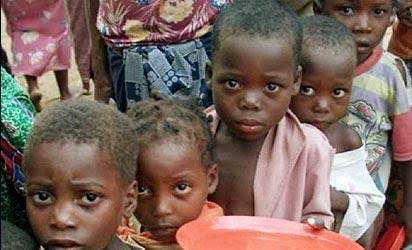
Nigeria Admissions of malnourished children rise amid 4-year high in food insecurity due to conflict and climate

Nigeria Admissions of malnourished children rise amid 4-year high in food insecurity due to conflict and climate
By: Our Reporter
Admissions of severely malnourished children in health facilities supported by the International Committee of the Red Cross (ICRC) in northeast Nigeria have increased by 24% between the third quarters of 2023 and 2024.
This increase is part of a trend affecting the entire Lake Chad Basin region, where an estimated 6.1 million people will not have enough to eat in the coming months due in part to both conflict and climate, the highest figure in four years.
The rise in the number of people without enough food mirrors an increase in violence, which has severely impacted communities’ ability to grow crops and access markets. Violent incidents in the Lake Chad region in the first half of 2024 rose 58% compared with the same period in 2023.
Climate hazards are also preventing people from growing crops and accessing their farmland and markets, contributing to a food security crisis being felt across Lake Chad – in Cameroon, Chad, Niger and Nigeria. In northeast Nigeria, the start of the harvest season coincided this year with heavy floods that washed away seeds and all hope of harvest after an especially dry lean season.
“The consequences of spiraling violence and climate variability are devastating for families trying to feed themselves. We see the proof in the health facilities we support, where the rising number of children with severe acute malnutrition is heartbreaking. Unfortunately, they only represent a fraction of those in need across the region,” said Yann Bonzon, ICRC’s head of delegation in Nigeria.
In September, the ICRC expanded its efforts to curb malnutrition rates by supporting two additional health centers for malnourished children in Yobe and Adamawa states, northeast Nigeria. This will allow medical teams to provide a range of key services including consultations, nutritional screenings, and treatment for malnourished children with complications.
The ICRC, alongside with its partners from the International Red Cross and Red Crescent Movement, carries out activities assisting millions of people impacted by the combining effects of conflict and climate across the Lake Chad Basin. In northeast Nigeria in 2024, 187’000 people benefited from assistance in response to food shortages, delivered by the ICRC and the Nigeria Red Cross Society.
“We are increasing our humanitarian assistance, but we are afraid it is not going to be enough, because the needs are so much higher than the help we are able to provide,” said Alhaji Abubakar Kende, Secretary General of the Nigerian Red Cross Society.
The ICRC reminds all parties to armed conflicts that it is their responsibility under international humanitarian law (IHL), to ensure that people living in the territories under their control can meet their essential needs, including food, water, medical care, and access to farmland and markets. The ICRC engages all parties to armed conflicts on the respect for IHL, including in their conduct of hostilities. Indeed, IHL violations can negatively impact food security by disrupting access to fields and markets, restricting seasonal movement of livestock, and limiting access of humanitarian actors to communities in need.
Nigeria Admissions of malnourished children rise amid 4-year high in food insecurity due to conflict and climate


ECOWAS Court Goes Digital, Targets Faster Justice for 400 Million West Africans
…Regional court launches electronic filing, virtual case management, sets 2030 deadline for fully paperless judiciary
By: Michael Mike
The Community Court of Justice, ECOWAS on Monday formally launched its Electronic Case Management System (ECMS), ushering in what it described as the most significant digital transformation in its history and setting an ambitious target to become a fully paperless regional judicial institution by 2030.
The unveiling of the multilingual digital platform at the Court’s headquarters in Abuja marked the end of decades of largely paper-based judicial administration and the beginning of a technology-driven justice system designed to make litigation faster, cheaper and more accessible to over 400 million citizens across the 15 ECOWAS member states.
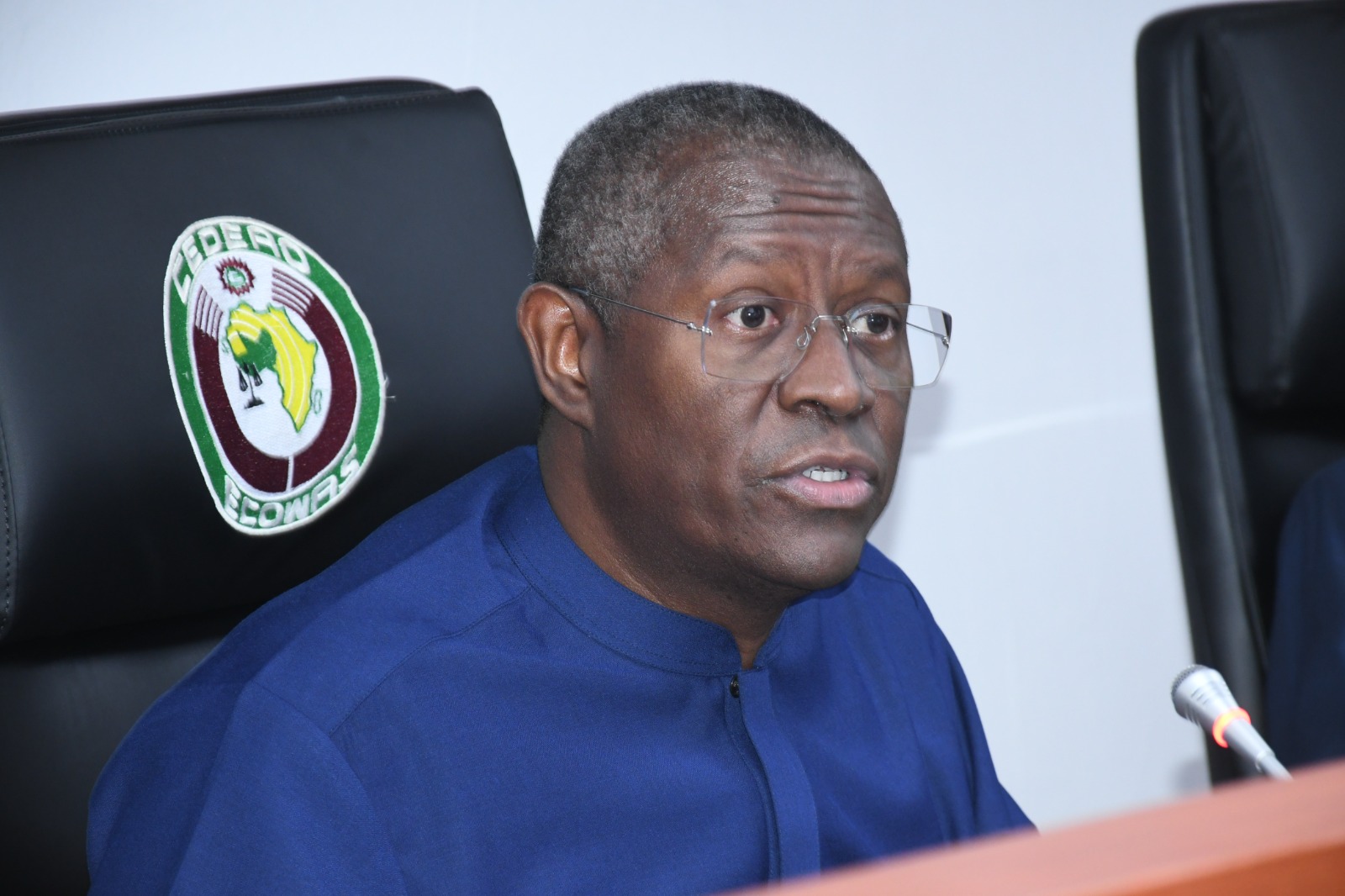
Speaking at the historic ceremony, President of the Court, Justice Ricardo Cláudio Monteiro Gonçalves, declared that the launch represented far more than the deployment of new software.
He described it as “the beginning of a new era in which technology strengthens access to justice, enhances efficiency and promotes transparency in the administration of justice,” adding that digital transformation would strengthen rather than diminish the Court’s commitment to judicial independence, fairness and the rule of law.
According to him, while technology would automate court processes and improve efficiency, judicial decisions would continue to be firmly anchored on the law and the principles of justice.
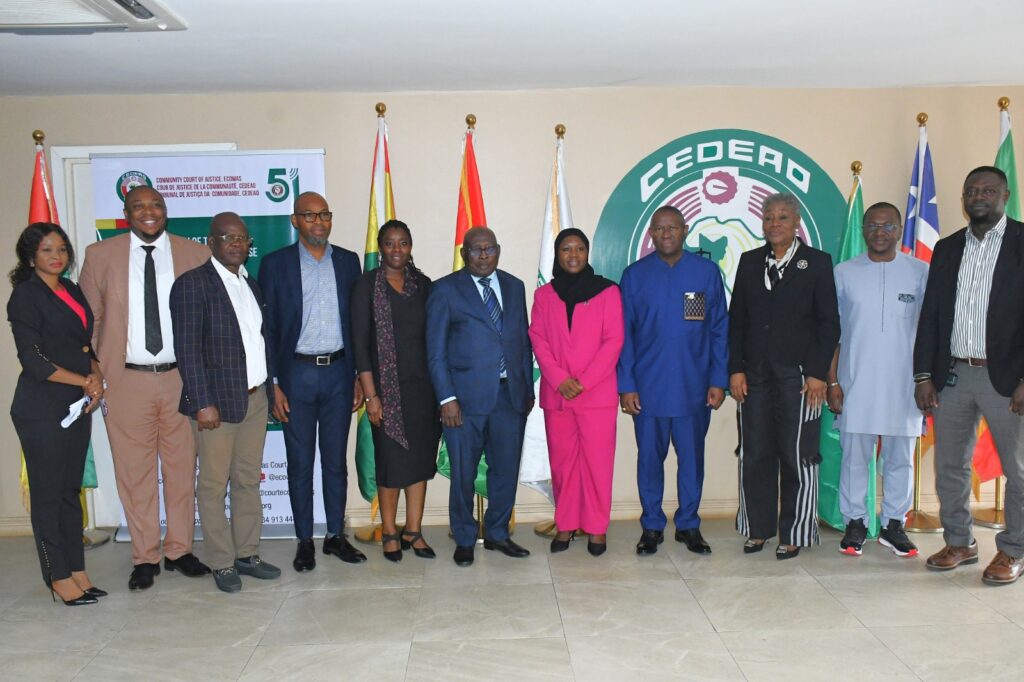
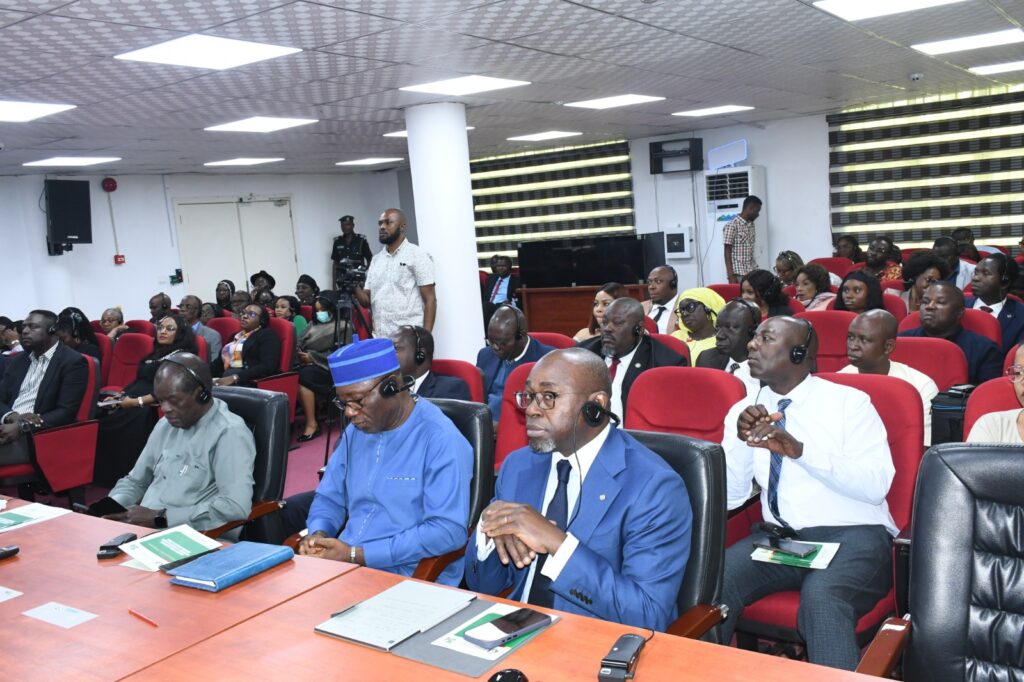
The ceremony, attended by senior ECOWAS officials, diplomats, judges, legal practitioners, civil society organisations, development partners and the media, was held under the theme: “Advancing Digital Justice: Enhancing Access, Efficiency and Transparency through Electronic Case Management.”
The ECMS is a secure, web-based platform operating in English, French and Portuguese that enables litigants and lawyers to file cases electronically, receive court notifications, monitor proceedings in real time, manage documents digitally and participate in virtual hearings from anywhere in the world.
The system also automates Registry operations, creates electronic case files with comprehensive audit trails and eliminates the cumbersome manual processes that have traditionally slowed judicial proceedings.
For lawyers practising before the Court, the implication is significant. Applications can now be filed electronically from cities such as Dakar, Accra, Praia, Banjul or Monrovia without the need to physically deliver documents to the Court’s Registry in Abuja. Litigants can equally monitor the progress of their cases online while judges and Registry staff will manage proceedings through integrated digital workflows.
The Court expects the innovation to reduce administrative bottlenecks, shorten case processing time, lower litigation costs and significantly improve transparency and accountability in the regional justice system.
Providing insight into the origins of the project, Acting Deputy Chief Registrar and ECMS Project Team Manager, Mrs. Marie Saine, said the platform was conceived as part of the Court’s long-term institutional reform agenda under its Justice 2030 Strategic Plan and aligned with the broader ECOWAS Vision 2050, which seeks to build modern, effective and people-centred regional institutions.
She said the Court recognised that its traditional paper-based system had become increasingly inadequate for a regional institution serving citizens across fifteen countries with three official languages and multiple legal systems.
According to her, filing cases required physical submission of documents to the Registry, case tracking depended largely on paper files, while serving judicial documents across the region often proved slow, costly and unpredictable.
“These were not failures of the people working within the system,” she explained. “They were the limitations of a system that had not kept pace with the scale and complexity of the Court’s mandate. The ECMS was conceived to remove those barriers, reduce delays, cut costs and place this Court where it belongs—within reach of every person in our Community who needs it.”
Saine traced the roots of the digital transformation to the COVID-19 pandemic in 2020 when courts worldwide faced unprecedented disruptions.
She said the ECOWAS Court responded by introducing temporary Practice Directions on electronic case management and virtual hearings to ensure that judicial activities continued despite lockdowns and travel restrictions.
What initially appeared to be emergency measures, she noted, soon demonstrated that digital justice was not only possible but capable of improving judicial efficiency by reducing travel costs, removing geographical barriers and ensuring uninterrupted access to justice.
“What the pandemic forced upon us, we chose to embrace as a permanent direction,” she said.
Rather than adopting an off-the-shelf software solution, the Court opted to build a platform specifically tailored to its Rules of Procedure, multilingual environment and unique operational needs.
The development process involved close collaboration among judges, legal officers, Registry personnel, information technology experts and software developers, resulting in a system capable of managing every stage of judicial proceedings—from electronic filing to final judgment and digital archiving.
Beyond developing the technology, the Court embarked on extensive capacity-building programmes across Anglophone, Francophone and Lusophone member states to prepare users for the transition.
Legal practitioners underwent intensive regional training sessions in June 2024, followed by refresher programmes held between June 22 and 26 this year ahead of the platform’s official launch.
Saine stressed that technology alone could not deliver justice unless those expected to use it possessed the necessary skills and confidence.
“The principle that guided every aspect of the implementation is simple: technology only delivers value when people are equipped and empowered to use it effectively,” she said.
Welcoming participants to the ceremony earlier, the Court’s Chief Registrar, speaking on behalf of the President and the College of Judges, described the launch as a transformational milestone in the evolution of regional justice.
He said the ECMS would streamline judicial administration by eliminating procedural bottlenecks, enhancing transparency through real-time access to case information and extending the reach of the Court to every corner of the ECOWAS Community.
According to him, the initiative would also strengthen regional integration by harmonising judicial processes across member states while reinforcing the Court’s longstanding reputation for fairness, accountability and respect for the rule of law.
He acknowledged that the project encountered administrative, procurement and technical challenges before reaching implementation but said the determination of the Court’s leadership, project team, consultant and staff ensured its successful completion.
The Court paid tribute to former President of the Court, Edward Amoako Asante, for providing the vision and leadership that drove the project through its formative years, while also commending Justice Gonçalves for sustaining the initiative and bringing it to fruition.
Recognition was equally extended to former ECMS Project Team leader Dr. Athanase Atannon, his successor Mr. Gaye Sowe, consultant Dr. Frederic Drabo and members of the Registry, Legal and Information Technology departments whose contributions helped translate the vision into reality.
Looking ahead, Justice Gonçalves disclosed that the Court expects at least 80 per cent of legal practitioners appearing before it to register on the platform within the next six months, while new cases are expected to be initiated electronically through the ECMS.
By 2030, he said, the Court aims to establish a fully digital judicial institution with complete electronic case archives, reduced case processing times and a justice delivery system recognised as a benchmark for regional courts in Africa.
He, however, emphasised that the success of the initiative would ultimately depend on its adoption by judges, lawyers, litigants, member states and development partners.
“The true success of this system will depend on everyone’s commitment to using it and ensuring its continuous improvement,” he said, urging all stakeholders to embrace the platform.
Formally declaring the Electronic Case Management System operational, the Court’s President described the launch as a defining moment in the institution’s history and a renewed commitment to delivering timely, transparent and technology-enabled justice across West Africa.
For a Court established to uphold human rights, interpret Community law and strengthen regional integration, Monday’s launch signalled more than a technological upgrade. It marked a decisive shift from paper files and physical court processes to a digital justice ecosystem that promises to reshape how regional justice is accessed and delivered across the ECOWAS Community for decades to come.
ECOWAS Court Goes Digital, Targets Faster Justice for 400 Million West Africans
Uncategorized
AfCFTA, UNDP, Nigeria Demand Urgent Action to Put Women at Centre of Africa’s Economic Integration
AfCFTA, UNDP, Nigeria Demand Urgent Action to Put Women at Centre of Africa’s Economic Integration
…Warn continent cannot unlock $3.4tn single market while female traders battle finance, border bottlenecks
By: Michael Mike
African leaders on Monday made a compelling case for placing women at the heart of the African Continental Free Trade Area (AfCFTA), warning that the continent’s ambition to create the world’s largest single market would remain unrealised unless governments urgently remove structural barriers limiting female entrepreneurs and traders.
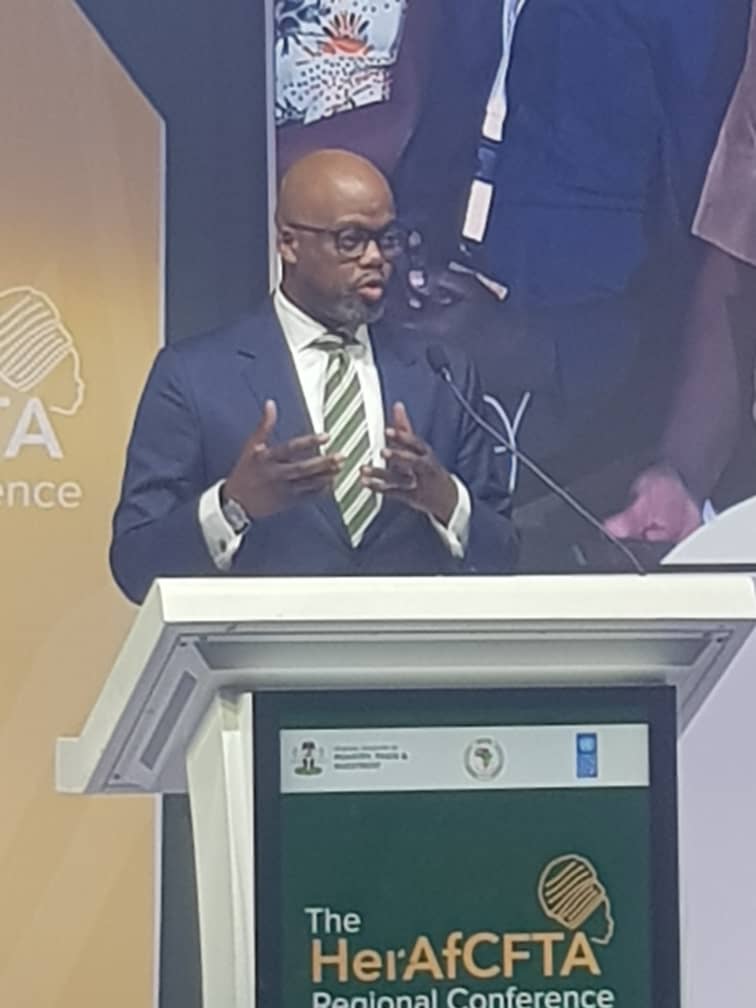
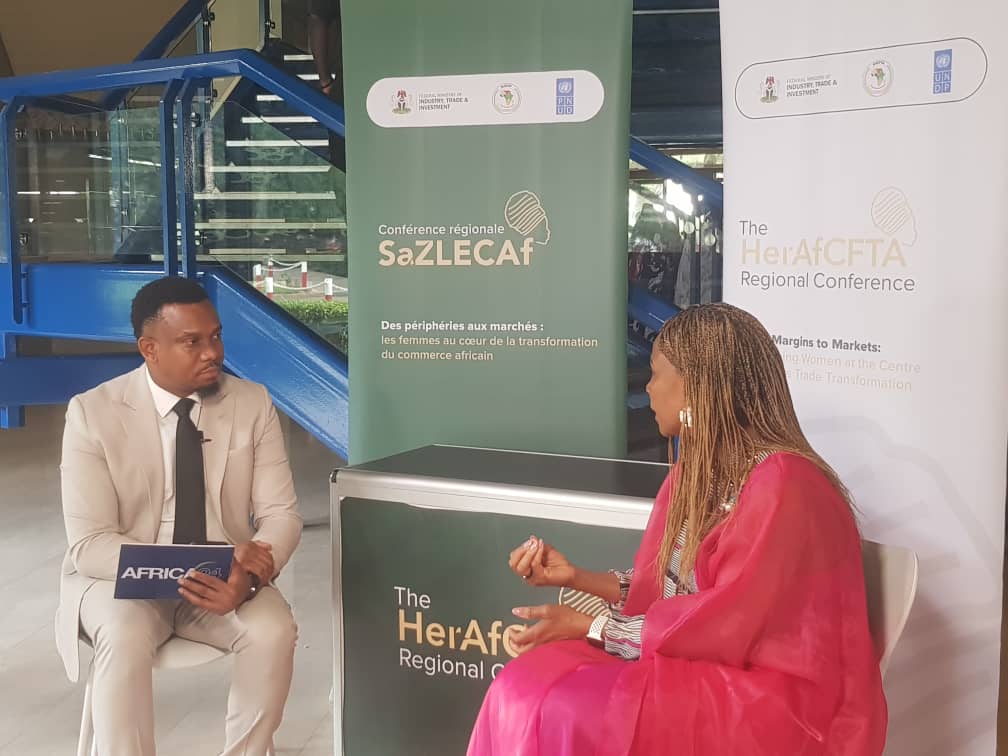
Speaking at the 2026 HerAfCFTA Regional Conference in Abuja, the Secretary-General of the AfCFTA Secretariat, Wamkele Mene, Nigeria’s Minister of Industry, Trade and Investment, Dr. Jumoke Oduwole, and the United Nations Assistant Secretary-General and Director of the Regional Bureau for Africa, Ahunna Eziakonwa, said women already constitute the backbone of Africa’s informal and small business economy but remain excluded from the policies, financing and infrastructure required to scale their enterprises across the continent.
The conference, themed “Women Advancing Africa’s Economic Transformation through Intra-African Trade: Scaling Impact,” drew ministers, trade commissioners, development partners, business leaders and women entrepreneurs from across Africa.
Collectively, the speakers argued that Africa’s future economic prosperity, industrialisation and strategic autonomy would depend on how quickly governments transform the AfCFTA from a legal framework into a practical platform that enables women-owned businesses to trade seamlessly across borders.
Eziakonwa described the current global environment as one characterised by fractured supply chains, rising protectionism and weakening multilateral cooperation, insisting that Africa could no longer depend on external markets to drive its development.
“We do not have time for a slow lane,” she declared.
“Every day we delay is a day of lost opportunity, lost trade, lost jobs and lost potential.”
She described the AfCFTA as a strategic necessity capable of helping Africa retain value, build resilient supply chains and reduce dependence on exports of raw materials.
According to her, although 49 African countries have ratified the agreement, implementation remains slow, stressing that treaties alone would not create jobs or improve livelihoods.
The UNDP regional chief urged African governments to harmonise regulations, simplify customs procedures, modernise logistics infrastructure, establish interoperable digital payment systems and eliminate barriers slowing the movement of goods and services across the continent.
She argued that Africa had a unique opportunity to demonstrate that economic integration could succeed even as much of the world moved towards protectionism.
“In a world that is disintegrating, Africa chooses integration. In a world that is building walls, Africa chooses bridges,” she said.
Eziakonwa maintained that women must be central to that vision, noting that they dominate informal cross-border trade despite operating under difficult conditions.
Drawing from African history, she cited the Aba Women’s Revolt of 1929, Queen Nzinga of Angola and generations of market women across West Africa as examples of women’s longstanding role in shaping African commerce.
“If women cannot navigate the AfCFTA market, then Africa has built a market for only half of its people,” she warned.
She called for immediate reforms, including simplified regulations for women traders, increased investment in trade infrastructure and digital systems, and greater representation of women in trade negotiations and policy formulation.
Earlier, Mene said African women were already demonstrating extraordinary entrepreneurial capacity despite significant structural constraints.
He disclosed that 83 per cent of Nigerian women identify as entrepreneurs, significantly higher than the continental average of 51 per cent, while women account for over 40 per cent of employment in micro, small and medium-sized enterprises.
He further revealed that women constitute approximately 74 per cent of informal cross-border traders within West Africa and facilitate between $2.5 billion and $6.5 billion in annual ECOWAS trade.
Despite their enormous contribution, he said African women traders continue to face harassment, extortion and an estimated $49 billion financing gap.
“These are not merely statistics,” Mene said.
“They represent millions of women creating businesses, generating employment and driving economic transformation.”
The AfCFTA Secretary-General highlighted the African Union Protocol on Women and Youth in Trade as a landmark achievement, describing it as the world’s first legally binding trade instrument specifically designed to promote women’s participation in continental trade.
According to him, the protocol commits member states to removing barriers to finance, encouraging women’s participation in higher-value sectors such as manufacturing, logistics, technology and mining, and creating a more inclusive continental marketplace.
He stressed, however, that implementation would require stronger collaboration among governments, development partners and the private sector.
Mene identified affordable finance, export readiness, market intelligence, digital trade skills, legal support, infrastructure and mentorship as critical requirements for women-owned businesses seeking to compete across Africa.
Speaking as host, Oduwole reaffirmed Nigeria’s commitment to ensuring that women become central beneficiaries of the AfCFTA.
She welcomed trade ministers, commissioners and entrepreneurs from across Africa, describing the conference as evidence of growing continental collaboration around inclusive trade.
The minister said the case for placing women at the centre of the AfCFTA was “an existential one,” arguing that the agreement could only succeed if it reflected the realities of the entrepreneurs who already dominate much of Africa’s private sector.
According to her, women own more than half of Africa’s micro, small and medium-sized enterprises, making them indispensable to the continent’s industrial and commercial future.
She, however, cautioned against treating women as a single homogeneous group, noting that female entrepreneurs operate across agriculture, manufacturing, services, technology and creative industries, each facing unique challenges requiring targeted policy responses.
“Our task is to ensure that women are not confined to the lower rungs of the AfCFTA market,” she said.
Oduwole pledged Nigeria’s commitment to implementing policies that would enable women-owned businesses to expand beyond domestic markets and fully benefit from the continental free trade agreement.
She also praised women entrepreneurs exhibiting products from several African countries at the conference, saying their presence demonstrated that the AfCFTA was already delivering tangible results beyond policy documents.
The three leaders agreed that Africa’s economic integration would ultimately be judged not by the number of treaties signed but by whether women entrepreneurs could move goods more easily, access finance, build competitive businesses and create jobs across borders.
They called on African governments to accelerate implementation of the Protocol on Women and Youth in Trade, dismantle longstanding barriers confronting women-owned enterprises and ensure that the continent’s emerging single market becomes genuinely inclusive.
Their message was unequivocal: Africa cannot build a prosperous, competitive and integrated economy while leaving behind the women who already power much of its trade
AfCFTA, UNDP, Nigeria Demand Urgent Action to Put Women at Centre of Africa’s Economic Integration

Itsekiris Raise Alarm Over Alleged Plot Against Olu of Warri’s Uvwie Visit
By: Michael Mike
The Itsekiri National Association in Canada (INAC) has raised the alarm over an alleged plot by some individuals in Effurun, Uvwie Local Government Area of Delta State to disrupt a planned royal visit by the Olu of Warri, Ogiame Atuwatse III, to Itsekiri communities in the area.
The group warned that any attempt to prevent the revered monarch from visiting his subjects could trigger avoidable inter-communal tension, urging the Delta State Government and security agencies to act swiftly to forestall a breakdown of law and order.
In a statement jointly signed by INAC President, Fiogho Tonwe; Secretary, Owen Fregene; Tosan Eyide; and Oritseweyinmi Adodo-Obadoni, the association said the monarch’s scheduled visit to Ugbolokposo and other Itsekiri settlements in Uvwie was in line with long-established traditional responsibilities and should not be politicised.
According to the association, the Olu of Warri’s visit to communities under his traditional authority is a legitimate exercise of his role as custodian of the Itsekiri people, irrespective of where they reside.
“The Olu of Warri has a legitimate and historic responsibility to his subjects wherever they reside. A visit to Itsekiri communities within Uvwie that have co-existed with their Urhobo neighbours for generations is neither an encroachment nor an act of aggression. It is the exercise of a sovereign’s duty of care to his people,” the statement said.
The association alleged that some individuals were mobilising opposition to the visit in what it described as a deliberate attempt to inflame communal sentiments for political relevance.
While acknowledging that many residents of Uvwie do not support the planned protest, INAC condemned what it called the exploitation of ethnic sensitivities by a few actors seeking political visibility.
The association also expressed concern over what it described as the silence of the Delta State Government and sections of the Urhobo leadership, warning that failure to publicly discourage threats against the monarch could embolden those intent on causing unrest.
“It is deeply troubling that at a moment when a clear and authoritative voice is needed to de-escalate tension and reaffirm the rights of all communities to practise their traditions freely, that voice has been absent,” the statement said.
It added that “silence from those in authority is not neutrality; it is, in effect, permission. It emboldens those who incite and abandons those who suffer the consequences.”
INAC called on Delta State Governor, Sheriff Oborevwori, to publicly affirm the rights of Itsekiri communities to receive their traditional ruler and to promote peaceful coexistence among ethnic groups in the state.
The association also urged the Urhobo Progress Union and other Urhobo traditional and civic organisations to distance themselves from individuals allegedly promoting division and to reaffirm the longstanding peaceful relationship between the Urhobo and Itsekiri peoples.
It further appealed to the Nigeria Police Force and the Department of State Services to provide adequate security for the monarch, members of his entourage and the communities expected to receive him, while ensuring that anyone resorting to violence or intimidation is brought to justice.
INAC also urged the National Council of Traditional Rulers of Nigeria to intervene where necessary in defence of the constitutional rights and freedom of movement of recognised traditional rulers across the country.
Reaffirming its support for the Itsekiri people, the association warned that the international community was monitoring developments and called on all stakeholders to prioritise dialogue and restraint.
“Peace is possible. It has always been possible. But peace requires courage from those in leadership—the courage to speak, to intervene, and to refuse to be silent when silence itself becomes a form of complicity,” the statement added.
Itsekiris Raise Alarm Over Alleged Plot Against Olu of Warri’s Uvwie Visit

ECOWAS Court Goes Digital, Targets Faster Justice for 400 Million West Africans

AfCFTA, UNDP, Nigeria Demand Urgent Action to Put Women at Centre of Africa’s Economic Integration

Itsekiris Raise Alarm Over Alleged Plot Against Olu of Warri’s Uvwie Visit

Roger Federer’s Shock as DNA Results Reveal Myla and Charlene Are Not His Biological Children

THE PLIGHT OF FARIDA

FAILED COUP IN BURKINA FASO: HOW TRAORÉ NARROWLY ESCAPED ASSASSINATION PLOT AMID FOREIGN INTERFERENCE CLAIMS
-
 News2 years ago
Roger Federer’s Shock as DNA Results Reveal Myla and Charlene Are Not His Biological Children
-
Opinions4 years ago
THE PLIGHT OF FARIDA
-
 News1 year ago
FAILED COUP IN BURKINA FASO: HOW TRAORÉ NARROWLY ESCAPED ASSASSINATION PLOT AMID FOREIGN INTERFERENCE CLAIMS
-

 News2 years ago
EYN: Rev. Billi, Distortion of History, and The Living Tamarind Tree
-
 Opinions5 years ago
POLICE CHARGE ROOMS, A MINTING PRESS
-

 ACADEMICS2 years ago
A History of Biu” (2015) and The Lingering Bura-Pabir Question (1)
-

 Columns2 years ago
Army University Biu: There is certain interest, but certainly not from Borno.
-

 Politics1 year ago
2027: Why Hon. Midala Balami Must Go, as Youths in Hawul and Asikira/Uba Federal Constituency Reject ₦500,000 as Sallah Gift
