
News
Nigeria, Currently Dealing with Multiple Layers of Disease- Ministry of Health

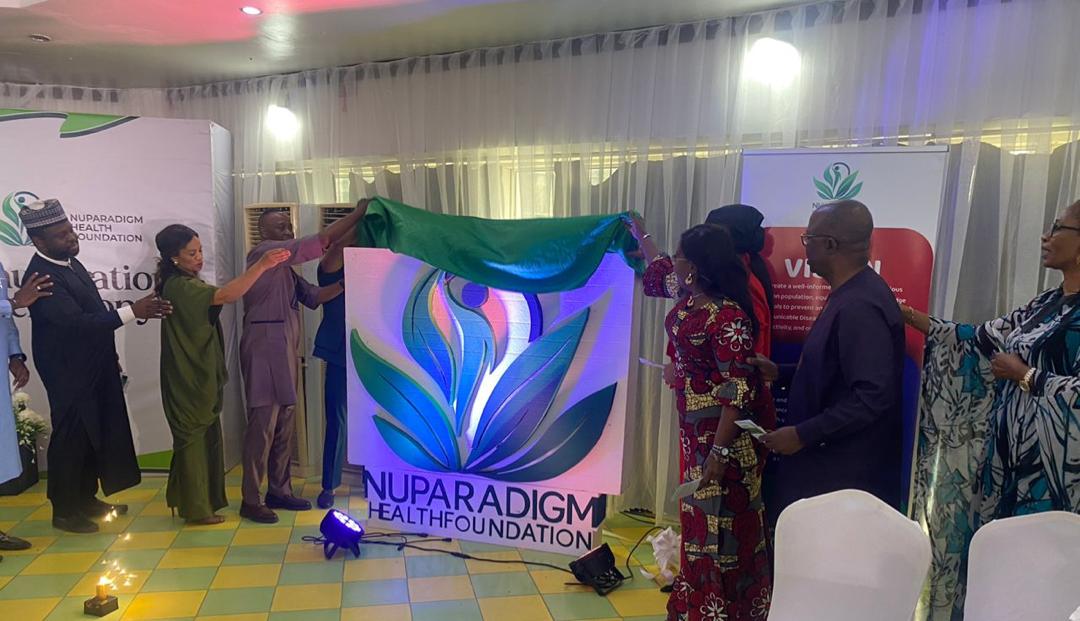
Nigeria, Currently Dealing with Multiple Layers of Disease- Ministry of Health
By: Michael Mike
The Ministry of Health has raised the alarm over the changing health challenges in the country, warning that the country is currently dealing with multiple layers of disease at the same time.
Speaking at the official inauguration of the Nuparadigm Health Foundation, which marks a new era of health awareness and n the country, a representative of Ministry of Health, Abraham Emmanuel emphasized the urgent need for prevention, education, and lifestyle interventions to protect public health.

Nuparadigm Health Foundation is a non-governmental organisation committed to raising awareness about non-communicable diseases and the risk factors associated with them. The foundation aims to provide credible health information, educate communities, and encourage healthier lifestyles to prevent the onset of avoidable illnesses.
Emmanuel explained that Nigeria’s health challenges are changing, with the country now dealing with multiple layers of disease at the same time.
He said; “Africa, and Nigeria in particular, is no longer facing only communicable diseases. We are now experiencing a double burden of communicable and non-communicable diseases, and some even describe it as a triple burden when pandemics are included.”
He decried that younger Nigerians are increasingly affected, stating that: “Non-communicable diseases are increasing in Nigeria, and the age limit is dropping. Conditions like hypertension, stroke and type 2 diabetes are now affecting people in their 30s.”
Emmanuel noted that lifestyle is the main risk factor. He said: “These are mainly lifestyle-related diseases, which means they can be managed and prevented through increased awareness and better choices.”
He also highlighted alarming national survey findings, warning that many Nigerians are unaware of the silent health threats around them. “The data from our national survey is alarming. Many Nigerians are developing non-communicable diseases without knowing the risk factors, such as unhealthy diets, physical inactivity, harmful use of alcohol, tobacco use and even second-hand smoke,” he said.
Emmanuel, while lamenting that these risk factors which are often overlooked in daily life, are driving a surge in preventable illnesses, creating a hidden crisis that could overwhelm families and the healthcare system if urgent action is not taken.
On her part, the founder of Nuparadigm Health Foundation, Dr. Omolara Olagunju said her experience as a doctor led her to conclude that hospitals mainly treat disease, while true healthcare lies in daily prevention.
She said: “After about 15 years of medical practice, I realised that we don’t really have healthcare in the true sense. Hospitals are not health care systems; they are more like disease parlours. Real healthcare happens outside the hospital, and you should not have to be sick before you start thinking about how to be healthy.”
She explained that many Nigerians harm their health unknowingly because they lack access to simple, trustworthy information.
Olagunju said: “A lot of people are doing things every day that are damaging to their health, and they don’t even know it. When I tell them, they say, ‘Doctor, I didn’t even know.’ That is why we believe that everyone has a right to essential health information — the kind of information you need to maintain the good health that you already have.”
She also acknowledged the harsh realities of daily life, saying many people sacrifice health in the struggle to survive.
“People tell me they are too busy to come for health checks, and I later realised that their reasons are legitimate. People are trying to make ends meet in Nigeria. But sometimes we are working harder, winning the battle financially, and losing the war because our health is steadily deteriorating in the process.” She noted .
She emphasized that the foundation is designed to take health awareness directly into everyday spaces instead of waiting for hospital visits.
“Instead of waiting for people to come to the hospital, we decided to go to them to their offices, their schools and their social media platforms and share this information as widely as possible, because it may be just one piece of information that makes all the difference.” She said.
She also warned that unhealthy lifestyles learned early are already showing consequences in children.
“We were not born liking sugary drinks; these tastes were learned. Today, I see obese children everywhere, and I ask myself what will happen to these children in 10, 15 or 20 years if we don’t do something drastic now.” She warned .
In his keynote address, Consultant Physician and Interventional Cardiologist, Dr. Iseko Iseko said Nigeria invests more in treating illness than in preventing it.
“Over the last two decades in healthcare, most of what we do is secondary prevention treating diseases after they have happened and trying to prevent complications. But primary prevention, which is stopping diseases from happening through education and healthy practices, is where we should be investing more of our energy.” He said
Iseko warned that Nigeria’s fragile healthcare system is under strain from both infectious and lifestyle-related diseases
In his words he said “In Nigeria and sub-Saharan Africa, we are still dealing with communicable diseases like malaria, tuberculosis and HIV, but at the same time we are now seeing increasing cases of heart attacks, strokes and diabetes. This double burden of disease is putting enormous pressure on our healthcare system.”
He described Nigeria’s low life expectancy as a reflection of widespread preventable illness and weak preventive care.
He said: “A lot of Nigerians are dying prematurely, and Nigeria is now among the countries with the lowest life expectancy in the world. This is not because we lack potential, but because we have failed to prioritize preventive health and protect our population from avoidable diseases”.
Iseko stressed that everyday habits are driving diseases that drain families financially and emotionally, noting that:
“Many of the diseases we see today are lifestyle-driven and preventable. Treating heart failure alone can cost over ₦1.85 million every month, and when you look at conditions like stroke and kidney failure, the cost to families is catastrophic. This is why prevention, early detection and lifestyle change are far better than waiting to treat advanced disease.”
He further warned about lifestyle-related risk factors, stating that: “Sitting too much, smoking, unhealthy diets and alcohol are silently destroying our blood vessels. These are preventable causes of heart disease and stroke.”
Iseko emphasized the financial and health benefits of prevention, stressing that: “The average cost of treating heart failure is not less than ₦1.85 million per month. Treatment is expensive, catastrophic, and it is far better to prevent these diseases than to manage them.”
The event brought together healthcare professionals, government officials, and key stakeholders, emphasizing the urgent need for prevention, education, and lifestyle interventions to protect public health.
Nigeria, Currently Dealing with Multiple Layers of Disease- Ministry of Health


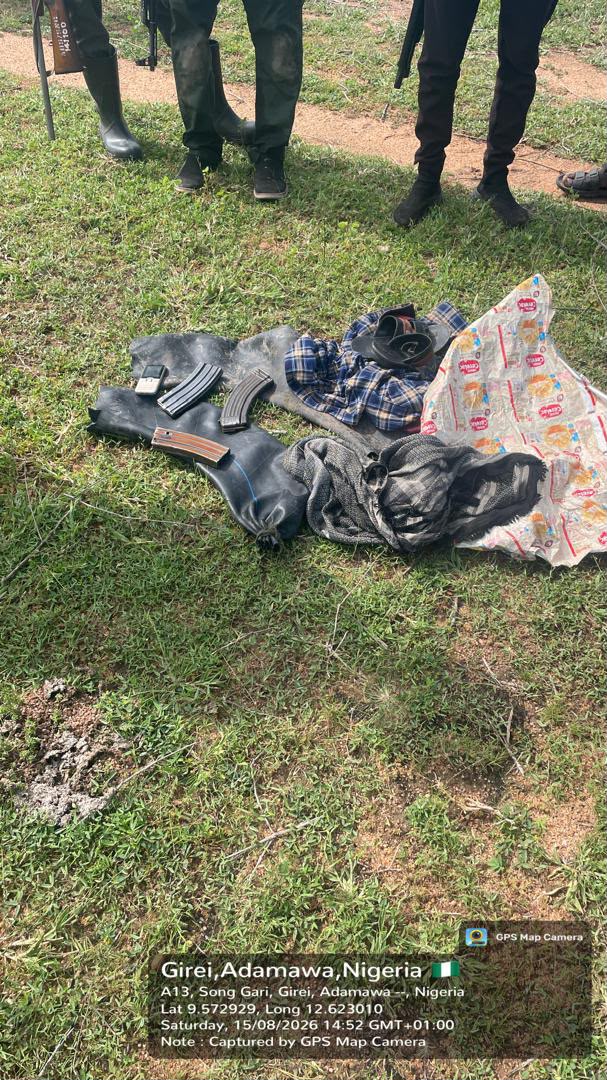
Troops Raid Kidnappers’ Camp in Adamawa, Recover Ammunition and Restraints
By Zagazola Makama
Troops of Operation HADIN KAI in collaboration with local hunters, have raided a suspected kidnappers’ hideout in Maigero Village, Song Local Government Area of Adamawa State, forcing the criminals to flee.
Zagazola Makama gathered that the operation was conducted at about 11:20 a.m. on Saturday, August 15, following intelligence on the location of a suspected kidnappers’ camp in the area.

The troops, working alongside members of a local hunters’ group, moved against the hideout and made contact with the suspected kidnappers.
The ensuing pressure forced the kidnappers to retreat in confusion into the surrounding forest.
The troops pursued the fleeing criminals but later withdrew due to the thickly forested terrain.
During the subsequent exploitation of the area, the troops recovered three AK-47 magazines, 25 rounds of 7.62mm special ammunition, one Tecno mobile phone and a long chain with padlocks allegedly used to restrain kidnapped victims.

The recovered items were taken into military custody as troops returned to base at about 6:20 p.m. the same day.
The operation is part of ongoing efforts by troops under Operation HADIN KAI and Operation DESERT SANITY V to disrupt kidnapping networks and deny criminal elements freedom of action across the North-East.

The general security situation across the theatre remains calm but unpredictable, while troops continue to maintain a high level of operational readiness.
Troops Raid Kidnappers’ Camp in Adamawa, Recover Ammunition and Restraints

Borno: Kwaya Kusar stakeholders seek investment in grains processing
Farmers and some stakeholders in Kwaya Kusar community have urged governments at all levels and industrialists to establish grain processing factories in their community.
They stated that having such facilities would help prevent post-harvest losses, create jobs, stabilise food prices and create wealth for the state and country.
They made the call in separate interviews with our Correspondent in Kwaya Kusar town of Borno State on Monday.
They said processing maize, wheat and local grains into staple foods like flour, semolina, and livestock feeds would further strengthen national food security while transforming the agricultural value chain.
Alhaji Abdullahi Gidado, the Secretary of Kwaya Kusar Grains Market said that the area has enough grains to feed any industry established in the area.
Gidado said that grains from the market were taken to other parts of the country on a weekly basis throughout the year.
He said that over 15, 000 bags leave the market weekly during dry season while over 40, 000 bags were being taken out of the market weekly immediately after harvest.
He said that with such a factory, more youths would be employed while farmers would get better value for their efforts.
“We want the government and other industrialists to take advantage of our strength in grain cultivation to set up mini factories to process our grains into staple foods.
“The more we take these grains out without processing it, the more we lose; from post harvest losses to rains spoiling our grains during the rainy season.
“We take over 30 to 40 trucks of assorted grains from this market weekly and each truck carries 400 bags; after harvest, the number reaches over 100 trucks weekly,” he said.
Also, Malam Hassan Musa, the Chairman of All Farmers Association of Nigeria, AFAN, Kwaya Kusar Local Government corroborated Gidado’s call to establish mini flour milling factories to reduce post-harvest losses.
Musa said farmers within the five local government areas of Biu, Kwaya Kusar, Hawul, Bayo and Shani all in Borno South have the capacity to produce grains that would feed any factories.
“Today, we (farmers) no longer get good returns on investment because we take out our produce raw to feed industries in other parts of the country.
“If we cultivate and process the grains here, the prices of these staple foods will drop and post harvest losses will greatly reduce,” he said.
For Malam Yusuf Abu, a grain dealer at the market said that over 7,000 jobs have been created because of the market as youths engage in grading, loading, transportation and many other areas.
Abu said “we will gain more if we process and take finished products out than taking our raw grains to feed flour mill industries elsewhere.
Borno: Kwaya Kusar stakeholders seek investment in grains processing
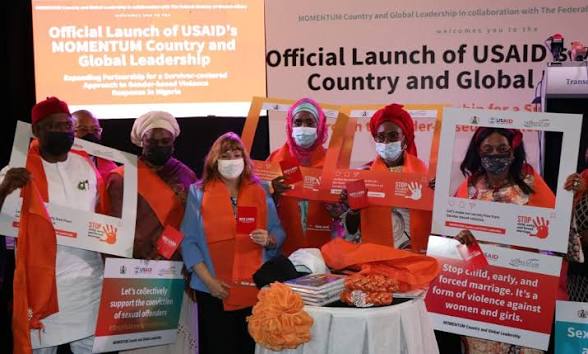
Nigeria Deploys Nationwide Platform to Track Violence Against Women Cases
…New system to provide visibility on investigations, prosecutions, conviction
By: Michael Mike
Nigeria has deployed a new nationwide reporting platform designed to track cases of violence against women from the point of reporting through investigation, prosecution and conviction, in a move aimed at strengthening accountability and access to justice for survivors.
The platform, developed by the Federal Ministry of Justice with support from the EU Support to End Sexual and Gender-Based Violence (ESGBV) Programme in Nigeria and implemented by the International Institute for Democracy and Electoral Assistance (International IDEA), is expected to address persistent gaps in case documentation, data coordination and justice-sector monitoring.
The initiative was unveiled on Monday in Abuja during the Deployment and Operationalisation of the Violence Against Women (VAW) Reporting Platform and National Validation and Capacity-Building Workshop on the VAW Reporting System.
The organisers described the platform as Nigeria’s first standardised justice-sector VAW reporting system, designed to consolidate information on cases from different states into a central database.
Speaking at the event, GBV Policy and Strategy Development Specialist, ESGBV Programme, International IDEA, Melissa Omene, said the initiative was developed to address one of the major weaknesses in Nigeria’s response to violence against women — the fragmentation of data and inadequate tracking of cases after they are reported.
“Reporting violence is only the beginning of a survivor’s journey. What happens after reporting matters just as much as the reporting itself,” Omene said.
She disclosed that an assessment involving 112 respondents from 32 institutions across the Federal Capital Territory, Benue, Kaduna and Oyo states identified gaps in data coordination, investigations, evidence management and justice-sector monitoring.
Omene said the National GBV Dashboard recorded 4,449 GBV cases in the first half of 2023, taking the nationwide number recorded since the dashboard was launched in 2020 to more than 19,000.
The figures, she said, highlighted the need for a stronger system capable of following cases beyond the initial reporting stage.
Also speaking, the Head of the Sexual and Gender-Based Violence Unit at the Federal Ministry of Justice, Yewande Gbola-Awopetu, said the success of the new platform would depend significantly on the accuracy and consistency of information supplied by designated desk officers.
“Every field you complete, every case status you update, and every follow-up you log becomes part of the evidence base,” she said.
Gbola-Awopetu disclosed that the National Human Rights Commission had recorded more than 33,000 SGBV cases between January and May, while the National Agency for the Prohibition of Trafficking in Persons (NAPTIP) documented more than 3,000 cases of violence against women in the FCT.
She said the figures reinforced the need for improved documentation and tracking of cases to determine what happens after victims report violations.
The National Consultant for the VAW Reporting System at International IDEA, Agharinma Ehiedu, said the platform would bring together information previously scattered across state-level systems into a single national database.
According to him, justice institutions would be able to access national data without having to contact individual states separately.
“You can know how many offenders you have, how many cases have been convicted, and those that are pending trial across the country,” Ehiedu said.
He added that the platform would also enable members of the public to report violations, with cases subsequently routed to relevant state desk officers.
He described the system as providing “full visibility of what is happening” to violence-against-women cases across the country.
Violence against women remains a major human rights, public health and justice challenge in Nigeria. It includes physical, sexual and psychological violence, domestic violence, harmful practices, trafficking and other forms of abuse.
One of the longstanding difficulties in addressing the problem has been the absence of a consistently integrated system for documenting cases and tracking their progression through Nigeria’s multiple justice and response institutions.
Cases can pass through the police, health facilities, social welfare structures, human rights institutions, prosecutors and courts, while information is often held separately by each institution. This can make it difficult to establish how many reported cases resulted in investigation, prosecution or conviction.
The problem is compounded by under-reporting. Survivors may choose not to report incidents because of stigma, fear of retaliation, economic dependence, lack of confidence in institutions or concerns about the consequences of pursuing cases.
Nigeria has also established legal and institutional mechanisms aimed at addressing gender-based violence. The Violence Against Persons (Prohibition) Act (VAPP) 2015 criminalises a range of harmful acts, including physical, sexual and psychological violence, while providing protections and remedies for victims and survivors. Its implementation, however, depends substantially on effective enforcement and, in states where necessary, domestication.
The country’s response also involves institutions including the Federal Ministry of Justice, Nigeria Police Force, National Human Rights Commission, NAPTIP, health and social welfare agencies, state ministries and civil society organisations.
The new VAW reporting platform is therefore expected to complement these existing structures by providing a mechanism for capturing and following cases across the justice chain.
Beyond statistics, the system could allow authorities to identify bottlenecks — including cases delayed at investigation or prosecution stages — and improve evidence-based planning and accountability.
For survivors, the ultimate test will be whether reported cases receive timely attention and whether perpetrators are brought to justice.
The ESGBV Programme and International IDEA said the deployment was intended to move Nigeria’s response beyond simply recording incidents towards ensuring that cases remain visible until appropriate justice outcomes are achieved.
The initiative also comes as Nigeria prepares for continued efforts to strengthen its institutional response to sexual and gender-based violence, with stakeholders stressing that better data is essential for effective policy, resource allocation and accountability.
Nigeria Deploys Nationwide Platform to Track Violence Against Women Cases

Troops Rescue Gunshot Victim After Fulani Bandits Attack in Plateau

Troops Arrest Six Suspected Drug Dealers in Damboa

Troops Raid Kidnappers’ Camp in Adamawa, Recover Ammunition and Restraints

Roger Federer’s Shock as DNA Results Reveal Myla and Charlene Are Not His Biological Children

THE PLIGHT OF FARIDA

FAILED COUP IN BURKINA FASO: HOW TRAORÉ NARROWLY ESCAPED ASSASSINATION PLOT AMID FOREIGN INTERFERENCE CLAIMS
-
 News2 years ago
Roger Federer’s Shock as DNA Results Reveal Myla and Charlene Are Not His Biological Children
-
Opinions5 years ago
THE PLIGHT OF FARIDA
-
 News1 year ago
FAILED COUP IN BURKINA FASO: HOW TRAORÉ NARROWLY ESCAPED ASSASSINATION PLOT AMID FOREIGN INTERFERENCE CLAIMS
-

 News2 years ago
EYN: Rev. Billi, Distortion of History, and The Living Tamarind Tree
-
 Opinions5 years ago
POLICE CHARGE ROOMS, A MINTING PRESS
-

 ACADEMICS2 years ago
A History of Biu” (2015) and The Lingering Bura-Pabir Question (1)
-

 Columns2 years ago
Army University Biu: There is certain interest, but certainly not from Borno.
-

 Politics1 year ago
2027: Why Hon. Midala Balami Must Go, as Youths in Hawul and Asikira/Uba Federal Constituency Reject ₦500,000 as Sallah Gift
