
News
Nigerian Engineering Olympiad Launched to Strengthen Global Engineering Competitiveness

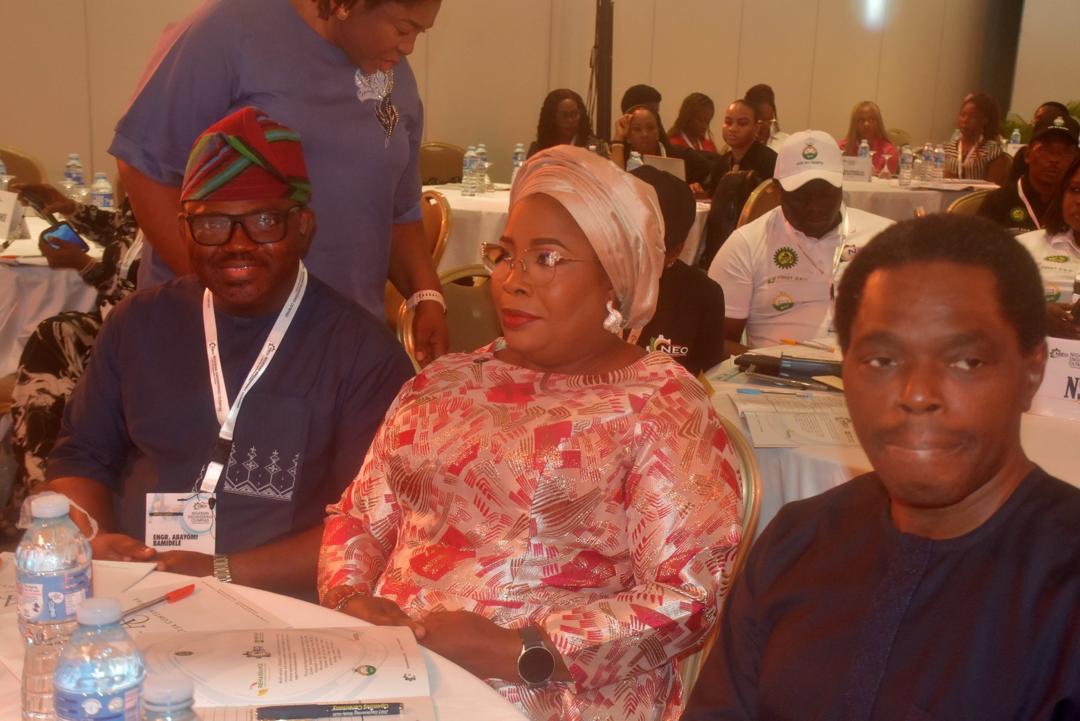
Nigerian Engineering Olympiad Launched to Strengthen Global Engineering Competitiveness
By: Michael Mike
The Nigerian Society of Engineers (NSE) has expressed commitment to bolstering engineering education in the country through linking academia with industry sector to bring about meaningful growth in Nigeria.
Nigeria while announcing a bold step toward strengthening its global engineering competitiveness with the launch of the maiden Nigerian Engineering Olympiad (NEO), an initiative the Nigerian Society of Engineers (NSE), expressed willingness to transform university inventions into market-ready technologies capable of advancing national development.
Speaking during inauguration of the maiden Nigerian Engineering Olympiad (NEO), a national programme designed to identify, nurture, and commercialise engineering talent across tertiary institutions, the President of NSE, Margaret Oguntala, disclosed that the Olympiad aims at tackling pressing needs in infrastructure, manufacturing, energy transition, sustainability, and digital technology, as ultimate goal to produce a generation of job creating engineers, problem solvers, and globally competitive innovators.
The Nigerian Engineering Olympiad was organised by Enactus Nigeria in partnership with NSE, Nigerian Content Development and Monitoring Board (NCDMB), Renaissance Africa Energy Company (RAEC), and the First Exploration and Petroleum Development Company (FIRST E&P).
Oguntala said, “As the foremost Engineering professional body, NSE believes that the addition of new ideas is critical for professional development and community impact.
“Every great invention in history began with an idea. All the transformations humanity has seen from the steam engine, to towering skyscrapers, electricity, internet, and artificial intelligence started as ideas acted upon.
“Ideas do shape the world. The power of ideas in transforming societies cannot be overemphasised; indeed, great nations have stood on the shoulders of men and women of ideas to advance growth and development.
“Nigeria is brimming with such creative minds in our universities. In our quest to turn technological development as a nation, NEO offers dynamic platform for students to unleash innovative capacity, as collective effort to create environment where ideation can truly thrive.”
Oguntala, also Chairman-in-Council of the NSE, stressed the need for stakeholders from across government agencies, academia, industry leaders and media to prioritise NEO.
According to her, the Olympiad creates a structured pipeline—regional contests, prototype bootcamps, iterative design, product validation, intellectual property support and a national finale in April 2026—designed to take ideas from concept to commercialization.
She described the Olympiad as “a national innovation incubator” that will provide mentorship, seed funding and technical guidance to the top teams.
Oguntala also highlighted NSE’s recent $17.4 million partnership with MIDAS IT of India to supply advanced engineering design software to 15 universities, a step she said would “strengthen academic excellence and prepare young engineers for global competitiveness.”
She reiterated that the Olympiad reflects Nigeria’s determination to elevate its technological capacity and compete on a global scale.
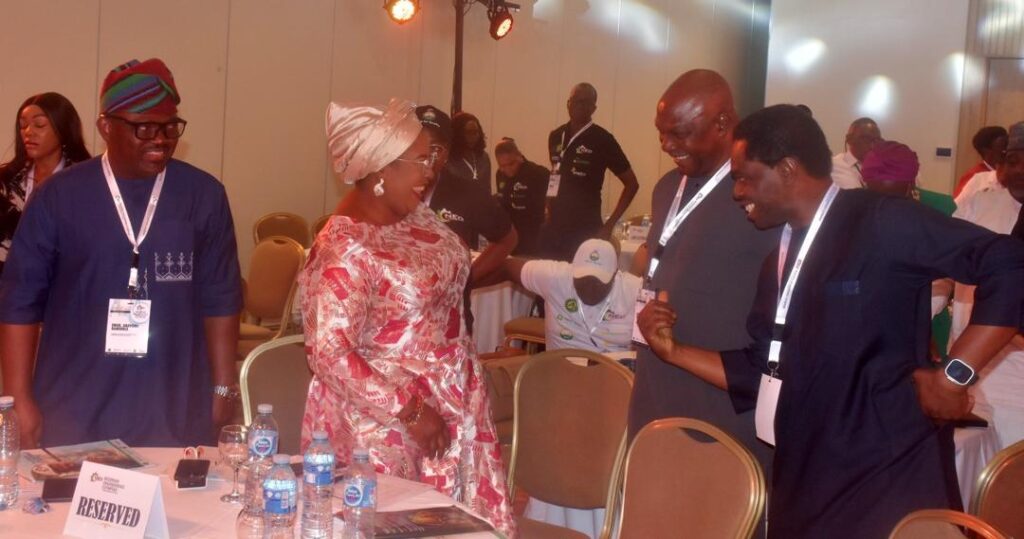
She said: “Today, we ignite a spark that will light the way for Nigeria’s engineering future. The innovations born from this Olympiad could become the solutions that drive our industries, improve our infrastructure and uplift our communities.”
In a remark, Executive-Secretary, Nigerian Content Development and Monitoring Board (NCDMB), Omatsola Ogbe commended Olympiad for aligning with the Federal Government’s policy drive for indigenous innovation and industrial competitiveness.
Ogbe, represented by Director Capacity Building of NCDMB, Abayomi Bamidele explained ongoing capacity building programmes in petroleum engineering, robotics, digital technology, and advanced technical disciplines efforts would help to reinforce the Olympiad’s talent pipeline.
He disclosed that industry surveys showed not less than 79 per cent of engineering graduates lacked practical and hands-on competencies aligned with global standards a challenge NCDMB says must be addressed urgently.
According to him, engineering skills deficit contributed to shortage of competent local engineers, heavy reliance on expatriates, and increasing brain drain
“Nigeria has a population exceeding 237 million people, nearly half of West Africa, yet only about 5 per cent of our engineering graduates are industry ready at graduation.
“This Olympiad provides a structured pathway to identify and support young innovators who can design solutions for our national challenges,” he said.
For his part, Enactus Nigeria’s Country Director, Michael Ajayi, said that national-scale impact can only come from strong collaboration across government, private sector, and civil society.
Ajayi said: “This partnership proves that when we combine policy support, private-sector systems, and nonprofit expertise, we can deliver transformational impact not just for individuals, but for entire industries.
“Olympiad’s objectives include encouraging students to apply classroom knowledge to real-life problem-solving and enabling them to build engineering-driven businesses that generate jobs and wealth.”
He disclosed that the Olympiad was designed to run a seven-month cycle and will feature regional contests, intensive mentorship, prototype development, and a national grand finale scheduled to hold in April 2026.
First E&P’s General Manager for Integrated Gas Development, Yetunde Taiwo, said the company’s involvement stems from a commitment to innovation and talent development.
She said: “Our core values are around fostering talent, innovation and entrepreneurship. Some of the perennial challenges we see in the industry can actually be solved by these very bright young minds.”
She added that engaging students early with real industry problems could help reduce brain drain by creating clear pathways into the workforce.
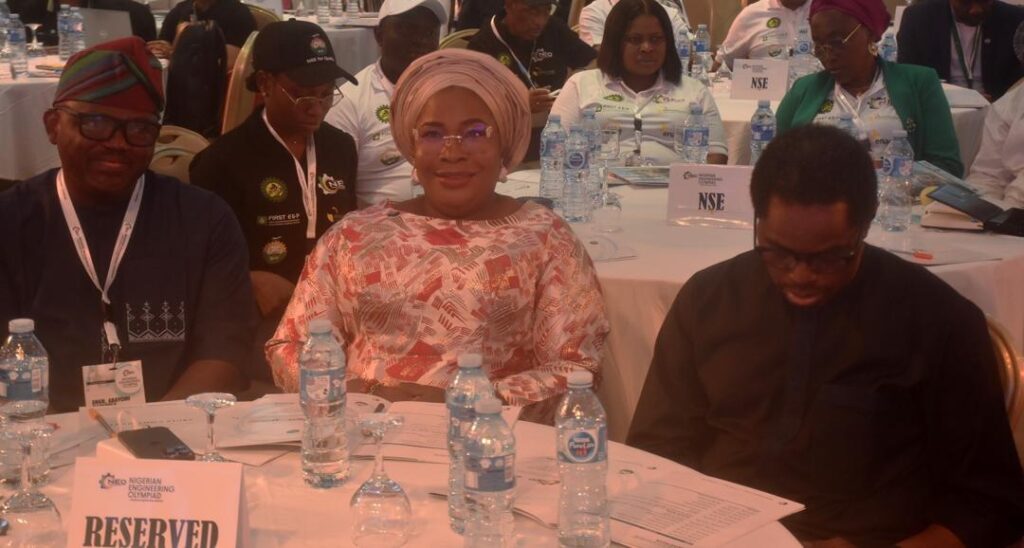
Representing Renaissance Africa Energy Company, Nigerian content manager Olanrewaju Olawunyi said their support reflects a longstanding commitment to developing human capital.
“We are made in Nigeria, we’re built for Africa. We invest in people. People are our biggest resource.”
He noted that Renaissance funds STEM education from primary to tertiary levels and runs fully funded scholarships—including sending candidates from the Niger Delta overseas for postgraduate studies.
“This is not just a flash. All our programs are annual and fully funded, and we also pay students during internships.”
On behalf of the Minister of Youth Development, Technical Adviser Ebiho Agun said the Olympiad aligns fully with government priorities and the nation’s long-term workforce needs.
“It provides young minds with the opportunity to stretch their imagination, deepen technical abilities, and demonstrate excellence on a national and international stage,” he said.
He described the initiative as “a catalyst for mentorship, discovery and long-term career development,” urging participants to seize the opportunity: “You are the heartbeat of Nigeria’s future. remain steadfast in your pursuit of excellence.”
Nigerian Engineering Olympiad Launched to Strengthen Global Engineering Competitiveness



ActionAid Raises Alarm as 33.4% of Nigerian Women Married Before 18
…Group urges governments to enforce child marriage laws, boost girls’ education
By: Michael Mike
ActionAid Nigeria has called on federal and state governments to strengthen enforcement of laws against child marriage and increase investment in girls’ education and rights, warning that early marriage continues to deprive millions of Nigerian girls of opportunities to determine their futures.
The organisation, in a statement issued on Saturday ahead of the 2026 International Day of the Girl, said 33.4 per cent of young Nigerian women aged 20 to 24 were married before the age of 18, with the prevalence approaching 50 per cent in the North-east and North-west.
The statement, signed by its Country Director, Andrew Mamedu, cited an analysis of the 2024 Demographic and Health Survey, alongside UNICEF estimates that more than 3.7 million women aged 20 to 24 were married before turning 18.
The International Day of the Girl, marked on October 11, is being observed this year under the theme, “End child marriage and invest in girls’ rights.”
ActionAid said child marriage was not merely a cultural practice or a family matter but a violation of girls’ rights that could disrupt their education, restrict their economic prospects and expose them to violence and early pregnancy.
It added that more than 12 million girls globally were married before adulthood every year, underscoring the need for sustained action by governments, communities and development partners.
The organisation identified poverty and limited access to education as major factors contributing to early marriage, noting that girls from poorer households and those with lower levels of education faced greater risks.
According to the statement, UNICEF analysis indicates that ensuring every girl in Northern Nigeria completes secondary education could reduce child marriage by as much as two-thirds, while also lowering adolescent pregnancy and improving economic productivity.
To illustrate the impact of interventions that empower girls, ActionAid recounted the experience of Aisha Aliyu, who was 16 when her family began preparing for her marriage to her cousin.
Aisha, who participated in the organisation’s Girl-led Research and Action Project, learnt about girls’ rights, the importance of education and the risks associated with early marriage.
Armed with that knowledge, she found the confidence to speak to her parents about her desire to continue her education. Her parents eventually called off the marriage, allowing her to return to school.
She now hopes to become a businesswoman and mentor other girls in her community.
ActionAid said her experience demonstrated how access to information, safe spaces and opportunities for participation could help girls challenge practices that threatened their futures.
Through its Girl-led Research and Action initiative, the organisation supports girls to investigate issues affecting their lives, generate evidence and use their findings to advocate for change.
It also works with women’s rights organisations and communities through its Local Rights Programme to address harmful gender norms, violence, barriers to education and the exclusion of girls from decision-making.
The organisation said its Renewed Women’s Voice and Leadership Nigeria Project, funded by Global Affairs Canada, also supports locally led initiatives to advance gender equality and strengthen women’s and girls’ leadership.
Mamedu said investment in girls must go beyond protecting them from abuse to recognising their rights and enabling them to participate in decisions affecting their lives.
“Investing in girls is not simply about protecting them from harm; it is about recognising their rights, supporting their leadership and creating the opportunities they need to shape their own lives and contribute meaningfully to society,” he said.
He urged governments to ensure that the systems and resources required to protect girls’ rights were available and effective.
ActionAid called on federal and state governments, the National and State Assemblies, and justice and law-enforcement institutions to ensure that laws protecting girls against child marriage and other harmful practices were effectively implemented, with clear accountability for violations.
It also urged the Federal Ministry of Education, the Universal Basic Education Commission, state ministries of education and state universal basic education boards to increase investment in safe, quality and inclusive education, particularly for girls in rural, conflict-affected and marginalised communities.
The organisation further called for expanded social protection and livelihood support for vulnerable households to ease the economic pressures that push girls into early marriage and school dropout.
It urged ministries responsible for women’s affairs and youth development, local governments, schools, legislators and community institutions to establish safe spaces where girls could participate meaningfully in research, policy discussions and decisions affecting their lives.
Parents, traditional and religious leaders, civil society organisations, schools and the media were also urged to challenge social norms that restrict girls’ choices and support their right to education and leadership.
ActionAid said ending child marriage required coordinated action to address its underlying causes, protect girls from harmful practices and ensure that every girl had the opportunity to learn, thrive and shape her future.
ActionAid Raises Alarm as 33.4% of Nigerian Women Married Before 18
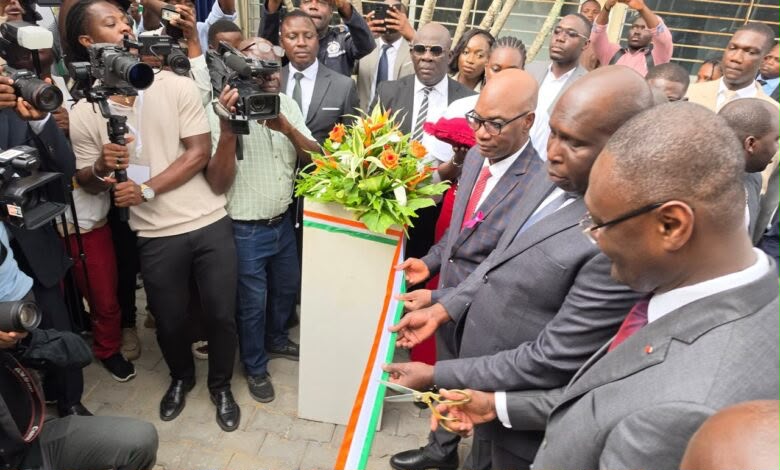
WAHO Receives Keys to Temporary Headquarters in Côte d’Ivoire
…Move to Grand-Bassam marks new chapter for West African health cooperation
By: Michael Mike
The West African Health Organisation (WAHO), the health institution of the Economic Community of West African States (ECOWAS), has received the keys to its temporary headquarters in Grand-Bassam, Côte d’Ivoire, marking a major step in its relocation to the country.
The handover ceremony, held at the Village of Information Technology and Biotechnology (VITIB), followed the decision by ECOWAS Heads of State and Government on December 14, 2025, in Abuja, to establish the organisation in Côte d’Ivoire.
The relocation opens a new chapter for the regional health institution as it seeks to strengthen cooperation among West African countries in tackling epidemics, improving access to quality healthcare and medicines, and developing coordinated responses to public health emergencies.
The ceremony brought together senior Ivorian government officials, representatives of ECOWAS and its institutions, WAHO leadership, VITIB officials and partner organisations.
Speaking at the event, Minister Delegate Adama Dosso said the handover demonstrated the Ivorian government’s commitment to providing the necessary conditions for WAHO’s establishment.
He said the decision to host the organisation reflected the confidence reposed in Côte d’Ivoire by ECOWAS leaders and the country’s commitment to regional integration.
Dosso commended the national institutions involved in preparing the facilities within a short period, particularly the National State Property Management Company (SONAPIE) and VITIB.
Also speaking, Minister Delegate in charge of Technical Education and Mayor of Grand-Bassam, Jean Louis Moulot, described WAHO’s arrival as an important development for the city and its growing profile as a centre for technology and healthcare.
He highlighted investments in health infrastructure, the development of VITIB and the construction of the National Oncology and Radiotherapy Centre, noting that WAHO’s presence would create further opportunities for cooperation and innovation.
Moulot said the establishment of the organisation also demonstrated West African countries’ determination to pool expertise and develop common solutions to shared health challenges.
The Director-General of WAHO, Professor Palokinam T. Pitche, expressed appreciation to the government and people of Côte d’Ivoire for their hospitality and the measures taken to facilitate the relocation.
He also paid tribute to Burkina Faso and the people of Bobo-Dioulasso for hosting and supporting the organisation for several decades, while acknowledging the ECOWAS Commission and other stakeholders involved in the transition.
Describing the handover as a significant institutional milestone, Pitche said: “It marks a decisive step in WAHO’s effective establishment in the Republic of Côte d’Ivoire and opens a new chapter in the institutional life of our Organisation.”
He said WAHO’s location within VITIB offered an opportunity to link public health expertise with technological innovation, digital solutions and biotechnology.
“Our presence at VITIB should be an invitation to build bridges between health, innovation, digital technologies and biotechnology, for the benefit of West African populations,” he said.
The WAHO chief identified access to quality healthcare, epidemic prevention and response, preparedness for other health emergencies, access to quality medicines and vaccines, and stronger regional health initiatives as priority areas for cooperation with Ivorian health authorities.
He expressed the hope that the new headquarters would become a centre for consultation, coordination and innovation, enabling member states to develop common responses to health challenges across the region.
In his remarks, the Director-General of VITIB, Mebeti Dosso, welcomed WAHO to the technology park, saying its presence would strengthen the facility’s scientific, technological and regional significance.
He identified digital health, training and innovation as areas offering opportunities for collaboration and reaffirmed VITIB’s readiness to support WAHO’s operations and develop joint initiatives.
WAHO’s establishment in Grand-Bassam is expected to deepen its cooperation with Côte d’Ivoire while providing a platform for connecting national expertise with regional health priorities.
The organisation will continue to pursue its mandate of harmonising health policies and strategies, strengthening regional cooperation and promoting solidarity among ECOWAS member states to improve the health and well-being of West African populations.
WAHO Receives Keys to Temporary Headquarters in Côte d’Ivoire
Governors To Declare Nutrition Emergency, Unleash Radical Funding Mechanism
** Commit to grassroots accountability, unified nutrition budget
** FG to begin targeted intervention in two high-stunting states
By: Our Reporter
In a historic move, governors of the 36 states of the federation have declared war on hunger by committing to launch a nationwide nutrition emergency.
This massive mobilisation will establish a powerful National Nutrition Intervention Fund to instantly advance Nigeria’s ambitious Nutrition 774 Initiative across every single local government area in the country.
Zamfara State Governor, Dauda Lawal, announced this on Friday in Addis Ababa, Ethiopia, while reading the Nigeria Governors’ Forum (NGF) Addis Ababa Commitment on Nutrition at the Nigeria Country Session.
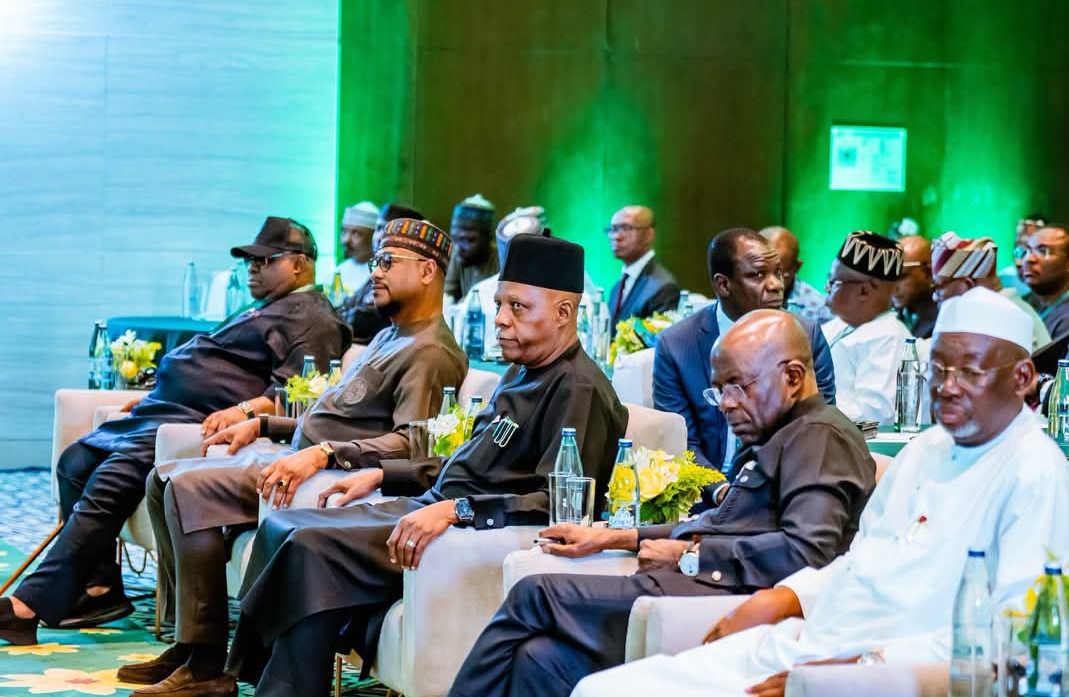
The commitment followed a three-day Nigeria-Ethiopia Nutrition Leadership Exchange, where the Nigerian delegation led by the Vice President, Senator Kashim Shettima studied Ethiopia’s experience in nutrition delivery, particularly through its Seqota Declaration.
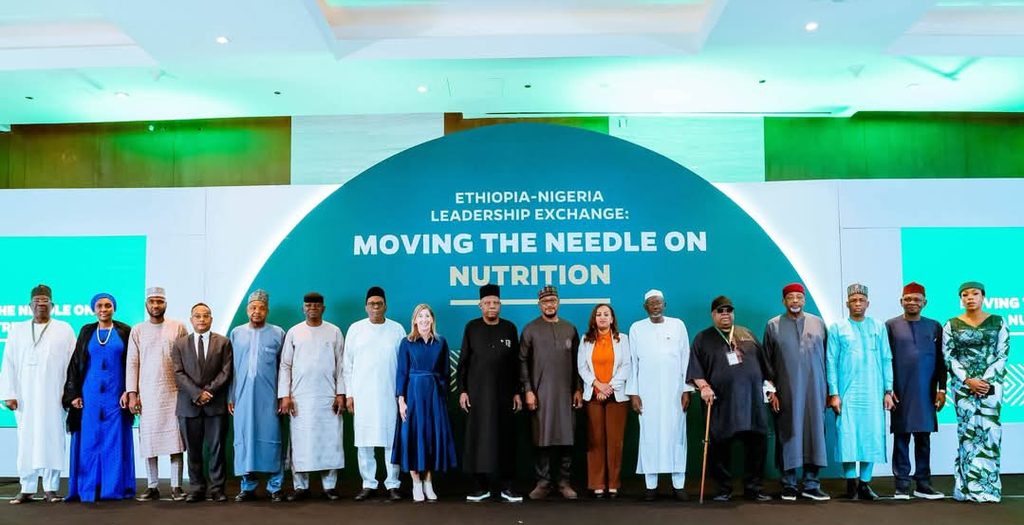
While reading the NGF commitment at the session themed “From Lessons to Commitment: Accelerating Implementation of the Nutrition 774 Initiative,” the governors also pledged to strengthen domestic financing, deepen accountability at the grassroots, and institutionalize a unified framework for nutrition planning and budgeting, drawing lessons from Ethiopia’s experience in tackling malnutrition.
Speaking on behalf of the NGF, Governor Lawal said the exchange had reinforced the importance of sustained political leadership, effective multisectoral coordination, ownership at all levels of government, predictable financing, and the systematic use of data to drive decisions and accountability.
He noted that Nigeria’s Nutrition 774 Initiative already embodied many of Ethiopia’s principles, adding that the exchange provided practical lessons to strengthen the programme and deliver measurable results.
According to him, the key lessons included the need for a unified approach to planning and budgeting, stronger coordination across sectors, bottom-up planning, predictable financing, and the use of data and scorecards to measure performance.
“We are encouraged that Nigeria’s N774 Initiative already embodies many of the principles we have seen here in Ethiopia. “mThis leadership exchange has, however, provided important practical lessons on how these principles can be further strengthened and translated into results,” he stated.
The NGF also identified matching financing between the Federal Government and states as an important mechanism for aligning priorities, encouraging subnational investment and reinforcing shared accountability for nutrition outcomes.
Lawal recalled that, in the presence of Vice President Shettima, the three tiers of government signed the Nutrition Compact on February 20, 2025, to establish a common commitment to tackling malnutrition.
He said the compact was signed by the Chairman of the NGF on behalf of the 36 states, the President of the Association of Local Governments of Nigeria (ALGON) on behalf of the 774 local governments, and the Minister of Budget and Economic Planning on behalf of the Federal Government.
He explained that the latest commitment would reinforce the existing compact by adapting lessons from Ethiopia to Nigeria’s circumstances and translating them into concrete actions across the three tiers of government.
Under the commitments, the governors resolved to declare nutrition a national emergency, establish a National Nutrition Intervention Fund to catalyse implementation of the compact, and institutionalise “One Goal, One Plan and One Budget” for nutrition.
The proposed fund is expected to incentivise state-level leadership, encourage increased domestic investment, reward effective implementation and support measurable improvements in nutrition outcomes.
The governors also pledged to strengthen bottom-up planning by ensuring that nutrition priorities reflect needs at community and ward levels before being incorporated into local government, state and national plans.
They further committed to extending the National Nutrition Scorecard beyond the state level to include local government and ward-level performance indicators, strengthening accountability throughout the delivery chain.
The NGF also resolved to institutionalise the use of data for decision-making and performance management, including state-specific surveys and assessments to provide timely evidence for planning, resource allocation and corrective action.
Meanwhile, the Executive Director and Chief Executive Officer of the National Primary Health Care Development Agency (NPHCDA), Dr Muyi Aina, has disclosed that the Federal Government will begin targeted nutrition interventions in two states with a high burden of stunting before expanding the programme to other states.
Aina, who spoke on behalf of federal agencies, said the Nigerian delegation had learnt important lessons from Ethiopia’s agricultural transformation, early childhood development programmes and data-driven initiatives.
He identified clear vision and leadership, alignment across the three tiers of government, evidence-based prioritisation, rigorous measurement and disciplined execution as critical elements for achieving sustainable results.
According to him, the federal team would adopt a focused approach by selecting two states based on their stunting burden, defining clear objectives and developing multisectoral interventions tailored to their needs.
He said relevant ministers and federal agencies would work with the governors and their teams to identify sectoral priorities, determine the responsibilities of each tier of government and involve communities and development partners in the implementation process.
Aina explained that the plan would be costed, with the participating governments working towards a joint financing arrangement and establishing measurable indicators to track progress.
“We will track very rigorously progress in the execution of the plan,” he said.
The NPHCDA chief also proposed three- six- and nine-month review meetings with the Vice President, who is also Chairman of the National Council on Nutrition, to assess progress, address implementation gaps and guide the expansion of the interventions to other states.
He said the approach would enable the government to learn from implementation, make necessary adjustments and ensure that resources were directed towards interventions capable of producing measurable improvements.
On his part, the Coordinating Minister of Health and Social Welfare, Professor Muhammad Ali Pate, said the exchange had provided valuable lessons on translating political commitments into practical action and measurable nutrition outcomes.
Pate identified focused sectoral action, a clear implementation roadmap, performance matrices and accountability as critical to accelerating Nigeria’s response to malnutrition.
He said the Federal Government would work with states to turn the commitments made during the exchange into practical interventions, with progress reported to the Vice President through the National Council on Nutrition.
According to him, the combined efforts of federal and state governments, communities and development partners would be essential to achieving sustainable results.
Pate expressed confidence that Nigeria could adapt Ethiopia’s experience to its own circumstances, noting that the progress recorded by the East African country demonstrated the value of sustained political leadership and coordinated action.
He also expressed appreciation to the Ethiopian government and its officials for hosting the Nigerian delegation, describing the exchange as an opportunity for both countries to learn from each other.
The minister invited Ethiopian officials to visit Nigeria to study its ongoing initiatives and explore further areas of cooperation.
For her part, Ethiopia’s Minister of Health, Dr Mekdes Daba, commended Nigeria for its commitment to strengthening nutrition delivery and described the leadership exchange as a practical demonstration of African countries learning from one another.
Daba expressed appreciation to Vice President Shettima for leading the high-level delegation to Ethiopia, saying the visit reflected Nigeria’s determination to translate its nutrition ambitions into action.
She said the Nutrition 774 Initiative represented a significant national commitment, stressing the importance of starting with focused interventions, measuring results and expanding successful approaches.
The minister emphasised that commitments must ultimately translate into tangible improvements in the lives of citizens, adding that implementation, feedback and continuous assessment were essential to achieving lasting results.
According to her, Ethiopia is ready to provide technical support and work with Nigeria as it implements and expands the initiative.
She described the exchange as the beginning of a long-term partnership, expressing optimism that both countries would continue to share experiences and strengthen their efforts to tackle malnutrition.
Daba said the Nigerian and Ethiopian governments have a shared responsibility to demonstrate that African countries could draw on their own experiences to deliver development outcomes for their people.
Governors To Declare Nutrition Emergency, Unleash Radical Funding Mechanism

PCC: Malam Bashir’s pace, determination, and commitment to repositioning the Commission

ActionAid Raises Alarm as 33.4% of Nigerian Women Married Before 18

WAHO Receives Keys to Temporary Headquarters in Côte d’Ivoire

Roger Federer’s Shock as DNA Results Reveal Myla and Charlene Are Not His Biological Children

THE PLIGHT OF FARIDA

FAILED COUP IN BURKINA FASO: HOW TRAORÉ NARROWLY ESCAPED ASSASSINATION PLOT AMID FOREIGN INTERFERENCE CLAIMS
-
 News3 years ago
Roger Federer’s Shock as DNA Results Reveal Myla and Charlene Are Not His Biological Children
-
Opinions5 years ago
THE PLIGHT OF FARIDA
-
 News1 year ago
FAILED COUP IN BURKINA FASO: HOW TRAORÉ NARROWLY ESCAPED ASSASSINATION PLOT AMID FOREIGN INTERFERENCE CLAIMS
-

 News3 years ago
EYN: Rev. Billi, Distortion of History, and The Living Tamarind Tree
-
 Opinions5 years ago
POLICE CHARGE ROOMS, A MINTING PRESS
-

 ACADEMICS3 years ago
A History of Biu” (2015) and The Lingering Bura-Pabir Question (1)
-

 Columns3 years ago
Army University Biu: There is certain interest, but certainly not from Borno.
-

 Politics1 year ago
2027: Why Hon. Midala Balami Must Go, as Youths in Hawul and Asikira/Uba Federal Constituency Reject ₦500,000 as Sallah Gift
