
International
Several Common Fallacies on the Taiwan Question

Several Common Fallacies on the Taiwan Question
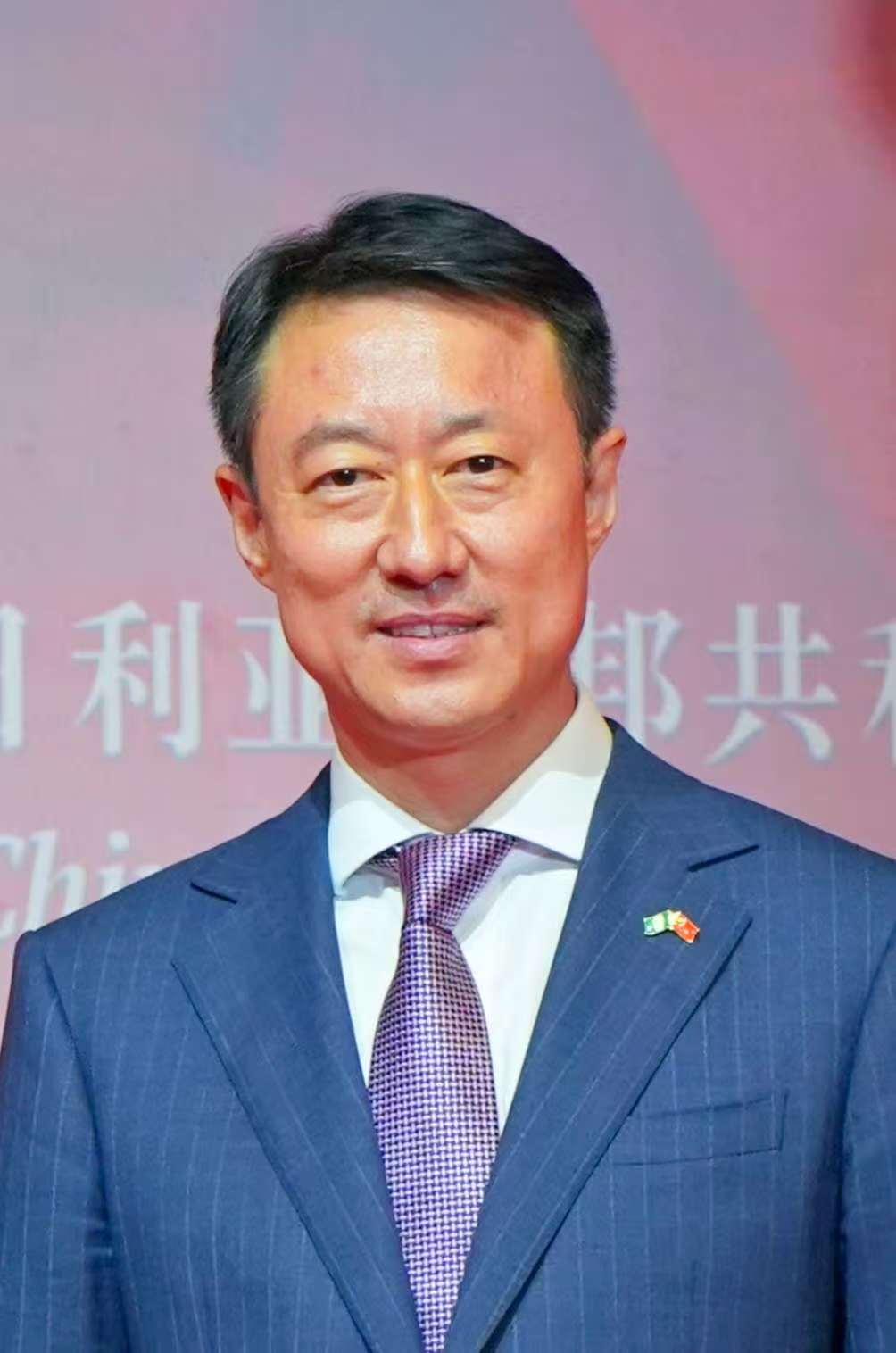
By: Ambassador Yu Dunhai
The 80th session of the United Nations General Assembly recently concluded successfully. This was a session of special significance, as it marks the 80th anniversary of the victory in the global anti-fascist war and the establishment of the United Nations.
Over the past 80 years, the UN has become the most universal, representative and authoritative intergovernmental international organization, with the UN-centered international system widely supported by the international community.
Eighty years ago, defeated Japan returned Taiwan to China, which was an indisputable outcome of the global anti-fascist war and a crucial part of the post-war international order. Currently, the Taiwan Democratic Progressive Party (DPP) authorities stubbornly adopt a separatist policy seeking “Taiwan independence” , while a small number of countries claim that China’s sovereignty over Taiwan has not been established, openly challenging the authority of the UN and the post-war international order. To clarify the facts and set the record straight, I feel obligated to address several common fallacies on the Taiwan Question.
Fallacy 1: “The two sides of the Taiwan Strait are not subordinate to each other.”
Taiwan has belonged to China since ancient times, with clear historical and legal foundations. Numerous historical records and documents detail the early development of Taiwan by the Chinese people.
As early as the 12th century, the Chinese government established administrative institutions and exercised jurisdiction in Taiwan. In 1895, Japan forced the Qing government to cede Taiwan and the Penghu Islands to Japan through war. In 1943, the Cairo Declaration issued by China, the United States and the United Kingdom stipulated that all the territories seized by Japan including Taiwan must be returned to China.
In 1945, the Potsdam Proclamation issued by China, the United States, the United Kingdom and the Soviet Union reaffirmed that the terms of the Cairo Declaration must be implemented. In August of that year, Japan accepted the Potsdam Proclamation and signed the Instrument of Surrender in September, pledging to “faithfully fulfill the obligations laid down in the Potsdam Proclamation.”
Through a series of internationally legally binding documents, China recovered Taiwan both legally and in fact. Although the two sides of the Taiwan Strait have not yet achieved complete reunification, the fact that both the mainland of China and Taiwan belong to one China and that Taiwan is an inalienable part of China has never changed and cannot be changed. This is the true status quo of the Taiwan Strait. Taiwan has never been a country, nor will it ever be in the future.
Fallacy 2: “China’s sovereignty over Taiwan has not been established.”
Shortly after the victory in the War of Resistance Against Japan in 1945, the Nationalist government led by Chiang Kai-shek launched a civil war. Under the leadership of the Communist Party of China, the Chinese people won the civil war, ultimately overthrowing the “Republic of China” government led by Chiang Kai-shek. Some members of the Nationalist regime retreated to Taiwan, and with interference from external forces, the two sides of the Taiwan Strait entered a prolonged state of political confrontation.
On October 1, 1949, the Central People’s Government of the People’s Republic of China (PRC) was established, and the PRC government became the sole legitimate government of China. This was a change of government within the same international legal entity of China, with no change to China’s sovereignty or inherent territory. The PRC government naturally enjoys and exercises China’s sovereignty in full, including sovereignty over Taiwan.
Fallacy 3: “UN General Assembly Resolution 2758 does not establish the One-China principle.”
Resolution 2758 fully embodies the One-China principle. On August 20, 1971, before the resolution was put to a vote, the Chinese government issued a statement emphasizing: “There are not two Chinas in the world; there is only one China, the People’s Republic of China. Taiwan is an inalienable part of Chinese territory and a province of China, which was returned to the motherland at the end of World War II. This is an indisputable fact.”
On October 25, 1971, the 26th session of the UN General Assembly adopted Resolution 2758, which decided to “restore all the rights of the People’s Republic of China, recognize the representatives of its government as the only legitimate representatives of China to the United Nations, and expel forthwith the representatives of Chiang Kai-shek from the place which they unlawfully occupy at the United Nations and in all the organizations related to it.”
Resolution 2758 politically affirmed and consolidated the One-China principle: there is only one China in the world, Taiwan is a part of China, and the PRC government is the sole legitimate government representing all of China. Following the resolution’s adoption, UN official documents consistently refer to Taiwan as “Taiwan, Province of China.” These facts are indisputable and unchallengeable.
Fallacy 4: “UN General Assembly Resolution 2758 does not determine Taiwan’s status.”
Resolution 2758 and the One-China principle that the Resolution embodies impose universal binding force on all subjects of the international community through the UN Charter, bilateral diplomatic treaties, and fundamental principles of international law.
In diplomatic practice, the resolution’s authority is reflected in the correct Taiwan-related positions, policies, and actions of the UN General Assembly, UN specialized agencies and many UN member states.
These collectively form an important international legal and moral foundation for handling Taiwan-related questions. The One-China principle, framework, consensus and related institutional arrangements supported by the resolution have become principles and common knowledge followed by all countries, as well as a solemn commitment by countries with diplomatic relations to respect China’s sovereignty and territorial integrity.
The claim by a few countries that “Taiwan’s status is undetermined” challenges the authority of the UN, defies the post-war international order, and is an absurd and dangerous attempt to reverse history.
Fallacy 5: “Now is the time for the UN to recognize Taiwan.”
According to Resolution 2758, China’s representation in the UN naturally includes Taiwan as part of the whole of China. This is entirely consistent with the international legal principle that “one sovereign state can only be represented by one central government.” There is only one seat for China in the UN, and the PRC government is the sole legitimate representative of China in the UN. There is no issue of “two Chinas” or “one China, one Taiwan.”
The Taiwan authorities have repeatedly pushed for farcical attempts to achieve “meaningful participation” or “re-entry” into the UN, trying to challenge the authority of Resolution 2758, but all ended up in failure.
Resolution 2758 clarifies that “China” in the UN Charter refers to the People’s Republic of China, imposing an obligation on all UN member states to avoid raising the so-called issue of Taiwan’s representation in the UN system. Taiwan has no basis, reason or right to participate in the UN or other international organizations exclusive to sovereign states. On this matter of principle, there is no gray area or room for ambiguity.
The One-China principle has become an international consensus, with 183 countries including Nigeria, establishing diplomatic relations with China based on this principle. In 1971, when China and Nigeria established diplomatic relations, Nigeria solemnly pledged in the Joint Communiqué: “The Government of the Federal Republic of Nigeria recognizes the Government of the People’s Republic of China as the sole legitimate government representing the entire Chinese people.” Since then, the One-China principle has been firmly supported by successive Nigerian governments, serving as the cornerstone for the healthy and stable development of China-Nigeria relations.
The Nigerian government requested the Taiwan authorities to relocate its trade office to Lagos from Abuja in 2017, strictly restricted official interactions between Nigerian government officials and Taiwan, and reiterated that the Taipei trade office in Nigeria is a non-diplomatic commercial entity that does not represent any government.
In September 2024, during President Bola Ahmed Tinubu’s state visit to China, Nigeria reiterated in the Joint Statement: “Nigeria firmly adheres to the One-China principle, recognizes that there is only one China in the world, that the Government of the People’s Republic of China is the sole legitimate government representing the whole of China, and that Taiwan is an inalienable part of Chinese territory. Nigeria opposes any form of ‘Taiwan independence,’ opposes interference in China’s internal affairs, and firmly supports the Chinese government’s efforts to achieve national reunification.”
China highly appreciates the Nigerian government’s firm stance on the Taiwan Question. Nigeria’s political resolve and firm stance align with the fundamental interests of the Nigerian nation and people, the purposes and principles of the UN Charter, and the global landscape of one China.
Currently, the China-Nigeria comprehensive strategic partnership continues to deepen, with friendly cooperation becoming a model for China-Africa cooperation and Global South collaboration. China is willing to strengthen strategic communication and practical cooperation with Nigeria, promote the early implementation of a zero-tariff policy for 100% of tariff lines on products, enhance collaboration under the framework of Global Governance Initiative, and jointly build a China-Nigeria community with a shared future.
We hope that all peace-loving countries and peoples will stand on the side of historical justice, uphold the purposes and principles of the UN Charter, safeguard the authority of UN General Assembly Resolution 2758, firmly oppose the deliberate distortions by the Taiwan authorities and a few countries, and take concrete actions to support the Chinese people’s just cause of defending national sovereignty and territorial integrity and achieving national reunification.
Several Common Fallacies on the Taiwan Question


Venezuela Solidarity Group Urges U.S. to Lift Sanctions After Deadly Earthquakes
By: Michael Mike
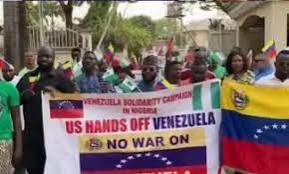
The Venezuela Solidarity Campaign in Nigeria (VSCN) has called for the immediate and unconditional lifting of United States sanctions on Venezuela, arguing that the restrictions are hampering humanitarian relief and reconstruction efforts following devastating twin earthquakes that reportedly killed more than 2,000 people and displaced over 50,000 others.
In a statement issued on Sunday and signed by its coordinator, Comrade Dimeji Macaulay, the group expressed solidarity with the Venezuelan people and the Bolivarian Government, describing the earthquakes as a humanitarian tragedy that has left widespread destruction of homes, hospitals, schools, roads and other critical infrastructure.
The organisation extended condolences to families of the victims and praised what it described as the resilience of the Venezuelan people in confronting the disaster despite years of economic hardship.
According to the VSCN, the U.S. sanctions have weakened Venezuela’s capacity to respond effectively to the emergency by limiting access to financial resources and restricting the importation of medicines, equipment, technology and other essential materials.
The group maintained that maintaining the sanctions during a humanitarian crisis amounts to collective punishment against ordinary citizens and called for their permanent removal to facilitate relief operations and long-term reconstruction.
“There can be no moral or legal justification for maintaining an economic blockade against a country struggling to save lives and rebuild after a devastating natural disaster,” the statement said, adding that every day the sanctions remain in force prolongs the suffering of the Venezuelan people.
The campaign also urged the Federal Government of Nigeria to publicly support the removal of the sanctions, strengthen diplomatic relations with Venezuela and contribute to international humanitarian efforts for victims of the disaster.
It further appealed to the African Union to reject unilateral coercive measures, describing them as violations of international law, while calling on African countries to support Venezuela’s recovery.
The group equally called on the United Nations to intensify humanitarian assistance and ensure that sanctions do not obstruct emergency relief operations or reconstruction programmes.
Beyond governments and international organisations, the VSCN appealed to trade unions, youth organisations, civil society groups and progressive political movements across Africa and the wider international community to demonstrate solidarity with Venezuela by opposing what it described as economic warfare and supporting the country’s right to determine its future without external interference.
Reaffirming its commitment to the Venezuelan cause, the organisation said it would continue campaigning until the sanctions are lifted, insisting that Venezuela’s recovery should not be hindered by external political considerations
Venezuela Solidarity Group Urges U.S. to Lift Sanctions After Deadly Earthquakes
Navigating The Deadlock: AU’s Strategic Options for Sudan’s Reinstatement
By: Dr Sami Abdelhalim Saeed
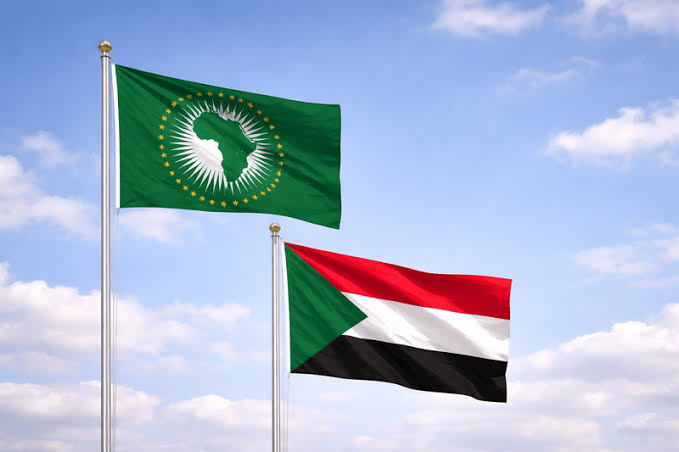
Following the military coup in Sudan on October 25th, 2021, led by General Abdel Fattah al-Burhan, the Commander-in-Chief of the Sudan Armed Forces (SAF), who dissolved the transitional government and declared a state of emergency, the African Union (AU) suspended Sudan’s membership on October 27, 2021.
As of February 2026, the AU Peace and Security Council (PSC) has reaffirmed that the suspension remains in effect until a democratic transitional government is restored in the country. The AU faces a critical challenge as it seeks to balance its policy of “Zero Tolerance” against Unconstitutional Changes of Government with the urgent and pressing needs of the continent’s peace and security.
As AU-PSC considers a spectrum of diplomatic strategies, from strict compliance to constitutional frameworks and pragmatic, incremental normalisation with the de facto government, the status of Sudan’s membership is a pivotal test of the AU’s capacity to uphold its core principles amid a profound internal armed conflict and humanitarian crisis.
Given the importance of peace and the maintenance of constitutionalism in Sudan, this article offers alternatives for policymakers at the national and AU levels. It draws on the case of Sudan to inform policy reforms, with a focus on political pragmatism.
Principles vs. Pragmatism Maintaining Sudan’s suspension upholds the AU’s principles but limits its capacity for effective peacebuilding.
This isolation creates a strategic dilemma, as the AU-PSC loses influence on other mediation efforts and lacks sufficient on-the-ground monitoring. Similar challenges have occurred in Mali, where the AU’s focus on constitutionalism has conflicted with broader peace and security goals. By excluding Sudan’s de facto authorities, the AU cannot facilitate inclusive dialogue or coordinate regional security efforts, thereby prioritising constitutional principles over practical mediation.
The worsening humanitarian crisis in Sudan is increasing instability across the already fragile sub-Saharan region. The African Union’s peacebuilding strategy for Sudan remains unclear. Although the AU has engaged diplomatically with the de facto government, these efforts have not eased the ongoing humanitarian emergency.
AU’s Options to Restore Sudan’s Membership
The AU has several distinct options for navigating the restoration of Sudan’s membership while balancing legal mandates with regional stability.
First, the AU’s PSC upholds the principles of the USG, ACDEG, and the Lomé Declaration, applies a step-by-step approach to diplomacy, and limits Sudan’s membership to technical committees. To restore its membership in the AU, Sudan must adhere to the AU’s “Zero Tolerance” policy for Unconstitutional Changes of Government (UCG).
In fact, this is the current situation as the Council applied this option at its February 2026 meeting. The AU demands an immediate and permanent ceasefire between the SAF and RSF, followed by an inclusive, Sudanese-led national dialogue to establish a civilian transitional authority.
This approach rejects legitimising the 2021 military coup and recognises the current government in Port Sudan as a de facto authority, aligning with the United Nations’ stance.
The AU’s PSC strongly condemned the role of the national military in the ongoing human rights violations and confirmed that Sudan’s suspension will remain in place until a democratic transitional authority is restored in the country. Although Sudan’s Prime Minister Kamil Idris proposed a ceasefire monitored by the UN, the AU, and the Arab League, the AU rejected the proposal because it did not include a process to establish a civilian-led government.
Second, the AU might establish formal procedures to legitimise Sudan’s current military leadership. In such an attempt, the organisation might consider a strategy similar to its reinstatement of Egypt’s membership in June 2014, following the 2013 military coup against President Mohamed Mursi.
In Egypt’s case, the suspension was lifted after a transitional roadmap, including a new constitution and scheduled elections, which were deemed sufficient to restore constitutional order. This precedent may help Sudan persuade the AU to restore its membership. However, criticised the AU’s decision regarding Egypt as overly lenient and primarily focused on maintaining stability for a major member state.
The AU may find this approach preferable, as it upholds constitutional standards in Africa while addressing peacebuilding and security. However, the situation in Sudan remains a major security challenge in the Horn of Africa, sub-Saharan Africa and Central Africa.
The African Union’s decision to readmit Egypt in 2014 was widely criticised, with some arguing that it prioritised political interests over democratic development. Additionally, this option to legalise the current military leadership in Sudan faces legal obstacles, including Article 25(4) of ACDEG, which provides that coup perpetrators cannot participate in elections to restore constitutional order.
Third, the AU’s PSC may engage in international peace initiatives for Sudan, including those led by the United States or mandated by the United Nations Security Council, as exemplified by the United Nations-African Union Mission in Darfur (UNAMID) under United Nations Security Council Resolution (UNSCR) 1769 (2007). In these contexts, AU functions as a regional actor facilitating the implementation of peace processes.
This role may require adjustments to the AU’s legal framework to uphold international peace and security better. The AU may also condition its involvement in political settlements by employing a step-by-step strategy. This approach entails negotiating agreements in which military leaders commit to relinquishing power.
Such a strategy enables concurrent advancement toward both peace and democratic governance.
The AU continues to navigate a complex path between upholding its foundational anti-coup framework and the practical necessity of regional mediation. While the “step-by-step” strategy and informal consultations allow the AU to maintain a degree of diplomatic influence, the ongoing suspension of Sudan reflects a steadfast commitment to the principles of the Lomé Declaration and the ACDEG. Ultimately, the restoration of Sudan’s membership will likely depend on an inclusive transitional framework that addresses both peace and democracy, ensuring a verifiable return to constitutional, civilian-led governance as a prerequisite for full reinstatement.
As a Chatham House report indicates, Sudan under warlords is not only a humanitarian catastrophe and a high risk to the Horn of Africa and the Sub-Saharan region, but also a defining test for the AU and its obligation to uphold the principles of constitutional order and civilian protection. As violence escalates across the country, failure to act decisively risks furthering Sudan’s fragmentation. It would also be a damning indictment of the AU’s capacity to respond when African lives are in peril.
In conclusion, the AU stands at a critical juncture where the cost of inaction may soon outweigh the price of political settlement. The internal armed conflict in Sudan is no longer merely a civil war and a competition for power, but a fundamental challenge to the AU’s institutional identity and its “African solutions to African problems” notion. To break the current deadlock, the AU must move beyond the binary of strict suspension or unconditional recognition.
By adopting a pragmatic roadmap that treats humanitarian access and security coordination as an immediate priority while holding civilian-led governance as the non-negotiable finish line, the AU can reclaim its role as a decisive mediator. Sudan’s path back to the AU will be found only through an innovative approach and a reinvigorated policy that proves the continent’s leading organisation can maintain its constitutional principles while protecting the lives of Africans.
Dr Sami Abdelhalim Saeed is an African constitutional expert and rule-of-law scholar with over 15 years of experience advising United Nations missions on peacebuilding and legal reforms in post-conflict environments.
Navigating The Deadlock: AU’s Strategic Options for Sudan’s Reinstatement
Cuba Condemns U.S. Accusation Against Raúl Castro, Defends 1996 Airspace Action
By: Michael Mike
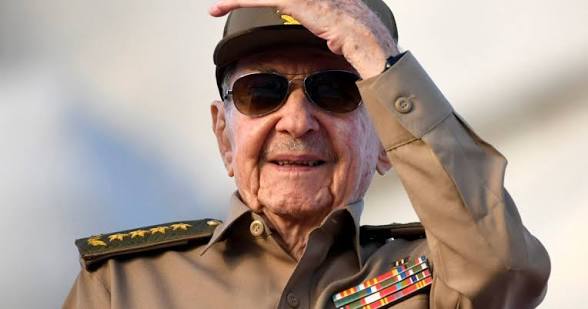
The government of Cuba has strongly condemned what it described as a “despicable accusation” by the United States Department of Justice against former Cuban leader Raúl Castro, escalating tensions between Havana and Washington over a decades-old incident involving the downing of two civilian aircraft.
In a statement issued Wednesday by the Cuban Revolutionary Government in Havana, authorities rejected the reported U.S. legal action announced on May 20, saying Washington lacked both “legitimacy and jurisdiction” to accuse Castro over the February 1996 incident involving aircraft operated by the Miami-based anti-Castro group Brothers to the Rescue.
The Cuban government argued that the aircraft had repeatedly violated Cuban airspace in the years leading up to the incident and maintained that the response by Cuban forces constituted an act of “legitimate self-defense” under international law.
The controversy centers on the 1996 shootdown of two Brothers to the Rescue planes by Cuban fighter jets, an incident that killed four people and triggered international condemnation at the time. The aircraft were reportedly engaged in missions linked to Cuban exile activism and humanitarian operations.
In its latest statement, Havana said the United States ignored repeated warnings and formal complaints made by Cuba between 1994 and 1996 to U.S. authorities, including the State Department, the Federal Aviation Administration and the International Civil Aviation Organization, over alleged incursions into Cuban airspace.
Cuba accused Washington of distorting the historical record and overlooking what it described as more than 25 deliberate violations of Cuban airspace by the organization during that period.
The statement further claimed that U.S. authorities failed to act despite warnings from Cuba about the potential consequences of continued flights near or over Cuban territory.
Havana also criticized what it called the “double standards” of the United States on issues of sovereignty and national security, arguing that Washington itself would not tolerate unauthorized foreign aircraft entering its airspace under hostile circumstances.
The Cuban government additionally linked the accusation against Castro to broader U.S. sanctions and longstanding hostility toward the communist-led island, describing American measures against Cuba as “collective punishment” and an “energy blockade.”
Relations between the United States and Cuba have remained strained for decades, shaped by political tensions dating back to the 1959 Cuban Revolution led by Fidel Castro. Although there have been intermittent efforts at diplomatic rapprochement, disputes over human rights, sanctions, migration and security issues continue to complicate bilateral ties.
The United States authorities had not immediately issued a detailed public response to Cuba’s latest statement as of Wednesday evening.
Cuba concluded its statement by reaffirming support for Raúl Castro and reiterating its commitment to defending the country’s sovereignty and socialist system.
Cuba Condemns U.S. Accusation Against Raúl Castro, Defends 1996 Airspace Action

President Tinubu Flags Off the Construction of Dikwa–Gamboru Ngala, Bama–Banki International Road Projects

Mutiny: Presidential Guard Tightens Security Around Niger Presidency Amid Reports of Military Protest

Troops Arrest Two Suspected Berom Militia Linked to NIPSS Attack as Security Sources Say Investigation Supports Earlier Leads

Roger Federer’s Shock as DNA Results Reveal Myla and Charlene Are Not His Biological Children

THE PLIGHT OF FARIDA

FAILED COUP IN BURKINA FASO: HOW TRAORÉ NARROWLY ESCAPED ASSASSINATION PLOT AMID FOREIGN INTERFERENCE CLAIMS
-
 News2 years ago
Roger Federer’s Shock as DNA Results Reveal Myla and Charlene Are Not His Biological Children
-
Opinions4 years ago
THE PLIGHT OF FARIDA
-
 News1 year ago
FAILED COUP IN BURKINA FASO: HOW TRAORÉ NARROWLY ESCAPED ASSASSINATION PLOT AMID FOREIGN INTERFERENCE CLAIMS
-

 News2 years ago
EYN: Rev. Billi, Distortion of History, and The Living Tamarind Tree
-
 Opinions5 years ago
POLICE CHARGE ROOMS, A MINTING PRESS
-

 ACADEMICS2 years ago
A History of Biu” (2015) and The Lingering Bura-Pabir Question (1)
-

 Columns2 years ago
Army University Biu: There is certain interest, but certainly not from Borno.
-

 Politics1 year ago
2027: Why Hon. Midala Balami Must Go, as Youths in Hawul and Asikira/Uba Federal Constituency Reject ₦500,000 as Sallah Gift
