
Politics
Tinuke Davies-Kesington decries women marginalization in politics

Tinuke Davies-Kesington decries women marginalization in politics
By: Michael Mike
Diaspora Woman leader, Tinubu Support Organisation and Matron, Asiwaju Volunteers Groups, Baroness Tinuke Davies-Kesington on Friday complained about the perceived marginalization of women in Nigeria, saying the women are not having a fair deal in the country’s politics.
‘’ I will say first, that women, being the majority in the population, are not adequately represented in Politics in Nigeria, especially when we look at the important roles that women fulfill in society at large. Yet women have significant influence in politics, as the electorate, as well as in areas such as campaigning and fundraising. Nigerian women, regardless of ethnic and tribal background, are for the most part entrepreneurs. From the woman in the market, to the multi million naira event planner, entrepreneurialism is what defines the Nigerian woman’’.
Speaking to journalists in Lagos, Davies Kessington stated that the cry of marginalization of women in Nigeria’s politics underscored the imperative of women seeing politics as a calling and service to nation and the people.
‘’To be direct, Women in Nigeria have not involved themselves more fully in politics. It is seen as a game for men, seeking power, which of course is a wrong perspective to have, but nevertheless, this is how politics is viewed. Nigerian women focus their energies on being entrepreneurs rather than politics. This is purely a pragmatic choice, as survival and providing for one’s family comes first. Women in Nigeria must see politics as a calling for those who wish to serve their fellow citizens and make life better’’.
Davies-Kessington, a strong supporter of Asiwaju Bola Ahmed Tinubu, maintained that no matter the setback suffered by the pro-gender bill aimed at increasing women’s participation in governance and representation, the future of women in Nigeria is bright.
‘’I know that a large number of women, who have interest in Politics, would have been discouraged, and disheartened by what happened with the bill in March 2022. Those who voted against increased representation of women in politics, probably even hoped for women to be discouraged. However, I want women in Nigeria to really think. We do not need permission to engage in politics in Nigeria. The goal of politics is to solve existential problems. Women have a large population, and we therefore constitute a large proportion of the electorate. We are the ones that vote politicians into power. We already have the numbers. We just need to organise. We do not need permission. In fact, I think that if we engage in politics, with true enthusiasm, and actively seek to solve the numerous problems in Nigeria that affect us as women, and consequently families, then more qualified and capable women will become an integral part of politics. That would be a good thing’’
She spoke on culture, religion and the need to balance the scheme of things in Nigeria
‘’Women, in Nigeria can equate the balance. Nigerian women function in very high pressure environments. We are mothers, business owners, wives, home managers. We take care of family, and extended family, we negotiate, we teach, we counsel. There is so much that we do as women. And yet, we are able to function at the highest levels, and this is done through balancing all that we do. We do this naturally, and in the field of politics, women can bring a healthy balance. Women are able to see the best way to manage details, and see how to resolve issues through collaboration. Nigerian women will always bring balance, as we naturally collaborate, and seek synergy, rather than think in terms of competition, or power. That is how many men see things, and that is what works for them. The balance will come in the grand scheme of things in Nigeria, when women move forward with confidence, and show the attributes we have that will benefit the political system in Nigeria’’.
Also Read: Cleric urges religious leaders to preach love, positive…
The Bola Tinubu’s campaigner stated that the women should not be taken for granted any longer.
‘’Nigeria is a democratic country. Protest and dissenting voices have a right to be heard, especially where there is hurt, anger, or discontent. It must be encouraged. Women in Nigeria need to think deeply. We have numbers and influence over the electorate. We only need to organize, aggregate our numbers, and put forward or support those representatives for electoral positions that support women, and the issues that are important to them. There is no rule that says that these representatives have to be men. The political field is also open to women. Political positions are open to Nigerian women. All it takes is proper organisation’’.
She suggested that current moves to increase women participation in politics should include strategy and collaboration.
‘’I am working with capable women, who are actively involved in politics in Nigeria. I am mentoring young women who are interested in engaging in politics. I am working directly with very competent men, in Nigeria, politicians who advocate and support increased women’s participation in the political system in Nigeria. I am working with a number of organizations who are devising procedures and policies that will encourage more female engagement in politics at both the local and national levels in Nigeria. There is a lot of work I am doing, but I am not doing it alone. It is only through strategy, and collaboration, that Nigerian women can get more involved, and actually do the real work that politics entails’’.
She harped on the need for appropriate organization.
‘’A large majority of Nigerian women are entrepreneurs. We are natural capitalists. The most important thing that Nigerian women can do, in the field of politics, is to organise. Once organised, we as women, can then focus directly on the issues at hand. Money in politics is just one aspect of the electoral process, as countless aspirants and would be politicians in Nigeria have found out. There is more to it, and Nigerian women know this. Money is just one aspect. Women being organised in Nigeria, is more powerful than money, or a political process that has been monetised’’.
She stated that the main challenges before the current administration were economy and insecurity.
‘’Security is a core issue for Nigeria. Everyone is affected, and the very viability of Nigeria as a country and a functional democracy, hangs in the balance because of security, or rather the lack of it. Terrorism, robbery and murder have no place in a country that boasts such deep, ancient cultures, and highly intelligent and educated people. The lack of security in Nigeria, the loss of life, rampant kidnappings, is destroying the image of Nigeria on the World stage. Nigeria lacks a real tourism industry, because there is a lack of security. Direct foreign investment, outside of the oil and gas industry, is severely limited because of the perceived risk that Nigeria has become. Insecurity is not a new thing in Nigeria. Homes in Nigeria are built like prisons, complete with high walls, steel doors and metal bars on the windows. No one in Ghana or Togo has to live like prisoners in their own homes the way Nigerians do. People in Nigeria are used to living in fear and insecurity. They are so used to it, that they no longer realize just how much fear they have’’
The Diaspora APC leader also made fresh case for proper intelligence gathering, outreach in the communities, where criminals and terrorists come from, in order to prevent further recruitment and social policy to help support young people and put them into positive alternative activities.
‘’The so-called “Giant of Africa”, is now being laughed at, and being described as a pig, wallowing in its own dirt and filth. This is unacceptable, and it has led to Nigerians that live abroad openly insulting the home country in front of outsiders. No Nigerian that lives abroad, no matter what tribe they are from, generally has anything good to say about Nigeria. It has become the norm to curse Nigeria. This is shameful for a Country with so much potential, to become a leading nation in the world. This has to do with insecurity, and the economy. For Nigeria to move ahead, in a world that is becoming ever more technologically advanced, Security has to be at the forefront of every Nigeria’s mind, both at home, and in the diaspora. It is the volatile security in Nigeria that acts as an impediment for people to return to Nigeria and contribute. All too often, we hear of victims, and it keeps getting worse. Just look at the full scale military attacks, killings and kidnappings of women and girls in the North of the Country. Look at the murder, kidnapping and robbery in the South of the country. This is unacceptable. But sadly, Nigerians are used to living with, and adapting to unacceptable conditions’’
She also tasked the security agencies on information sharing.
‘’There is a need for better information sharing between different agencies such as the Police and the military, and between different regions. There must be a network of correct information gathering, so that we know who the enemy is, how they are financed, who supports them, where they live, who they are related to, who they associate with. To destroy an enemy, you must know the enemy. There must be a shift in the mindset of security agents in Nigeria. The Police, military and others must become more motivated, and undertake more training in intelligence gathering, investigation and counter terrorism, so that they can perform their duties more effectively’’
She emphasized severe penalties for high level criminals, and terrorists, as well as those associated with them.
‘’There is need for punitive and financial penalties for anyone that supports any form of criminality and terrorism. Government must be bold and robust in labeling terrorists, armed robbers and kidnappers as what they are: They are enemies of every tribe and every person in Nigeria. They are enemies and need to be seen as such. The communities need to ostracize them. If the country’s economy is to grow, Nigeria needs security, if the population is to live freely. Nigeria needs security, if it is to be taken seriously as a leading nation in Africa, Nigeria needs security. If Nigeria’s security situation gets worse, while politicians look on, our country will not only be laughed at, but every Nigerian, of every tribe, will be looked down upon, as incompetent human beings, who cannot even live safely within our borders. Robust strategies must be employed to keep citizens safe. Anything less, will be failure, and spell doom for the nation and the citizens’’.
The All Progressives Congress (APC) chieftain advised those aspiring for political positions in 2023 to focus on the country’s security challenges.
‘’The agenda for any new administration must be robust and strategic. There must be competent information gathering and outreach for the disaffected communities that terrorists, kidnappers, and armed robbers come from. There must be stronger legislation to punish offenders and willingness by the government to boldly assert that groups that advocate violence against people or the state, through actions, words or symbols, are terrorists and criminals and they must be punished as such. Armed robbers and kidnappers must be targeted relentlessly’’
She also appealed to the electorate not to elect ineffective representatives in 2023
‘’Nigeria can win the battle of insecurity when the mindset shifts from it being a battle, to it being a war. There must be a war waged against insecurity and Nigerians must hold every single politician, police officer, and military officer accountable. The politicians must lead, and be held accountable for keeping citizens safe. If they fail to do this, then Nigerian citizens must be brave enough to ensure that they no longer elect ineffective representatives. Nigerians will continue to live like prisoners, if security is not made a core issue by the incoming government’’.
Tinuke Davies-Kesington decries women marginalization in politics


Politics
Nigeria: The cacophony surrounding calls for Tinubu’s resignations, Shettima’s replacement, and protests ahead of 2027 general elections
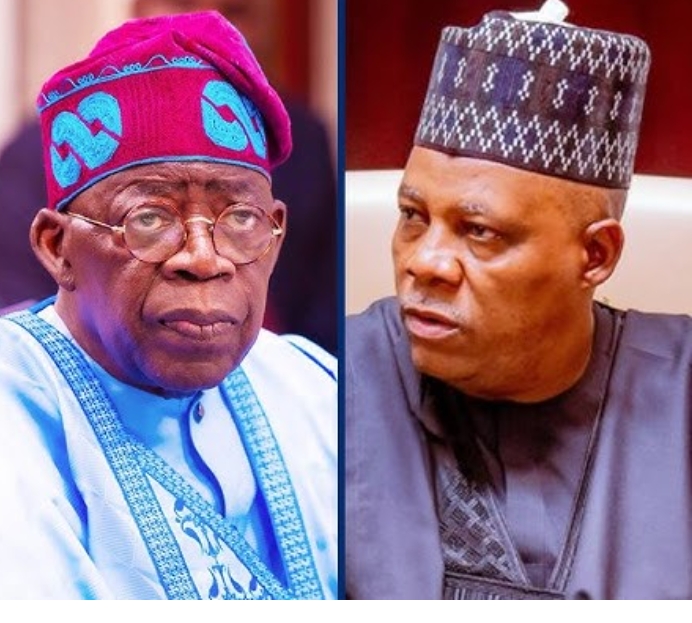
Nigeria: The cacophony surrounding calls for Tinubu’s resignations, Shettima’s replacement, and protests ahead of 2027 general elections
By: Dr James Bwala
The constant political arguing in Nigeria, with people asking for President Bola Tinubu to step down, wanting Vice President Kashim Shettima to be replaced, loud protests about safety issues, and constant talk about how this government is worse than before, is getting louder and more expected as the 2027 elections get closer. These upsets, even though they seem strong, usually follow a repeating pattern that’s more about political shows than real change.
As history shows, even with all the talk and distractions, Tinubu and Shettima’s government is set to finish its term by 2031. The so-called prophets who predicted their failure will fail; political people who take advantage of situations will gain from it; sceptics and those who don’t know much will wake up and see the tough facts they ignored; and organisers of protests will end up losing money, since only a few people make money from big group actions. Indeed, Nigeria’s political situation has been a recurring theme in every election cycle since the country regained democracy in 1999. In fact, to end this cycle, Nigerians need to move beyond misleading words and regional divisions and start looking for answers inside the country to its ongoing problems. History shows that these issues started right after independence, when regional identities began to grow stronger.
READ ALSO: https://newsng.ng/unite-north-vp-shettimas-call-for-peace-and-unity-among-northern-communities/
The main issue causing tension now is the opposition’s demands both outside the APC and inside the party for President Tinubu to step down right away and for Vice President Shettima to be removed as well. These demands, driven by angry public protests and strong opinions in the media, usually come from feelings of being unsafe and dissatisfaction with how the government is handling things. People can understand why they’re unhappy—because there are still problems like banditry, kidnappings, and fights between communities—but these complaints often forget about the political system that the Tinubu-Shettima government works within. Nigerians should understand that running a country is a difficult and long process, and big changes usually don’t happen quickly. Moreover, the laws and constitution help keep elected officials safe from being removed without good reason. So, the better approach is to work with the existing systems to bring about change, instead of using strong emotions that don’t lead to real results and cause problems for everyone else.
Making things more complicated are the natural comparisons people make between this government and previous ones. Critics frequently refer to past governments to point out the weaknesses of Tinubu and Shettima or to praise the successes of former leaders. However, these comparative analyses often have problems with selective memory and biassed opinions. Every government in Nigeria since it started being a democracy has faced many different problems—like economic issues, conflicts between different ethnic groups, corruption, and dangers to safety. No government has come into power without being affected or having won completely. Nigerians should focus on the future instead of comparing who did better or worse. They should look closely at how policies are working and make sure people are held responsible, no matter which political group they belong to. This approach would create a political culture where people give honest feedback instead of constantly pointing fingers at each other.
READ ALSO: https://newsng.ng/unite-north-vp-shettimas-call-for-peace-and-unity-among-northern-communities/
The constant demand for change before the 2027 elections isn’t just happening in Nigeria; it’s something that happens in many democracies around the world. In Nigeria, this political trading has turned into a ritual, where the same people keep winning and others keep losing. The powerful political leaders use this situation to gain more control, while the voters keep moving between feeling hopeful and becoming disappointed. This pattern weakens the process of building a stable democracy and leads to people feeling distrustful and disappointed. For real and long-term change, Nigerians need to go beyond just talking and pretending and instead focus on making big, lasting changes to the system. This means making government organisations stronger, keeping things open and honest, teaching people about their rights and how to participate, and making sure everyone has a say in decisions. The country can only break free from this never-ending pattern of letdown by dealing with the real problems at the heart of the issue.
A major obstacle to Nigeria’s political progress is the ongoing use of regional and ethnic-religious language to divide people. Politicians and groups with special interests frequently use these splits to gain more support, which unintentionally makes society’s differences worse. These methods might help in the short run, but they usually make people distrust each other and slow down the country coming together. The result is a country that is split up, making it hard to work together on important issues, and it’s tough to find good answers to big problems. Nigerians should work together to stop harmful stories that divide people and build a shared sense of belonging that goes beyond local concerns. Seeing diversity as a strength instead of a weakness helps create teamwork and supports long-term growth.
READ ALSO: https://newsng.ng/unite-north-vp-shettimas-call-for-peace-and-unity-among-northern-communities/
It is just as important to recognise the role that voters play in continuing or stopping this cycle. When people don’t care about voting because they don’t trust the system or feel things aren’t changing, it makes democracy weaker and gives more power to those who are already in control. Voting without proper information, based on things like ethnicity, religion, or favouritism, hurts the idea of meritocracy and makes government work less effectively. It’s essential to give citizens strong civic education that covers everything they need to know. A knowledgeable group of voters can make leaders answer for their actions, ask for honesty, and push for rules that improve the country’s health. So, strong involvement from citizens is really important for changing Nigeria’s political direction towards stability and success.
Protests can be a valid way for people to show they disagree with something in a democracy, but they only work well if they have clear goals and are organised in a smart way. In Nigeria, many protests turn into shows that help a few people make money instead of pushing for real changes in policies. The cost of putting on protests usually comes from people who are already struggling, but those who organise them get political power or money in return. For protests to lead to real changes, they need to be supported by ongoing efforts to raise awareness, talking with people in power, and taking real steps to make things happen. People and groups that work for the good of society should adjust their approaches to focus on peaceful, inclusive, and effective ways of making changes.
READ ALSO: https://newsng.ng/unite-north-vp-shettimas-call-for-peace-and-unity-among-northern-communities/
In the end, solving Nigeria’s many complex issues isn’t about sudden changes in government but about working together to create strong systems and ensure fair leadership for everyone. President Tinubu’s and Vice President Shettima’s government, just like the ones before them, will finish the time they are supposed to serve according to the country’s laws. The real question is whether Nigerians will use this time to work with the government in a positive way, take part in elections and other democratic activities, and ask for honest and responsible actions from those in power. Only by having citizens who are committed and responsible can a country move past repeated failures and create real, lasting improvements.
The loud noise and chaos about people demanding resignations, new leaders, and protests before Nigeria’s 2027 elections show a long history of political problems without real changes. The urge to see government through the eyes of short-term anger or political competition only keeps the country’s problems going. Nigerians need to stop lying to themselves, stop focusing on dividing the country by region, and work together in a united way to deal with the problems they all face. By doing this, they can escape the repeating pattern of political compromises and create a lasting plan for the country’s growth and peace. The future of Nigeria relies not on empty words but on a lasting dedication to shared responsibility and fair leadership for everyone.
* James Bwala, PhD, writes from Abuja.
Nigeria: The cacophony surrounding calls for Tinubu’s resignations, Shettima’s replacement, and protests ahead of 2027 general elections
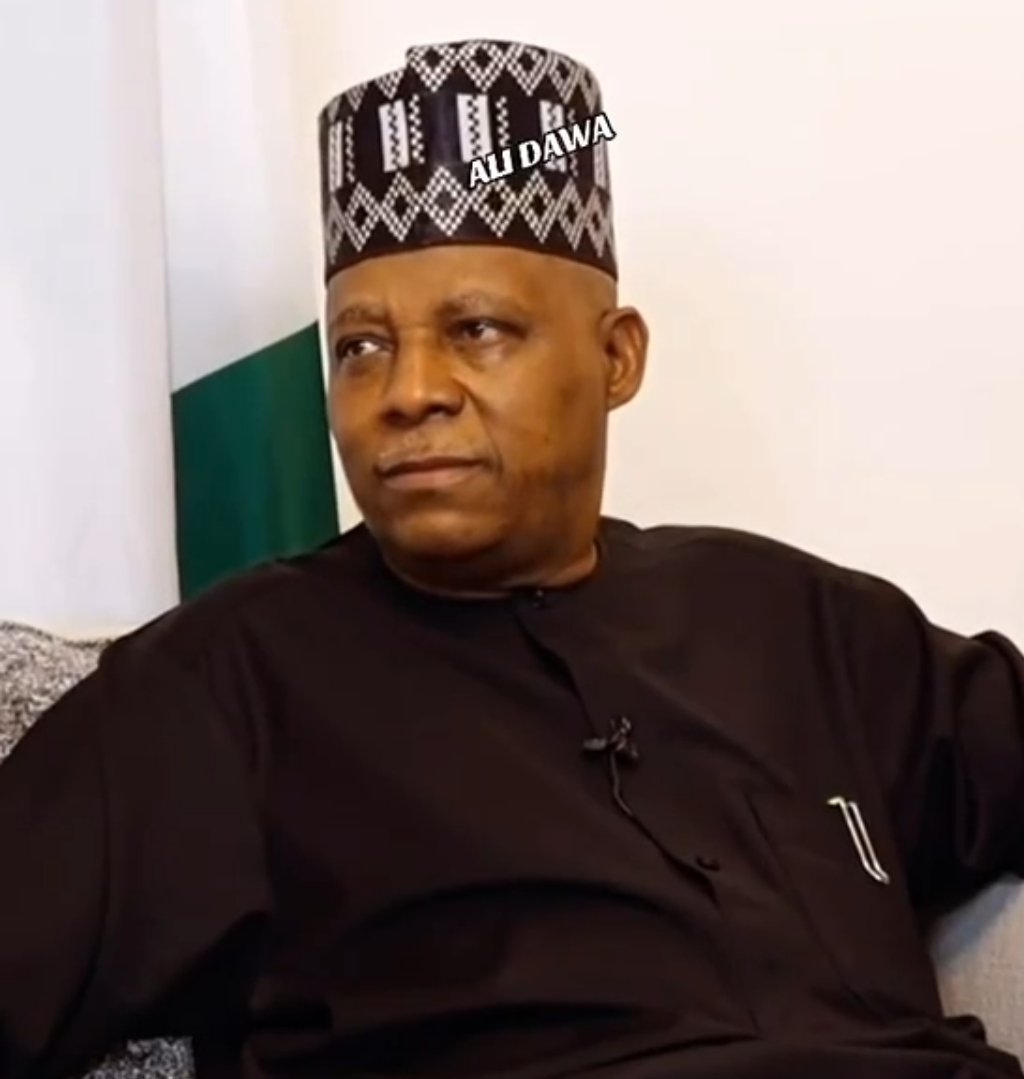
Unite North: VP Shettima’s Call for Peace and Unity Among Northern Communities
By: Dr. James Bwala
Northern Nigeria is home to a multiplicity of cultures and ethnic groups; the Hausas, the Fulanis, the Kanuris, and the Nupes all live in Northern Nigeria. Because most of these groups share a common heritage and have a long history of peacefully living together, Northern Nigeria’s communities play a vital role in the socio-economic development of the country. However, the occurrence of conflicts between groups of people residing in the North has unfortunately stifled economic development, caused people to be displaced, and even cost some their lives.
Recently, Vice President Kashim Shettima made an important plea to some communities, specifically the Hausas and the Fulanis, for an end to conflict and a unification of forces. His compliments and constructive criticism are accurate and needed for the ongoing development of peace and growth in the Northern region of Nigeria.
The vice president’s words reflect a deep understanding of the realities of this situation. He mentioned that Hausas, Fulanis, Kanuris, and the Nupes all possess no defining differences. He pointed out that the struggle in the North brings violence to communities that all share hopes and dreams of economic and social development and reinforces the barriers that separate them from the assistance that the federal government is ready to provide.
READ ALSO: https://newsng.ng/vp-shettimas-invest-lagos-summit-a-contest-of-narratives-on-both-the-dangote-and-abdulsamad-empires/
In looking at the causes of conflict between these groups, one can see that political manipulation and historical grievances, along with competition for limited resources and misunderstanding, also play important roles. The conflict between the settled agricultural communities, mainly the Hausas and Kanuris, and the pastoral Fulanis revolves mainly around issues of land, the use of land for grazing, and the availability of water. Lack of communication and distrust serve to deepen the impact of violence on every group.
Vice President Shettima’s appeal for forgiveness and unity is an appeal for reconciliation on a national level. In conflict situations, forgiveness allows the groups to overcome the historical grievances and concentrate on the common objectives. This appeal for forgiveness and reconciliation is effective when there is strong will and involvement from the grassroots. Such an initiative enables the leadership to strengthen communication and to promote the realization of structures and systems for peaceful coexistence. The councils, religious institutions, and civil society organs are able to promote the necessary and sufficient conditions of reconciliation and forgiveness.
ALSO READ: https://newsng.ng/vp-shettimas-invest-lagos-summit-a-contest-of-narratives-on-both-the-dangote-and-abdulsamad-empires/
The northern peoples’ unity can help maximize government and private investments. Once initiatives for development and the building of health and educational infrastructure for the North begin, a peaceful environment will be required. The fullest help from the government should see the greatest commitment from the people to keep the peace and work for progress.
The North’s strategic significance to the entire country of Nigeria must also be recognized. As Nigeria’s major provider of agricultural and trade resources and of the human resources upon which the nation draws, the North’s growth must be a worthy goal for Nigeria’s entire growth. Social conflicts among the various ethnic groups in the North will fragment the region and adversely affect Nigeria’s potential for peace, stability, and growth. Thus, appeals for peace and unity must be seen not only as a regional concern but also as a national concern.
In order to achieve lasting peace in the North and reconcile the people following this ugly and unfortunate situation, the North must look inwardly and establish and implement a multi-faceted approach in addressing the underlying causes of violence and tension that have engulfed the region for decades now. Measures to be taken should include equitable distribution of resources, transparent governance, effective conflict resolution mechanisms, and empowerment of youth and women who are often the victims of these conflicts. There is also the need for educational campaigns that would promote cultural awareness, religious tolerance, and respect for individuals’ dignity, which can be very helpful in dismantling prejudices and fostering solidarity among diverse ethnic groups that made us strong as Arewa people.
READ ALSO: https://newsng.ng/vp-shettimas-invest-lagos-summit-a-contest-of-narratives-on-both-the-dangote-and-abdulsamad-empires/
While we come together as a people to do the needful, the government also must ensure that security agencies operating across states in the North must earn the confidence of the people while discharging their duties impartially and effectively to protect all citizens irrespective of where they are held. Also, the issue of accountability for perpetrators of violence, if taken with some degree of justice, can deter future conflicts and therefore build confidence in the justice system. In addition to this, there should be investment in rural development and sustainable agriculture so as to alleviate competition over resources while encouraging cooperation through joint ventures and community projects to serve the common good.
Kashim Shettima’s vision for a strong and united Northern Nigeria is not just about an idealistic plea; the vision is a strategic approach necessary for building a North whose foundation its fathers have left for the generation now and for generations to come. Therefore, it is incumbent on the people to embrace their common identity through unity and recognizing that their strength lies in that unity rather than division. It was the unity of the North that led the people to greatness; harnessing their collective potential can transform the region into a beacon of peace, prosperity, and cultural richness. However, the people must realize that this cannot be achieved when violence and killings become a way of life.
READ ALSO: https://newsng.ng/vp-shettimas-invest-lagos-summit-a-contest-of-narratives-on-both-the-dangote-and-abdulsamad-empires/
In analyzing the call made by the Vice President, Kashim Shettima, towards ending violence, especially between the Hausas, Fulanis, and other tribes, and the call towards unity for the common good of the people of northern Nigeria, this calls for urgent attention and decisive action, looking at the current situation and the way things are falling apart in the region. Indeed, the future of the region depends on the ability of the people to reconcile their differences, forgive past wrongs, and work together collaboratively toward shared development goals, which are the dreams of the fathers. Also, with government support and communal commitment, the North can walk through these muddy waters and overcome its challenges and set an example of harmony and progress for the entire nation. I believe in the words of the “Jagoran Arewa,” the vice president, that it is indeed time for healing and for northerners to lay down their arms and embrace dialogue and build a united front that will usher in a new era of peace and prosperity for all northerners.
* James Bwala, PhD, writes from Abuja.
Unite North: VP Shettima’s Call for Peace and Unity Among Northern Communities

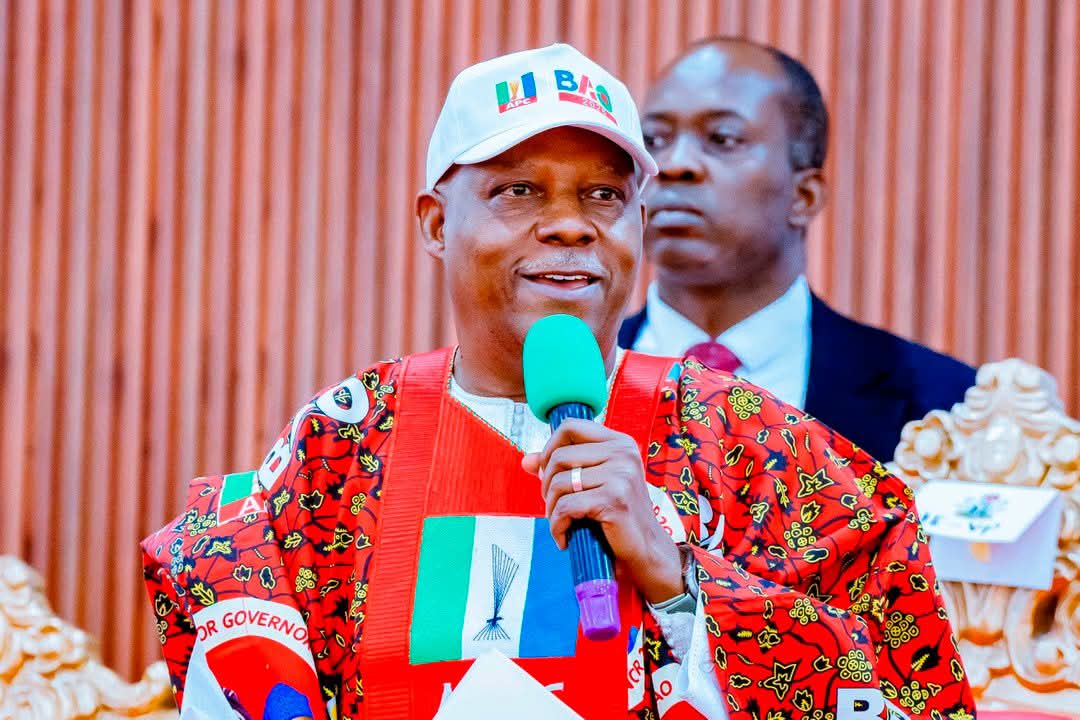
Ekiti 2026: VP Shettima Drums Support For Oyebanji’s Reelection At APC Mega Rally
Says governor’s 2nd term bid is a ticket that deserves renewal, an investment in state’s progress, peace, future
By: Our Reporter
Reiterates FG’s resolve to work with state in deepening development, expanding opportunity, strengthening security
The Vice President, Senator Kashim Shettima , Monday, embarked on a last-minute campaign for the reelection of the All Progressives Congress (APC) governorship candidate, Governor Biodun Oyebanji, for a second term in office ahead of Saturday’s gubernatorial election in Ekiti State.
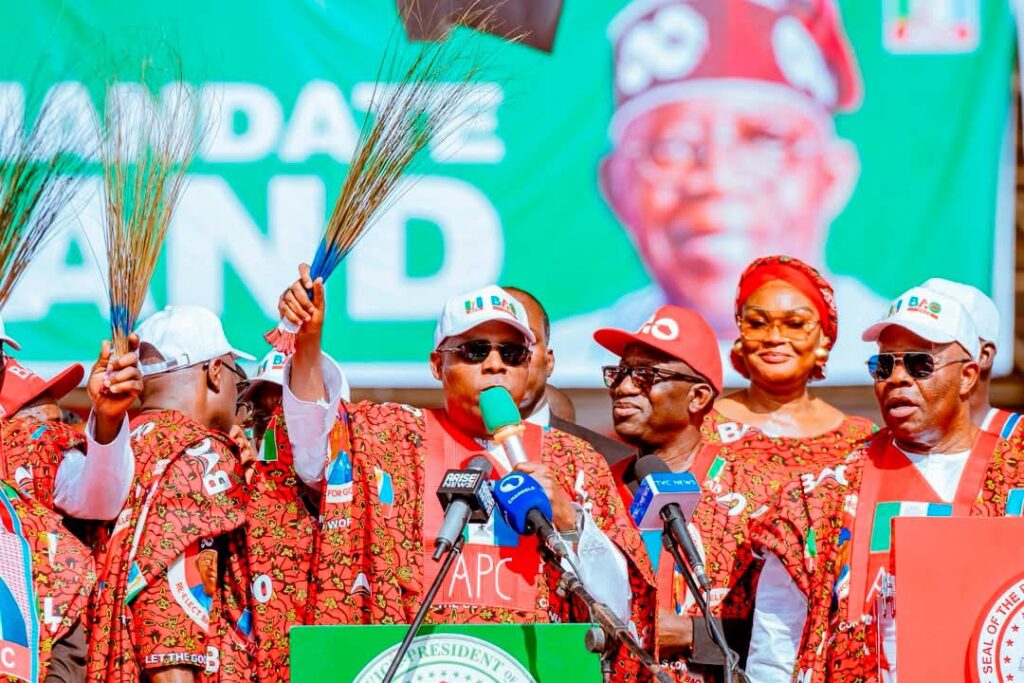
He told the people of the state that the joint ticket of Governor Oyebanji and his deputy, Chief Mrs. Monisade Afuye, is a ticket of balance, experience, and continuity that deserves renewal, noting that instead of a routine contest in Saturday’s governorship poll, Ekiti is standing at the gate of a larger Nigerian journey.
Speaking in Ado-Ekiti, the Ekiti State capital, during the APC Grand Finale Mega Rally, Senator Shettima, who represented President Asiwaju Bola Ahmed Tinubu, maintained that continuity for Governor Oyebanji is an investment in the peace, progress, and future of the state.
Joined at the mega rally by APC governors, party leaders, National Assembly members and Ministers, among others, the Vice President said, “The task before you is simple, sacred, and historic. Go out and vote. Speak to your neighbours. Speak to your families. Speak to your wards, your unions, your communities, and your friends. Tell them that continuity in Ekiti is not a favour to one man. It is an investment in the peace, progress, and future of this state.
“And so I ask you, sons and daughters of this proud land, to march to the polling units in your numbers and cast your votes for Biodun Oyebanji and his worthy Deputy, Mrs. Monisade Afuye. Give them the mandate to finish the work they have so faithfully begun. Stand with them as steadfastly as they have stood with you.”
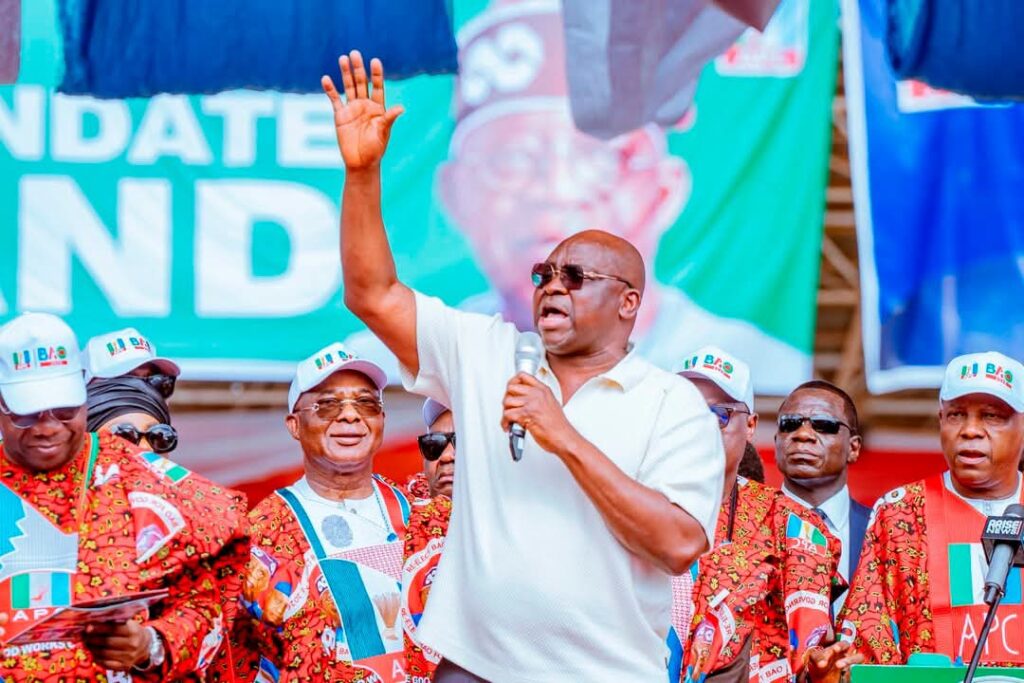
VP Shettima noted that the mammoth crowd that gathered at the Ekiti Parapo Pavilion, venue of the mega rally in Ado Ekiti, is an indication that the people of the state are together with the APC and the government at the centre, in the journey to make Nigeria better, just as he extended the goodwill of President Bola Ahmed Tinubu, noting that Ekiti State remains dear to the government.
Drumming support for Governor Oyebanji and his deputy, he said, rather than approaching leadership as a theatre, the governor understands that “government must touch the market woman, the teacher, the civil servant, the farmer, the student, the driver, the trader, and the family waiting for hope at the end of each month.”
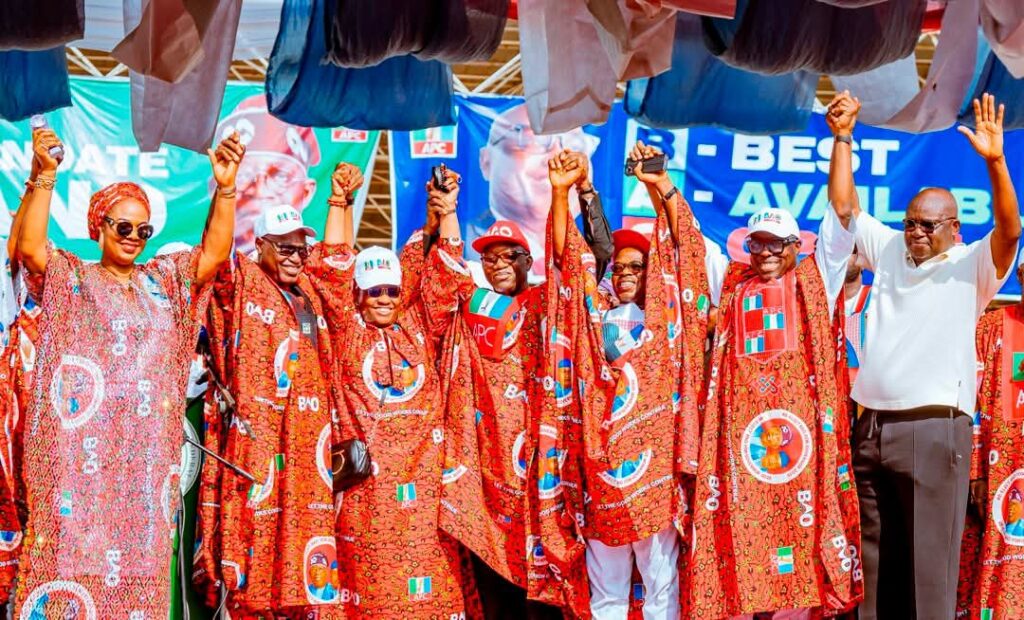
Senator Shettima stated that Governor Oyebanji has shown dedication to the welfare of Ekiti people, carried himself with humility, governed with patience, and listened with respect, while working “with the calm strength of a man who knows that power is a loan from the people.”
He continued: In Governor Oyebanji, Ekiti has a son who did not come to experiment with the state. He came prepared. He came with knowledge of the land. He came with respect for elders, with regard for institutions, and with a heart open to the young.
“He has not spent his time fighting shadows. He has spent it building bridges, strengthening trust, and keeping the machinery of government focused on service.”
Describing the joint ticket as one of balance, experience, and continuity that has worked, and therefore deserves renewal, VP Shettima said APC’s stability is not an accident but a “product of sacrifice by noble leaders like Governor Oyebanji, leaders who understand that politics without discipline becomes confusion, and ambition without order becomes injury to the people.
He observed that while other political parties “are busy fighting themselves, quarrelling over chairs, tearing their roofs in the rain, and asking the people to trust them with a house they cannot keep standing,” the the APC has stayed together, disagreeing with maturity and resolved its differences purpose.
He promised that the President Tinubu-led Federal Government will work hand in hand with the governor, his deputy, and the people of Ekiti “to deepen development, expand opportunity, support enterprise, strengthen security, and widen the road to shared prosperity.”
Also, Senate President Godswill Akpabio described Oyebanji “as the most friendly parliamentary governor in Nigeria,” stating that the governor has performed excellently and deserves to be reelected by the people of the state.
“Therefore, on election day when you go to the polling unit and collect the ballot paper, look for the broom and once you vote for the broom you have voted for the continuity of good governance of Governor Biodun Oyebanji of Ekiti State,” he said.
Similarly, APC National Chairman, Prof. Nentawe Yilwatda, said the governor’s style of leadership exemplifies the true philosophy of what the APC stands for.
He applauded the governor’s achievements in education, health services delivery and infrastructure development, saying “I saw the roads that you have constructed; take a bow and take your votes.”
Earlier, Governor Oyebanji thanked President Tinubu and Vice President Shettima for their tremendous support towards the progress and development of the state since they assumed office in 2023.
The governor, who expressed gratitude to the people of Ekiti for entrusting him with their mandate, appealed to them to shun all forms of violence before, during and after the June 20 gubernatorial election in the state.
“I don’t have much to say rather than to thank the people of Ekiti State. Close to four years ago, we entered into a social contract with you that we will serve you. You can attest to the fact that with the help of God and the support of Mr. President, we have served you well.
“My plea to you on Saturday is that, go out and cast your votes for the APC. Our symbol is the broom and when you vote for the broom you are voting for the continuation of our shared prosperity agenda. Please be at peace with your self. Don’t fight with anybody. Let us exercise our civil duty to celebrate democracy,” Oyebanji said.
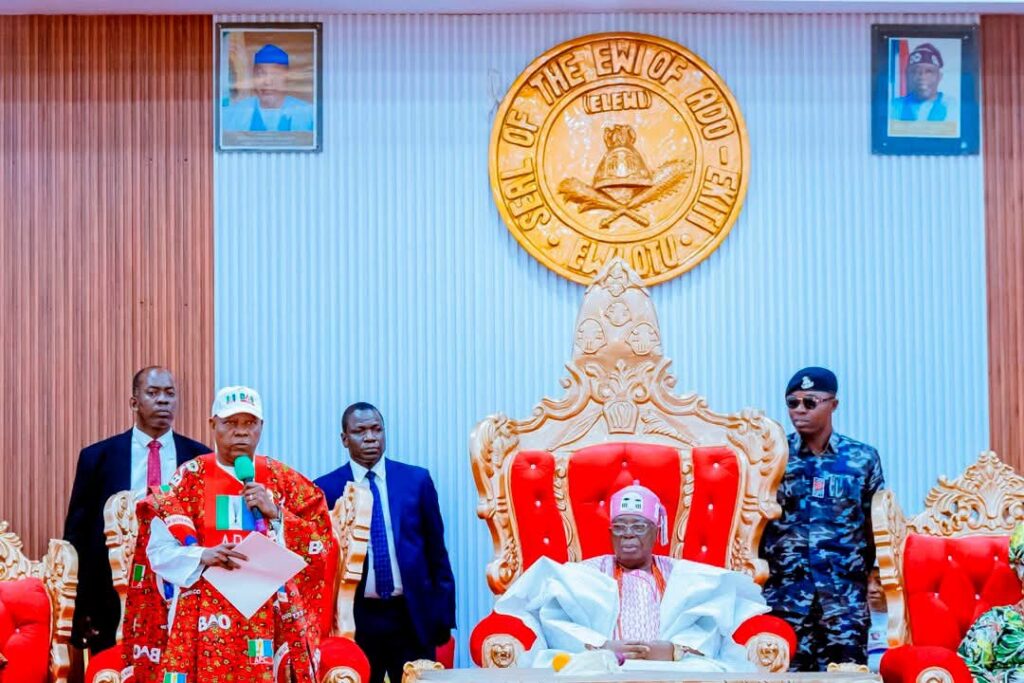
Before proceeding to the venue of the mega rally, the Vice President paid homage to the Ewi of Ado Ekiti, HRH Oba Adeyemo Adejugbe, where he thanked the royal father, saying he not merely a presentation of the antiquity but a symbol of Ekiti people’s heritage.
Urging the citizens to come out enmass for the election, he said this is the first time and incumbent governor of Ekiti would be elected for a second term in office.
The VP also urged the traditional rulers to join hands with the governor for the development of Ekiti State, citing federal appointments the state has benefited under the Tinubu administration.
Earlier, the Ewi of Ado Ekiti expressed gratitude to President Tinubu and Vice President Shettima for their efforts to boost the education sector, including the establishment of NelFund, which he said has assisted many Ekiti indigenes.
The Traditional ruler also noted that the Tinubu administration has done a lot in terms of transport infrastructure, citing the Lagos – Calabar coastal road and other trunk A roads across the country as a testament to infrastructural development in the country.
The Vice President also met with members of the Ekiti State Traditional Rulers Council at Government House, where he assured them of President Tinubu’s support for the traditional institution.
The Chairman of the Council and the Ogoga of Ikere-Ekiti, HRM Oba Adu Adejimi Alagbado, thanked Vice President Shettima for coming back to Ekiti, saying it is an indication of the love Mr. President has shown to the state.
Noting that the Tinubu administration has benefited Ekiti people, he pledged the support of all the traditional rulers to the administration and to ensure that the governor and the President are reelected for a second term.
Ekiti 2026: VP Shettima Drums Support For Oyebanji’s Reelection At APC Mega Rally

Troops Arrest Suspected Military Impostor in Katsina

Troops Recover 50 Rustled Cattle, Repel Suspected Rustlers in Kaduna

Troops Arrest Suspected Terrorist in Kogi, Suspect Confesses to Group Membership

Roger Federer’s Shock as DNA Results Reveal Myla and Charlene Are Not His Biological Children

THE PLIGHT OF FARIDA

FAILED COUP IN BURKINA FASO: HOW TRAORÉ NARROWLY ESCAPED ASSASSINATION PLOT AMID FOREIGN INTERFERENCE CLAIMS
-
 News2 years ago
Roger Federer’s Shock as DNA Results Reveal Myla and Charlene Are Not His Biological Children
-
Opinions4 years ago
THE PLIGHT OF FARIDA
-
 News1 year ago
FAILED COUP IN BURKINA FASO: HOW TRAORÉ NARROWLY ESCAPED ASSASSINATION PLOT AMID FOREIGN INTERFERENCE CLAIMS
-

 News2 years ago
EYN: Rev. Billi, Distortion of History, and The Living Tamarind Tree
-
 Opinions5 years ago
POLICE CHARGE ROOMS, A MINTING PRESS
-

 ACADEMICS2 years ago
A History of Biu” (2015) and The Lingering Bura-Pabir Question (1)
-

 Columns2 years ago
Army University Biu: There is certain interest, but certainly not from Borno.
-

 Politics1 year ago
2027: Why Hon. Midala Balami Must Go, as Youths in Hawul and Asikira/Uba Federal Constituency Reject ₦500,000 as Sallah Gift
