
Crime
Codeine syrup, Loud consignments worth over N2.1billion intercepted at Lagos, P/H ports

Codeine syrup, Loud consignments worth over N2.1billion intercepted at Lagos, P/H ports
By: Michael Mike
Large consignments of codeine-based syrup and Loud, a synthetic strain of cannabis worth about N2.2 billion in street value have been intercepted at the Port Harcourt seaports, Onne and the Murtala Muhammed International Airport, Lagos by operatives of the National Drug Law Enforcement Agency (NDLEA).
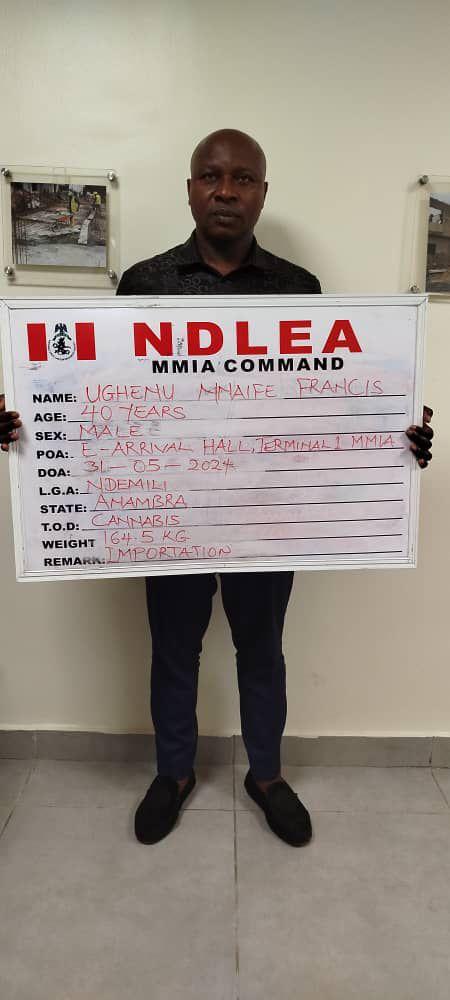
The spokesman of the anti-narcotics agency, Femi Babafemi, in a statement on Sunday said at the Lagos airport, NDLEA officers with the cooperation of other security agencies last Friday intercepted a large consignment of Loud, packed in eight suitcases, containing 320 parcels with a total weight of 164.5 kilogrammes of the strong psychoactive substance coming from Canada on a KLM flight via Amsterdam, Netherlands.
He noted that the consignment estimated to be worth N960 million which was brought in by a passenger, Ughenu Nnaife was discovered at the E-arrival hall of the airport by personnel of NDLEA, Customs and others during a joint search operation by the security operatives while the suspect was attempting to smuggle the suitcases out of the hall.
He said preliminary investigation revealed that the suspect is a resident of Germany but travelled to Toronto, Canada to transport the drug to Nigeria.
Babafemi added that during his interview, he claimed he was recruited as a mule to convey the drug to Nigeria for an agreed fee of N6 million.
He disclosed that at the Port Harcourt Ports Complex, NDLEA operatives last Monday intercepted a container marked TEMU 6807401 imported from India enroute C to C bonded terminal in Enugu. During a joint examination of the container by NDLEA, Customs and other security agencies, 1,750 cartons of codeine weighing 26,250 kilogrammes, containing 175,000 bottles of the opioid worth over N1.2 billion in street value were discovered.
In Abuja, a 25-year-old lady, Blessing Thomas, was arrested with 1 kilogramme methamphetamine by NDLEA operatives on patrol along Kwali – Gwagwalada expressway last Friday while travelling in a commercial bus from Lagos to Yola, Adamawa state, also operatives in Nasarawa state last Wednesday nabbed a 70-year-old grandfather, Muhammadu Ibrahim, with 57.2 kilogrammes cannabis in Lafia, the state capital.
Babafemi said two suspects: Suleiman Kazeem, 35, and Sunday Gbenga, 20, were arrested when NDLEA officers raided Ara forest, Ara-Ekiti in Ekiti State where they recovered 426 kilogrammes of cannabis sativa already processed and packed in big sacks, while they destroyed over 4,000 kilogrammes of same substance on 1.66 hectares of farmland last Thursday.
In Katsina state, 76 blocks of cannabis weighing 42 kilogrammes were seized from a Nigerien, Suleman Audu, 29, when he was arrested by NDLEA officers along Zaria – Malumfashi road last Wednesday.
Meanwhile, the commands and formations of the agency across the country continued their War Against Drug Abuse (WADA) sensitization activities to schools, worship centres, work places and communities among others with equal vigour in the past week.
While commending the officers and men of MMIA, PHPC, Nasarawa, Ekiti, Katsina and FCT commands of the agency for the arrests and seizures, Chairman/Chief Executive Officer of NDLEA, Brig. Gen. Buba Marwa (Retd) noted that their efforts and those of their compatriots across the country have in no small measure reduced access to and availability of illicit substances in Nigerian communities. He charged them to remain vigilant at all times and continue their collaboration with other agencies and stakeholders in their areas of responsibility.
Codeine syrup, Loud consignments worth over N2.1billion intercepted at Lagos, P/H ports


Fresh Chadian Offensive Forces ISWAP/Boko Haram Fighters to Flee Lake Chad Shores
By: Zagazola Makama
A fresh military offensive by Chadian forces in the Lake Chad Basin has triggered a mass displacement of Boko Haram terrorists and their families from the Tunbuns and adjoining island settlements toward parts of northern Borno, security and local sources have disclosed.
The development followed days of intense aerial bombardments and coordinated ground assaults launched by the Chadian military against suspected Boko Haram and ISWAP enclaves in the Lake Chad region after deadly attacks on Chadian troops earlier this month.
Sources told Zagazola Makama on Tuesday that large numbers of insurgents, accompanied by women and children, were seen moving across border routes from the Tunbuns toward Kangarwa and surrounding settlements.
Kangarwa is located about 14 to 15 kilometres from Kukawa in northern Borno.
The sources said the fleeing insurgents were escaping sustained bombardments by Chadian air assets targeting known terrorist camps and logistics bases located within the marshlands and islands around the Lake Chad fringes.
According to the sources, there are growing fears that some of the displaced fighters may attempt to regroup within established enclaves around Doro Naira, Wula Wula, Njemina, Tunbun Gini, Tunbun Rago and Tunbun Shanu in Borno state.
The sources stressed the need for intensified military operations within the Kukawa, Baga, Gudumbali and Malam Fatori axis to prevent the insurgents from integrating into existing cells operating within Nigerian territory.
The latest offensive is believed to be directly linked to recent deadly attacks carried out by insurgents against Chadian troops in the Lac Province area of Chad.
Security sources said insurgents linked to the Bakura-led faction of Jama’atu Ahlis Sunna Lidda’awati wal-Jihad (JAS) attacked Chadian military positions at Ngaboua and Chukuntale, known collectively as the Barka Tolorom axis, between May 4 and May 6.
According to the sources, the first attack occurred on May 4 at about 10 p.m. when insurgents stormed a Chadian military base at Ngaboua and reportedly overran the position.
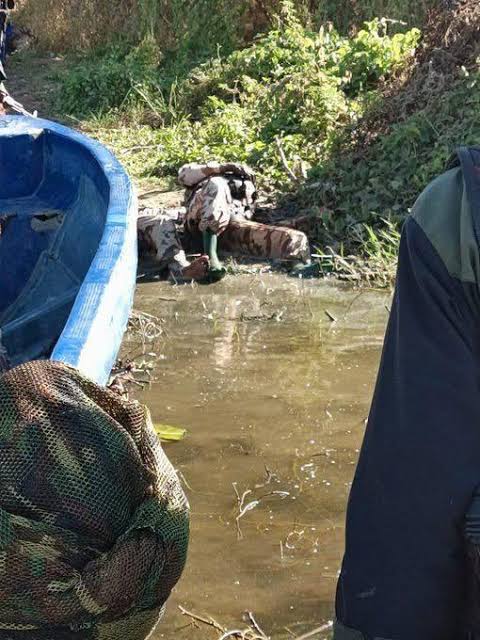
Two days later, Chadian troops mounted a counteroffensive involving senior military commanders and multiple watercraft advancing through the riverine area toward insurgent positions.
However, the troops were reportedly ambushed around the Chukuntale waterways and adjoining high grounds.
Official Chadian figures put the casualty toll at 23 soldiers killed and 26 wounded.
However, security and local intelligence sources suggested that the actual casualty figure could be significantly higher, with some reports indicating that more than scores of soldiers, including two generals, may have been killed during the attacks.
The Chadian authorities subsequently declared a three-day national mourning period from May 6 to May 9 for fallen soldiers and imposed a 20-day state of emergency across the Lac Province.
Sources also disclosed that mass burials had been conducted for some of the deceased troops, while reports indicated that additional bodies remained within remote island locations difficult to access.
Zagazola noted that the Lake Chad region remains one of the most difficult operational theatres in the fight against Boko Haram due to its geography of islands, swamps and narrow waterways that provide insurgents with concealment and escape routes.
The terrain enables fighters to move rapidly between islands using canoes and small boats, making pursuit by conventional forces extremely difficult.
Zagazola further noted that poor communications, difficult logistics and isolated forward positions often complicate casualty evacuation, troop reinforcement and battlefield reporting within the region.
The latest attacks have also revived memories of the March 2020 Bohoma assault in Chad, where Boko Haram fighters killed dozens of Chadian soldiers during an attack on a military base located on one of the Lake Chad islands.
The renewed Chadian offensive appears aimed at dismantling insurgent camps and preventing further attacks on military formations within the region.
However, concerns remain that displaced insurgents could spill into communities across northern Borno and parts of Yobe if regional forces fail to coordinate sustained follow-up operations.
Military sources said the current dry-season conditions between May and July provide favourable terrain for clearance operations within the Tunbuns and adjoining riverine corridors.
Zagazola also renewed calls for stronger coordination among countries operating under the Multinational Joint Task Force, warning that unilateral operations without sustained regional synchronisation could simply displace insurgent threats across borders rather than eliminate them.
Fresh Chadian Offensive Forces ISWAP/Boko Haram Fighters to Flee Lake Chad Shores
Crime
JNIM Fighters Intensify Pressure on Bamako Supply Routes Amid Growing Security Concerns in Mali
JNIM Fighters Intensify Pressure on Bamako Supply Routes Amid Growing Security Concerns in Mali
By: Zagazola Makama
Armed fighters linked to Jama’at Nusrat al-Islam wal-Muslimin (JNIM) have intensified attacks along key transport corridors in southern Mali, raising fresh concerns over the country’s deteriorating security situation and the growing vulnerability of routes leading to the capital, Bamako.
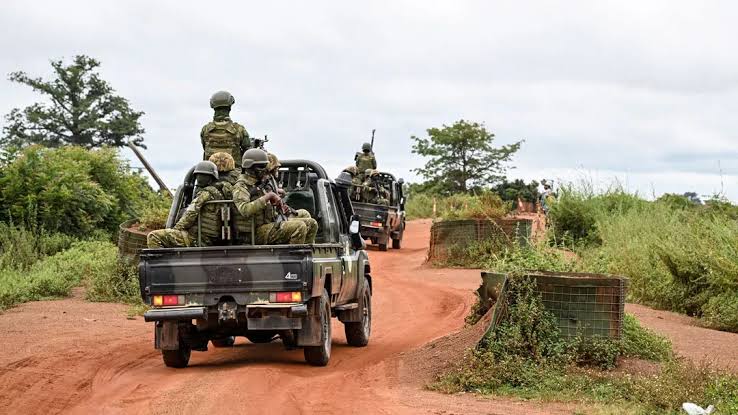
Security sources and local reports indicated that several commercial buses and cargo trucks were intercepted and set ablaze on May 9 along the strategic Sikasso-Bougouni highway despite prior warnings allegedly issued by JNIM elements operating in the region.
The attacks reportedly occurred barely 48 hours after Mali’s Foreign Affairs Minister, Abdoulaye Diop, assured diplomats in Bamako that the state remained firmly in control of the security situation and that ongoing military “reorganisation” efforts were progressing effectively.
According to local accounts, armed fighters also attacked the village of Zambougou, located about 45 kilometres from Ségou on the road toward Bamako.
The village, reportedly hosting a pro-government militia allied with the Malian Armed Forces (FAMa), was allegedly set on fire during the assault.
Residents said militia members fled the area during the attack, leaving civilians stranded as homes and property were destroyed.
Similar incidents were reported in the Sanankoro Bani area, where additional buses were reportedly burned by armed groups operating along the corridor.
The attacks have heightened fears that insurgent groups are steadily tightening pressure on transport and supply routes critical to Bamako’s economic and logistical stability.
Transport operators and residents in affected regions described growing anxiety over movement along major highways linking southern and central Mali to the capital.
The latest incidents appear consistent with a broader insurgent strategy aimed at isolating Bamako through progressive disruption of transport corridors, supply chains and commercial movement.
“The pattern emerging is not random violence,” a regional security observer said.
“It increasingly resembles a deliberate strategy of economic and psychological pressure targeting the state’s ability to maintain normal activity and public confidence.”
The attacks also underscore the widening gap between official government messaging and realities on the ground, according to analysts monitoring the conflict.
In his May 7 briefing with diplomats, Diop had accused unnamed foreign actors of attempting to destabilise Mali while insisting that state institutions remained operational and effective.
However, critics argue that the repeated attacks on highways, military positions and civilian infrastructure reflect persistent weaknesses in the country’s security architecture despite the junta’s assurances.
Insurgent activity has expanded significantly in recent weeks across northern, central and southern Mali, targeting not only military facilities but also transport networks, energy infrastructure and commercial routes.
The ruling military government, led by Assimi Goïta, has repeatedly defended its security strategy since severing military ties with France and strengthening cooperation with Russian military partners.
Nevertheless, insecurity has continued to spread in several regions despite intensified military operations.
Zagazola warned that attacks on major highways could have severe economic consequences if sustained over time, particularly as Mali already faces inflationary pressures, fuel shortages and rising transportation costs.
“The danger is not only military. When commercial traffic slows and populations begin to fear movement between cities, the economic and psychological effects become significant.”
Local residents in parts of central and southern Mali have increasingly expressed concern over insecurity on roads previously considered relatively stable compared to conflict zones in the north.
Humanitarian organisations also warned that disruptions along key transport corridors could affect delivery of food supplies, medical assistance and other essential goods to vulnerable communities.
As of the time of filing this report, Malian authorities had not issued a detailed official statement regarding the attacks on the Sikasso-Bougouni axis.
JNIM Fighters Intensify Pressure on Bamako Supply Routes Amid Growing Security Concerns in Mali

Troops Arrest Additional Suspect Over Alleged Sale of Military Camouflage in Plateau State
By: Zagazola Makama
Troops of Sector 3, Operation Enduring Peace (OPEP), have arrested an additional suspect in connection with the alleged illegal sale and distribution of military camouflage materials in Plateau State.
Security sources said the suspect, identified as Mr. Hamisu Pam, 45, was arrested at about 1530 hours on May 11 at his shop in Taminus Market, Jos North Local Government Area.
The arrest followed ongoing investigations linked to earlier apprehended suspects alleged to be involved in the circulation of military-pattern uniforms within the state.
During the operation, troops reportedly recovered several yards of camouflage fabric from the suspect’s shop, believed to be part of the items under investigation.
Authorities said the suspect is connected to previously arrested individuals currently in custody over similar allegations.
The military added that all suspects are undergoing further interrogation as part of efforts to dismantle networks involved in the illegal trade of military materials, which is considered a threat to security operations and public safety.
Operation Enduring Peace reiterated its commitment to tightening controls on the circulation of restricted military items and enhancing intelligence-led operations across Plateau State.
Security agencies have also urged members of the public to report suspicious activities, particularly the unauthorized sale or possession of military-grade materials.
Troops Arrest Additional Suspect Over Alleged Sale of Military Camouflage in Plateau State

Yobe 2027: Consensus, G-Six, and the Crucible of Direct Primaries

NHRC, stakeholders meet to promote human rights in Gombe

2027: The Dynamics of Consensus Candidates and the Crisis of Succession in Nigeria’s Democratic Party Politics

Roger Federer’s Shock as DNA Results Reveal Myla and Charlene Are Not His Biological Children

THE PLIGHT OF FARIDA

FAILED COUP IN BURKINA FASO: HOW TRAORÉ NARROWLY ESCAPED ASSASSINATION PLOT AMID FOREIGN INTERFERENCE CLAIMS
-
 News2 years ago
Roger Federer’s Shock as DNA Results Reveal Myla and Charlene Are Not His Biological Children
-
Opinions4 years ago
THE PLIGHT OF FARIDA
-
 News1 year ago
FAILED COUP IN BURKINA FASO: HOW TRAORÉ NARROWLY ESCAPED ASSASSINATION PLOT AMID FOREIGN INTERFERENCE CLAIMS
-

 News2 years ago
EYN: Rev. Billi, Distortion of History, and The Living Tamarind Tree
-
 Opinions4 years ago
POLICE CHARGE ROOMS, A MINTING PRESS
-

 ACADEMICS2 years ago
A History of Biu” (2015) and The Lingering Bura-Pabir Question (1)
-

 Columns2 years ago
Army University Biu: There is certain interest, but certainly not from Borno.
-

 Opinions2 years ago
Tinubu,Shettima: The epidemic of economic, insecurity in Nigeria
