
Columns
My Binocular: Zulum, Ahidjo and the quest to bring health care to the people of Borno and North East Nigeria.

My Binocular: Zulum, Ahidjo and the quest to bring health care to the people of Borno and North East Nigeria.
By: Bodunrin Kayode
I decided to bring this historic event as one of my end of year views into my binocular because of the tremendous love I have for the health sector. Apart from that I have watched both left handed Professors who are health lovers in this narrative do their best from the extreme corner of north east Nigeria. Both Professors Babagana Zulum and Ahmed Ahidjo have a common craze in their services to humanity. And that is their craze for infrastructural development regardless of the sector. Having watched the deteriorating health sector in Nigeria since 1999 when democratic governments took charge, never have I seen such synergy between the federal and state governments in a bid to restore the health sector as I have seen in Borno. Zulum has expectedly taken ownership of the University of Maiduguri Teaching Hospital (UMTH) as a mark of his magnanimous social responsibility to his people as the chair of the north East Governors forum. His recent visit to the UMTH cannot pass without going into the annals of my series on the review of 2022 which will soon come to an end.
Alternative solar power at the UMTH
The University of Maiduguri Teaching Hospital UMTH has survived many challenges. One of the biggest challenges it has gone through is the very insurgency which has enveloped its catchment area which is north east Nigeria since 2009. That is why it has not escaped the eagle eyes of both Governor Kashim Shettima and his political disciple Professor Babagana Zulum. The donation of N100m by Professor Zulum to the institution recently was a big boaster which has turned out to be a saving grace for the mainly diesel support lighting system to the growing institution. Sadly alternative lighting of the hospital is a big burden to the Chief Medical Director which is why he directed that the grant from the government will go immediately to cushion the lightening system through solar. The massive lightening of the hospital will be a great relief to many patient who used to sleep in darkness with or without the knowledge of management especially when diesel is finished. For a facility which spends more than 50 percent of its internally generated revenue (IGR) on diesel re-lightening the facility through an alternative solar source is a giant leap in the service to the north east of the country. The UMTH has actually been swallowing more than it can chew because of the heavy burden and expectations placed on it by the entire North East Nigeria.
READ ALSO: https://newsng.ng/reuters-mercenary-journalism-and-nigerian-military/
Instead of concentration on only tertiary cases, primary and secondary issues have all been rushed into the facility and the consultants cannot say no to what is going on. They are always ready to respond to minor cases that is brought to their knowledge. Even if it’s just ordinary post traumatic stress disorder (PTSD) which can be handled by the secondary level in the state.
The Challenge of accommodation
From very reliable sources, one of the greatest problems of the UMTH has been the issue of accommodation which has not been tackled head long for the last 40 years. It’s been so biting in the hospital that it has affected both General practicing Medical Officers, residents and consultants. It’s been a major challenge because most of the medical practitioners feel unsafe living outside the facility which is heavily protected from all fronts and gates. Newly recruited resident doctors are the most hit because they must be near the facility to run calls. That is why the building of a new set of flats by Governor Zulum is coming at a time when it is quite needed in the hospital. The CMD Professor Ahidjo was extremely happy when the Governor came to turn the sod for the building of those flats located in the heart of the residential areas within the UMTH.
Hear his remarks during the visit of Governor Zulum to UMTH
” I would not hide my feelings as I was working with His Excellency, tears were running down my face I had to turn round to clean my tears. It is not because of the donation, but that compassion that goes with it. It is not every leader that you have, that would come and visit you and see what you have, after the challenges that you faced and share with you, not everybody can do that.
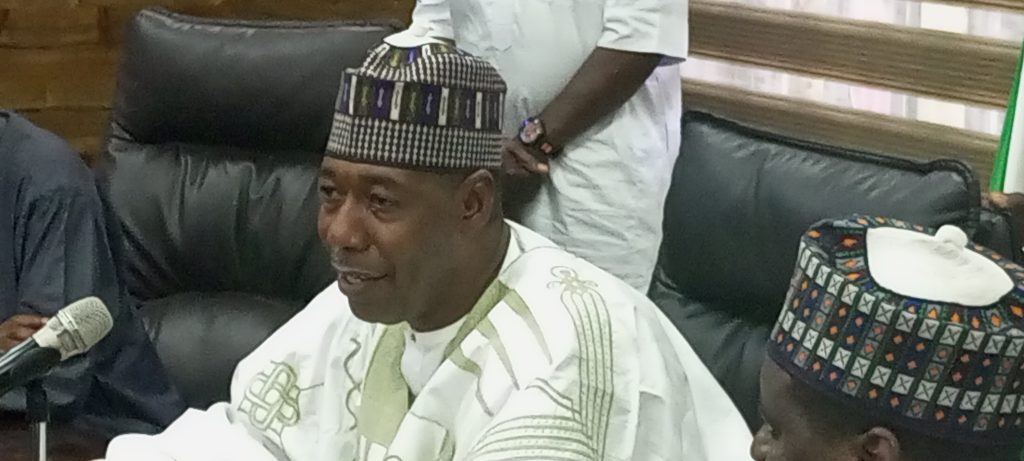
“Your Excellency, we cherish your compassion, and that is the most important thing. We all know the Federal Government has stopped building housing for its own staffs especially in facilities like this. And in our own environment we are all living in insurgency prone areas. Housing may be a single factor that may make a professional leave this institution. So one cannot overemphasize the importance of housing to our own staff. Many that want to come to this hospital with skills, but are not people that when you advertise for employment that will apply. NO! We look for them, because they have special skills. And one of the first thing they would ask YOU is, do you have accommodation? Without accommodation they won’t come, because where they work, they are already accommodated. For them to leave where they are to come here with no accommodation I think that may be very difficult. Recently our resident doctors have been crying aloud because of lack of this accommodation equally.
” So this came right at a time that we really needed it and I think your Excellency sir, we are really very grateful. However, this is not the very first time you started it. We all went to the auditorium with almost 1200 seating space in the main hall with the parallel section that will accommodate 1800 participants, which you donated freely to the hospital. We really cherish that particular action and we would never forget that.
Zulum’s boaster against Covid
“Again all of you can remember during the COVID time, things were hard, there was no single naira donated or given to this hospital to manage COVID 19 before intervention came from His Excellency of 20 million naira to this hospital, I vividly recall that his donation was the first that we got to manage COVID 19 patients and it came at a time when there was a lot of media challenges, here and there the money was given to the hospital to manage COVID 19 and nothing was done. As of that time not a single kobo was given to the Teaching Hospital to manage COVID 19 by the Federal Government. The Borno State Government was the first body to give University of Maiduguri Teaching Hospital the sum of 20 million as support for managing COVID 19. We are really very grateful and we are very happy to be associated with you sir.
Ensuring that nobody leaves the north east Nigeria for advance treatment anywhere.
“Such leaders are really people that we all need to support, we are not talking about party, but there are individuals that have excelled. Showing exceptional virtues anywhere. They have sacrificed their lives not only to get anything but to service their own people. We salute you your Excellency for your exceptional expressions of your virtues that is beneficial to humanity. Not only that, whenever you are with him, before you start thinking of asking for this or that, he is the one that will ask you what are the challenges you are facing. Which means you are concerned with your own institution, that is why you are there to ask. But he is more concerned thinking about your own institution given you options before you even ask, that is only shown by few leaders. Some of the Governors have a clear cut demarcation between Federal and State Government institutions, but the case here is entirely different.
“I am happy for us here at University of Maiduguri Teaching Hospital, myself and my team and the team of the board of management, has been exceptionally hard workin. Our Board Chairman is not from Borno State, he is not from the Northeast but for any door I want to open, he is there by my side in support. We live in peace, for one to have an opportunity to operate it means there is baseline peace. It is not possible for us to do all these things without the support of the UMTH staff and Borno Community. In other climes, we see petitions flying to EFCC, ICPC all the time. But here, everybody is supporting and that makes the environment conducive for all of us. And Unions they are all here from the Nigerian Medical Association, the Medical and Dental Consultant Association, the Resident doctors, JOHASU, Nursing Association, Pharmacists Association all of them are here today represented in this room. I really commend you because on any issue we work as a family in this hospital, we never had challenges between us. We have gone round we have seen centers. We have dreams, we have so many good dreams, but the main thing in our dream is to ensure that no one would leave Northeast for treatment elsewhere that’s where we are heading to. We may not be there we may be slightly less than 50 percent of where we really want to go, but we are moving. Today we have gone round, at least we have gone round 60 percent of the new things that we have done. There are other 40 percent remaining. I believe some of you may also want go round again, you can be able to see what we were able to achieve. Once again your Excellency we thank you for this kind gesture and lastly you came with a donation of 100m. If I tell you the reality. The expenditure of the hospital is far more than the revenue generated. Sometimes for you to manage such facility, you have to think outside the box, you have to have business skills. The internal revenue generation of this hospital is clearly about 50 million but the expenditure is over 100 million. Only two items in our expenditure, diesel is 50 something million in a month and yet all of the revenue generation is about 50 million. So you find that managing such facility is very difficult. If you say you will add the cost of investigation and services, the society is poor. If you say, you would loose, you will not add, vendor supply is their own money. How do you pay them? So you will be left in the middle. So you need a lot of skills to navigate. But many do not understand, they feel like there were piles of money and you refused to put light, you refuse to put water, you refuse to put the food that’s how they assume, but it is not so. So your Excellency sir, we really appreciate and we thank you.”
Governor Zulum responds
” The Government of Borno State under my leadership will continue to provide major support to this hospital with a view to delivering the mandate of providing portable quality healthcare delivery system to the entire people of Borno State, the Northeast Nigeria and Nigeria as a whole.
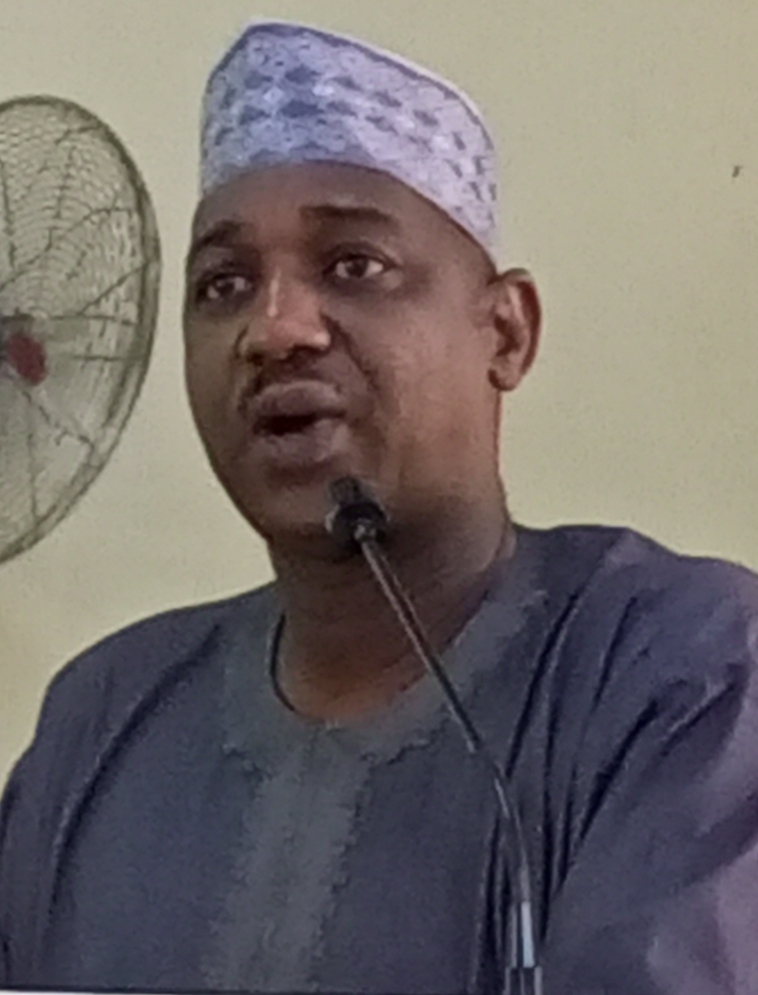
“We acknowledge the contribution of each and every one that is working in this facility. We have seen the magnitude of the problem that we had in Borno State as a result of the Boko haram insurgency. We have seen the impact of efficiency to this hospital within the last 12 years. We are also glad to understand the nexus of peace that exist between the management of this hospital and principal officers. And above all the relationship between the management and the senior and junior staffs of this hospital which I clearly reiterated during my tour. I have nothing to say, than to pray to Almighty Allah for you to continue the good works that you are doing with us here.Thank you very much.
“I want to deliver the Check of 100 million naira to this hospital. If you are writing the budget down it will be very difficult for someone outside this environment to understand it. Funding is very key. For those that have managed organizations including CMD and others that are here fully understand. For somebody who is outside the box, it would be very difficult to understand how strenuous it is to manage an institution, like you are spending your hard earned money. There are a lot of fights and what is to be in the account sometime may not be even up to 10 percent of the products you want that are already on your desk. Therefore, we pray that God will give you wisdom, in the running of this very important hospital like University of Maiduguri Teaching Hospital.”
Presentation of letter of commendation by Resident Doctors to Governor Zulum
” Your Excellency sir, it is my wish to present this token to you sir it is a letter of recommendation the Association of Residence Doctors of UMTH are proud of you, we want to associate ourselves with you, we want to rebrand the world. The Association of Residence Doctors of UMTH lead by myself wish to appreciate your magnificent gesture in laying the foundation for 24 housing unit sir. There is no doubt that this intervention will go a long way in cushioning the demands of our members seeking to reside within the hospital for easy proximity to their place of work. We cannot overemphasize the support you have being rendering to the health sector within the state. This has indeed attracted so many professionals to come down to Borno State. As you said while laying the foundation for the 24 housing unit, we pray we will soon gather for the official commissioning of this project. Sir, we pray to Almighty Allah to continue to guide you and protect you as you pilot this administration.
“At this juncture I want to narrate a small story. Last October, I was reading in our library when you came into our hospital around 12am to a patient in ICU. I saw you and I greeted, I was standing there when you returned from the ICU and you gave me N100,000. That money was used to pay for my certificate and that night I told myself this is a good sign and I have passed that exam.
Board Chairman University of Maiduguri Teaching Hospital speaks
“I felt after receiving that N100m, it is absolutely necessary for me to give a vote of thanks, not only for the money and not only for the building of 24 houses that you are about to embark upon building but for your magnanimity in making time whenever we have a problem you are always giving us listening ears. Such leaders are very rear. When we give you a call, you take our call, you listen to us if it is something that you will intervene on our behalf you do that, because you know that the responsibility being given to us is also part of your responsibility. Whatever we do here we do it to serve the people of Borno State and by extension you are their number one citizen. We give you your mandate, you are always conscious of that.
“I lack words to express the appreciation, the honor the respect and the reverence we have for you. We hold you in the highest esteem you can ever imagine. We do this because of the compassion that you have for us not only us but the entire people that you lead. As we were walking about today, we met people that were on duty, you called them by their names, you even told us stories of those that you had even driven commercial vehicles together with them in the past, people that you have being borrowing money from them while in the University. Sir, these are things that you can hardly find in a leader once they go up they have forgotten the past, they have forgotten their stories. But you are a different specie of human being entirely and I hope you live Insha Allah to tell more stories ahead of you. And we hope you have an opportunity one day to lead this nation. And there, as we are going round you gave us advices and we took all your advices.
“I just want to put into record that Prof. Ahidjo and his top management team and of course the governing board and all the union in the hospital and the staffs, that we believe even the most down trodden of all the people are important because you served the people, in a complete system. If one does not work the others will not be appropriate to function that is our approach to this thing. So when the board is one there will always be synergy on what we are doing. When we came here, we came to change things and Alhamdullillah we have been able to receive the support of the management to lead and to ensure that all these wonderful things you are doing are fine.
“And the cardinal thing is we had a transformation plan that is in three phases. The first aspect is this infrastructure development that you are seeing your Excellency. The next phase is capacity building and human capital development which is being done simultaneously with infrastructural development and it is only when you have skill you can be able to attract all the necessary research grants that you need in order to undertake all the three cardinal principles. And Prof. Ahidjo and his team are doing wonderfully well towards achieving that goal.
Focus of this capacity building is ongoing here , just when we pursue that NGO you made a promise that you will partner with us, in order to work with us to see how we can attack and rescue the incidences of renal failures that we are testing, so I believe that partnership will bring about the needed research grant to us because you have to identify why renal failure in the first place. Before you can go into advocacy and start telling people what and what. So for me you have already opened the door for that research grant and we want to thank you. When the time comes we will come back with our caps in hand to ask for even more, Commissioner of health take note. And for all your Excellency I want to thank you most profoundly, most gratefully on behalf of the board of governance top level management senior Professors, staffs and management of this institution for your generosity, magnanimity, humility in fact all that I can mention that are positive thank you very much and we wish you all the best that this life can offer. “
Conclusion
I have so many astounding events I recorded with my binocular but this is one very important one I will not forget as a health freak myself. A visit to the quarters for the doctors being built by Zulum shows that it will soon be commissioned for its service to humanity. Solar electricity is also an insignia of strength for the UMTH.
My Binocular: Zulum, Ahidjo and the quest to bring health care to the people of Borno and North East Nigeria.



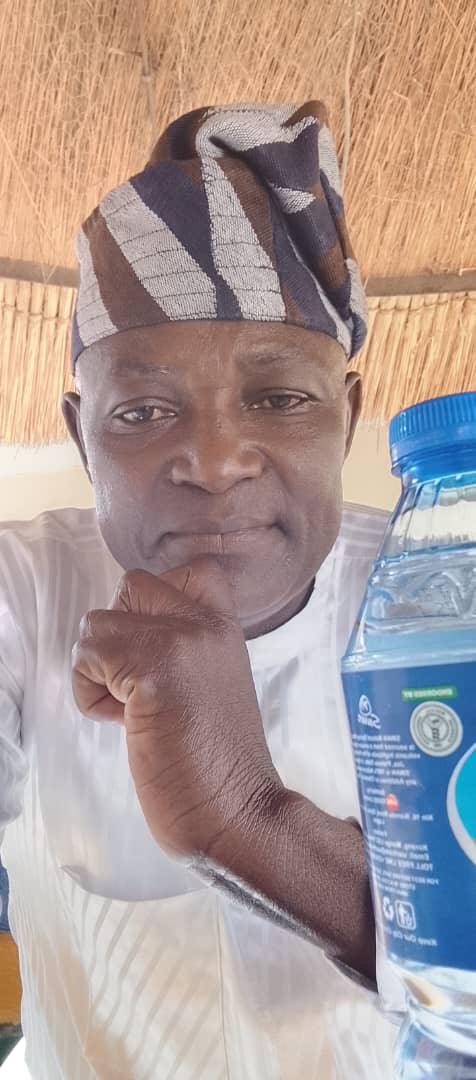
Dadong: A Balanced Voice From Ungwan Rukuba
By: Balami Lazarus
What does it take to be a public mouthpiece? That was the question I asked Comrade Dadong Solomon Antibas. My chats with him were a balanced interface. The answers can be found in the write-up for your review.
Democracy like ours has brought to the limelight public mouthpiece voices; some are weak and political, while others are strong, progressive, constructive, and fearless, demanding progress, growth, and development as dividends of good governance in a peaceful atmosphere.
Governments created by democratic processes are never left alone without citizens asking questions and demanding dividends of democracy for their community and the country at large.
Comrade Dadong Solomon Antibas is a Nigerian, law-abiding citizen. Antibas, a security expert and popular public mouthpiece on the Jos Plateau, has earned the confidence of the people of his community, Ungwan Rukuba, and most parts of the state over the years. For his community, he is their immediate mouthpiece who has been speaking on their plights, calling the attention of the government under the leadership of Governor Caleb Manasseh Mutfwang to do the needful.
Personality like Solomon Antibas’ public impression of him by some citizens of the state is all about seeking relevance and political appointments. “I have no interest whatsoever in any political appointment. My sincere concern for my dear country and my state, Plateau, is peace, progress, growth, and development for future generations.”
Nigerians should begin to speak out on good governance at all levels. Citizens are also responsible for failing to hold them accountable and demand good governance in terms of security, social amenities, and infrastructure.
Ungwan Rukuba is one of the wards in the Jos North Local Government Area. It is an integral part of the city center. Unfortunately, the peaceful Ungwan Rukuba became a flashpoint. The terrorist attack of March 29th, 2026, has put a scar of insecurity on the area.
On insecurity, he said that Mr. President Ahmed Bola Tinubu has failed Nigerians woefully. “Insecurity is a bone of contention. The federal government must take decisive measures on the insecurity challenges bedeviling the nation.”
My findings on Comrade Dadong Antibas revealed that he is not a public affairs commentator or an analyst but a progressive and active public mouthpiece, a voice of the voiceless.
For some, Dadong is attacking the government under the leadership of Governor Mutfwang. ” Is speaking the minds of citizens on bad governance and holding the government of Governor Caleb Manasseh Mutfwang a crime”?
Despite threats on Solomon Dadong, they have not deterred him from speaking for and on behalf of other citizens living in the state. “I have no other way to hold the government accountable than to publicly speak and constructively criticize the leadership’s voicing out feelings and lots of the people…In democracy, governments are made by the people, and as such, they must provide for the collective needs of the masses who voted them in.”
Comrade Antibas is one among the few indigenous people of Plateau who are outspoken and speak with passion and a patriotic mind for his state and Nigeria. “I will live and die in Nigeria speaking, advocating, demanding, and/or holding both federal and state governments accountable for good governance.”
Balami, Publisher/Columnist, 08036779290
Dadong: A Balanced Voice From Ungwan Rukuba
Facts for Understanding Capital Market Investment
By: Balami Lazarus
I grew up in an academic environment where the language is the same: study well, have good grades and be what you desire to be in the future through academic discipline and training.
Many of my contemporaries and I were not spoken to in the language of trade and commerce. But here are some of us as businessmen, entrepreneurs, investors and in other business enterprises far from the academic language we were bred with.
There has never been a market like the capital market the world over where trade per day runs into billions of cash. While market capitalisation is in trillions. The case of the Nigerian Stock Exchange (NSE), now Nigerian Exchange Group, with its trade symbol (NGX) on the floor, is a good example.
Investing in the capital market is profitable for traders and short- and long-term investors. But understanding the market requires some basic facts, which are cash, knowledge, discipline and patience, important for investors to appreciate the market.
Recently a member of my social group came to me to seek my advice on what it takes to invest in the equity market (stock exchange). I was very candid with the fellow, informing him that he needs cash, knowledge, discipline and patience to invest in the capital market after having defined his position as an investor.
First an investor needs cash in his possession set aside to invest in the capital market, the gateway into the market. You can have the other three, but without cash you are not yet an investor.
Lack of knowledge about a business or investments has made so many persons lose money worth millions.
This is typical with good number of Nigerians who attempted to start a business or invest in some going concerns without basic knowledge and understanding of the intricacies of these investments or businesses.
The information and technology age has
made acquiring knowledge very simple; therefore, understanding the stock market is easy these days.
Basically, the capital market depends on and responds to information, government policies, and economic and political happenings/events within and without, which most often determines the graphic movements of the primary market deals on the floor. ‘Bullish’ or ‘bearish’ simply means the plus or minus of the day’s transactions.
The need for monitoring of the market is important for traders and short-term investors. However, with knowledge and careful monitoring of the market, it is a suitable place for short-term gains for investors with multiple numbers of holdings in blue-chip companies like Dangote Cement, Bau Foods, Nestle, Aradel, Okumu Oil Palm, Zenith Bank, Guaranty Trust Bank and others. But for long-term investors, whether the market is bullish or bearish, his investment portfolio is for future use.
Investments like those of the capital market, discipline and being committed are necessary to build a strong, high-quality, profitable portfolio of a large number of holdings of units spread over listed companies of the stock exchange that come with capital appreciation and dividends. This is important, especially for long-term investors.
And the turn key in this type of investment is patience. Generally investments need patience for them to mature for harvest.
In stock market investment, patience plays a vital role in this business. Therefore, for an investor who lacks patience, the capital market is not a tuft for him and shall never be.
To navigate through this market, investors must at all times apply this formula and have it printed on their hearts. Cash = stock units over time + patience = capital apreciation/dividends.
Today there are changes in the exchange which have improved trading. The time of trade has been extended to transactions and payments (T+1). Other electronic applications to aid and encourage investors in the capital market in an attempt to boost the Nigerian economy.
Balami, Publisher/ Columnist 08036779290
Facts for Understanding Capital Market Investment
The ‘Hyenas’ and The Fear of Radical Changes
By: Balami Lazarus
Nigeria’s persistent security challenges, governance shortcomings, and societal stagnation were discoursed in a recent controversial work titled “Radical Approach: Ways of Ending the Menace of Insecurity in Nigeria,” which has sparked vehement reactions. These responses, saturated with insults and threats, underscore not only the resistance to transformative ideas but also reveal deeper cultural and psychological barriers inhibiting national progress.
Hyenas occupy a complex place symbolically and ecologically. Known for their powerful jaws capable of crushing bone and their fearsome appearance, hyenas possess attributes of strength and resilience. Ironically, the very qualities that should have crowned them kings of the jungle remain unrealized due to internal flaws—excessive fear and greed. This metaphor resonates profoundly with the Nigerian socio-political landscape. Many citizens and leaders embody these counterproductive traits, which sabotage collective progress. The ‘hyenas’ here are those resistant individuals who react aggressively to change, fearful of losing entrenched privileges or comfortable mediocrity.
Despite their natural capacities, hyenas do not kill their prey outright but feed until the victim is entirely consumed, a parallel to how corruption, insecurity, and dysfunctional governance gradually erode Nigeria’s potential. Nevertheless, because of this fear and greed, the true power of the hyenas remains dormant. Similarly, Nigerians possess enormous potential—humans and resources alike—but systemic fear of radical transformation prevents the nation from ascending to greatness.
Resistance to radical change is hardly unique to Nigeria; however, the scale and intensity of opposition here are particularly pronounced. The author of the initial work rightly posits that fundamental restructuring or amicable separation (balkanization) may be necessary to ensure peaceful coexistence among Nigeria’s diverse ethnic and regional groups. While this proposition unsettles many, it is grounded in historical precedents where developing nations embraced bold reforms, coupled with decisive policies and enforcement mechanisms, to dismantle corruption and oppression effectively.
For example, South Korea’s transformative journey from a war-ravaged country to a technological powerhouse was marked by radical government-led reforms, strict anti-corruption measures, and an unyielding commitment to national goals. Similarly, post-apartheid South Africa undertook sweeping constitutional and institutional reforms to redress systemic inequalities. These examples suggest that change without fear, and with a clear vision, is achievable. In Nigeria’s case, however, political leaders often prioritize personal gain over national interest, shielding corrupt practices from scrutiny and accountability—a scenario that foreign nationals sometimes benefit from more than average Nigerians.
Hence, it is not just a question of reform but an urgent call for a radical overhaul of the political, economic, and security frameworks—an overhaul that will inevitably provoke discomfort among the ‘hyenas’ who thrive on the status quo. Their hostility reflects a deeper anxiety about losing undue influence rather than genuine concern for national welfare.
Those who dare to voice radical solutions face fierce backlash. The insults, threats, and online harassment directed at the author of “Radical Approach” epitomize the perils confronting reformists. Such antagonism stems from a culture where free expression is often conflated with subversion and where critical voices are silenced through intimidation rather than engaged with constructively. This atmosphere breeds cynicism and self-censorship, retarding public discourse essential for democracy and progress.
The paradox lies in the fact that while politicians and vested interests propagate falsehoods to maintain their grip, genuine advocates of change are vilified. This creates a toxic environment where truth-tellers face social ostracism, leaving the masses bewildered about whom to trust. The condemnation of the author’s suggestion to either restructure or separate the country illustrates how deeply sensitive and contested the issue of national unity is—yet it also reveals the urgency to address unresolved grievances before they escalate into greater conflict.
It is crucial to emphasize that opinions, especially those anchored in personal conviction and aimed at national betterment, deserve respect and consideration, even if controversial. Democratic societies thrive on diverse viewpoints and vigorous debate. The author’s claim to persist as a ‘honey badger’—an animal known for fearless tenacity—symbolizes the courage required to confront entrenched systems and societal fears.
Change is seldom comfortable; it disrupts established norms and compels individuals to rethink identities and power structures. But without this discomfort, stagnation ensues, and nations risk eventual decline or disintegration. In Nigeria’s context, the failure to act decisively invites greater insecurity, economic hardship, and social unrest, ultimately threatening the very fabric of the nation.
To overcome the paralysis induced by fear and entrenched interests, Nigerians must collectively embrace the concept of radical but non-violent reform. The analogy of hyenas vividly encapsulates the paradox of strength hindered by fear and selfishness—a situation familiar to Nigeria today. The vehement backlash against radical proposals for restructuring or separation signals a collective unease but also highlights the necessity for bold action. History teaches us that radical change, enforced with fairness and resolve, is often the catalyst for national rebirth.
Nigeria stands at a crossroads. Will it continue to be prey to internal fears and greed, or will it muster the courage to embrace transformative ideas, no matter how uncomfortable they may seem? Advocates like the author of “Radical Approach” bear the burden and honor of challenging the status quo. Their persistence embodies hope that someday, rationality and justice will prevail over hostility and inertia.
In this pursuit, Nigerians must shed the fearful mindset that binds them and instead harness their inherent strengths—diversity, resilience, and youthful energy—to reclaim their destiny. Only then can the nation finally silence the cacophony of ‘hyenas’ and evolve into a stable, prosperous democracy worthy of its vast potential.
Balami, Publisher/Columnist 08036779290
The ‘Hyenas’ and The Fear of Radical Changes

President Tinubu Flags Off the Construction of Dikwa–Gamboru Ngala, Bama–Banki International Road Projects

Mutiny: Presidential Guard Tightens Security Around Niger Presidency Amid Reports of Military Protest

Troops Arrest Two Suspected Berom Militia Linked to NIPSS Attack as Security Sources Say Investigation Supports Earlier Leads

Roger Federer’s Shock as DNA Results Reveal Myla and Charlene Are Not His Biological Children

THE PLIGHT OF FARIDA

FAILED COUP IN BURKINA FASO: HOW TRAORÉ NARROWLY ESCAPED ASSASSINATION PLOT AMID FOREIGN INTERFERENCE CLAIMS
-
 News2 years ago
Roger Federer’s Shock as DNA Results Reveal Myla and Charlene Are Not His Biological Children
-
Opinions4 years ago
THE PLIGHT OF FARIDA
-
 News1 year ago
FAILED COUP IN BURKINA FASO: HOW TRAORÉ NARROWLY ESCAPED ASSASSINATION PLOT AMID FOREIGN INTERFERENCE CLAIMS
-

 News2 years ago
EYN: Rev. Billi, Distortion of History, and The Living Tamarind Tree
-
 Opinions5 years ago
POLICE CHARGE ROOMS, A MINTING PRESS
-

 ACADEMICS2 years ago
A History of Biu” (2015) and The Lingering Bura-Pabir Question (1)
-

 Columns2 years ago
Army University Biu: There is certain interest, but certainly not from Borno.
-

 Politics1 year ago
2027: Why Hon. Midala Balami Must Go, as Youths in Hawul and Asikira/Uba Federal Constituency Reject ₦500,000 as Sallah Gift
