
Crime
NDLEA destroys 40 tons of cannabis plants in Ekiti; intercepts over 4,000kgs of illicit drugs in Lagos, Kogi, FCT, Kaduna, Sokoto, Edo raids

NDLEA destroys 40 tons of cannabis plants in Ekiti; intercepts over 4,000kgs of illicit drugs in Lagos, Kogi, FCT, Kaduna, Sokoto, Edo raids
By: Michael Mike
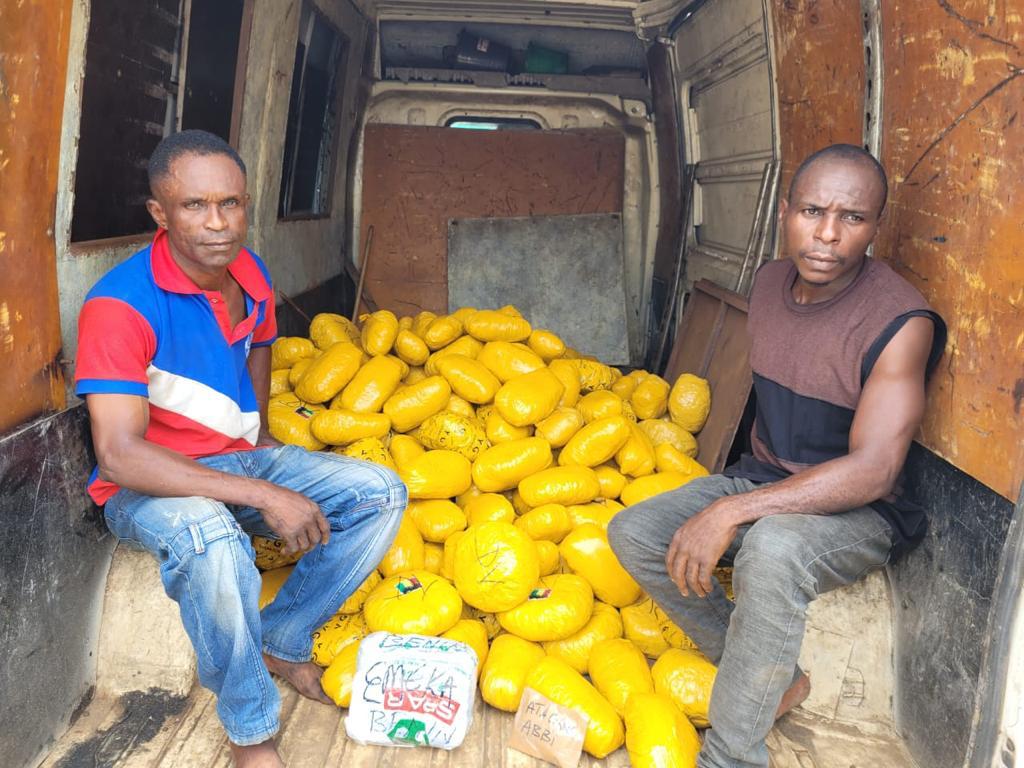
Over four tons of illicit and controlled drugs including consignments of nitrous oxide popularly known as laughing gas, skunk, codeine syrup, methamphetamine and tramadol have been intercepted by operatives of the National Drug Law Enforcement Agency, NDLEA, during interdiction operations in the last one week in Lagos, Kogi, FCT, Jigawa, Kaduna, Sokoto and Edo states.
A statement on Sunday by the spokesman of the anti-narcotics agency, Femi Babafemi also said no fewer than 1,194 cylinders of laughing gas with a total weight of 2,547.2 kilogrammes loaded in two Toyota Sienna buses were last Friday intercepted by NDLEA operatives along Okene-Lokoja-Abuja expressway.
He said two suspects: Onyebuchi Ikpozu and Kenneth Igwe who were taking the consignments to the nation’s capital, Abuja for distribution have been arrested and taken into custody.

Babafemi said while one of the Toyota Sienna buses marked KTU 582 HV was conveying 99 cartons containing 594 cylinders weighing 1,267.2 kilogrammes, the second bus with registration number FKJ 329 YA was conveying 100 cartons of the substance with 600 cylinders weighing 1,280 kilogrammes.
He also said a 48-year-old woman, Mrs. Ugo Eluba was also arrested in Abuja in a follow up operation after 2,400 ampules of pentazocine injection and 100,000 tablets of Exol-5 intercepted in Kogi state were traced to her.
In the FCT, operatives intercepted 977 kilogrammes of skunk last Wednesday in a trailer marked LSR 343 XW, bearing cartons of maggi. The spokesman said the skunk consignment was loaded into the truck at Ipele junction in Ondo state. While 959 kilogrammes of the substance were meant for distribution in Sokoto state, the rest was to be dropped off at Gwagwalada. Two suspects: Auwal Mohammed and Abdullahi Abubakar have been arrested in connection with the seizure, while two other suspects: Mutari Abdulazeez, 31, and Ayuba Madaki, 28, were also arrested last Saturday at Zuba area of the FCT with different quantities of
methamphetamine, cannabis and 13,930 pills of tramadol.
Babafemi also revealed that Shuaibu Yusif, 27, and Abubakar Hussaini, 20, were last Saturday nabbed with 89.1 kilogrammes of skunk along Kano -Hadejia road, Jigawa state during a stop and search patrol by NDLEA operatives.
He disclosed that no fewer than 6,000 ampules of pentazocine injection were recovered from a suspect, Usman Sidi, 35, last Monday along Abuja – Forest road, Kaduna while on his way to Bauchi state.
He said a follow up operation in Bauchi led to the arrest of the actual owner of the consignment, Dominic Chukwuma, 35, last Tuesday with at least 2.58 kilogrammes of diazepam and 36.55 kilogrammes of pentazocine injection recovered from his home.

Two other suspects: Inuwa Nuhu and Isiyaku Sani were also arrested same Tuesday in connection with the seizure of 49 blocks of cannabis sativa concealed in a black sack weighing 26 kilogrammes in a commercial vehicle coming from Ogere, Ogun state to Kano.
Babafemi said a total of 183kgs of Ghana Loud, a strain of cannabis, were recovered from body compartments of a J5 bus intercepted in Lagos last Wednesday, operatives in Sokoto, last Tuesday arrested one Charles Okeke, 44, with 473 bottles of codeine syrup at Unguwar Kosai area of Sokoto.
In Edo state, 365 blocks of compressed cannabis sativa weighing 258 kilogrammes were recovered from a Toyota Camry car marked KTU 886 EZ at Igarra, Akoko Edo local government area.
He said in a massive operation between Monday 11th and Wednesday 13th September, NDLEA operatives stormed thick forests in Ijesha Isu-Ekiti, Ikole Local Government Area of Ekiti state, where they destroyed 40 tons (40,000 kilogrammes) of cannabis plants covering 16 hectares of farmland.
Meanwhile, across the country, NDLEA Commands continued their War Against Drug Abuse, WADA, sensitization lectures and advocacy visits to worship centres, schools, workplaces, palaces of traditional rulers and communities all through the week. Instances include: WADA sensitization lecture at Madarasatu Tarbiyyatil Aulad Islamiyyah Izala Mosque, Sabon Gari Wudil, Wudil local government area of Kano State; WADA sensitisation town hall meeting with principals of secondary schools in Kaduna north and south local government areas organized by the Zone J command of the agency; WADA advocacy visit to the palace of Igwe Emmanuel Ugwu, traditional ruler of Ibagwa Nike, Enugu state and WADA sensitisation lecture for students of the Oyo State College of Science and Health Technology, Ibadan, among others.
Chairman/Chief Executive Officer of NDLEA, Brig. Gen. Buba Marwa (Retd) while commending the officers and men of the Lagos, FCT, Kaduna, Jigawa, Kogi, Sokoto and Edo Commands of the agency for the arrests and seizures of the past week, also applauded their compatriots in all the commands across the country for intensifying the WADA sensitization lectures and advocacy messages to every part of their areas of responsibility.
NDLEA destroys 40 tons of cannabis plants in Ekiti; intercepts over 4,000kgs of illicit drugs in Lagos, Kogi, FCT, Kaduna, Sokoto, Edo raids


Crime
Troops Arrest Two Suspected Berom Militia Linked to NIPSS Attack as Security Sources Say Investigation Supports Earlier Leads
Troops Arrest Two Suspected Berom Militia Linked to NIPSS Attack as Security Sources Say Investigation Supports Earlier Leads
By Zagazola Makama
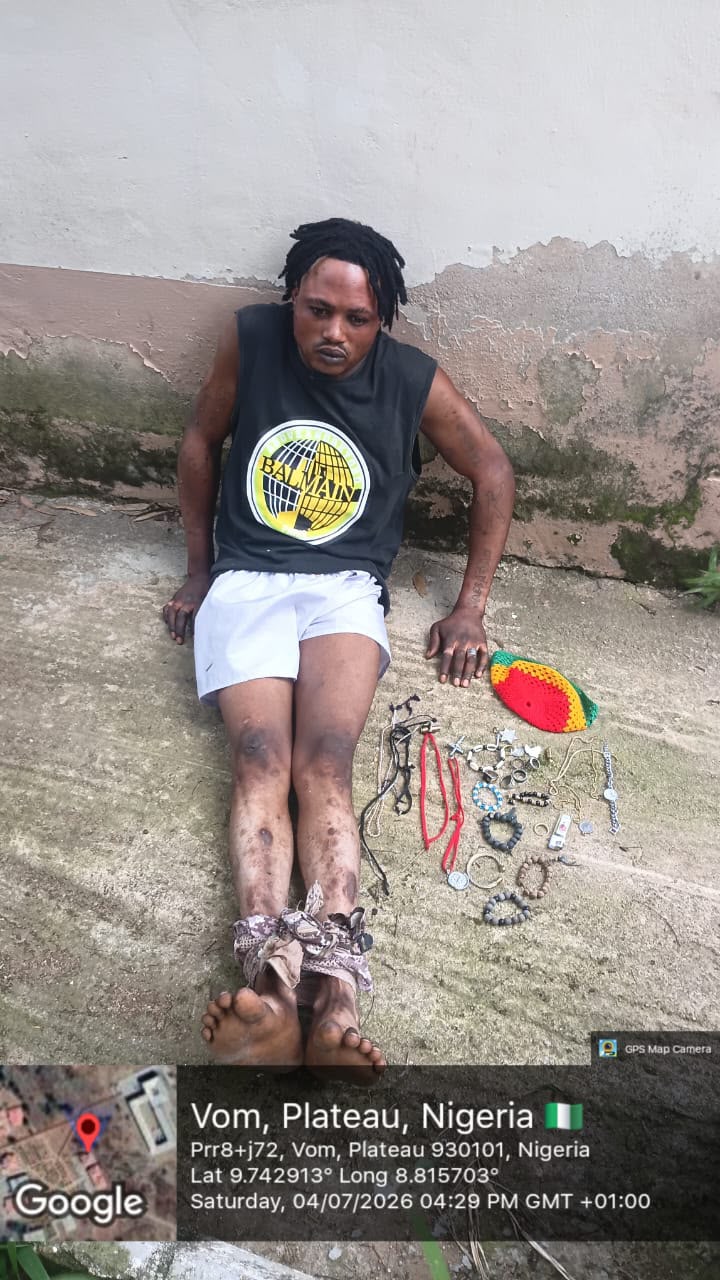
Troops of Operation Enduring Peace (OPEP) have arrested two suspected Berom militia allegedly linked to the recent attempted attack on the National Institute for Policy and Strategic Studies (NIPSS), Kuru, in Jos South Local Government Area of Plateau State, in another significant breakthrough in the ongoing investigation.
Sources told Zagazola Makama that the suspects were apprehended at about 3:30 p.m. on July 4 during an intelligence-led operation by troops of Sector 6 at Trade Centre in Jos South.
According to the sources, one of the suspects was identified as Mr. Aboi, while the identity of the second suspect has yet to be officially released as investigations continue.
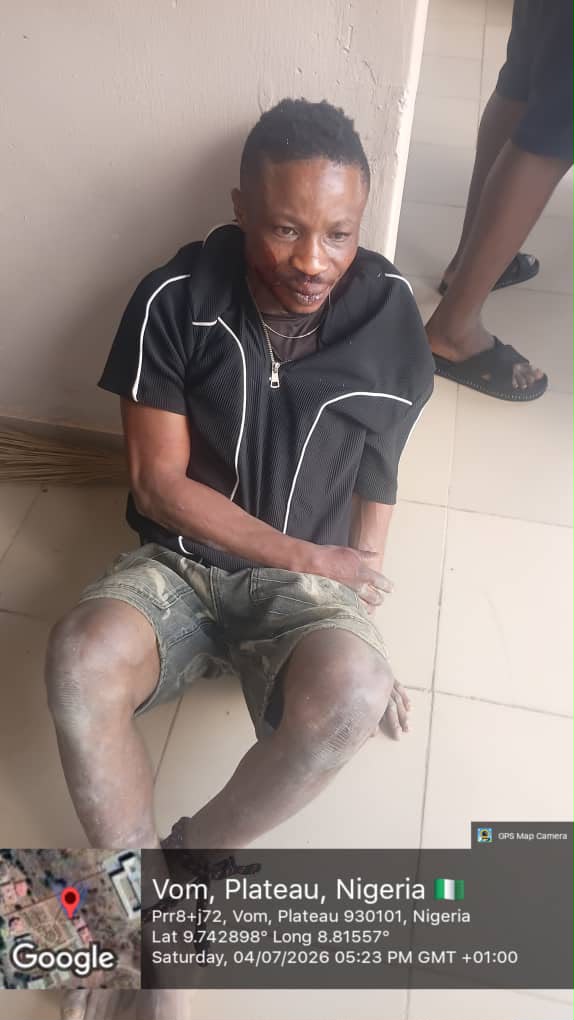
The sources said the two men were arrested in connection with the failed attack on the NIPSS facility and are currently undergoing interrogation to assist security agencies in identifying and apprehending other members of the alleged criminal militia network.
“The suspects are being exploited for further intelligence that could lead to the arrest of other members of the group involved in the attack,” one of the security sources said.
The latest arrests followed the July 2 attempted attack on the strategic national institution, during which troops engaged suspected Berom militia in a gun battle, killing one suspect while others escaped into nearby rocky terrain.
During that operation, troops recovered a service rifle bearing registration number CO-3175, which military authorities said had earlier been stolen from a soldier killed during an attack on troops at the Federal College of Land Resources Technology, Vom, on April 11.
The recovery of the weapon had already prompted security agencies to widen investigations into possible links between the recent attacks on security personnel operating within the Kuru-Vom axis.
Following the publication of Zagazola Makama’s report identifying the slain attacker as a suspected member of an armed Berom militia operating within the area, the Berom Youth Moulders-Association (BYM) issued a statement rejecting the report.
Barrister Dalyop Solomon Mwantiri, the association’s president, denied that the Berom ethnic community operated any militia group and challenged the report’s conclusions, arguing that the ethnicity of the deceased had not been independently established.
He claimed that the association had conducted inquiries and spoken to people within the community, but that no one claimed to know the identity of the attacker. He challenged Zagazola Media Network to back its claims with evidence and urged security agencies and journalists to rely only on verified information in reporting security incidents.
Subsequently, Zagazola Makama published additional reporting stating that the deceased attacker had been identified by local residents and multiple security and community sources as Peter, a Berom resident of the Trade Centre area. The report was supported by a 17-second WhatsApp video clip in which an individual identified the attacker as someone from his area.
Security sources told Zagazola Makama that the arrest of the latest suspects in the same Trade Centre axis, where Peter was reportedly traced, has strengthened investigators’ efforts to establish the composition of the group responsible for the attacks.
The sources, however, stressed that investigations remain ongoing and that the suspects would be afforded due process while intelligence exploitation continues.
Military authorities have yet to issue an official statement naming the suspects or announcing any formal charges.
Meanwhile, security has been reinforced around the NIPSS complex, with troops maintaining aggressive patrols, surveillance and domination operations aimed at preventing further attacks on the institution and adjoining communities.
The arrests are expected to assist investigators in unraveling the network behind the repeated attacks on security personnel and strategic facilities within the Kuru-Vom corridor.
Troops Arrest Two Suspected Berom Militia Linked to NIPSS Attack as Security Sources Say Investigation Supports Earlier Leads
One killed, another injured in Fulani Bandits attack as troops arrest suspect in Plateau
By: Zagazola Makama
Troops of Sector 6 of Operation Enduring Peace have arrested a suspect following an attack by Fulani Bandits on Rinyan Community in Riyom Local Government Area of Plateau that left one person dead and another injured.
Security sources said the troops responded at about 4:00 p.m. on Saturday after receiving reports of an attack by suspected armed Fulani militia on the community.
According to the sources, on arrival at the scene, the troops found one person dead, while another victim had sustained gunshot wounds.
The injured victim was evacuated to the General Hospital in Riyom for medical treatment.
The sources said the troops immediately pursued the fleeing assailants but did not establish contact with them.
However, one suspect was arrested during the operation and is currently in custody undergoing interrogation as investigations continue.
The military has maintained intensified operations across Plateau to curb attacks and apprehend those responsible for violent crimes in the state.
One killed, another injured in Fulani Bandits attack as troops arrest suspect in Plateau
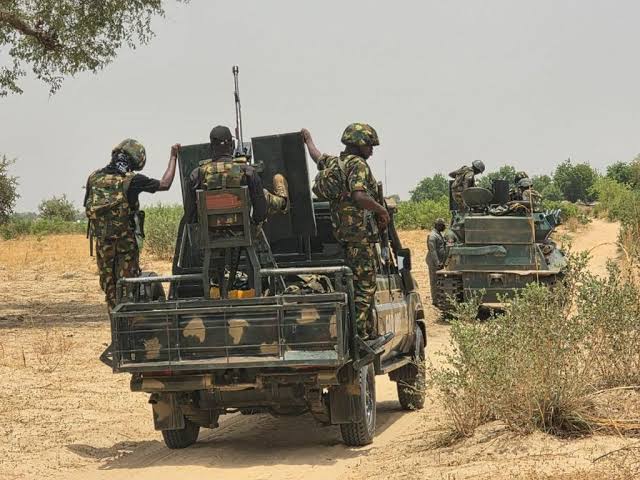
Troops Repel Terrorist Attack on Forward Operating Base in Zamfara
By: Zagazola Makama
Troops of Combat Team 5 (CT 5) have repelled a terrorist attack on their Forward Operating Base (FOB) in Moriki, Zurmi Local Government Area of Zamfara State.
Security sources told Zagazola Makama that the terrorists launched the attack at about 1:00 a.m. on Friday, assaulting the base from multiple directions.
The sources said the troops maintained their defensive positions and successfully repelled the attackers after an exchange of gunfire.
During the incident, three civilians sustained gunshot wounds and were immediately evacuated to a hospital for medical treatment.
The sources added that the situation has since been brought under control, while security has been reinforced in the area to prevent further attacks.
Troops Repel Terrorist Attack on Forward Operating Base in Zamfara

President Tinubu Flags Off the Construction of Dikwa–Gamboru Ngala, Bama–Banki International Road Projects

Mutiny: Presidential Guard Tightens Security Around Niger Presidency Amid Reports of Military Protest

Troops Arrest Two Suspected Berom Militia Linked to NIPSS Attack as Security Sources Say Investigation Supports Earlier Leads

Roger Federer’s Shock as DNA Results Reveal Myla and Charlene Are Not His Biological Children

THE PLIGHT OF FARIDA

FAILED COUP IN BURKINA FASO: HOW TRAORÉ NARROWLY ESCAPED ASSASSINATION PLOT AMID FOREIGN INTERFERENCE CLAIMS
-
 News2 years ago
Roger Federer’s Shock as DNA Results Reveal Myla and Charlene Are Not His Biological Children
-
Opinions4 years ago
THE PLIGHT OF FARIDA
-
 News1 year ago
FAILED COUP IN BURKINA FASO: HOW TRAORÉ NARROWLY ESCAPED ASSASSINATION PLOT AMID FOREIGN INTERFERENCE CLAIMS
-

 News2 years ago
EYN: Rev. Billi, Distortion of History, and The Living Tamarind Tree
-
 Opinions5 years ago
POLICE CHARGE ROOMS, A MINTING PRESS
-

 ACADEMICS2 years ago
A History of Biu” (2015) and The Lingering Bura-Pabir Question (1)
-

 Columns2 years ago
Army University Biu: There is certain interest, but certainly not from Borno.
-

 Politics1 year ago
2027: Why Hon. Midala Balami Must Go, as Youths in Hawul and Asikira/Uba Federal Constituency Reject ₦500,000 as Sallah Gift
