
Uncategorized
VP Shettima Demands More Private Sector Engagement In Healthcare Reforms


VP Shettima Demands More Private Sector Engagement In Healthcare Reforms
** Commissions Sulaiman Adebola Adegunwa Trauma Centre in Ogun
By: Our Reporter
Vice President Kashim Shettima has called for increased private sector participation in the ongoing reforms in the health sector and healthcare development across Nigeria.
He reaffirmed the Federal Government’s commitment to addressing critical deficits in the health sector through strategic partnerships and investments, noting however that the private sector has a very crucial role to play because the “government alone cannot shoulder this burden.”
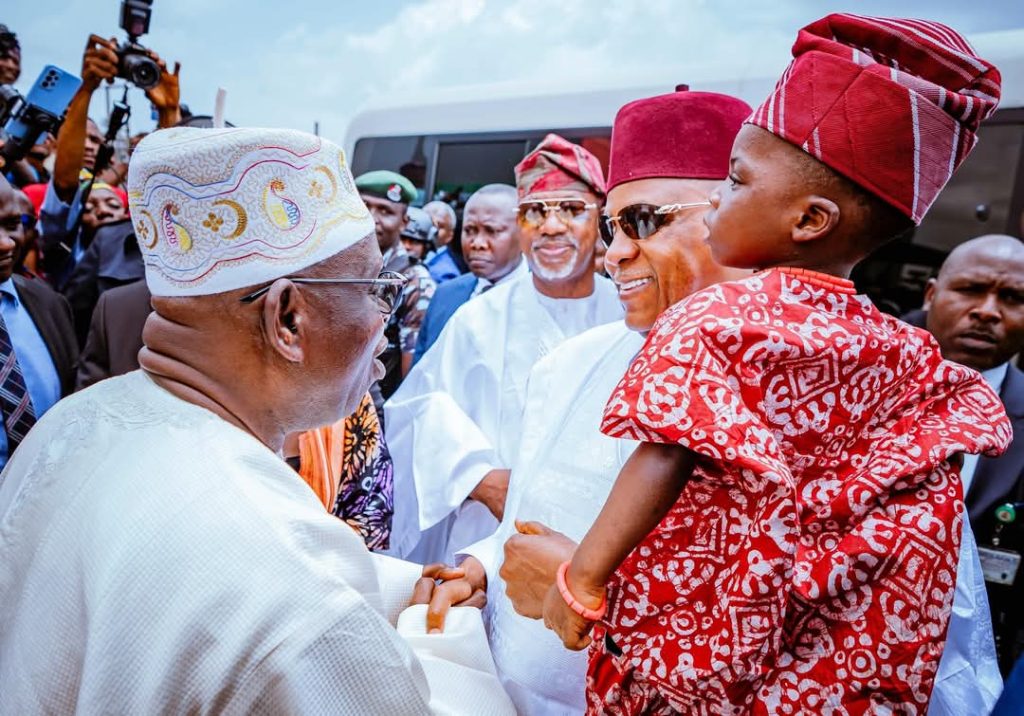
The Vice President who stated this on Saturday when he commissioned the Sulaiman Adebola Adegunwa Trauma Centre in Sagamu, Ogun State, said the health facility is a vital addition to the nation’s emergency care infrastructure and a symbol of the government’s dedication to saving lives.
Senator Shettima revealed that President Bola Ahmed Tinubu has approved a “comprehensive Health Sector Renewal Investment Initiative, including the creation of over 8,800 new Primary Healthcare Centres across the country and the upgrade of existing tertiary institutions to handle trauma, oncology, and infectious disease control.
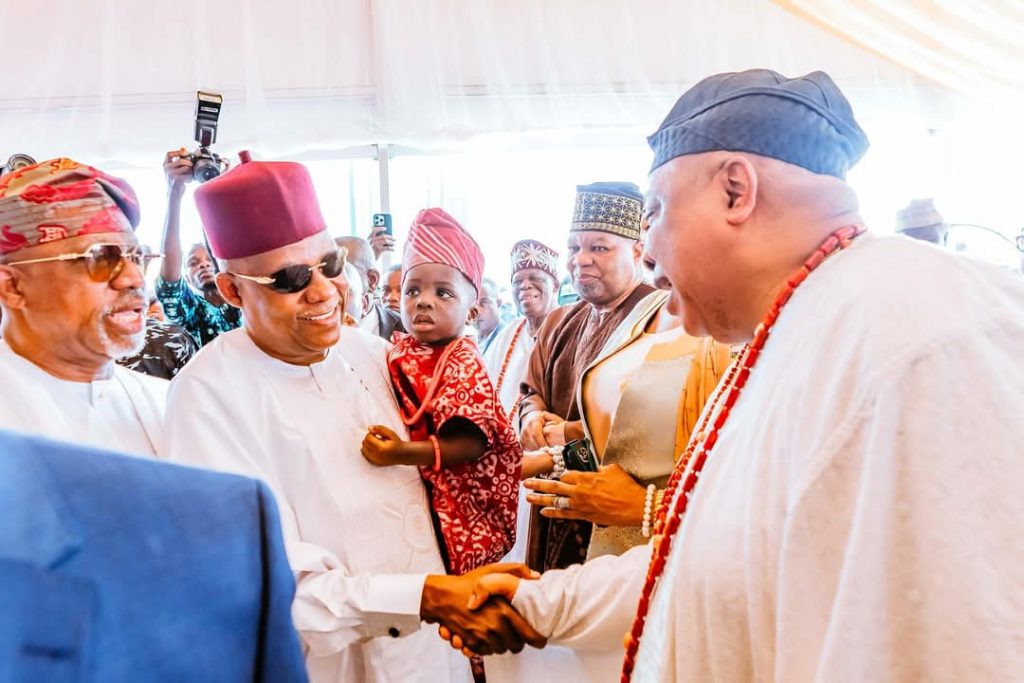
“In a nation facing rising urbanisation, motorisation, and industrial risks, trauma care is no longer optional—it is essential,” VP Shettima added, describing the facility as “a lifeline and a symbol of preparedness in a nation that cares.”
He commended the Adegunwa family’s initiative, urging more philanthropists and corporate organisations to “rise beyond personal achievement and invest in nation-building.”
Describing the initiative as a model of private sector contribution to public health, VP Shettima said, “This centre is more than a birthday gift; it is a gift to humanity. It is a lifeline—a sanctuary where the wounded can find healing, and where families in despair can find hope”.
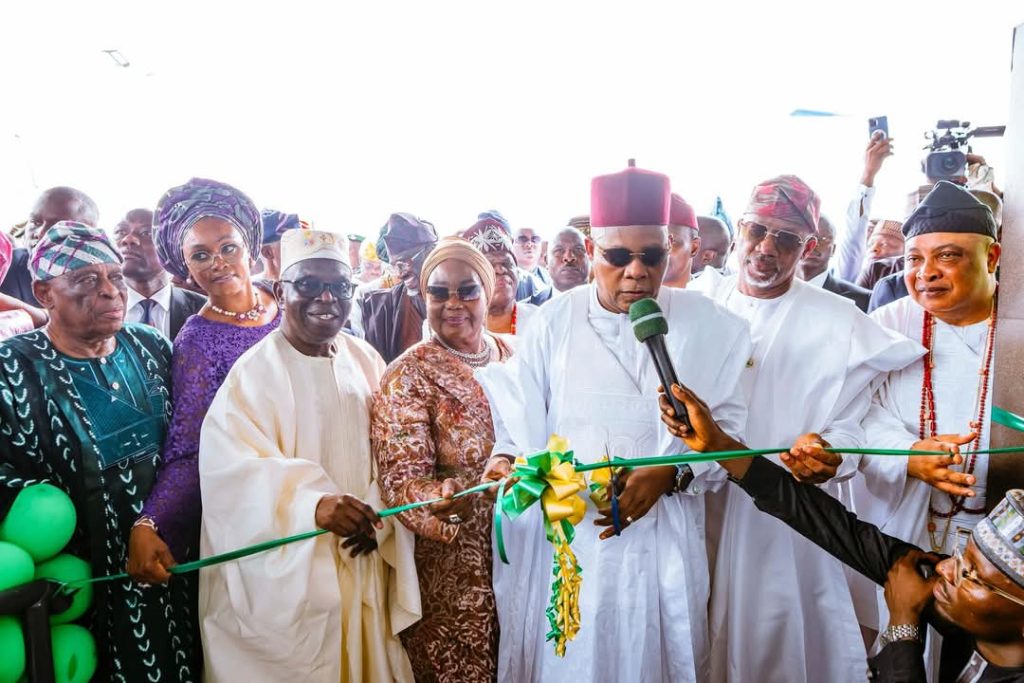
The facility built by the Sulaiman Adebola Adegunwa Foundation within the Olabisi Onabanjo University Teaching Hospital aligns with the Federal Government’s Health Sector Renewal Investment Initiative aimed at overhauling Nigeria’s healthcare delivery system.
“The Administration is investing in a National Health Insurance Scheme that leaves no Nigerian behind, and a Digital Health Information Management System that ensures data drives diagnosis and delivery,” the Vice President stated.
The commissioning ceremony coincided with the 80th birthday celebration of Alhaji Sulaiman Adebola Adegunwa, a former chairman of Sterling Bank Plc and CEO of Essay Holdings Limited, the parent company of Rite Foods Limited.
In his remarks, the Governor of Ogun State, Prince Dapo Abiodun, described the celebrant, Adegunwa, as “a philanthropist, entrepreneur and an astute businessman,” who even at the age of 80 has achieved greatness at all times.
Noting that the gathering was not only to honour Adegunwa but to also celebrate a legacy, a milestone and the father of modern philanthropy, Governor Abiodun expressed delight in commissioning the Trauma Centre donated by Pa Adegunwa to Olabisi Onabanjo University Teaching Hospital.
The Governor said it is a monumental facility established for the benefit of humanity and the betterment of mankind.
“In 2019 when I assumed office, this university was on its knees. It was like a ghost town; nobody came here for medical attention. It was one of the worst places I visited in my first term in office. In line with the recommendation of the committee we set up, we constituted the hospital governing board which did not exist for many years. I want to thank the Chief Medical Director for the great job she has done and the achievement that we are seeing today,” he stated.
Governor Abiodun thanked Vice President Shettima, who he described as a friend and a leader, saying it is gratifying to celebrate great leaders while they are still alive, thereby motivating others to do more.
Also, the donor and celebrant, Asiwaju Adebola Adegunwa, thanked the governor and all those who made the project a reality, noting that he is reminded by a passage in the Quran which enjoins everyone to spend from that which has been provided for them before it no longer exists.
He said right from his 56th birthday he had made a promise to give back to his community and impact as many lives as possible.
“Olabisi Onabanjo University holds a special place in my heart. On February 21, 1979, when the institution was still known as Obafemi Awolowo College of Health and Science, a group of six distinguished people visited my office to seek support for the institution.
“That meeting led to the establishment of a modern audio centre which I donated in celebration of my 58th birthday on April 4, 1995, and today, it’s still me with pride here with the current Chief Medical Director of the same hospital, Dr. Oluwabunmi Fatungase, among many who benefited from the medical facility during her medical training,” he explained.
Also speaking, the Chairman of the Board of Management, Olabisi Onabanjo University Teaching Hospital, Sagamu, Dr Kunle Hassan, said the trauma centre was designed to provide emergency medical care, management of trauma-related cases and significantly enhance the hospital’s capacity to deliver quality healthcare services to the people.
Hassan pledged that the management of the hospital would ensure effective utilisation of the facility and its maintenance so that it will continue to serve the community for generations to come.
He expressed profound gratitude to the donor, Chief Sulaiman Adebola Adegunwa, his foundation and members of his family for the remarkable gift.
“We had a budget of N800 million and instead of N800 million, he (Adegunwa) spent over N2 billion to build and equip the facility,” he said.
On his part, Oba Babatunde Adéwálé Àjàyí, the Akarigbo and Paramount Ruler of Remoland, while commending Chief Adegunwa for his selfless service to humanity, advocated for more federal presence in Remoland.
“Mr. Vice President, please convey to Mr. President, His Excellency, Asiwaju Bola Tinubu, our best wishes and let me note that we have a way of communicating privately but sometimes we say certain things publicly so that our people will know that we are trying.
“We need a lot of federal presence in Remoland. As of today, there is no single federal university or federal polytechnic in Remoland,” the traditional ruler said.
VP Shettima Demands More Private Sector Engagement In Healthcare Reforms


Troops foil kidnapping attempt, rescue two victims in Plateau
By Zagazola Makama
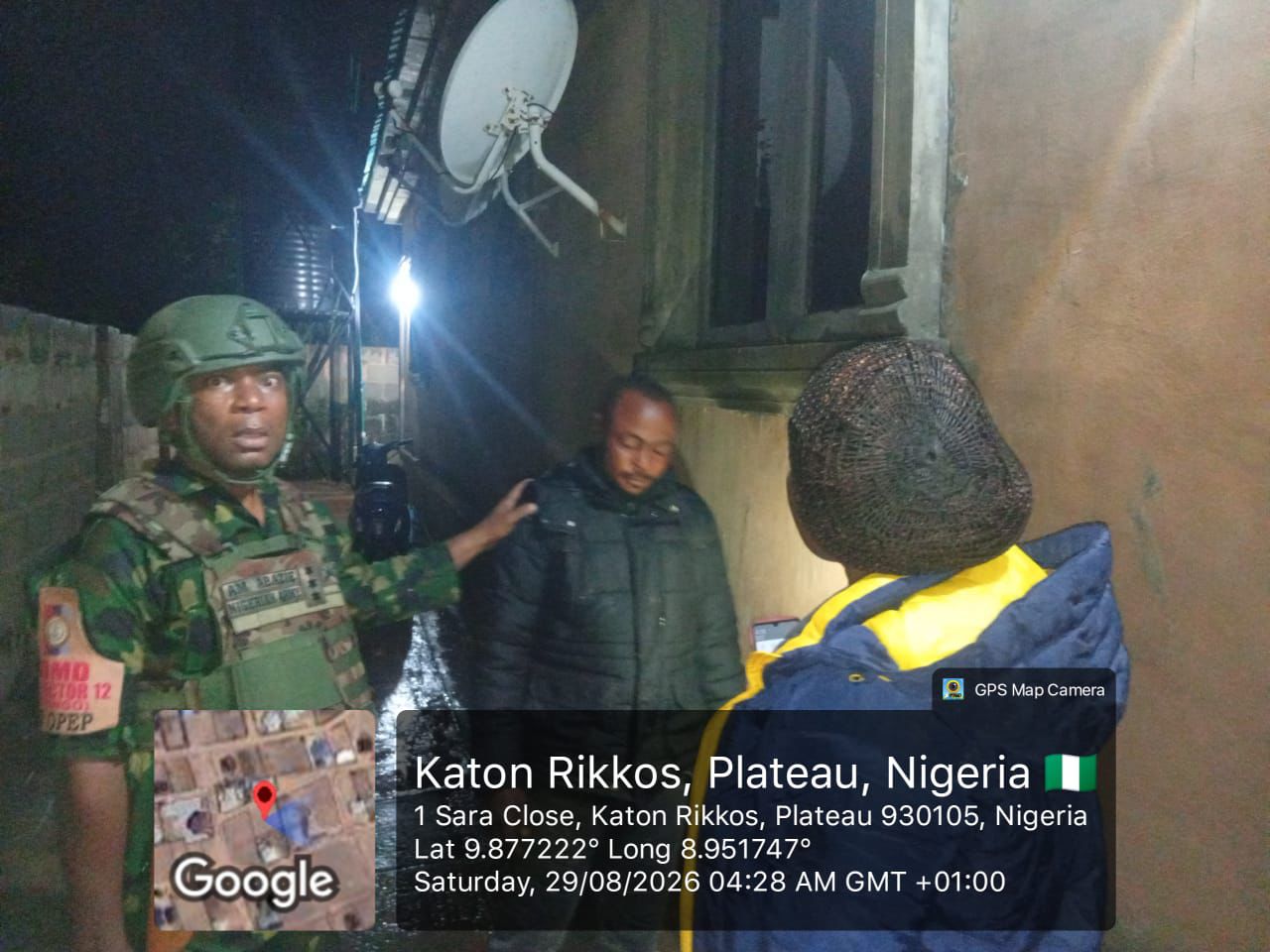
Troops of Sector 1, Sub-Sector 12, Operation ENDURING PEACE, have foiled a kidnapping attempt and rescued two victims in Jos North Local Government Area of Plateau State.
The troops responded at about 0345 hours on Aug. 29 following a report of an attempted abduction of Mrs Juliana Luka, 34, and Mr Luka Agwom, 43, at Road 12, Haske Quarters, Jos.
Military sources told Zagazola News that the troops’ quick intervention forced the suspected kidnappers to abandon the victims and flee from the area.
The troops subsequently rescued the two victims and conducted preliminary debriefing to obtain useful information that could assist in tracking and apprehending the fleeing criminals.
Security personnel have commenced efforts to locate the suspects, while patrols and surveillance have been intensified around the area to prevent further attacks.
The successful intervention highlights the importance of rapid response and timely information sharing in countering kidnapping and other criminal activities in urban communities.
Operation ENDURING PEACE has continued to sustain security operations across Plateau State, with emphasis on protecting vulnerable communities and denying criminal elements freedom of action.
Troops foil kidnapping attempt, rescue two victims in Plateau

Troops investigate suspected Malicious poisoning of cattle in Plateau
By Zagazola Makama
Troops of Sector 6, Operation ENDURING PEACE, have commenced investigation into the suspected poisoning of cattle belonging to a resident of Jol Community in Riyom Local Government Area of Plateau State.
The troops, deployed at Dakku, responded at about 1530 hours on Aug. 28 following a report of suspected poisoning of cattle belonging to Alhaji Isah.
Upon arrival at the location, the troops discovered one cow dead after reportedly grazing on a suspected poisonous substance.
The circumstances surrounding the death of the animal remained unclear as of the time of filing this report.

Military personnel have commenced investigation to determine the nature of the substance involved and establish the circumstances surrounding the incident.
The development comes amid heightened sensitivity over farmer-herder relations in parts of Plateau State, where incidents involving livestock, farmland destruction and cattle rustling have the potential to trigger community tensions.
Security forces have continued to engage local stakeholders and encourage residents to promptly report suspicious activities to prevent isolated incidents from escalating into broader conflict.
Troops investigate suspected Malicious poisoning of cattle in Plateau
Troops neutralise terrorists, recover weapons, motorcycles in Sokoto
By: Zagazola Makama
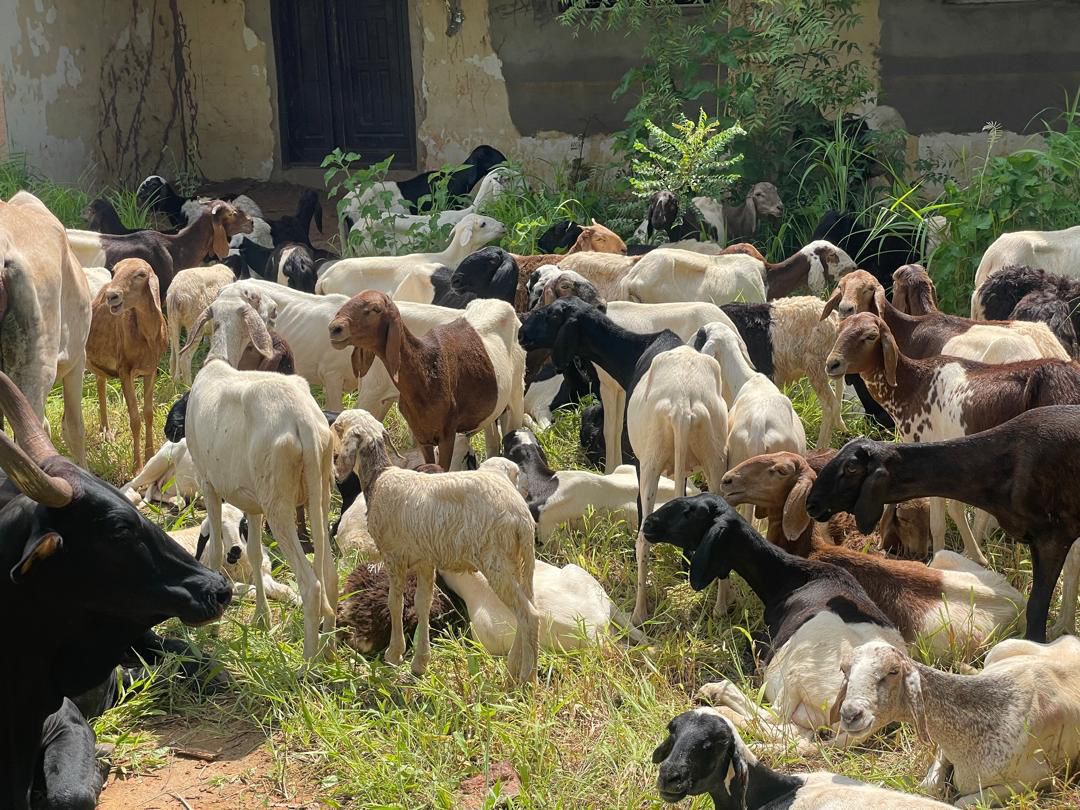
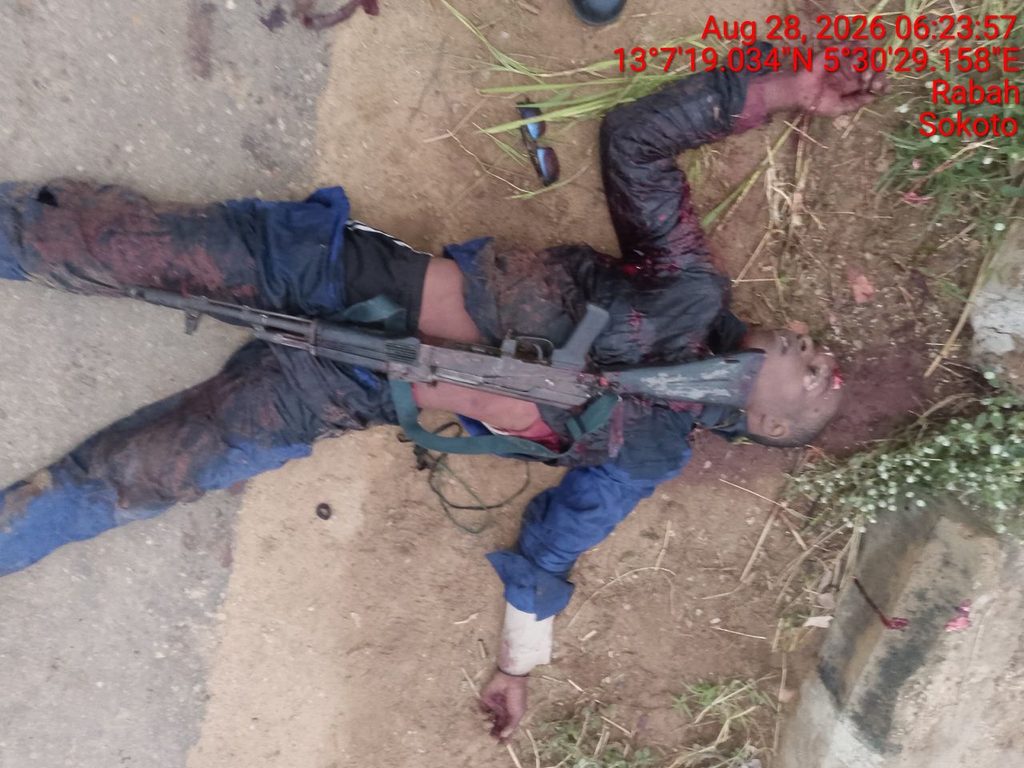
Troops of Sector 2, Operation FANSAN YAMMA, have neutralised several terrorists and recovered arms, motorcycles and rustled livestock during an encounter in Rabah Local Government Area of Sokoto State.
The troops, acting on credible intelligence on the movement of suspected terrorists attempting to move rustled livestock through the Maikujera general area, swiftly deployed to intercept the group.

During the operation, the advancing troops encountered an attempted ambush along the route. However, the troops responded with superior firepower, breaking through the ambush and neutralising several of the terrorists.
The remaining terrorists reportedly fled into the surrounding bush as the troops intensified their advance.
Items recovered during the exploitation included AK-47 rifles, motorcycles allegedly used by the terrorists and the rustled livestock.
The general area of Rabah and Maikujera is currently reported to be calm and stable, while troops remain deployed to maintain security.
The troops are also conducting routine patrols across the area to deter further terrorist activities and safeguard residents and their property.
Troops neutralise terrorists, recover weapons, motorcycles in Sokoto

Troops foil kidnapping attempt, rescue two victims in Plateau

Troops recover five cattle rustle by Berom Militia in Plateau

Troops investigate suspected Malicious poisoning of cattle in Plateau

Roger Federer’s Shock as DNA Results Reveal Myla and Charlene Are Not His Biological Children

THE PLIGHT OF FARIDA

FAILED COUP IN BURKINA FASO: HOW TRAORÉ NARROWLY ESCAPED ASSASSINATION PLOT AMID FOREIGN INTERFERENCE CLAIMS
-
 News2 years ago
Roger Federer’s Shock as DNA Results Reveal Myla and Charlene Are Not His Biological Children
-
Opinions5 years ago
THE PLIGHT OF FARIDA
-
 News1 year ago
FAILED COUP IN BURKINA FASO: HOW TRAORÉ NARROWLY ESCAPED ASSASSINATION PLOT AMID FOREIGN INTERFERENCE CLAIMS
-

 News2 years ago
EYN: Rev. Billi, Distortion of History, and The Living Tamarind Tree
-
 Opinions5 years ago
POLICE CHARGE ROOMS, A MINTING PRESS
-

 ACADEMICS3 years ago
A History of Biu” (2015) and The Lingering Bura-Pabir Question (1)
-

 Columns2 years ago
Army University Biu: There is certain interest, but certainly not from Borno.
-

 Politics1 year ago
2027: Why Hon. Midala Balami Must Go, as Youths in Hawul and Asikira/Uba Federal Constituency Reject ₦500,000 as Sallah Gift
